Multicellular Kingdoms: Plantae - Basic Structures, Life Cycle, and Water Transport
Basic Structures: The plant kingdom is characterized by various tissues and organs including roots, stems, and leaves, all of which play critical roles in supporting life functions. Each of these structures contributes to processes such as nutrient absorption, photosynthesis, and support.
Overview of Eukarya: Supergroup Plantae (Archaeplastida); Kingdom Plantae
Eukarya Supergroup: Plants are part of the Archaeplastida supergroup, characterized by their unique evolutionary lineage.
Basic Structure and Morphology
Land Plants Characteristics:
Multicellular, terrestrial photoautotrophic organisms with cellulose cell walls.
Originated from green algae and are now primarily found away from water.
Depend on mycorrhizae for nutrient uptake from the soil.
Exhibit diversity in size and complexity, from simple forms to advanced organisms.
Mostly stationary organisms.
Reproductive Features:
Basal groups such as Bryophyta (mosses) and Pterophyta (ferns) have flagellated sperm.
Plants produce drought-resistant spores containing sporopollenin, a key synapomorphy.
Egg cells, the zygote, and developing embryo are retained within the plant, marking another synapomorphy.
Plant Reproduction: Life Cycle
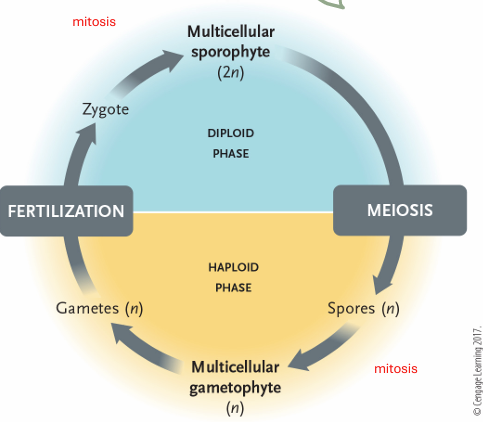
Alternation of Generations (AoG):
The life cycle of plants includes distinct sexual (gametes) and asexual (spores) reproduction phases.
All plants and algae demonstrate forms of AoG, which begins with aquatic algae where gametes may swim.
Zygotes may swim before they settle, leading to the development of new plants.
Differentiation of Spores and Gametes:
Mitosis: Plays a role in the production of cells in different life stages (both in gametes and in zygotes).
Adaptations to Life on Land: Reproductive Organs
Gametangia Structure:
Male and female gametangia (antheridia for male, archegonia for female) are protected by a sterile tissue layer.
These specialized structures facilitate reproduction in terrestrial environments.
Meiosis and Spores:
Meiosis results in haploid spores called meiospores, which are resistant to desiccation due to the presence of sporopollenin.
Adaptations to Life on Land: Dependent Embryo
Retention of Zygote and Embryo:
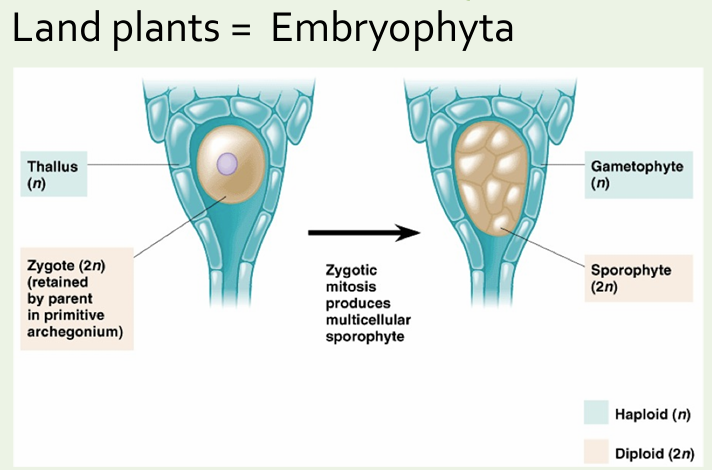
The zygote develops into an embryo that remains with the female haploid plant (female gametophyte), termed Embryophyta.
Specialized placental transfer cells provide essential nutrients to the developing embryo.
Compared to brown and red algae, which may have multicellular mechanisms, most green algae have free-living zygotes.
Multicellular Diploid Sporophyte:
The diploid sporophyte showcases an increase in meiosis occurrences, leading to a larger production of spores.
Life Cycle Stages Diagrams
Diagrammatic Representations:
Embryophyta structure:
Thallus (n)
Gametophyte (n)
Zygote (2n) (retained by parent in primitive archegonium)
Zygotic Mitosis: Produces multicellular sporophyte.
Sporophyte (2n), with comparisons between haploid (n) and diploid (2n).
Kingdom Plantae: Phylogeny
Relationships with Green Algae:
Shared derived traits (synapomorphies) between Charophyceae and Embryophyta:
Manufacture of cellulose microfibrils for cell wall construction.
Structural similarities in the sperm cells.
Comparable sequences in nuclear and chloroplast DNA.
Timelines of Evolutionary Changes
Key Developmental Milestones:
475 mya: Emergence of terrestrial embryophyte plants.
425 mya: Development of megaphylls and advancements from homosporous to heterosporous reproduction.
Dominant sporophyte stage characterized by polysporangiate structures, true roots and shoots, and vascular tissues.
Evolutionary Progression Diagram Explanation
Ancestral Green Algae:
Initially aquatic with no true embryonic formation.
Transition into land plants showcases:
Angiosperms (305 mya): Development of flowers and seeds, protected within fruits.
Gymnosperms: Spores are naked and unprotected.
Tracheophytes: Seedless plants with swimming sperm or varying forms of morphological structures.
Bryophytes: Lack vascular systems and exhibit simple structures like liverworts and mosses.
Water Transport and Resource Acquisition
Two Inhabited Systems:
Above ground: Characterized by dryness, sunlight exposure, and transpiration.
Below ground: Comprises moist environments offering minerals and anchorage for plants.
Consequently, these conditions lead to significant morphological and structural alterations in plants.
Water Transport: Vascular System
Components of the Vascular System:
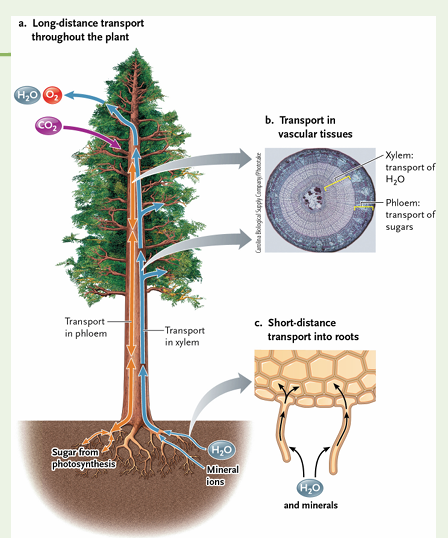
Vascular bundles consist of:
Bundle Sheath: Encloses the vascular tissues.
Central Xylem: Responsible for water conduction.
Surrounding Phloem: Facilitates sugar transport.
Rhizome in Ferns: A cross-section of underground stems.
Water Transport Mechanisms
Short Distance Water Movement:
Utilizes root hairs absorbing water through osmosis and moving it to central xylem.
Long Distance Water Transport:
Water travels from roots to leaves against gravity via the xylem, primarily through a process referred to as transpirational pull.
Challenges and Adaptations:
Different groups of plants face unique challenges and must evolve adaptive responses to facilitate water transport.
Water Potential and Transport Dynamics
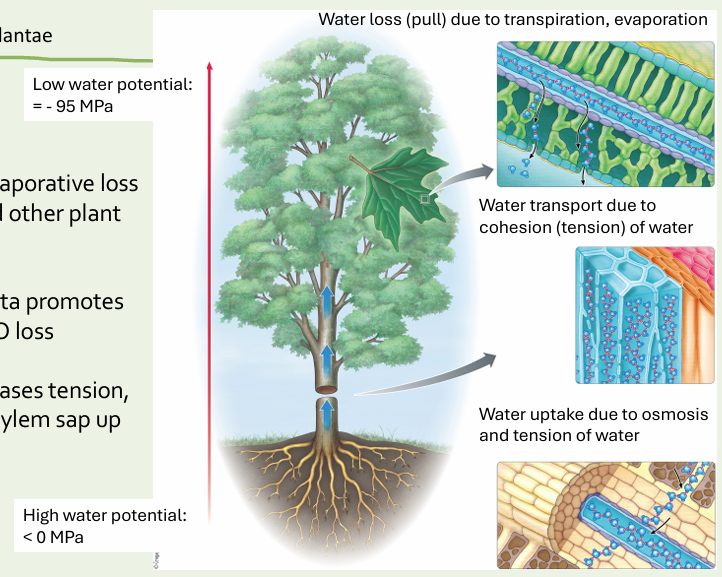
High Water Potential: < 0 MPa
Low Water Potential: = - 95 MPa
Water Loss Mechanisms:
Transpiration and evaporation contribute to pulling water through plants.
Cohesion and Tension:
Water transport inherently relies on the cohesive tension of water molecules, allowing for effective distribution.
Osmosis in Water Uptake:
The pressure and tension dynamics enhance water absorption and movement within plant tissues.
Transpiration Dynamics:
Defined as evaporative loss of water from leaf surfaces, influenced by stomatal openings which promote water loss and further draw water from the xylem.
Phloem Transport Dynamics
Mechanism of Sugar Transport:
Includes:
Sugar Source and Sink: Leaves act as sources while roots function as sinks.
Loading of Sugar: Involves the uptake of water.
Unloading of Sugar: Occurs where sugars are utilized or stored.
Recycling of Water: Thanks to osmosis, water is recycled back into the system.
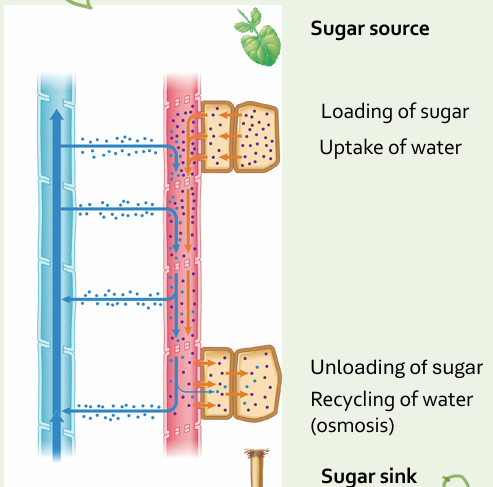
Method of Sugar Movement:
Products of photosynthesis are translocated through phloem using a ‘push’ mechanism (positive pressure), rather than through a pulling mechanism.
Key Points for Review
All plants exhibit an AoG with mitotic divisions post-fertilization and following meiosis.
All land plants (Kingdom Plantae) retain the zygote and sporophyte on the gametophyte parent.
Vascular bundles serve as a critical adaptation for efficient water transport across land plants (excluding mosses).
Vascular bundles consist of xylem for water transport and phloem for sugar distribution.
This document provides a comprehensive overview of the Plantae kingdom, focusing on basic structures, reproductive cycles, adaptations, phylogenetic context, and water transport mechanisms essential for student learning.