3. Telescopes
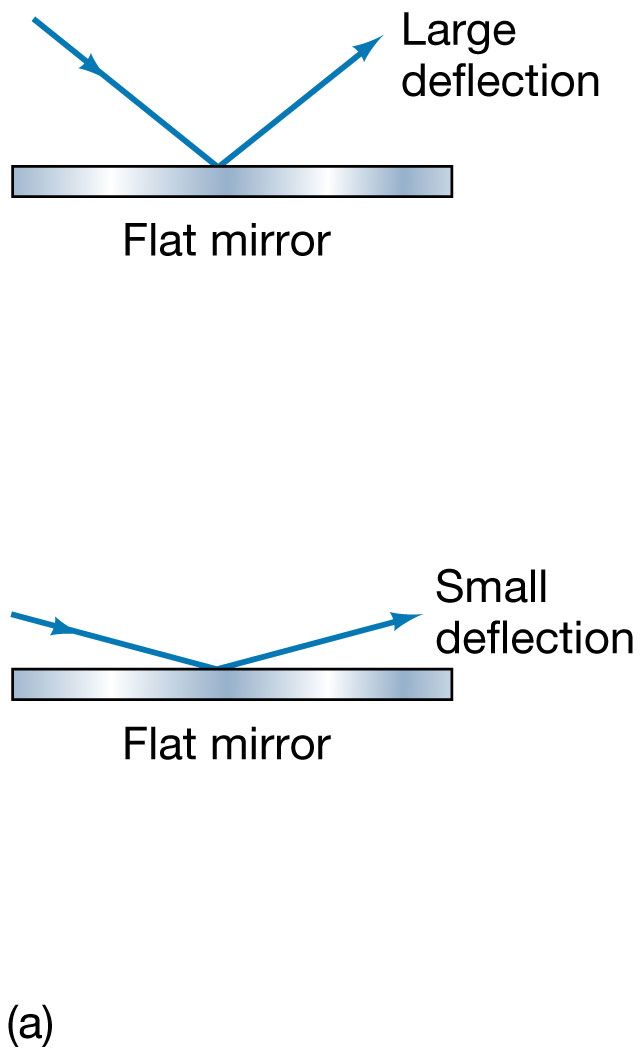
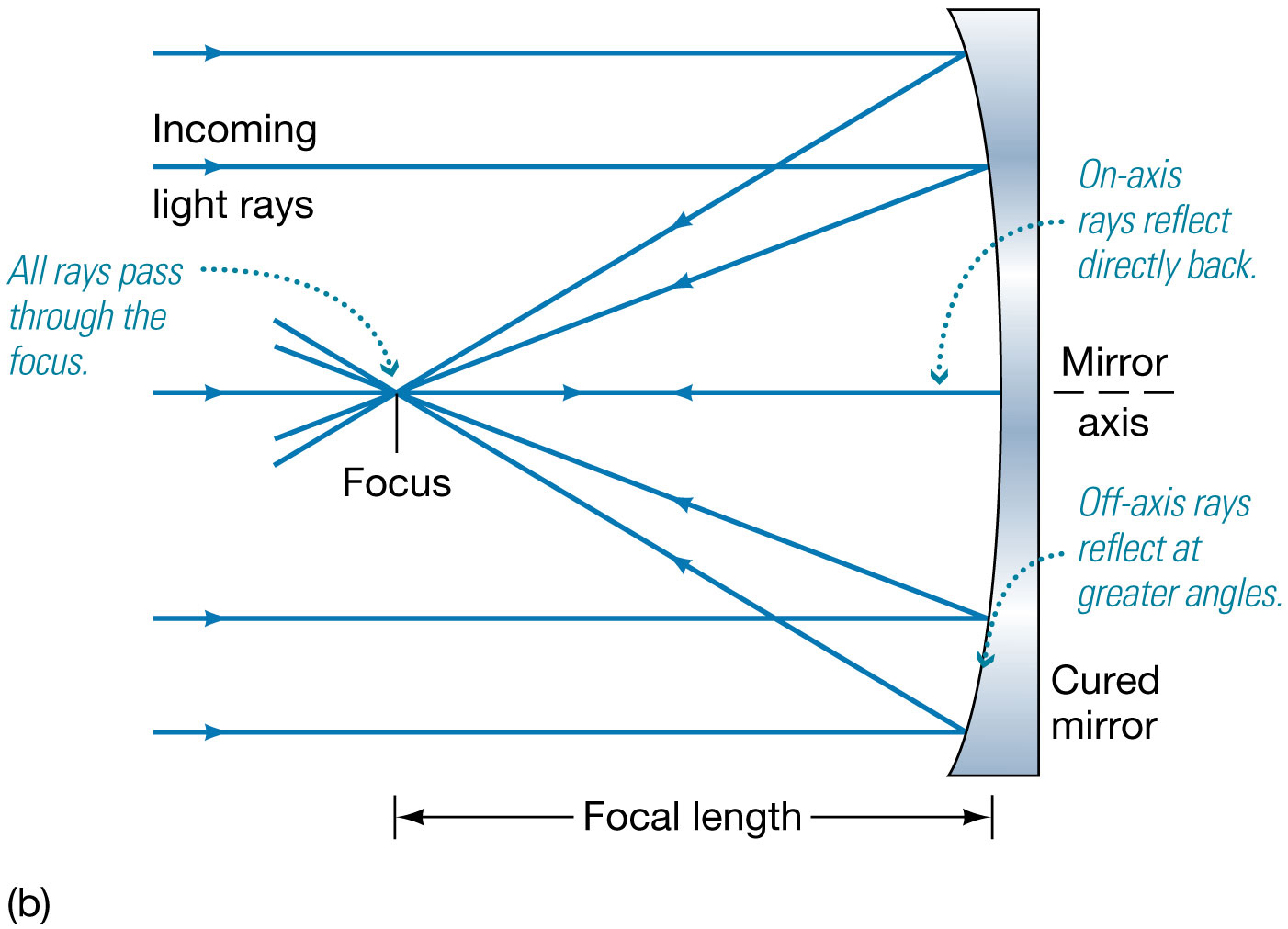
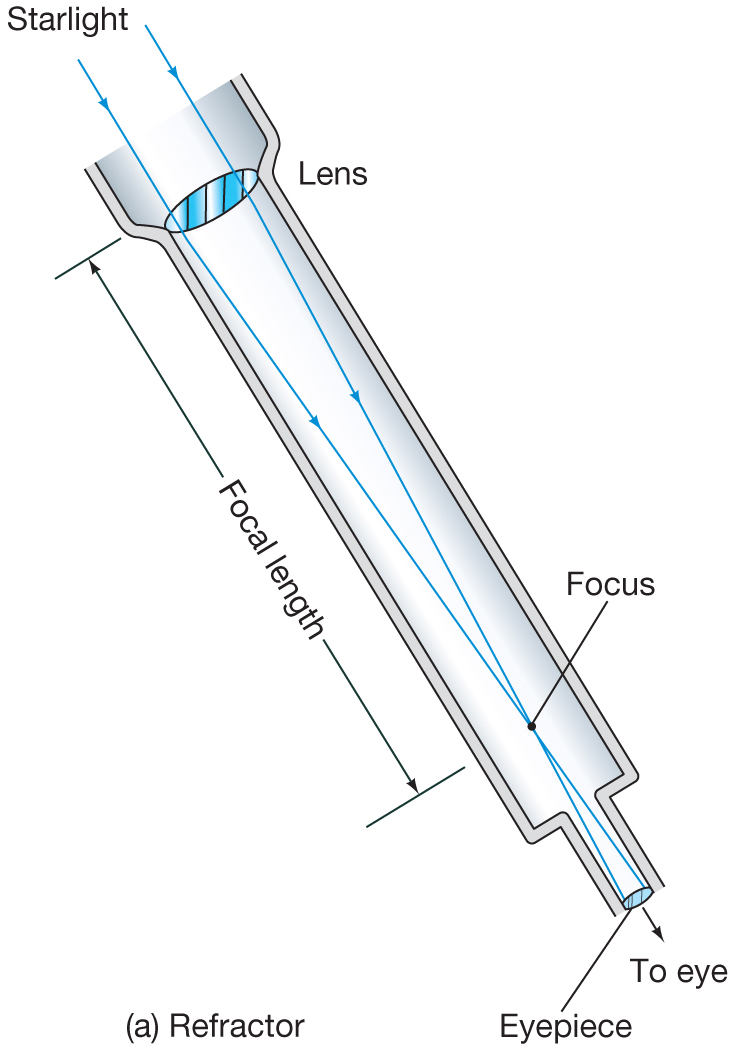
Reflectors vs. Refractors
Large scientific telescopes are virtually always reflector telescopes
Lenses create Chromatic Aberration - light bends and focuses at the edges of the lenses (like a prism due to different wavelengths)
Glass can absorb some wavelengths of light while light passes through the lens
Lenses are very heavy
Both sides of the lenses have to be polished to a high precision
Chromatic Aberration
Lenses bend different wavelengths of light at different angles, similar to a prism, and focus light around the edges of the image.
Seeing and Diffraction Limits
Seeing
How much stuff gets smeared by the atmosphere
Telescopes take one image in many minutes
that much time is needed to collect enough light to see anything
imagine adding a bunch of turbulent images like this
it ends up just being a smear
Seeing is measured in arc seconds
360 degrees = 1 circle
60 arc minutes = 1 degree
60 arc seconds = 1 arc minute
1 arc second is 1 part in 1,296,000 of a circle (360×60×60)
Really good seeing = 0.3 arc seconds (only at Mauna Kea)
Really bad seeing = 3 arc second (here on a clear night)
The smaller the quantity of arc seconds the better the seeing
“Seeing” - how crisp or focused a space image is
Ranked worst to best image quality
Sea-level in a humid environment
Sea-level in an arid/desert environment
On top of a high, dry mountain
Empty (outer) space
Angular Diameters
The moon is 31 arc minutes across
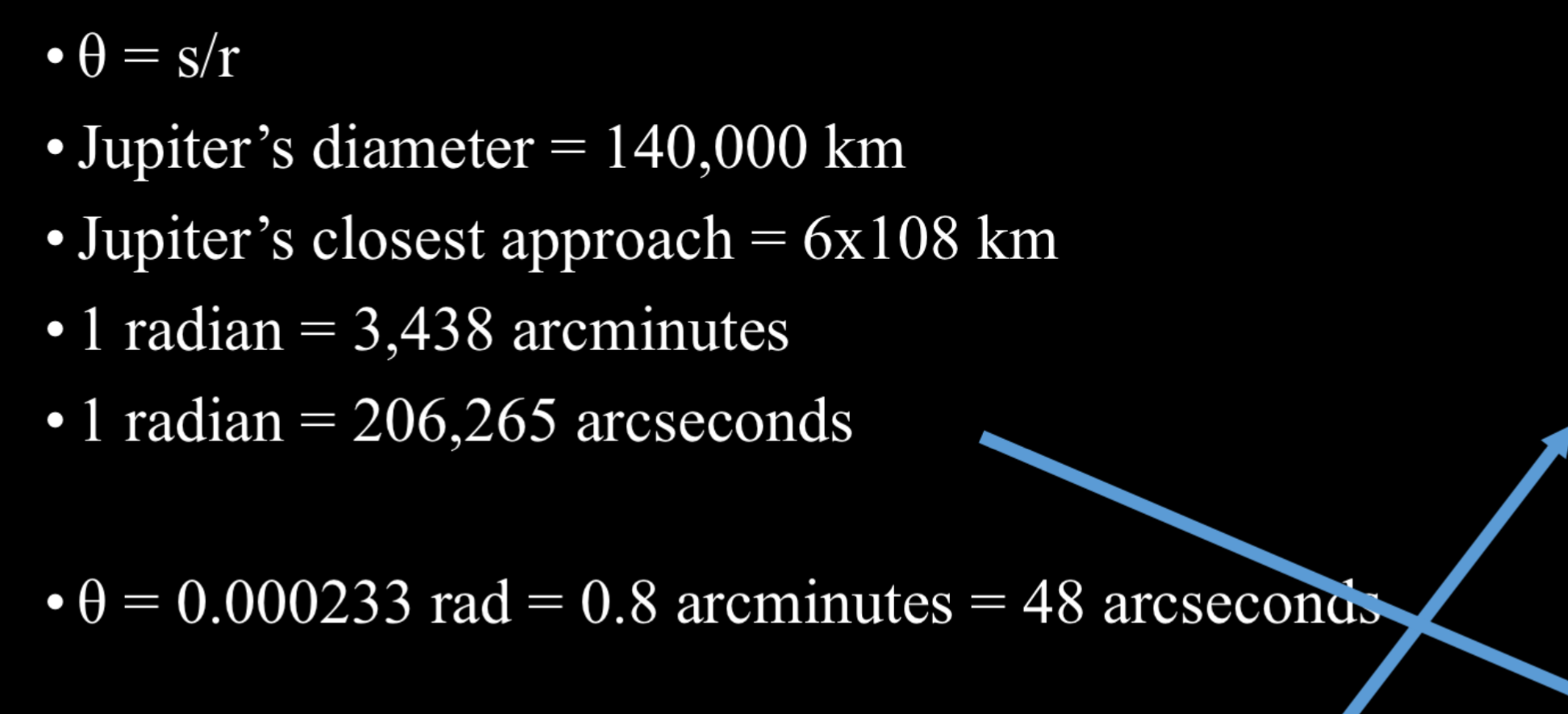
Jupiter has an angular diameter of 48 arc seconds at its closest
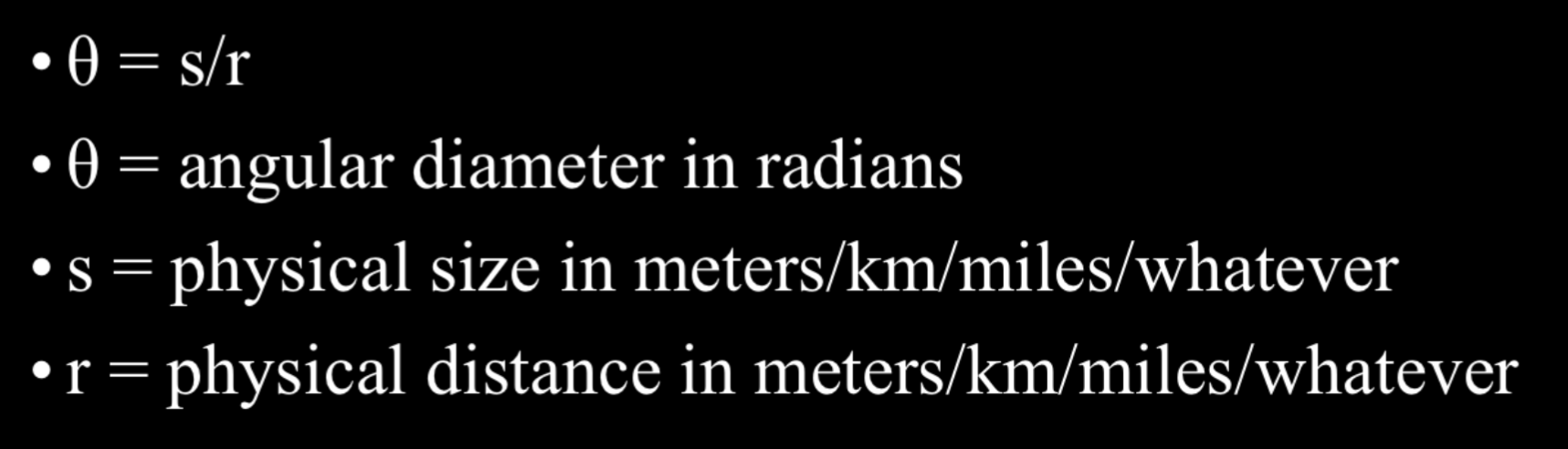
Finding Jupiter’s Angular Diameter
Finding Alpha Centauri A’s Angular Diameter
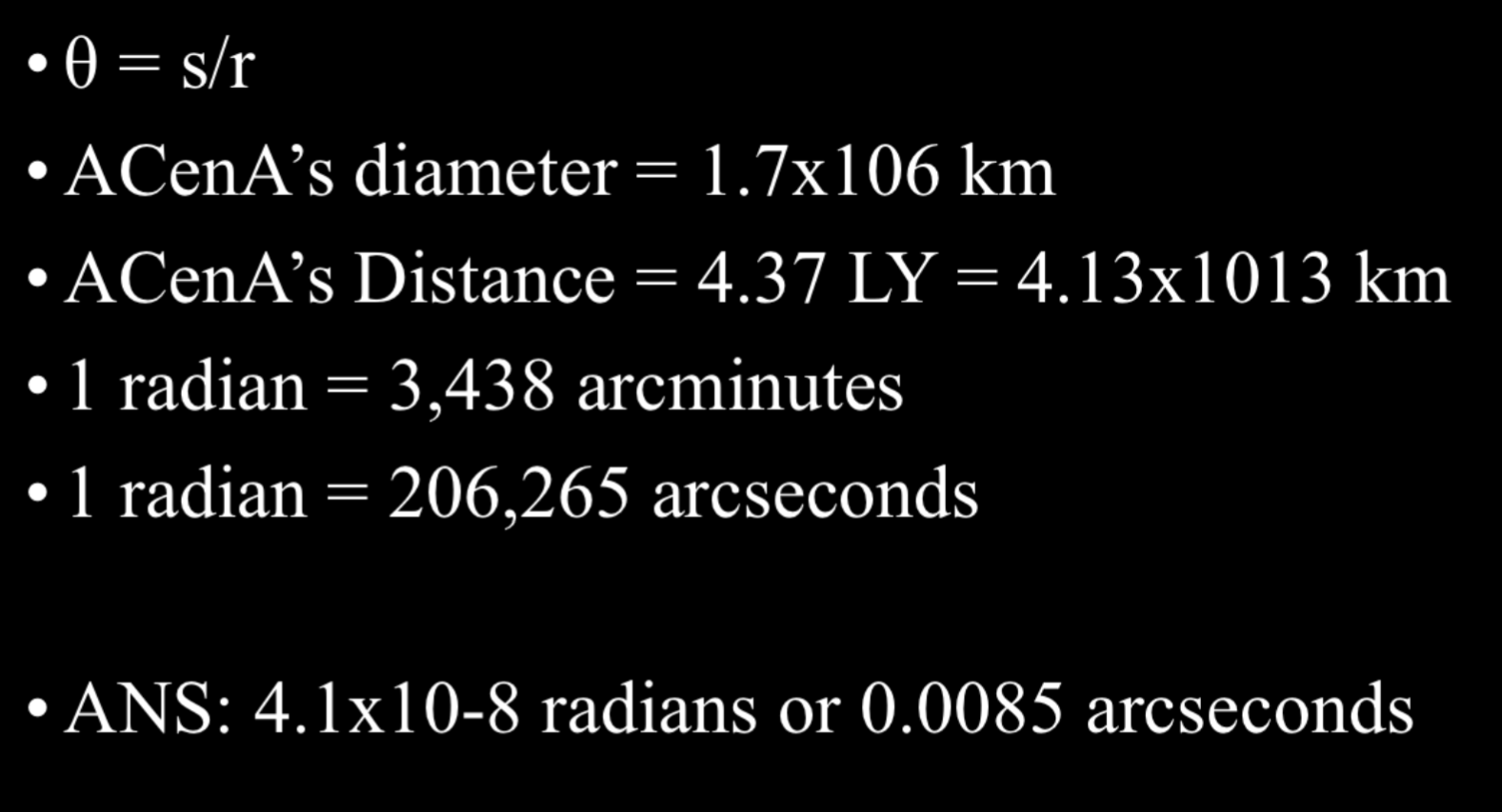
Can we resolve Alpha Centauri A? Meaning, can we see it as a disk instead of a point?
No, not with our eyes (1 arc minute resolution)
Not with the most powerful ground-based telescopes either (0.3 arc second resolution)
Diffraction Limited Telescopes
Put a telescope in space, seeing is zero, right? Resolve everything
Now there is a problem with quantum mechanics
Thanks to QM, we cannot get perfect seeing, even in space
light is a wave, so it obeys wave mechanics, which smears even photons
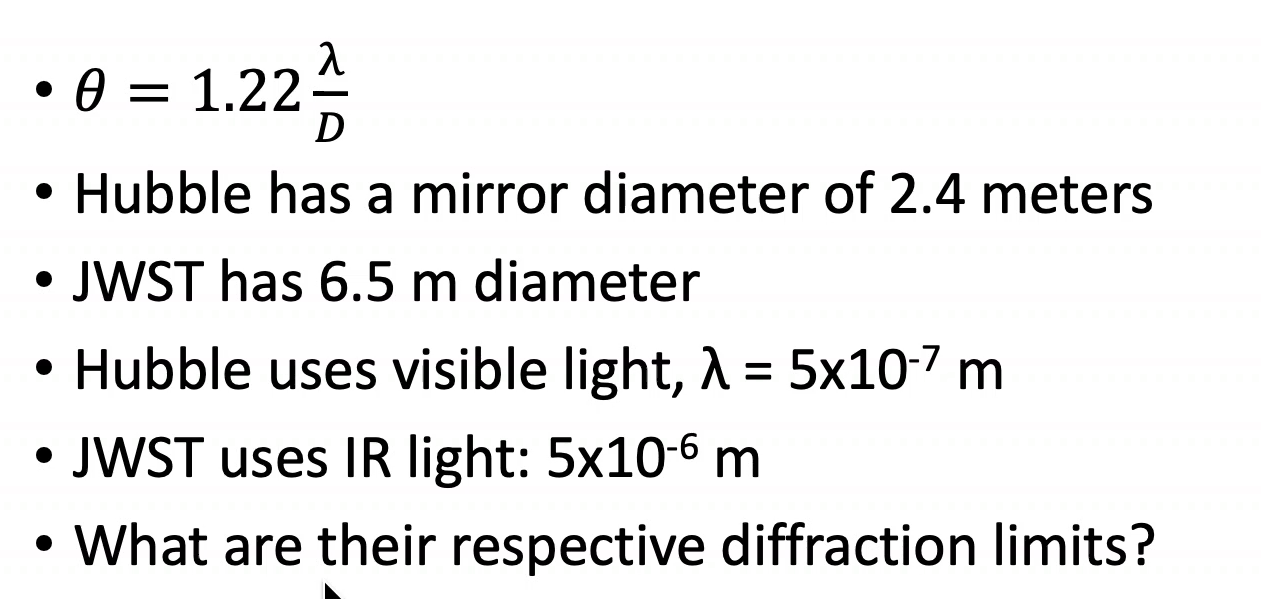
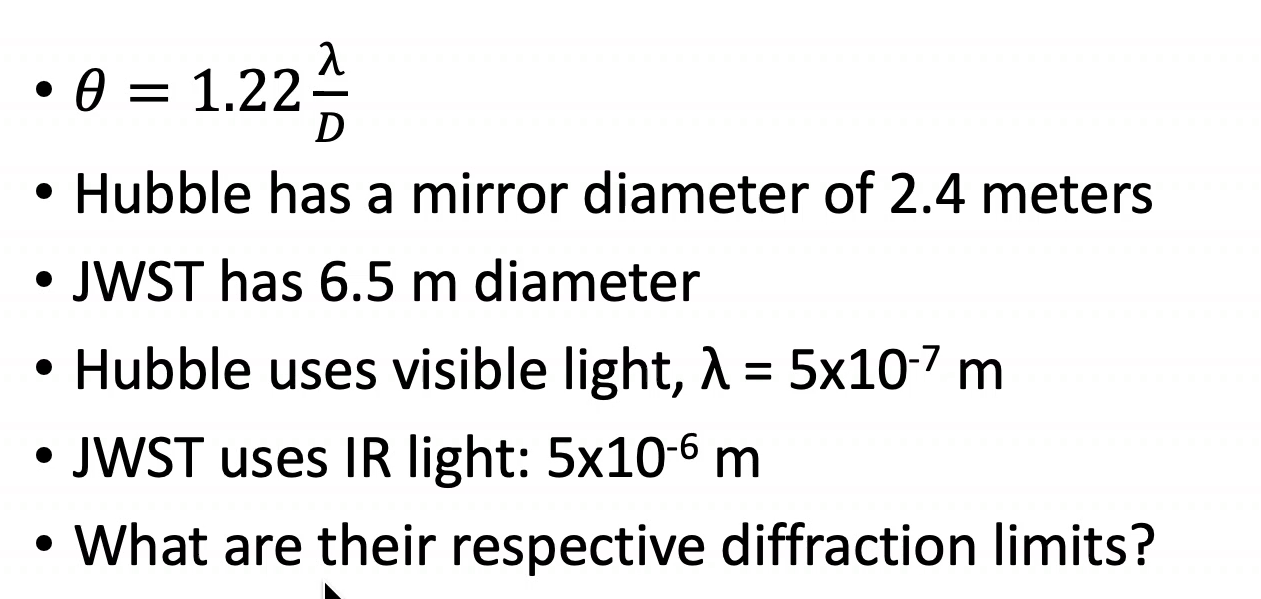
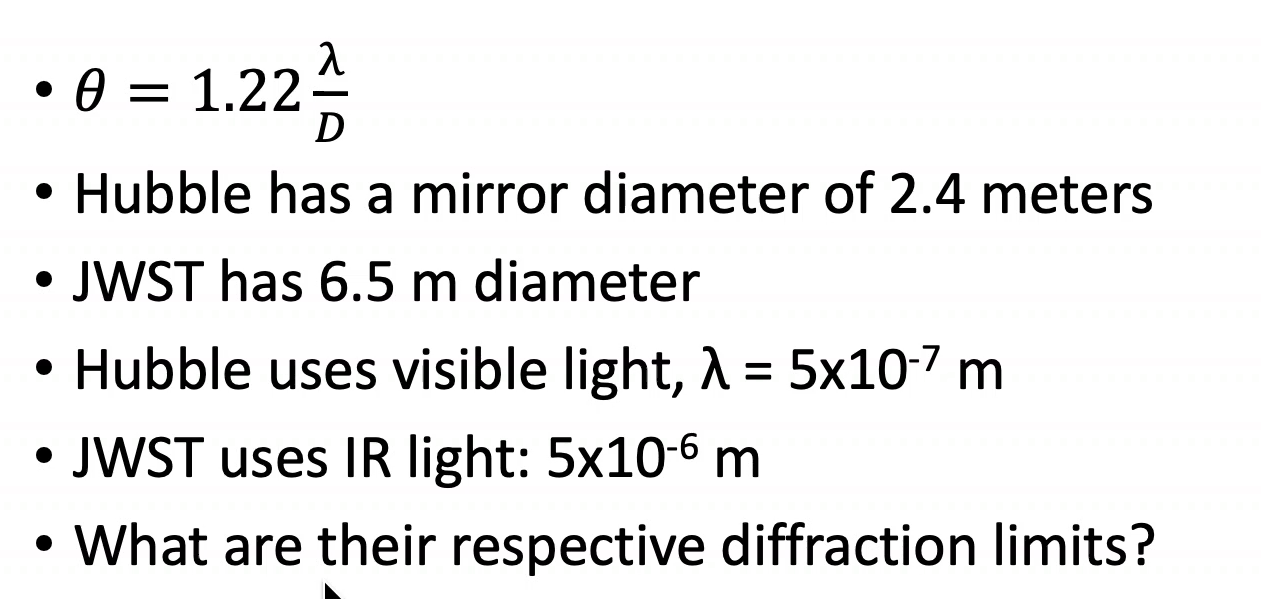
Hubble vs. JWST Diffraction
Seeing Continents?
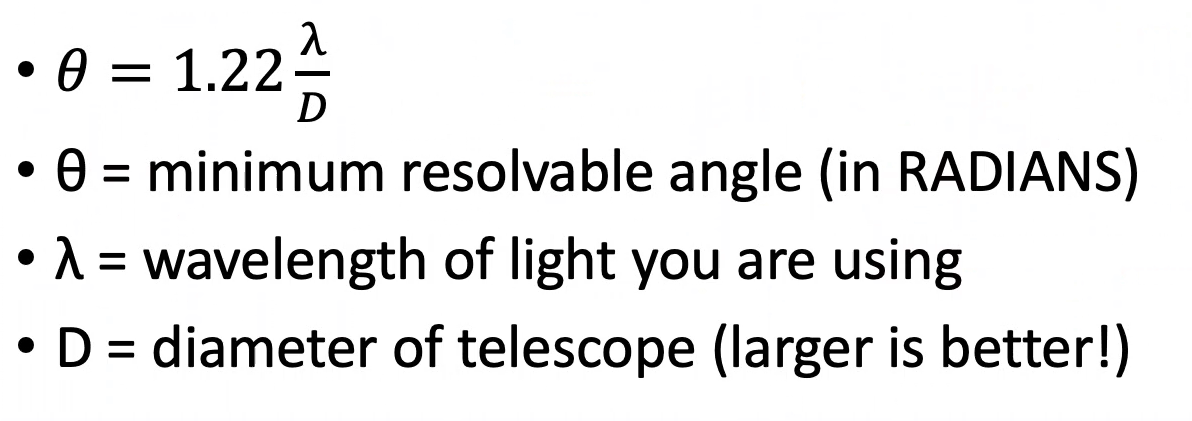
How large a space telescope do you need to see a continent (1000 km across) at 20 light-years distance?
1 LY = 9.46 × 10^12 km
Visible light (blue) = 4×10^-7 m
Adaptive Optics
Fire a laser into the upper atmosphere
observe how the laser beam is deformed by the turbulence in the atmosphere
Calculate exactly the reverse of the deformation from the atmosphere
bend and flex a mirror to exactly counteract the turbulence
repeat 20x a second