Antigen Response Process
Innate Portion - 1st Line of Defense
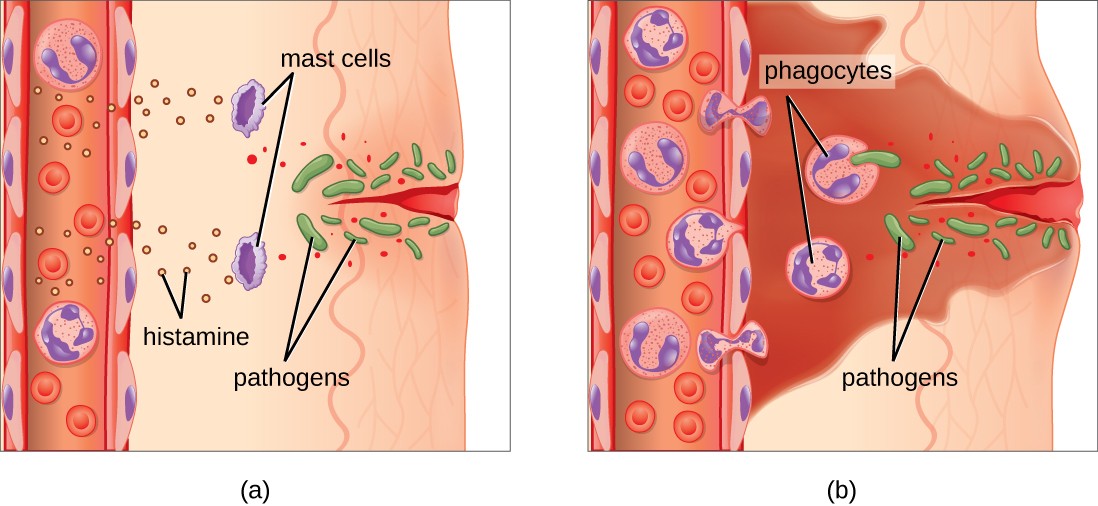
a break in the skin barrier, such as a cut, allows bacterial prokaryotes to enter
histamine is signaled and releases at the site
blood vessels dilate, stimulating an inflammatory response
platelets form scabs to close the cut
macrophages perform phagocytosis and hydrolyze cells in the lysosome
specific immune response is initiated through antigen presentation, then moves to lymph node full of lymphocytes
Adaptive Portion - Humoral Immune Response
The antigen of the pathogen is received by the antigen receptor, a helper T cell that recruits B and T lymphocytes
When B lymphocytes divide:
A) Primary/targeted immune response - plasma cells make and secrete antibodies so they can be tagged and killed by macrophages that recognize the tag. This response takes 7-14 days
B) Secondary response - memory cells in your blood are ready to release antibodies the next time you are exposed, making this process faster
When T lymphocytes divide:
A) a cell mediated immune response occurs, as natural killer cells kill virus infected cells
B) Memory T cells remember the same process as the prior response