Georgia's Executive Branch
Overview of the Executive Branch
Structure of Georgia's Executive Government
Georgia operates under a plural executive system, meaning multiple officials are elected rather than appointed. This includes the governor, lieutenant governor, and six other constitutional officers.
The elected constitutional officers are: Secretary of State, Attorney General, State Superintendent of Schools, Commissioner of Insurance, Commissioner of Agriculture, and Commissioner of Labor.
Each officer heads an executive department responsible for specific areas of governance, ensuring laws are implemented effectively.
This structure promotes accountability and representation, as each officer is directly elected by the public.
The plural executive model contrasts with a unitary executive system where a single individual holds executive power, allowing for diverse leadership in Georgia's government.
Revenue Sources for the State of Georgia
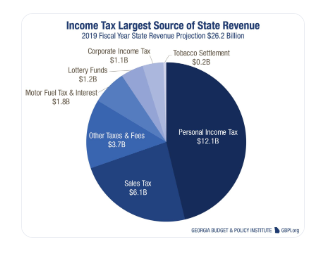
The top three sources of revenue for Georgia are: Individual Income Tax, General Sales Tax, and Other Taxes/Fees.
Additional revenue sources include the Lottery, Regulatory Fees (such as Parks and Occupational licenses), and Settlement Programs.
Understanding these revenue streams is crucial for analyzing the state's budget and financial health.
The reliance on income and sales taxes reflects broader economic trends and the state's demographic profile.
Revenue generation is essential for funding public services, infrastructure, and education in Georgia.
Structure of the Executive Branch
The Executive Branch is responsible for enforcing laws and overseeing the state government operations.
It is led by the Governor, who is the chief executive officer of the state.
The Lieutenant Governor serves as the second-in-command and presides over the state Senate.
Key Leadership Positions
Governor: Currently Brian Kemp, elected in November 2018.
Lieutenant Governor: Currently Geoff Duncan, also elected in November 2018.
Key Elected Officials and Their Responsibilities
Office of the Secretary of State
The Secretary of State is the custodian of Georgia's Seal and oversees the registration of corporations and non-profits.
This office supervises elections, ensuring fair and transparent electoral processes in the state.
The Secretary of State also manages 30 state boards, which play various roles in governance and regulation.
Current Secretary: Brad Raffensperger, serving since 2019, has been pivotal in election integrity discussions.
The office's responsibilities are critical for maintaining public trust in the electoral system.
Role of the Attorney General
The Attorney General serves as the chief legal officer for the state, handling legal matters and representing Georgia in court.
Responsibilities include managing contracts, prosecuting capital felony cases, and investigating state officials for wrongdoing.
Elected for a four-year term, the Attorney General's role is vital in upholding the rule of law and protecting citizens' rights.
Current Attorney General: Christopher Carr, appointed in 2016 and elected in 2018, has focused on consumer protection and public safety.
The office plays a key role in legal advocacy and policy development within the state.
Departments and Their Functions
Department of Education
The State Superintendent of Education oversees K-12 education standards and policies in Georgia.
Responsibilities include setting teacher certification requirements, student graduation criteria, and standardized testing protocols.
The department is structured into five offices focusing on various educational aspects, including curriculum and instructional support.
Current Superintendent: Richard Woods, serving since 2014, emphasizes educational reform and student achievement.
The education department's policies directly impact the quality of education and workforce readiness in Georgia.
Department of Agriculture
The Commissioner of Agriculture promotes and regulates Georgia's agriculture industry, a key economic sector.
Responsibilities include monitoring food processing, pest control, and the operation of state farmers' markets.
The department plays a crucial role in ensuring food safety and supporting local farmers.
Current Commissioner: Gary W. Black, serving his third term, has focused on agricultural innovation and sustainability.
The agriculture sector's health is vital for Georgia's economy and food security.
Additional Executive Branch Agencies
Overview of Other Agencies
The Department of Transportation is responsible for planning and maintaining Georgia's road infrastructure.
The Department of Economic Development focuses on attracting business investments and promoting tourism.
The Department of Natural Resources enforces laws related to environmental conservation and resource management.
The Department of Human Services ensures basic health and welfare needs are met for citizens.
The Georgia Bureau of Investigations assists in criminal investigations and forensic services, enhancing public safety.
Key Functions of Specialized Agencies
The Department of Corrections operates facilities to rehabilitate offenders and reduce recidivism rates.
The Department of Community Health oversees healthcare planning and disease prevention initiatives.
The Georgia Ports Authority manages the state's deep-water ports, facilitating international trade.
The Department of Family and Children Services addresses child welfare and support services for families in need.
Each agency plays a specific role in maintaining the state's infrastructure, health, and safety.
Qualifications and Terms of Office
Governor vs. Lieutenant Governor
Both positions require U.S. citizenship, Georgia citizenship for at least 6 years, and a minimum age of 30.
The Governor is limited to two consecutive terms, while the Lieutenant Governor can serve unlimited consecutive terms.
Election Process
Both the Governor and Lieutenant Governor are elected by popular vote in the state of Georgia.
They do not run as a team and can belong to different political parties.
Duties and Powers
Responsibilities of the Governor
Oversees the operation of the executive branch and ensures laws are executed faithfully.
Acts as the chief law enforcement officer and commander-in-chief of the state’s military.
Proposes the annual budget and presents it during the 'State of the State' address.
Responsibilities of the Lieutenant Governor
Presides over the state Senate and has significant influence over legislative processes.
Takes over the Governor's duties in case of death, resignation, or disability.
Appoints Senators to committees and recognizes members wishing to speak.
State Budget and Revenue Sources
Budget Process
The Governor sets the state budget and must introduce it within the first five days of the legislative session.
The General Assembly reviews and approves the budget, determining revenue sources and terms.
Major Revenue Sources
The top three sources of revenue for Georgia include:
Individual Income Tax
General Sales Tax
Other Taxes and Fees
Additional revenue comes from fees, state lottery, and settlement programs.
Taxation in Georgia
Types of Taxes
Various taxes collected in Georgia include:
Individual Income Tax: A flat tax on personal income, currently at 6%.
Property Tax: Levied on real estate, collected by local governments.
Excise Tax: Fixed taxes on specific goods like gasoline and tobacco.
Non-Tax Revenues
Fees: Collected from state parks and occupational licenses.
State Lottery: Funds allocated for educational programs, including HOPE scholarships.
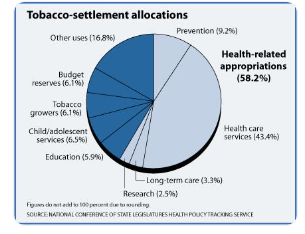
Settlement Programs: Funds from tobacco settlements to cover healthcare costs for the poor.