Tang Chapter 10 - Designing & Evaluating Career Intervention Programs
Rationale of Career Development Programs
provides a proactive and systematic approach
should reach a larger audience & benefit more people who may not otherwise be served
access to the information needed to explore options
primary reasons: accessibility and effectiveness
also out of consideration of many career development theories that emphasize lifespan development and the role of learning experiences in shaping one’s career identity and choices
to help people prepare for challenges and meet their needs at various life stages
gap between policy & practice with many individuals not having access to services or being underserved
Purpose of Career Development Programs
facilitating individuals’ knowledge & skill development so that they know how to make decisions and manage career and life tasks
ASCA has laid the foundation for career development in k-12
the three major ASCA standards are as follows
students will acquire the skills to investigate the world of work in relation to knowledge of self and to make informed career decision
students will employ strategies to achieve future career goals with success and satisfaction
students will understand the relationship between personal qualities, education, training, and the world of work
for adults, a career development program could focus on identifying the meaningfulness of work and life, assisting professional development and growth to deal with life situations through employee assistance and training for transition preparedness
Principles of Career Development
prevention is the essence of career development programs
the core value of prevention is to empower people with the capacity to manage their careers and to avoid possible problems
goal - readiness for employment and transition to prevent unemployment or unhappy employment
the program elements of career education included awareness of a wide range of career options, of one’s own personality, of industry (production, distribution, and consumption), and attitudes toward life roles, self, and others
comprehensiveness refers to the need for career programs to serve individuals with and integration of all aspects of life rather than just solving one problem or job placement
systematic and developmental prevention efforts are parallel to each other because systematic intervention needs to be based on a developmental framework so that prevention and intervention can be steady, corresponding to the level and needs of the population served
ASCA Model
divided into 4 components, with critical sub-components to be implemented as part of comprehensive school counseling programs
4 characteristics of the 21st century school counselor
advocacy
leadership
collaboration
systematic change
primary source document for the k-12 school counseling profession
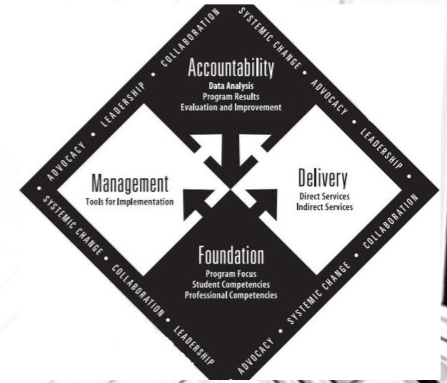
guides school counselors int he develop of school counseling programs that
are based on data-informed decision making
are delivered to all students systematically
include a developmentally appropriate curriculum focused on the mindsets and behaviors all students need for postsecondary readiness and success
close achievement and opportunity gaps
result in improved student achievement, attendance, and discipline
four components
define
student standards - ASCA Mindsets & Behaviors for Student Success: K-12 College- and Career-Readiness for Every Student
professional standards
ASCA Ethical Standards for School Counselors
ASCA School Counselor Professional Standards & Competencies
manage
program focus
beliefs
vision statement
mission statement
program planning
school data summary
annual student outcome goals
action plans
classroom and group
closing the gap
lesson plans
annual administrative conference
use of time
calendars
annual
weekly
advisory council
deliver
direct student services
instruction
appraisal and advisement
counseling
indirect student services
consultation
collaboration
referrals
assess
determine its effectiveness, inform improvements to their school counseling program design and delivery, show how students are different as a result of the school counseling program
self-assess own mindsets and behaviors to inform professional development
program assessment
School Counseling Program Assessment
Annual Results Reports
School Counselor Assessment & Appraisal
ASCA School Counselor Professional Standards & Competencies Assessment
School Counselor Performance Appraisal Template
Process of Career Development Programs
creating work group - task group and steering committee
identify target population - age, developmental levels, social/cultural/economic backgrounds, racial/ethnic background
identify goals and objectives - goals are the overarching mission of the program, and the objectives are specific indicators that translate the goals to be observable and measurable
analysis of resources and barriers - personal characteristics of population to be served; institutional characteristics; community characteristics; macro-level elements
design program content related to goals - program components
marketing programs - need for more participation by teachers and staff members to reach more or all students
implementation of programs - a well-designed plan with a detailed timeline, specific activities, and responsible persons for delivering will pave the way for successful implementation
evaluating programs - gathers information to inform the stakeholders about the outcome of a given program
Examples of Career Development Programs with Diverse Populations and Settings
youths with challenges
citizen schools; after school matters; career academics; job corps; career exploration and development for adolescents with LD and EBD; work-based education
enrichment programs at work settings
mentoring women and minority groups to retain underrepresented groups: STE(A)M programs; the synergy project model intervention model
transition and partnership
achieving success identity pathways; tools for tomorrow