ETHICS
Feelings, Reasons and Impartiality
Feelings and Emotions (Rachels 2003).
Recall that in Lessons 5, a moral person is both agent and sentient. That means, as an agent, a moral person can decide and deliberate on possible courses of action and at the same time be the source of such moral actions. But as sentient, a moral person has the capacity to feel and sense. In Lesson 6, discussions on attaining a virtuous moral character are focused on a morally educated intellect which has the knowledge of the good—the cognitive aspect, and a strong matured reason that can control emotions—the non-rational affective aspect—which can interfere with arriving at morally right decisions.
If your answers based on reason is similar with your answers based on emotions, then good for you. That shows how Plato and Aristotle viewed the rational and non-rational parts of our souls to work together (see. Module 2, pp. 29 on Affective element). But this may not always be the case. There were times in the past, even now perhaps, and in the future when your reason and emotions were, is, and will not be in sync. These are those instances that this lesson is concerned about.
 First, the problem with emotions is that these might hinder the moral person from arriving at the truth. A strong emotion
would often give one a feeling of sureness and certainty. Remember those times when you were having strong emotions such as anger, pain, remorse, desire, and the like. In those very moments, you felt that you were sure of your decisions, such that, you uttered words against your friends and loved ones which you later regretted doing after you realized that you did not really mean those words after all (but you already hurt them). Emotions can cloud one’s judgments.
Second, emotions can be driven by other causes that are not rational and fundamental, such as, prejudices, cultural traditions and beliefs, selfishness, and the like. Recall the discussions on Ethical Relativism in Module 1, Lesson 4. Female excision has been held true by culture and tradition. But that does not make it right. The justifications for female excision were largely emotional. Men wanted loyal wives. They believed removing their capacity to feel desire in intercourse would solve promiscuity among married women. If excised women are not thinking about sex, they would be focused more on the needs of their husbands and children. Husbands were claimed to have enjoyed intercourse more with excised women (because they will be in command and there is no woman to satisfy).
Third, emotions vary among different individuals. In this sense, emotions sometimes are equated with personal taste. Compare your answers in this lesson with your classmates. Do you see the variety of emotions identified by your classmates? Compare your answers based on reason with your classmates. You will most likely recognize a common ground for all your answers. This is the reason why, without dismissing emotions or the affective element in our lives outright, we have to realize that, when emotions would run against your well-informed reason, there is a need to step back and refrain from making immediate moral decisions. There is a need to re-examine your views and your decisions. You have to allow your emotions to be guided by reason. Moral situations are important because these can harm others including yourself. This is the main reason why the truth is important and that all the interests of those involved in the situation must be considered. Hence, moral judgments must have good reasons.
Reason and Impartiality
What do we mean by, “moral judgments must have good reasons”? The answer is pretty much the opposite of the above arguments against the use of emotions when these are in conflict with reason.
 First, if emotions might hinder the search for truth, the use of reason will help us arrive at truths that matter in every moral deliberation. Having good reasons is arriving at truths by getting the facts right! Emotions may only give one what one wants or desires even if these are not right. Emotions may also make us view facts in one way or another other than what things really are. For example, buying things,
apparels, and foods endorsed by a famous influencer are actions guided by emotions one feels towards such influencer. McDonald’s Chicken Nuggets have been a common menu for a long time but you started buying it, and lining up even, just to get a BTS Meal (not to mention washing the purple meal box and plastic cups). There is really nothing about the meal that you wanted other than what it represents to the BTS Fandom. That is why, when asked why you lined up and washed those purple meal
boxes and cups, you simply acclaimed, “BTS yan eh!” That is not a reason but a want. While that meal preference due to BTS is quite harmless to persons aside from the added calorie intake, just imagine if the same motivation is used in moral situations. For example, a person got bash-ed, as it were, in Facebook for criticizing BTS. But facts are facts, and facts won’t change no matter
what our feelings are about these facts.
Second, if emotions can be initiated or triggered by prejudices, personal whims, desires, and the like, then there is a big chance that no two persons can always agree on something because no two persons do have the same prejudices, likes, and preferences. Reason, however, deals with principles that are universally true to all regardless of race, religion, age, gender, and the like. That means, individuals can actually agree and find a common ground every time these rational principles are recognized and accepted in the light of reason, despite their differences. There are two things to watch out in a dispute: either it is a dispute about beliefs, or a dispute about one’s feelings about their beliefs. It is easy to solve the former type of dispute—dispute on beliefs. When the facts are straightened out, whoever is wrong about the facts must agree about the facts and must concede as reason demands. But if the person insists one’s view despite the facts, that means that the dispute is not really about beliefs anymore but rather about one’s feelings about these beliefs (see. Copi, Cohen, and McMahon 2014).
Third, if emotions vary from one person to another depending on personal tastes and likes, persons can nevertheless arrive at an agreement through rational principles that are not relative to personal preference. Recall the discussion on Perspectives against Principles in Lesson 3, Module 1, pages 39 to 40. Differences in opinion can happen between persons because of the different perspectives each one is using, the different views or focus, and the prejudices and biases that each one has. But reason can be used to clarify these differences and agreement on a common ground is possible.
Feelings and Reasons in Moral Deliberations
It has to be clear that we are not saying that feelings and emotions are not important. Some philosophers consider the importance of the affective aspect of our being persons. They
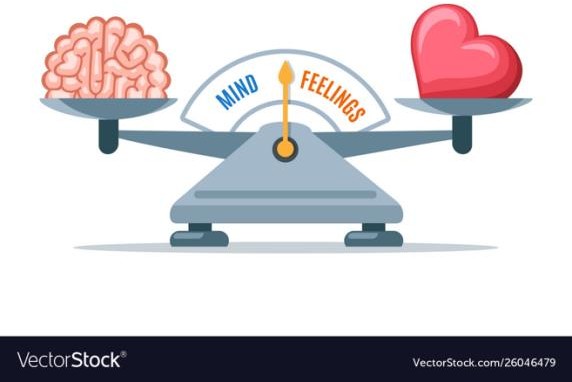 suggest, rather, a state of harmony between one’s reason and feelings. But in cases when emotions interfere and do not really help in moral deliberations, one of the most basic approaches suggested by moralists is for us to remain on the side of reason and impartiality. This is because, on one hand, emotions may hinder one from arriving at the truth; emotions may be caused by other factors such as biases, prejudices, and even our cultural idiosyncrasies; and emotions really vary from one person to another. Emotions and feelings then can make our decisions arbitrary. On the
other hand, reason is based on facts; reason deals with fundamental principles true for all people regardless of their differences; and individuals can achieve a common ground through reason.
Responsibility or Accountability
Action
The nature of action is almost always taken for granted in everyday dealings between persons. What is an action? Which one is an action: getting wet under the rain or getting wet when taking a bath? Getting wet under the rain is something that happens to people; getting wet when taking a bath is something that persons do. Action is pretty much the latter case— something that people do. But is everything we do considered an action? Is sneezing or breathing an action? Sneezing is an uncontrollable physiological response to an allergen. Breathing is a physiological process that goes on without our conscious effort. Sneezing and breathing is clearly something that people do. But sneezing and breathing are clearly different cases compared to choosing to review than to attend a party in view of passing tomorrow’s exam. There seems to be a weak sense of acting as in sneezing and breathing and a stronger sense in which a person is directly in control of his or her actions. The former seems to be better described as a behavior, while the latter is closer to what we call an action.
So, when do we say that an activity performed is properly an action? In Philosophy of Action, “an agent performs activity that is directed at a goal, and commonly it is a goal the agent has adopted on the basis of an overall practical assessment of his options and opportunities” (Wilson and Shpall 2016). There are important concepts embedded in this definition:
- An agent has knowledge of one’s own action—the agent knows what he or she is doing.
- An agent has a kind of direct control of one’s own action—the agent is free in doing so.
- An agent has an intention in performing one’s action—the agent has a goal in doing so.
- An agent has reasons for performing one’s action—the agent has reasons for doing so.
It is, therefore, under these considerations that an agent is both responsible and accountable for his or her actions. Without these conditions, an agent may not be totally held responsible or accountable for his or her actions. From this, can you now tell if natural forces and animals are capable of actions or not? Can you now classify natural forces and animals as responsible, accountable, or not?
Accountability
Accountability refers to the deservingness of blame or praise for the actions that we perform (Mabaquiao and Evangelista 2020, 31). This is grounded upon our rationality—intellect and free will. Since our intellect allows us to understand the nature, relation, and order of things around us, it is expected that every action we do are well discerned and properly deliberated. Since our free will allows us to direct our actions at will, it is expected that every action we do is chosen after due deliberation and acted upon by us at will. In short, our rationality allows us to act with full knowledge and with full consent. As a consequence, in morality, reason enables us to know which actions are right or wrong, while free will enables us to choose between these actions. That means, after knowing that something is right or wrong, we still have to make the choice on whether we act on the right course of action or the wrong course.
One’s deservingness of blame or praise therefore depends on that choice. We deserve blame if we freely choose to act on the right course of action or when we refuse to act on something good; we deserve praise when we act upon the right course of action or when we refuse to do the bad. Accountability, therefore, is not only about the blame as we usually understood it before, but with the praise as well. Accountability is about giving praise to those who did good and blame to those who did otherwise.
Deservingness also is not necessarily actual. That means, a person may deserve praise even if he or she does not receive it. Likewise, a person also still deserves blame even if no one knows his or her bad actions. This is what happens in cases of injustice. There are persons who may deserve praise but because of injustice, they never receive the praise they deserve. For example, there are people who do something good without announcing them to the public or posting them in social media. There are persons also who deserve blame but because of injustice, they appear to be beyond reproach. For example, a rich person who can win all cases thrown at him due to his contacts in powerful places. A law may be twisted to acquit the guilty, but a court acquittal will never remove the fact that the bad person still deserves blame.
Responsibility
Most of the time, we use the terms accountability and responsibility interchangeably, but responsibility is a much wider term than accountability. Responsibility commonly refers to three things:
- Responsibility as causation—responsibility here is understood as being the cause of something. Causation is a natural relation of things in our universe. Rain may cause floods, the shifting of tectonic plates can cause earthquakes in various magnitudes, the predator is the cause of the death of the prey, humans can cause pollution, and the like. In this sense, we can say that the typhoon is responsible (cause) for the floods that drowned people; the dog is responsible (cause) for the injuries of the child; and the person is responsible (cause) for the death of another.
There is, however, one important difference. Inanimate things in nature including animals are called causes when they are responsible for some events in their environment. Humans are called agents when they are responsible for events around them. This notion of responsibility therefore is connected with the human capacity called rationality discussed previously. For this reason, things and animals that cause some events around them may be responsible but not accountable for lack of rationality—intellect and free will. Humans, however, are both responsible and accountable for that matter.
- Responsibility as prospective duty or obligation—responsibility here is understood as duty and obligation for others that will or may happen. These are duties and obligations that are expected of us in advance. For example, to be parents is to be responsible for their children’s welfare. Responsibility here is prospective when parents are aware of these responsibilities and are working for these responsibilities.
Duties and obligations are asked of rational individuals only. Hence, inanimate things of nature and animals have no obligations to anyone at all. In this sense, things in nature and animals are neither responsible nor accountable. Humans may have prospective responsibilities but these are relative to their situation and relation to others or to the society. But since this responsibility is prospective or directed to what will and may happen, there is no sense of being accountable yet at this point.
- Responsibility as retrospective duty or obligation—responsibility here is understood as duty and obligation for others that happened already. These are duties and obligations that are usually evaluated if performed properly. For example, parents are to be praised or blamed for the things they did for their children in the past. This is the closest meaning of responsibility to accountability.
Duties and obligations here are for rational beings only. Hence, inanimate things in nature and animals cannot be blamed or praised for events that happen or may not happen because of them. Dogs usually kill the weakest in her pups and they are not to be blamed for such act. They are not thus accountable. Humans, in this sense can be both responsible and accountable.
The importance of these distinctions becomes evident in cases when a person may be the cause of an action but not as an agent. This happens when a mentally challenged individual may hurt another person. The mentally challenged individual here is not in his right mind and therefore lacks the pre-requisite rationality that agents have. The mentally challenged individual therefore may be responsible—responsibility as cause—but may not be fully accountable as an agent. This is a case of blameless ignorance.
When, for example, a factory manager introduced the use of a new chemical to his production which turned out to be hazardous to his employees, the manager is not excused by claiming ignorance—that he was not aware of the health hazard. As an agent with reason, the manager has the responsibility—prospective duty or obligation—to know the consequences of the chemical and subject it to prior tests before using it in his factory. This is a case of blameworthy ignorance because of prospective responsibility. And thus, he is blameworthy by virtue of retrospective responsibility or, also known as accountability.
Another example would be a seven-year-old child left for a while with his baby brother. Usually, parents would obligate their children to watch their younger siblings this way. If, unfortunately, the baby brother is injured in the absence of the parent, the older brother is not to be held responsible—retrospective duty or obligation—for the injury because to look after his younger sibling is not his responsibility—prospective duty or obligation. This will be clarified in the following discussion on attribution conditions.
Rights and Duties
Other related concepts to human action need to be explained here. Rights and Duties are meaningful to human actions only. Rights and Duties are different and related in three ways:
- By contrast: A person is basically a bearer of rights. Rights are entitlements that refer to interests that the bearer of rights is allowed to pursue or allowed to do. For example, a person who has the right to life is therefore entitled or allowed to do whatever is necessary to continue living. Conversely, humans do not have the right to take the life of another means that no one is entitled or allowed to kill another. Duties can be understood by contrast to rights as defined above. Duties are actions that we ought to do or perform. These are usually expressed as commands, laws, or imperatives. It is in this sense that persons who have inherent rights and duties are understood as moral agents.
- When one fails to exercise a right or duty: failure to exercise a right does not constitute a sanction—blamed or punished. For example, it is a student right to use the library for research. But choosing not to because she has ample resources at home does not merit a sanction. But failure to perform a duty merits a sanction. It is one’s duty to submit school activities and assessments on time. Thus, failure to do so merits a sanction. This pertains as well to moral agency.
- They imply each other: the rights one person requires certain duties from another person. So, if to use library resources is a right to students, to make the library available to students is the duty of the librarian and her staff. For that reason, a duty is intended to respect another person’s rights. It is in this sense that persons are understood as moral patients. The duty to respect a right however depends on the following types of right:
- Negative right—respected by one’s duty not to interfere in the exercise of the right. For example, the right to use the library resources is a negative right and it is every one’s duty therefore not to interfere to such right.
- Positive right—respected by one’s duty to provide the conditions for the exercise of the right. For example, the right to life of a baby is a positive right since it is the duty of the parents to provide such means of survival.

Kinds of rights
Rights can be classified according to the mode of acquisition of said rights. A person has rights that are categorized as contractual, legal, and moral.
- Contractual Rights—the rights that we acquire when we enter into an agreement or a contract with some other persons or institutions. Examples of these rights are those explicitly stipulated in some contract when the agreement is formal such as the rights of a lessor to demand payment of monthly payments from the lessee. Contractual rights may also be implicit in informal agreements. In this case, the rights are acquired from the contract as agreed upon by the two contracting parties.
- Legal Rights—the rights that we acquire when we become citizens of a certain country or state as provided by the constitution of such state. The rights of an individual here are acquired due to citizenship in a country as conferred by a legitimate body. Examples are the right to vote, right to redress of grievances, right to work, and the like.
- Moral Rights—rights that are acquired when one becomes a moral person or a member of a moral community. In this case, an individual acquires a moral right by virtue of being a moral person. The most basic conditions for moral personhood as mentioned earlier are rationality and sentience. That means, a person has moral rights by virtue of being rational and sentient regardless of contracts or legal bodies. That is why, sometimes, there are contracts or legal rights that are in conflict with human rights. The human rights should take precedence over these other rights because the conditions for human rights are more fundamental in nature. What is violated in human rights are the fundamental conditions that make one human.
Attribution Conditions
The attribution conditions will help us decide on whether you are or someone is incriminated or excused from accountability.
The following are the three conditions that can incriminate an individual to be accountable for an act he or she performed. A person is accountable for an action if and only if:
- Agent condition: he/she is the agent of the action.
- Knowledge condition: he/she knows or has the capacity to know that an action is good or bad.
- Intentionality condition: he/she intentionally performed the action.
The following are the three conditions that can excuse an individual from being accountable for an act he or she performed. A person is excused from accountability if and only if:
- Non-agency condition: he/she is no the agent of the action.
- Ignorance condition: he/she has no knowledge or has no capacity to know that an action is good or bad.
- Involuntariness condition: he/she is not free in doing the act or did not intend to do the action
Someone is fully accountable therefore if he/she has all three incriminating conditions— agency, knowledge, and intention; while someone is fully excused from accountability if he/she has all three excusing conditions—non-agency, ignorance, and involuntariness.
What if a person is an agent of an action and he knows that some action is bad but did not intend to do it? This is a case where there is agency, knowledge, but the act is involuntary. The first two conditions are incriminating while the third condition is excusable. For example, a person told the killer where the mayor is (agency), he knows that telling the killer the location of the mayor would mean the mayor may be killed (knowledge), but he was forced to do so under threat of a gun pointed at his family (involuntary). Situations like this can lessen the accountability of a person.
Degree Conditions
The degree conditions take into account the degree to which a person is accountable or not. In ever moral action, there may be circumstances that can either mitigate or aggravate the accountability of a person. Mitigating conditions lessen the degree of accountability, while aggravating conditions increase the accountability.
- Degree of knowledge—the more knowledgeable the person is about the wrongness of an act the more accountable he/she is; the less knowledgeable the lesser is the moral accountability.
- Degree of pressure—the difficulty in life that forces one to do a wrong action. The greater the pressure, the lesser the accountability; the lesser the pressure, the greater the accountability.
- Degree of intensity (seriousness) of the injury caused by the wrong action. The greater the intensity of the injury the greater accountability; the lesser the intensity of the injury, the lesser the accountability.
- Degree of involvement (or participation) in a group or collective wrong doing—the greater the involvement, the greater the accountability; the lesser the involvement, the lesser the accountability.
Moral Decision Making, Moral Courage and Will
The Steps in Ethical Decision-Making Process
This lesson adapts the Ethical Decision-making process suggested by Professor Douglas R. May, Co-Director of the International Center for Ethics in Business.
Steps | Principles to consider |
1. Gather the Facts |
|
2. Define the Ethical Issues |
ethical issue(s) in the situation. |
major one at a time. | |
3. Identify the Affected Parties (Stakeholders) |
|
4. Identify the Consequences to each affected party |
|
5. Identify Ethical Principles and the Rights or Duties of those involved |
Which help protect an individual’s basic autonomy?
based solely on the above analysis of these obligations. |
6. Consider your character or Integrity |
character considerations? |
7. Think creatively about potential actions |
involved in the situation. |
8. Check your gut |
“right.”Particularly relevant if you have a lot of experience in the area – expert decision-making. |
9. Decide on the proper ethical action (prepare to deal with opposing arguments) |
the consequentialist preferred action?
those with opposing viewpoints? |