DNA
Chromosomes in the nucleus carry hereditary material (DNA)
Overview
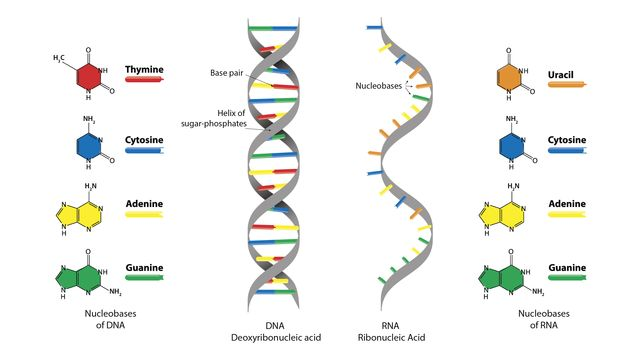
- Found in a double helix, most common form called B-form DNA
- Stands for deoxyribonucleic acid
- Controls cellular activity by influencing the production of enzymes; enzymes split the DNA molecule into two strands and then transport corresponding nitrogenous bases to each strand.
- Tells your body how to develop proteins
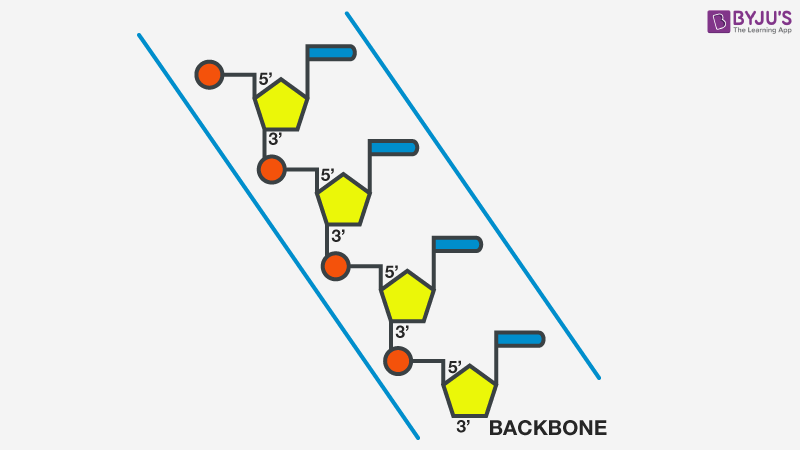
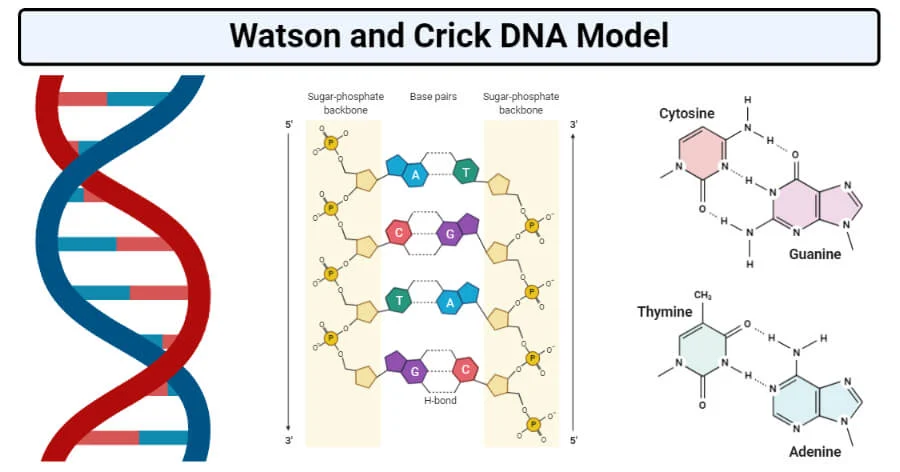
- Top strand is 5 prime to 3 prime, bottom is 3 prime to 5 prime
Structure
- Consists of two chains of nucleotide units in a twisted ladder-like structure (spiral staircase)
- This spiral staircase is called an alpha helix
- The sides of the ladder are made up of alternating deoxyribose sugar - phosphate group units
- The rungs of the ladder are made of 2 nitrogenous bases per rug linked together by a weak hydrogen bond
Nucleotides
- DNA is a very long chain polymer made up of thousands of repeating units called nucleotides
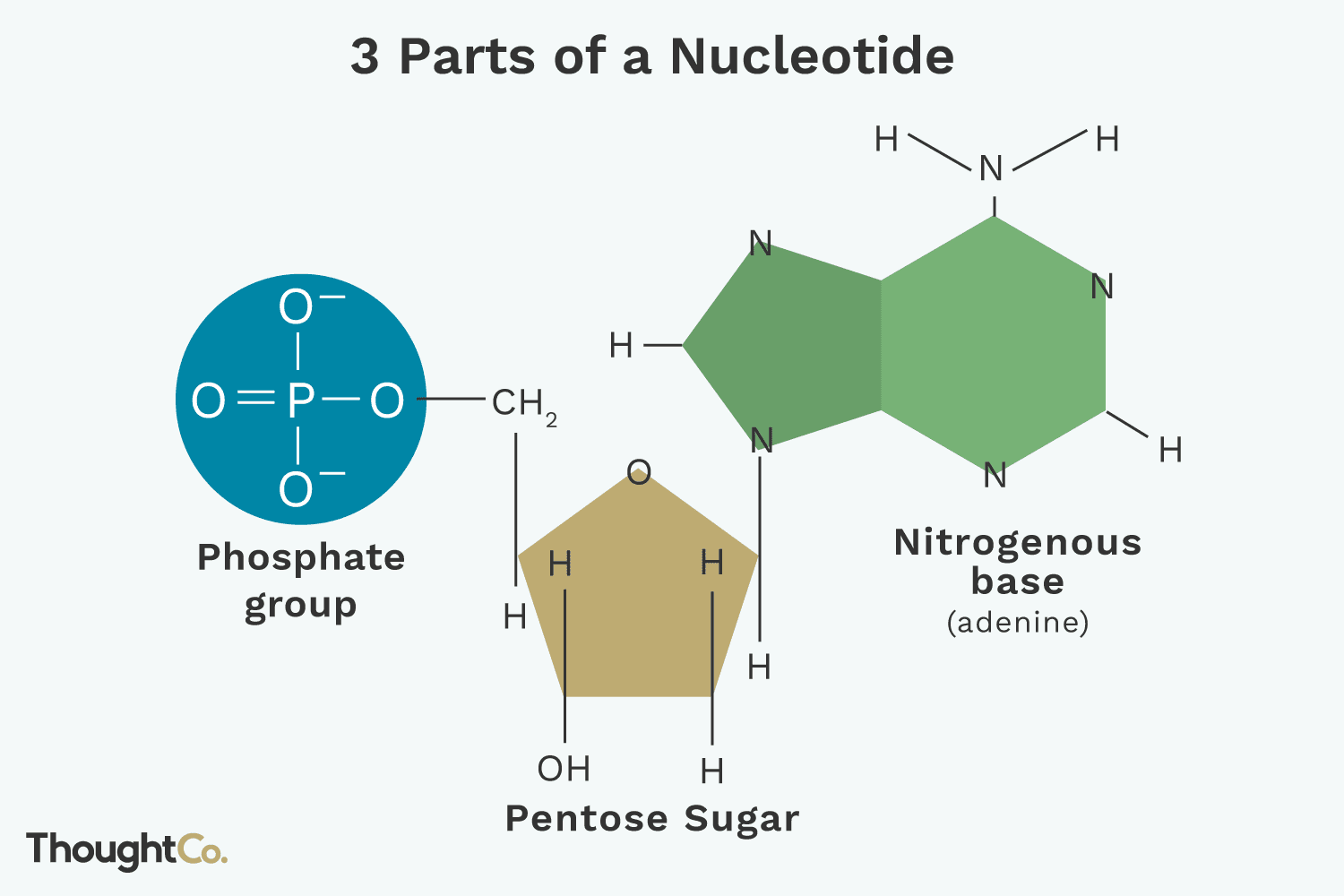
- A nucleotide unit is composed of a phosphate group, a pentose (5 carbon) sugar (also called deoxyribose), and a nitrogenous base
- Attach via phosphodiester bonds
- The nitrogenous bases are adenine (A), thymine (T), guanine (G), and cytosine (C)
Base Pairing
- Bound together by hydrogen bonds
- Only 2 combinations of base pairs can form the rungs of the DNA molecule
Purines: ADENINE (A) and GUANINE (G) - Double rings
Pyrimidines: THYMINE (T) and CYTOSINE (C) - Single ring
- Purines always pair with pyrimidines
- A always pairs with T and G always pairs with C
- This specific matching up of the nitrogenous bases is called complementary base pairing
Usefulness of the Watson-Crick Model
- Explained how mitosis produces exact DNA copies for each daughter cell - this the genetic information passes on unchanged
- Explained how DNA acts as a code directing the making of enzymes and other proteins by a cell directing cellular activities
- Directs the synthesis of RNA which makes proteins
DNA Replication
Overview
- Takes place in the nucleus
- Occurs during interphase (S phase)
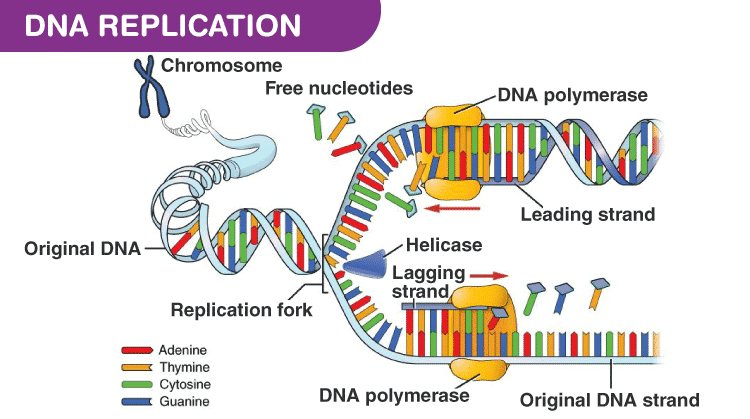
- Helicase unzips DNA and breaks hydrogen bonds
- DNA polymerase builds new strands of DNA
- Primase helps polymerase to know where to go
- Ligase “glues” DNA fragments together
Steps
- The double stranded DNA molecule unwinds and unzips the weak hydrogen bonds between the nitrogenous base pairs
- Free nucleotides present in the nucleus attach themselves by forming new hydrogen bonds with the exposed bases in the single chain. The only base which can reattach is the same type of base that was originally joined to it.