Chapter 11 - Endocytosis/Exocytosis & Cell Signaling Objectives
Endo/Exo
Know the functions of endocytosis and exocytosis
Endocytosis: brings materials into the cell by forming vesicles
pinching off of the plasma membrane that results in the uptake of material from outside the cell
receptor-mediated endocytosis: uptake by a cell of certain extracellular macromolecules, bound to specific receptors in the plasma membrane, by pinching off the membrane to form small membrane-bound vesicles
once binding occurs the plasma membrane folds in and pinches off to form small membrane-bound vesicles
Exocytosis: expels substances out of the cell by fusing with the plasma membrane
secretion of intracellular molecules (hormones, collagen), contained within membrane-bound vesicles to the outside of the cell by fusion of vesicles to the plasma membrane
vesicle membrane and plasma membrane make contact —» as the two membranes fuse the interior of the vesicle is exposed to the outside of the cell
the vesicles contents then diffuse into the space outside the cell
Both are crucial for cellular transport allowing cells to take in nutrients and signaling molecules while also secreting waste, hormones, and other essential components
2. Describe the steps within each pathway
Endocytosis: Plasma membrane folds inward to enclose a substance or fluid from the outside. The membrane pinches off from the cell surface to form a new vesicle inside the cell, which then moves into the cytoplasm
Types: Phagocytosis, pinocytosis, and receptor-mediated endocytosis
Phagocytosis: engulfment of large solid particles such as microorganisms to form a large vesicle
Pinocytosis: formation of small vesicles by the plasma membrane to take in fluids and dissolves solutes
Receptor-Mediated: uptake by a cell of certain extracellular macromolecules, bound to specific receptors in the plasma membrane, by pinching off the membrane to form small membrane-bound vesicles
Exocytosis:
Vesicle Trafficking: vesicles containing substances are transported from their origin to the cell membrane
Docking: the vesicle membrane becomes tethered and docks at the plasma membrane
Priming and Fusion: the vesicle is prepared to release its contents and then its membrane fuses with the plasma membrane releasing the contents to the outside
Indicate the roles each organelle plays within the pathways
Endocytosis
Plasma Membrane: Initiates endocytosis by folding inward to create a pocket around the target material, which then detaches to form a vesicle. It contains specific receptor proteins that trigger the formation of coated vesicles during receptor-mediated endocytosis
Endosomes: Early endosomes act as a sorting station for vesicles after they enter the cytoplasm. They can direct internalized substances to lysosomes for degradation, recycle them back to the plasma membrane, or send them to other parts of the cell. Early endosomes mature into late endosomes and can fuse with lysosomes to deliver cargo.
Lysosomes: Fuses with endosomes containing the internalized material. Lysosomes contain powerful hydrolytic enzymes that break down and digest the contents of the vesicle for use or disposal by the cell.
Vesicles: Small, membrane-bound sacs formed from the plasma membrane during endocytosis to transport materials within the cell. These can be further sorted and processed by other organelles.
Cytoskeleton: Composed of microtubules and actin filaments, the cytoskeleton directs the movement of vesicles through the cytoplasm and is required for the membrane changes needed for endocytosis. Actin filaments, for example, can provide the force to pinch off the forming vesicle from the plasma membrane.
Exocytosis:
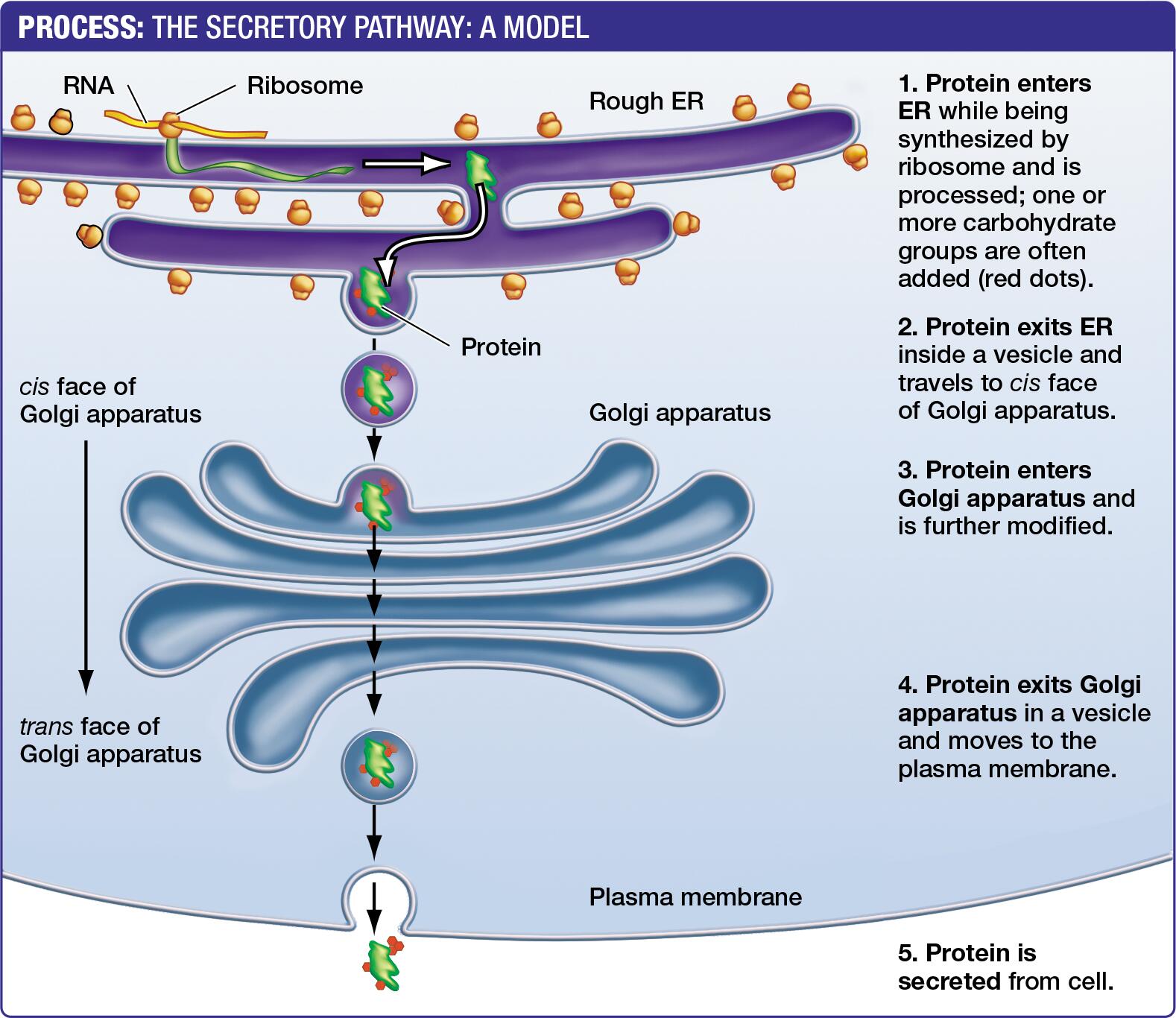
ER: Synthesizes and transports proteins and lipids, some of which are destined for secretion. These materials are then packaged into vesicles to be transported to the Golgi apparatus.
Golgi Apparatus: Acts as the "packaging and shipping" center for the cell. It receives vesicles from the ER and modifies, sorts, and packages proteins and lipids into new secretory vesicles. These vesicles bud off the trans-face of the Golgi and move toward the plasma membrane.
Secretory Vesicles: These vesicles, formed by the Golgi apparatus, carry their cargo to the plasma membrane. They dock and fuse with the plasma membrane, releasing their contents into the extracellular space.
Cytoskeleton: Provides the transport network for secretory vesicles to move from the Golgi apparatus to the plasma membrane. The motor proteins associated with microtubules and actin filaments direct this movement.
Plasma Membrane: Receives the secretory vesicles and fuses with their membrane. The fusion pore opens to allow the contents of the vesicle to be secreted outside the cell.
Part of endomembrane system, a functional network of internal membranes
allows a continuous flow of membrane material and molecules in and out of the cell
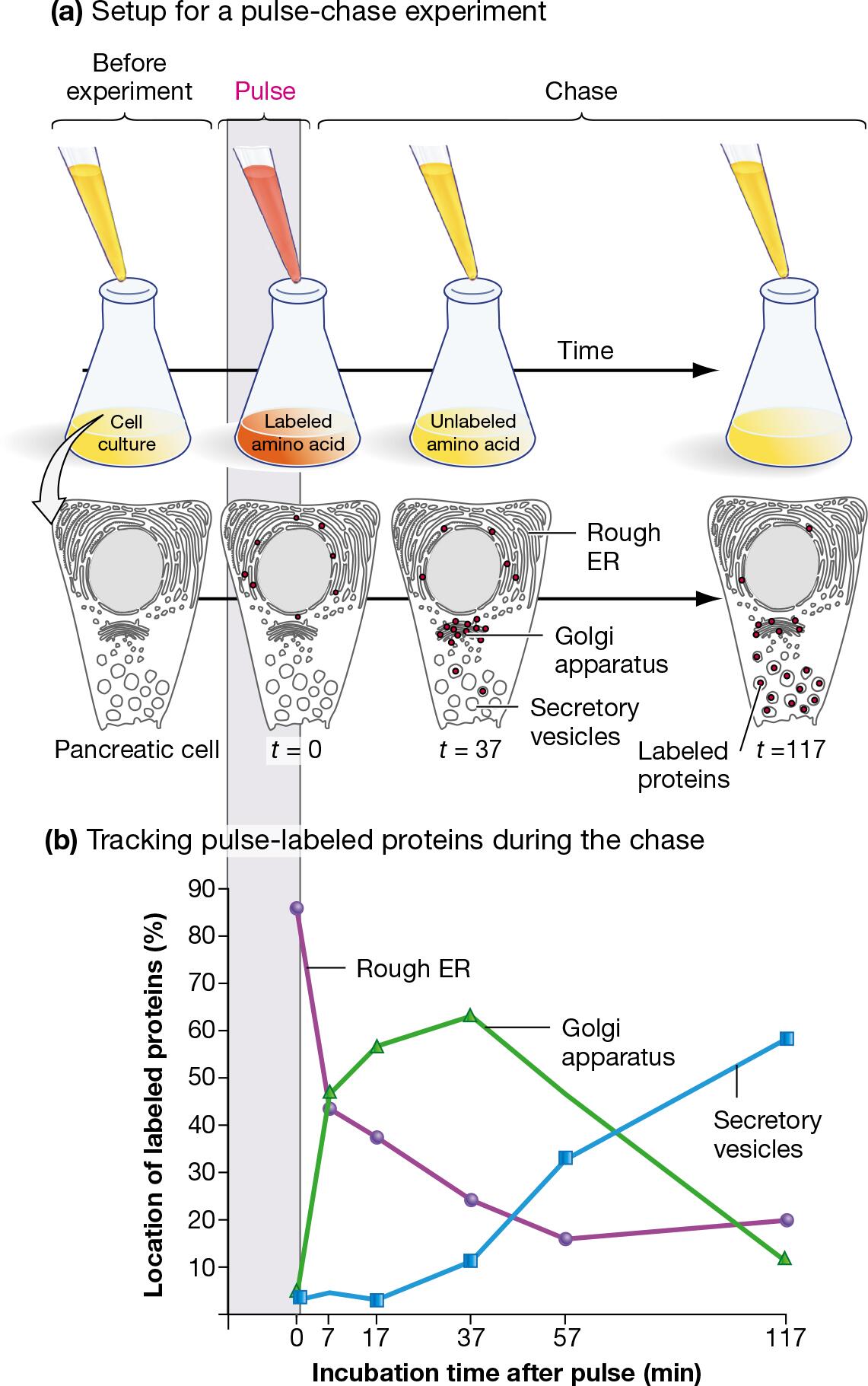
4. Explain Palade’s experiment design and results
Pulse-Chase Experiment: a type of experiment that involves using a labeled molecule (pulse) to mark a population of cells or molecules at a particular moment and then following their fate over time (chase)
Pulse: expose experimental cells to a high concentration of a modified amino acid for a short time
Chase: end the pulse by washing away the modified amino acid and replacing it with the normal version of the same molecule; the time following the end of the pulse is the chase
Showed proteins sequentially moved from the rough ER to the Golgi complex and then to the zymogen granules revealing the pathway for protein secretion and the role of vesicles in transport
5. Compare and contrast the activities of RER and Golgi within the endomembrane process
Similarities:
Function in Protein Modification: both organelles perform crucial post translational modifications such as glfycosation to proteins
Use of Vesicles: Both use vesicles for transport. The RER packages proteins and lipids into transport vesicles that bud off its own vesicles to send cargo to their final destinations
Part of Endomembrane System: Physically and functionally connected components of the same pathway, relying on each other to process materials for secretion or delivery to other organelles
Associated with Protein Synthesis: Both are essential for preparing proteins that will be secreted from the cell or integrated into cellular membranes
Differences:
Primary Role
RER: Protein synthesis, folding, and initial modifications. Its surface is studded with ribosomes that synthesize proteins directly into its lumen
Golgi: Protein and lipid sorting, packaging, and distribution; It functions like a cellular “post office” directing finished products to their final destination
Ribosomes
RER: Present. Ribosomes are docked on the RER’s outer surface giving it a “rough” appearance
Golgi: Absent. It doesn’t have ribosomes on its surface
Location
RER: An extensive network of interconnected sacs and tubules that extends from and is continuous with the nuclear envelope
Golgi: A stack of flattened membranous sacs, called cistern, typically located near the RER
Origin of Material
RER: Proteins are synthesized by ribosomes attached to its surface and folded within its lumen. Also synthesizes phospholipids
Golgi: Receives proteins and lipids in transport vesicles from the RER
Modification Type
RER: Performs initial modifications, such as the addition of the first carbohydrate chains to create glycoproteins and the formation of disulfide bonds
Golgi: Performs more complex modifications, such as adding or trimming carbohydrate chains, attaching phosphate groups, and synthesizing glycolipids
Sorting
RER: Performs basic quality control and sorting of newly synthesized proteins
Golgi: Acts as the main sorting center, using chemical tags and signals to determine the precise final destination of protein and lipids
Final Products
RER: Budding vesicles containing modified proteins and lipids are sent to the Golgi
Golgi: Packages and ships materials to various destinations, including lysosomes, the plasma membrane, or for secretion outside the cell
6. Provide the essential proteins needed for exocytosis
Picture on top black line
Increase in
7. List three types of endocytosis and main function
Phagocytosis: engulfment of large solid particles such as microorganisms to form a large vesicle
Pinocytosis: formation of small vesicles by the plasma membrane to take in fluids and dissolves solutes
Receptor-Mediated: uptake by a cell of certain extracellular macromolecules, bound to specific receptors in the plasma membrane, by pinching off the membrane to form small membrane-bound vesicles
Cell Signaling
1. Know the general steps associated with ACh pathway
Synthesis & storage, release into the synapse, receptor binding & action, and inactivation & recycling
First, ACh is synthesized in the presynaptic terminal from choline and acetyl CoA, a process facilitated by an enzyme
The newly synthesized ACh is then packaged into synaptic vesicle
When action potential reaches the nerve terminal it triggers an influx of calcium ions, which prompts the vesicles to release ACh into the synaptic cell through exocytosis
The release ACh then diffuses across the synapse and binds to receptors on the postsynaptic membrane leading to a cellular response
To terminate the signal, an enzyme rapidly breaks down ACh and then one of the enzymes is recycled back into the presynaptic terminal for future use
2. Describe the purposes of the signal and receiver
Signal
Also called a ligand
A molecular stimulus that carries information from one cell (signaling cell) to another (target cell)
Signals ensure that cells carry out the right functions at the correct time
Carries instructions: can be a hormone, neurotransmitter, or growth factor, carries a specific set of instructions, like a command for a cell to divide, differentiate, or die
Acts as a cue: signals from the environment, such as light or mechanical pressure, also function as cues that a cell must interpret to respond appropriately
Enables communication over distance: some signals, like hormones in the bloodstream, allow for communication between cells that are very far apart in the body
Receiver/Receptor
A protein ton or within a target cell that is capable of binding to a specific signal
Crucial for translating external signals into internal cellular changes
Ensures specificity: receptors have a specific shape that allows them to bind to only certain signals which ensures that cells respond only to certain messages and ignore others
Initiates signal transduction: when a signal binds to its matching receptor it causes the receptor to change its shape or activity which triggers a cascade of events inside the cell called the signal transduction pathway
Amplifies message: binding of a single signal molecule to a receptor can be amplified into a large intracellular response through the signal transaction pathway, enabling a strong cellular reaction from a weak initial signal
Produces a response: by relaying and amplifying the message the receptor triggers the cell’s final response such as altering gene activity
3. Compare and contrast the different types of signals and receivers
Signal Types
Hydrophobic and hydrophilic
Receptor Types
Intracellular and cell-surface receptors
4. Know what signal transduction involves and which receivers use it
Signal Transduction: cells convert a signal from outside the cell into a specific response inside the cell
Main stages include reception, transduction, and cellular response
Signaling molecules(ligands)
“first messengers” that carry a signal from outside the cell; can be hormones, neurotransmitters, growth factors, or other chemical messengers
Receptors
specialized proteins that receive the signal by binding to a specific ligand; binding of a ligand to a receptor causes a change in the receptor’s shape which initiates the cascade
Transduction
relay of the signal from the receptor to the cell’s interior, often involves:
second messengers: small, non-protein molecules that carry and amplify the signal inside the cell
protein kinases: enzymes that activate other proteins by adding a phosphate group (phosphorylation), can create a phosphorylation cascade where one kinase activates the next, amplifying the signal at each step
cellular response: final stage where the signal triggers a specific cellular activity
Receptors
Transmembrane proteins that bind to ligands outside the cell and initiate a signaling cascade inside
G Protein-Coupled Receptors: largest family of membrane receptors, work with G proteins that become activated when a ligand binds, activated G protein then triggers the production of second messengers
Enzyme-Linked Receptors: have an intracellular domain with enzymatic activity, ligand binding activates this domain which often phosphorylates other proteins to start a signaling cascade
Ligand-Gated Ion Channels: act as a gate for ions, when a ligand binds the gate opens allowing specific ions to flow into or out of the cell which causes a change in the cell’s membrane potential leading to a cellular response