Ecology and Evolutionary Ecology Notes
Introduction
Course Overview:
Focuses on Ecology and Evolutionary Ecology.
Examines interactions between organisms and their environments.
Taught by four instructors:
Greg: Symbiosis and relationships.
Stu: Reproductive Biology in flies.
Vanilla: Predation and parasitism.
Roger: Ecosystem function and ecology.
What is Ecology?
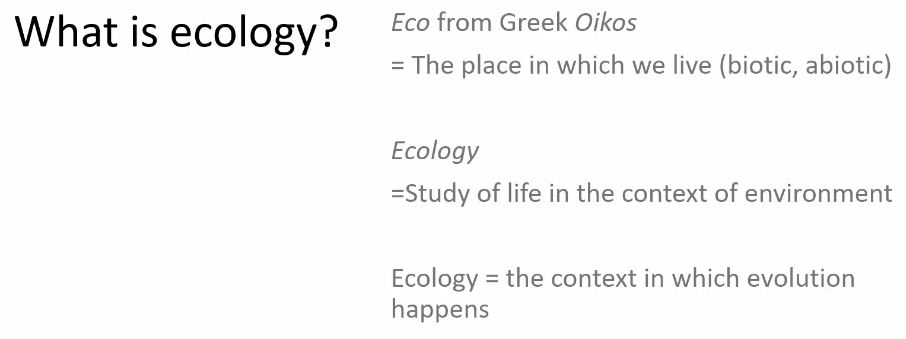
Ecology is the study of interactions among organisms and their environment, encompassing both biotic and abiotic components that influence living systems and their dynamics. ”The day to day basis of life and death is what ecology is.”
Definition:
Term derived from Greek word "oikos" meaning place of living (household).
Study of both biotic (living) and abiotic (non-living) components of the environment.
Explains how living systems interact with their non-living surroundings. So evolution is the birth and death of organisms.
Importance of Ecology
Context for Evolution:
Evolution (birth and death of organisms) is affected by ecological factors.
Ecology offers insight into survival against pathogens and parasites.
Reasons for Studying Ecology:
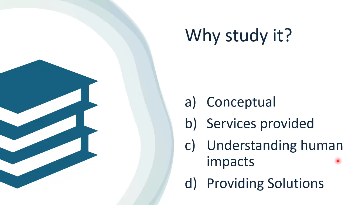
Conceptual Understanding:
Desire to understand the functioning of organisms and their environments.
Investigating relationships (e.g., reproductive output in different species).
Practical Implications:
Ecosystem services (goods and services provided by natural systems).
Sustainable use of land and resources.
Understanding human impacts on ecosystems (e.g., usage of chemicals like DDT).
Back in the 1950s, DDT was widely used to control pest insects on agricultural farms. However, this extensive use significantly disrupted natural ecosystems.
In essence, it ended up poisoning the environment—leading to the endangerment of many birds of prey.
This illustrates how everything we introduce into the environment can have far-reaching consequences. It's generally far better to understand potential impacts before taking action, rather than dealing with the consequences afterward.
For example, if the environment provides valuable services—like fisheries that supply us with food—we need to assess how our activities might affect those services. This way, we can reduce harm and ensure those benefits continue.
Which brings us to a fourth point: if we can understand our environmental impacts and how they affect the services we rely on, we can start to develop solutions aimed at sustainable development—meaning development that doesn’t compromise the essential services the environment provides. This requires integrating ecological knowledge into our decision-making processes and fostering collaboration among stakeholders to promote practices that enhance ecological resilience while meeting human needs.
في الخمسينيات من القرن الماضي، تم استخدام مادة الـ(دي دي تي على نطاق واسع لمكافحة الحشرات الضارة في المزارع الزراعية. ولكن هذا الاستخدام المفرط أدى إلى اضطراب كبير في النظم البيئية الطبيعية.
وبمعنى آخر، تسبب ذلك في تسميم البيئة، مما أدى إلى اقتراب بعض الطيور الجارحة من الانقراض.
وهذا يوضح أن كل ما نفعله أو نضيفه إلى البيئة يمكن أن يكون له تأثيرات واسعة النطاق. ومن الأفضل دائمًا فهم هذه التأثيرات قبل اتخاذ أي إجراء، بدلاً من محاولة إصلاح الضرر بعد وقوعه.
فعلى سبيل المثال، إذا كانت البيئة توفّر لنا خدمات مهمة، مثل مصايد الأسماك التي تمدنا بالغذاء، فمن الضروري أن نُقيّم كيف يمكن لأنشطتنا أن تؤثر على تلك الخدمات، حتى نتمكن من تقليل الأضرار وضمان استمرار استفادتنا منها.
وهنا نصل إلى النقطة الرابعة: إذا تمكّنا من فهم تأثيراتنا على البيئة وعلى الخدمات التي توفّرها لنا، يمكننا حينها البدء في وضع حلول لتحقيق ما يُعرف بالتنمية المستدامة — أي التنمية التي لا تُدمّر أو تُعطّل الخدمات البيئية الأساسية التي نعتمد عليها.
DDT هو اختصار لمادة كيميائية تُعرف باسم "ثنائي كلورو ثنائي فينيل ثلاثي كلورو الإيثان"، وتُترجم إلى العربية غالبًا بـ:
ثنائي كلورو ثنائي فينيل ثلاثي كلورو الإيثان
أو ببساطة: دي.دي.تي
وهو مبيد حشري قوي كان يُستخدم على نطاق واسع لمكافحة الحشرات، خصوصًا في الزراعة ومكافحة الأمراض مثل الملاريا. لكن لاحقًا تبين أن له آثارًا بيئية وصحية خطيرة، مثل تراكمه في السلسلة الغذائية وتسببه في ضعف قشور بيض الطيور، ما أدى إلى انخفاض أعداد العديد من أنواع الطيور الجارحة.
These differences raise key questions in evolutionary ecology:
Why do different organisms reproduce so differently?
Why are some species more common than others (e.g., many fruit flies, few lions)?
Why do animal populations rise and fall year to year?
Why do some species have a huge impact on ecosystems (like starfish), while others do not?
These are all important questions that ecologists try to answer when studying nature and biodiversity.
Ecosystem Services
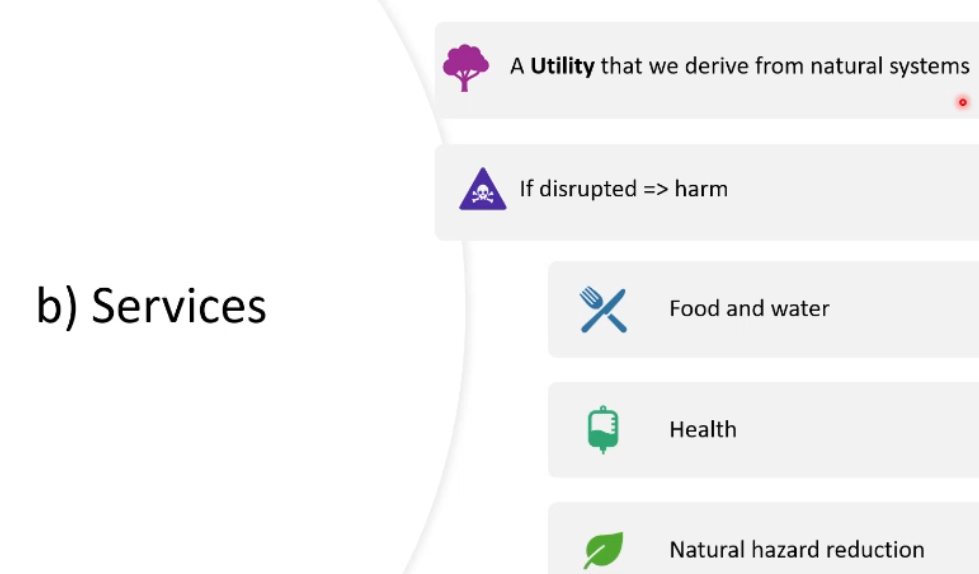
Definition:
A Utility that we derive from natural ecosystems.
Types of Services:
Provisioning: Food, water supply, raw materials.
Regulating: Flood control, disease regulation, climate stabilization.
Cultural: Recreational and mental health benefits.
Examples of Ecosystem Services
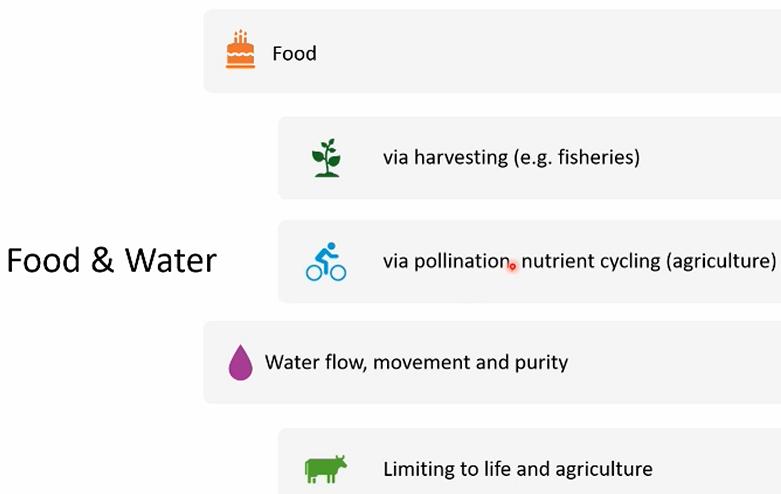
Fisheries:
Ethical and sustainable fish harvesting is vital for maintaining populations.
Pollination:
Essential for food crops; example: California's dependency on rented bee hives for almond farming.
Water Management:
Natural ecosystems regulate water purity and flow, impacting agricultural practices.
🌿 English Summary:
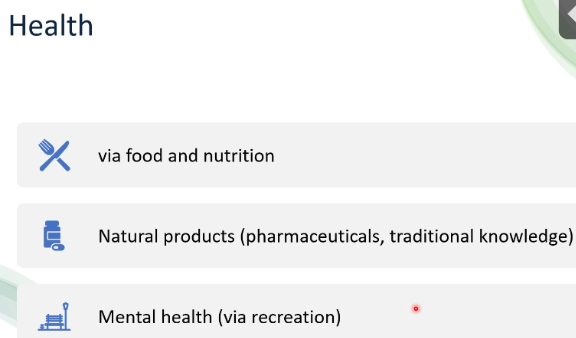
Nature plays a crucial role in human health and wellbeing. In many parts of the world, malnutrition is a major health issue—either from not enough food or from poor nutrition. Our food, medicines, and even mental health are all supported by natural systems.
Many pharmaceuticals come from plants that evolved to defend themselves. For example, caffeine protects coffee plants and also helps humans stay alert.
Foxglove plants give us heart medicine like digitalis, and new malaria drugs often come from plant compounds.
Nature also supports mental health—spending time in green spaces improves mood and well-being.
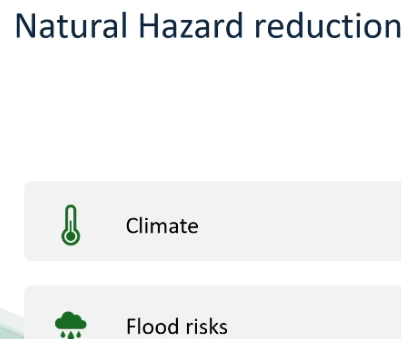
Natural systems help reduce flood risks by slowing down water flow. Removing nature increases the risk of flooding.
Finally, climate stability depends on ecosystems like the Amazon rainforest, which helps regulate global weather patterns.
Nature isn’t just pretty—it’s essential for our survival, health, and happiness.
🌱 الملخص باللغة العربية:
تلعب الطبيعة دورًا أساسيًا في صحة الإنسان ورفاهيته.
في أجزاء كثيرة من العالم، سوء التغذية هو من أكبر التحديات الصحية—سواء بسبب نقص الغذاء أو رداءة التغذية. الغذاء، الأدوية، وحتى الصحة النفسية كلها تعتمد على الأنظمة الطبيعية.
العديد من الأدوية مشتقة من نباتات طورت وسائل للدفاع عن نفسها. مثلًا، الكافيين هو مادة تحمي نبات القهوة، لكنها تنشّط الإنسان أيضًا.
نبات الديجيتال (النفال) يُستخدم في أدوية القلب، وبعض أدوية الملاريا الحديثة مصدرها نباتات.
الطبيعة تساعد في الصحة النفسية—المشي في أماكن خضراء يحسن المزاج.
الأنظمة الطبيعية تخفف من خطر الفيضانات عن طريق إبطاء تدفق المياه. إزالة الغطاء النباتي يزيد من خطر الفيضانات.
وأخيرًا، استقرار المناخ يعتمد على أنظمة مثل غابات الأمازون، التي تؤثر على أنماط الطقس عالميًا.
الطبيعة ليست فقط للمنظر الجميل، بل هي ضرورية لحياتنا وصحتنا وسعادتنا.
Human Impacts on Ecosystems
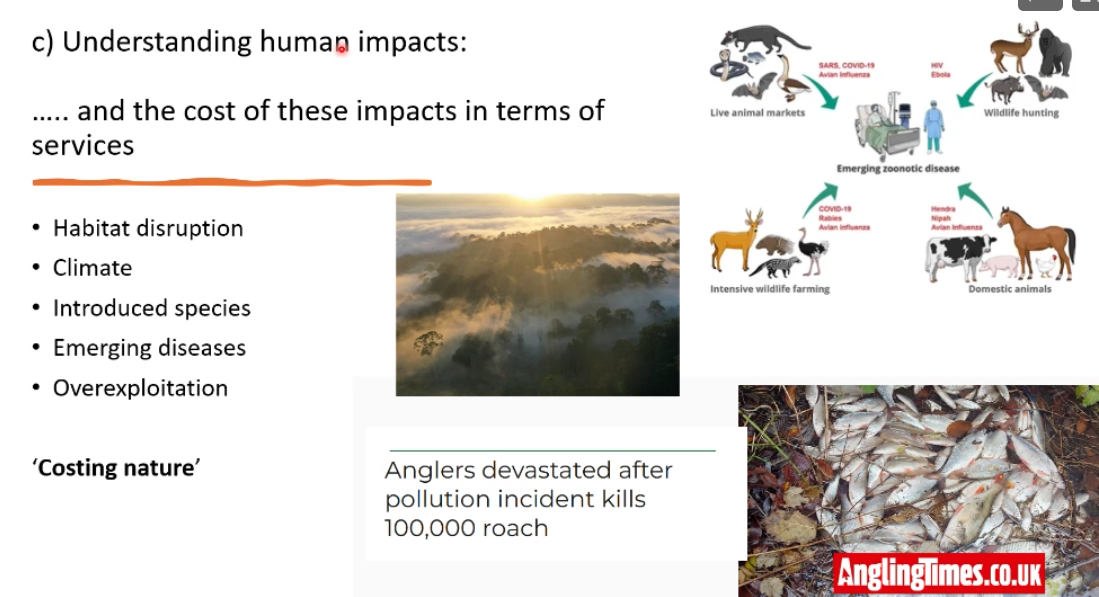
Habitat Disruption: Causes loss of biodiversity.
Climate Change: Influences species adaptation and survival.
Introduced Species: Alter ecosystem dynamics.
Emerging Diseases:
Human encroachment and habitat disruption increased the risk of pathogens crossing from wildlife to humans.
Overexploitation of Resources: Overharvesting can lead to extinction and population loss.
Sustainability and Development
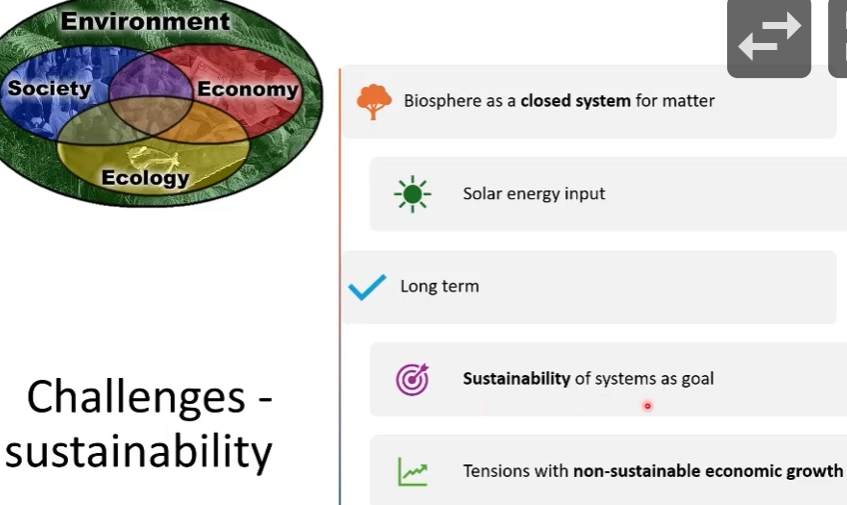
Concept of Closed and Open Systems:
Ecosystems are a closed system for matter but not for energy (energy input from the sun).
Sustainable practices: promote ecosystem resilience, avoid degradation of vital services, and meet developmental needs without depleting resources.
Circular Economy: Emphasizes sustainable development practices that support ecosystem functions over long periods.
🌍 English Summary:
Humans have major impacts on the environment, and the big challenge is making our systems sustainable.
Earth is almost a closed system for matter: the same elements (like carbon) have been cycling for billions of years. We don’t gain or lose much material from space.
However, Earth is open to energy, especially solar energy, which we can use to support sustainable systems.
A key issue is the conflict between short-term economic gain and long-term sustainability.
Example: Overfishing gives fast profit but ruins future fish supplies.
A sustainable fishery, on the other hand, can feed people forever.
So, true sustainable growth means getting long-term benefits, while unsustainable growth leads to collapse or loss of resources over time.
🌱 الملخص باللغة العربية:
لدى البشر تأثيرات كبيرة على البيئة، والتحدي الأكبر هو بناء أنظمة مستدامة.
كوكب الأرض يُعتبر تقريبًا نظامًا مغلقًا من حيث المادة: العناصر مثل الكربون تتداول منذ مليارات السنين، ولا تأتي أو تخرج من الكوكب بشكل ملحوظ.
لكنه نظام مفتوح من حيث الطاقة، خصوصًا الطاقة الشمسية، ويمكن استغلالها لدعم أنظمة مستدامة.
المشكلة تكمن في التضارب بين المكاسب الاقتصادية السريعة والاستدامة طويلة الأمد.
مثال: صيد الأسماك الجائر يحقق ربحًا سريعًا، لكنه يؤدي إلى نقص أو انقراض في المستقبل.
أما صيد الأسماك المستدام، فيُوفّر الغذاء بشكل دائم.
النمو المستدام الحقيقي يعني الحصول على منافع مستمرة، بينما النمو غير المستدام يؤدي في النهاية إلى تراجع أو فقدان الموارد.
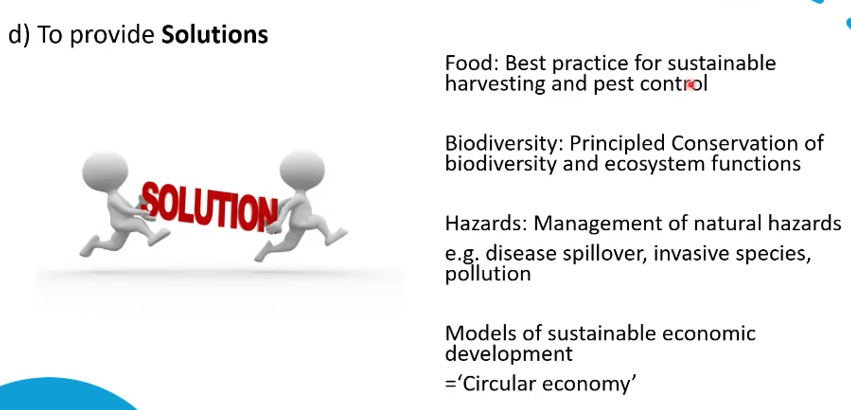
Solution
🌍 English Summary (Updated):
Humans have major impacts on the environment, and the big challenge is making our systems sustainable.
Earth is almost a closed system for matter—the same elements have been cycling for billions of years. We don’t gain or lose much material.
But Earth is open to solar energy, which we can use to support sustainable solutions.
A key issue is the tension between short-term economic gain and long-term sustainability.
Example: Overfishing may bring quick profit but destroys future resources.
Sustainable systems (like managed fisheries) can support people indefinitely.
True sustainable growth gives long-term benefits, while unsustainable growth leads to resource loss.
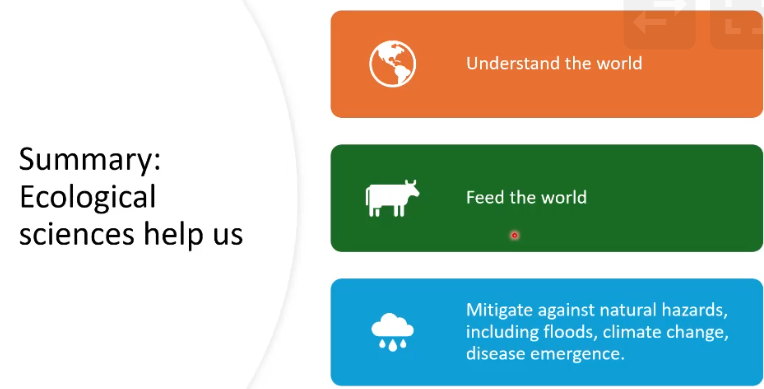
Laws and regulations are also needed—to control pollution, reduce the risk of natural hazards, and protect the ecosystem services nature provides.
Without sustainable planning, we face disasters like COVID-19, which show the importance of ecological understanding.
So ultimately, we can develop better and smarter by applying ecological knowledge in decision-making.
🌱 الملخص باللغة العربية (مُحدَّث):
للبشر تأثيرات كبيرة على البيئة، والتحدي الأكبر هو إنشاء أنظمة مستدامة.
الأرض تُعد تقريبًا نظامًا مغلقًا من حيث المادة—العناصر نفسها تدور منذ مليارات السنين، ولا يحدث تبادل كبير مع الفضاء.
لكنها نظام مفتوح للطاقة، وخاصة الطاقة الشمسية، والتي يمكن استخدامها لدعم حلول مستدامة.
يوجد دائمًا تضارب بين الربح الاقتصادي السريع والاستدامة طويلة الأمد:
مثلًا، الصيد الجائر يحقق ربحًا فوريًا لكنه يُدمّر الموارد لاحقًا.
أما الأنظمة المستدامة مثل صيد الأسماك المنظم، فهي تضمن الغذاء باستمرار.
النمو المستدام يحقق فوائد طويلة المدى، بينما النمو غير المستدام يؤدي إلى فقدان الموارد.
نحتاج أيضًا إلى قوانين وتشريعات لمواجهة التلوث وتقليل الأخطار الطبيعية، مما يحافظ على الخدمات البيئية التي توفرها لنا الطبيعة.
من دون هذا النوع من الإدارة، نواجه أزمات كبرى مثل كوفيد-19، مما يُظهر أهمية فهم البيئة والأنظمة الطبيعية.
في النهاية، يمكننا أن نطوّر مجتمعاتنا بذكاء من خلال تطبيق المعرفة البيئية في التخطيط واتخاذ القرار.
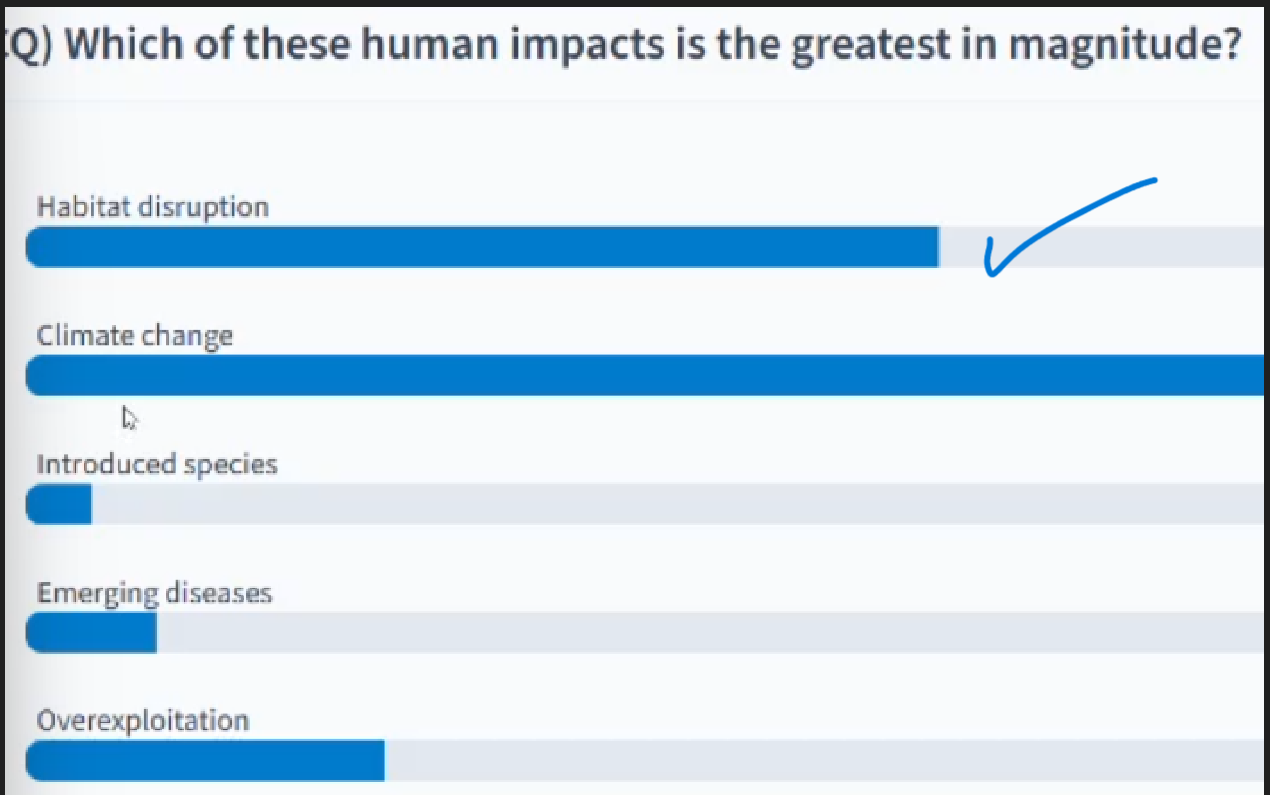
Most people think climate change is the biggest threat to biodiversity, but habitat disruption (like humans taking over land) is currently the main cause. Climate change will likely become a bigger problem in the future, but right now, more species are lost because their habitats are being destroyed.
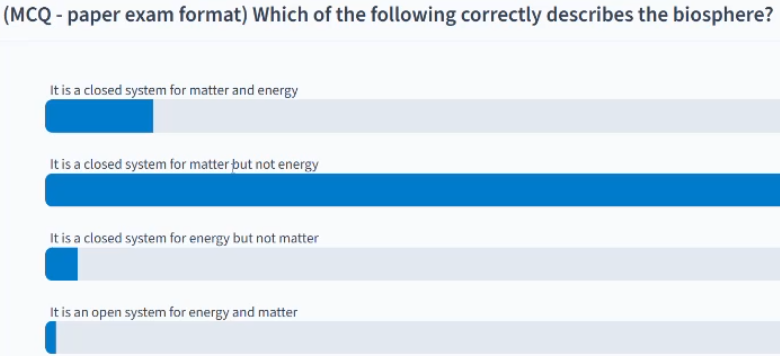
Which of these correctly describes the biosphere?
The biosphere (Earth's life-supporting system) is:
A closed system for matter – the same elements (like carbon, water, etc.) keep cycling on Earth. Hardly anything comes in or out, except rare cases like asteroids.
An open system for energy – we constantly receive energy from the sun, which drives life and natural processes.
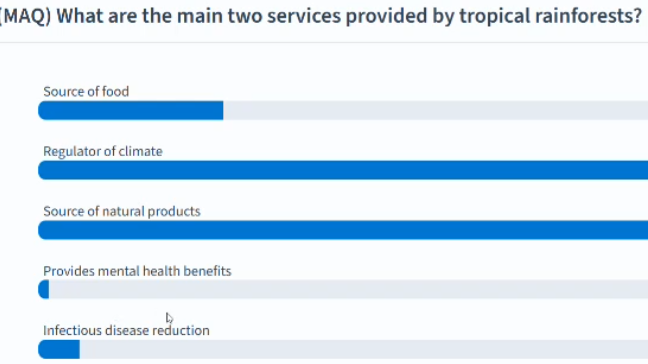
What are the two main ecosystem services provided by tropical rainforests like the Amazon?
✅ Correct Answers:
Climate regulation
Source of natural products (especially pharmaceuticals)
🟡 Explanation of each option:
❌ Food source:
While indigenous communities depend on the rainforest for food, globally the rainforest is not a major food provider.✅ Climate regulation:
The Amazon helps stabilize the Earth's climate by absorbing large amounts of carbon dioxide and influencing rainfall patterns.✅ Natural pharmaceutical products:
Many medicines (like heart drugs and anti-malarials) are derived from rainforest plants, making it a valuable source of natural compounds.❌ Mental health benefits:
The forest may improve mental health locally, but this isn’t a global service on the same scale as climate regulation or pharmaceuticals.❌ Infectious disease reduction:
Most new infectious diseases tend to emerge from Africa or Southeast Asia, not the Amazon region.
Course Structure
Focus on different levels:
Individual Level: Why do different species have varied biological traits?
Population Level: Interactions and growth within populations. Population biology is how they interact with other things in their own species,
Community Level: Interactions among different species, including consumptive (predation, competition) and non-consumptive (symbiotic) relationships.
Ecosystem Level: Examination of abiotic and biotic interactions; energy and nutrient cycles.
Biome Level: Large geographical areas with defined climatic characteristics and ecological properties.
More details of the course
Reproductive Schedules & Ageing
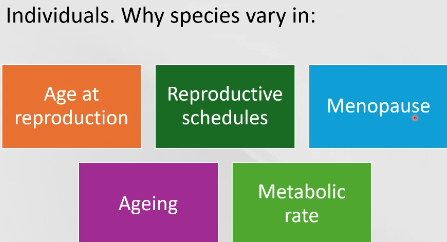
Different species reproduce at different ages and rates.
Menopause is rare but found in humans and some whales.
Evolution and biology of ageing will be discussed.
Metabolic rate influences lifespan: some species live fast and die young.
Population Ecology
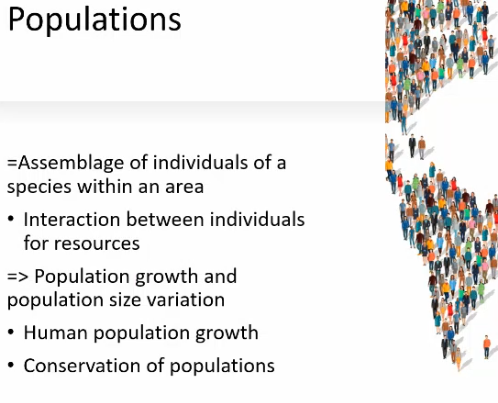
Populations are groups of the same species in an area.
Populations grow, compete, and interact over resources.
Human population growth is a major ecological concern due to its impact on land and ecosystems.
Communities and Interactions
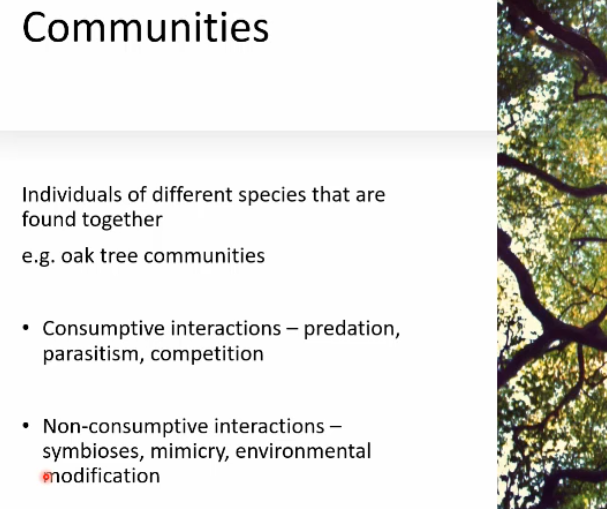
Communities = how different species interact.
Example: A single oak tree can host ~400 species.
Two main types of interactions:
Consumptive: predation, parasitism, competition (involves energy transfer/eating).
Non-consumptive: symbiosis, mimicry, keystone species, and ecosystem engineers.
Non-consumptive interactions are often more important than food webs for understanding biodiversity structure.
Ecosystems
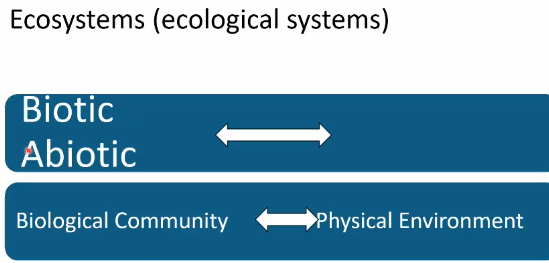
Ecosystems = interaction between biotic (living) and abiotic (non-living) elements.
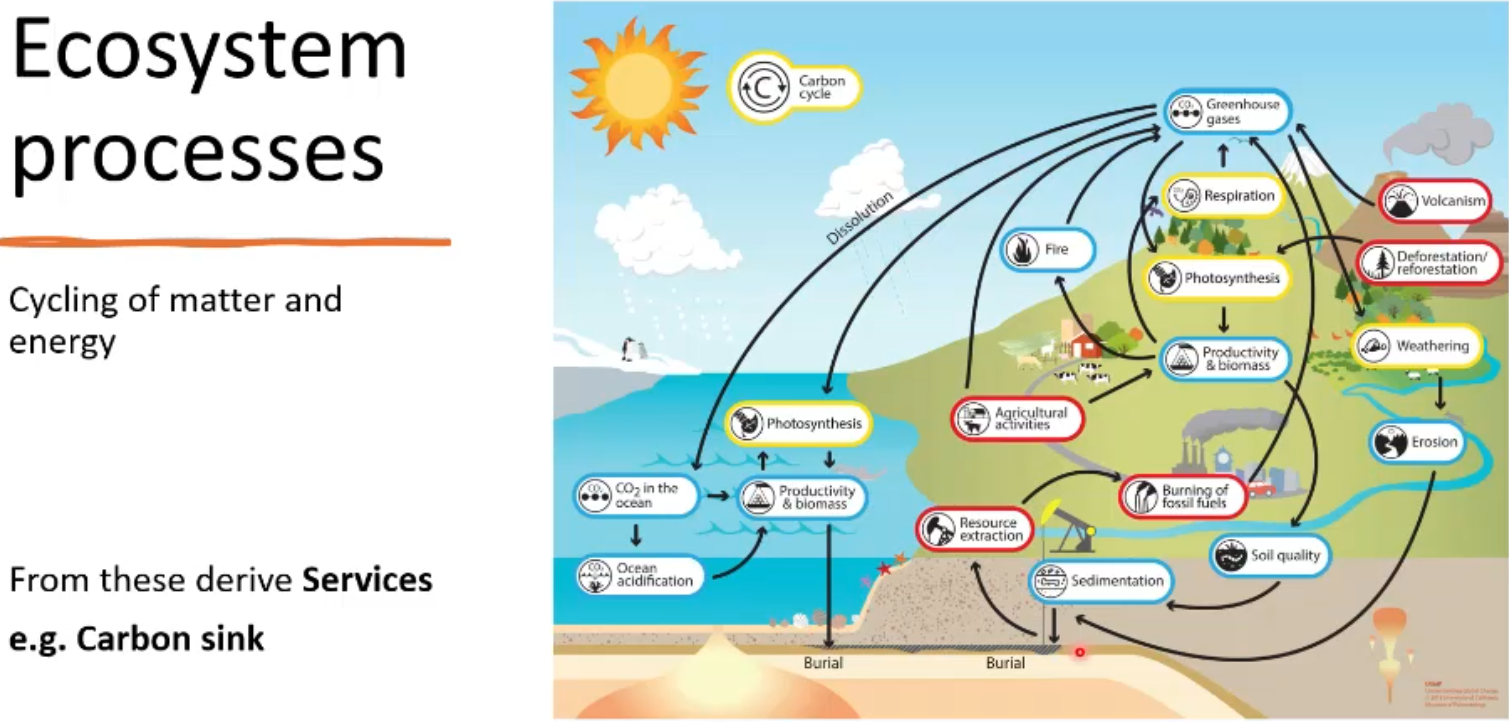
Focus on flows and feedbacks: energy, nutrients, and materials cycling (e.g., carbon cycle).
Ecosystem services (e.g., carbon sinks) help regulate the environment and support life.
Disrupting these services, like carbon burial, worsens climate change.
Biomes
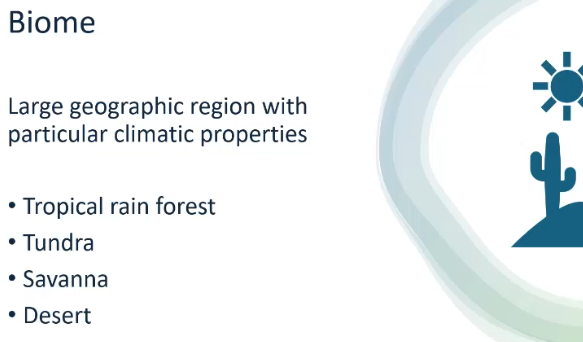
Large-scale ecosystems defined by climate and geography (e.g., tundra, rainforest).
The distribution of ecosystems across the planet will be explored.
Threats and Sustainability
The biggest threats to biodiversity and ecosystem services come from human activity.
Managing human behaviour and economics is essential for sustainability.
The goal: shift from destructive to sustainable interaction with the planet.
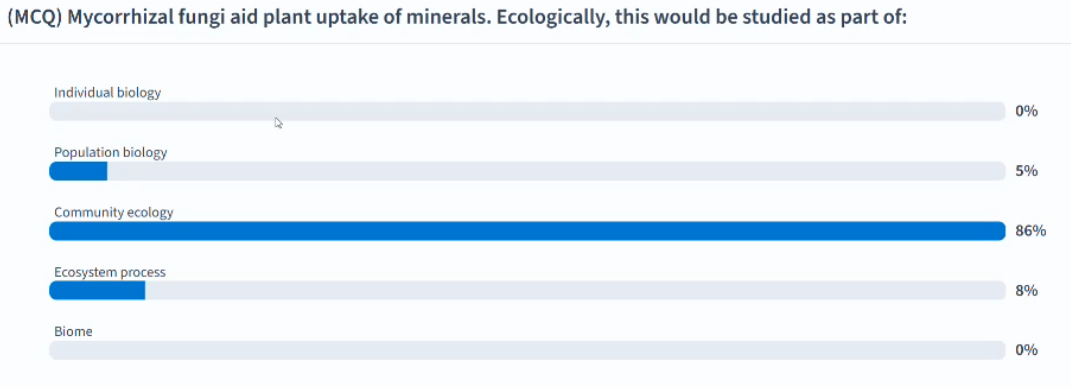
MCQ
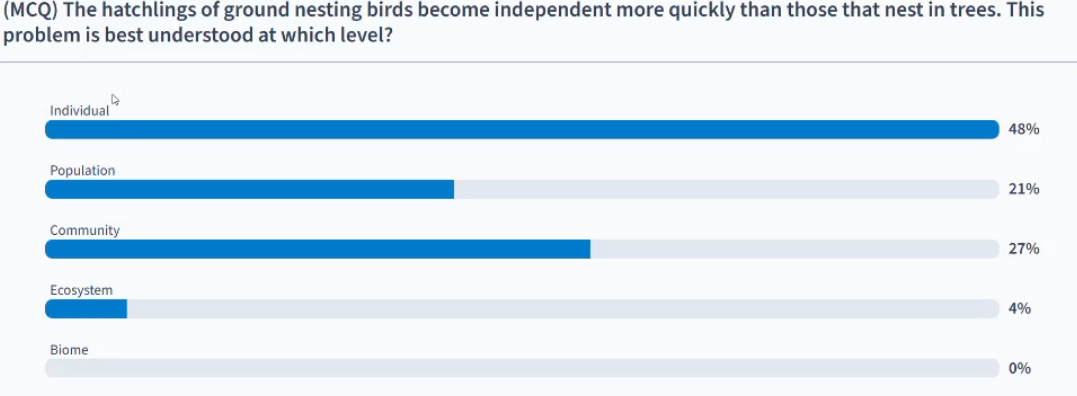
This is a form of individual biology. Could you ask me why individuals of different species differ from each other? not quite a population problem, because we're all asking how individuals within the population react with other individuals. And it's not a community problem because the species are different, because they're interacting with each other.
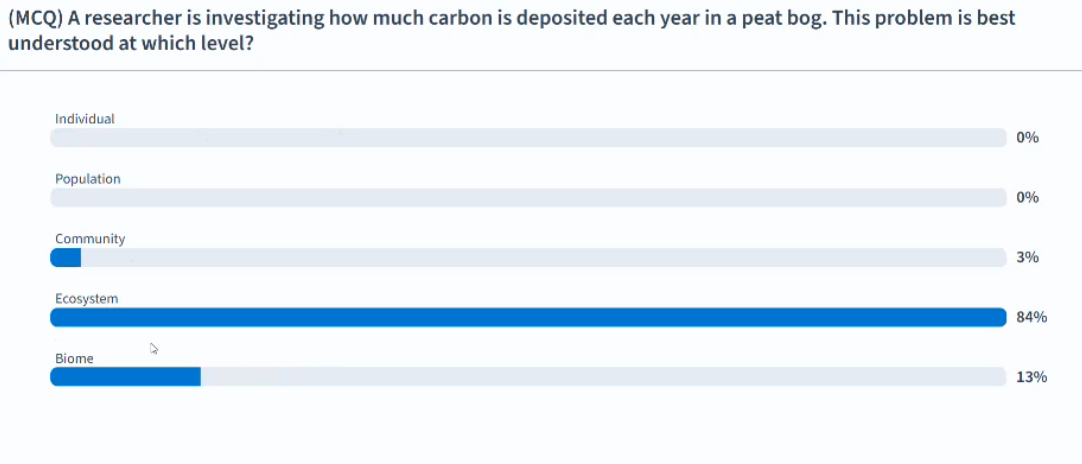
This is an ecosystem problem. So it's an ecosystem problem because carbon is being deposited by multiple, multiple different species.