GN 301 Module 4: Biochemical Pathways and Metabolic Disorders
Galactosemia
Galactosemia: ==Inability to metabolize galactose which is found in lactose==
- Medical consequences?
- Inability to digest milk products, such as cheese and ice cream
- Liver damage due to accumulation of galactose
- Growth failure due to lack of lactose, which helps growth
- Solution:
- ==Lactose-free diet==
- Early testing at birth
- Vitamin and mineral supplements
\n EXAMPLE PATHWAY:

What happens if the precursor is not present?
- There will be no Intermediate 1 or 2 stages, as well as no enzyme A, B, or B, which leads to ==no end product.==
What happens if genotype AABBcc?
- Enzyme A and B will be produced, but ==Enzyme C will not be produced== and there won’t be an end product to the reaction.
Alkaptonuria
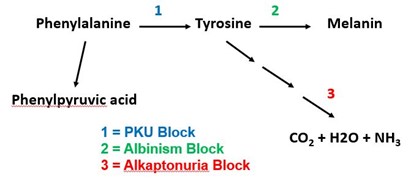
Alkaptonura: Due to the buildup of ==homogentisic acid.==
- Result in medical symptoms of:
- Dark urine: One of the earliest and most noticeable symptoms of alkaptonuria is dark urine, which can turn brown or black upon exposure to air.
- Joint pain and stiffness: The accumulation of HGA in the joints can cause inflammation, pain, and stiffness. This can lead to progressive joint damage and osteoarthritis.
- Heart problems: Alkaptonuria has been associated with an increased risk of heart disease, including thickening of the heart valves and atherosclerosis.
- Eye problems: HGA can accumulate in the eyes and cause a bluish-gray discoloration of the sclera, the white part of the eye. This is often referred to as ochronosis and can also affect the cornea, leading to vision problems.
- Skin discoloration: In some cases, HGA can accumulate in the skin and cause a bluish-black discoloration, particularly in areas of the body that are exposed to sunlight. Kidney stones: Alkaptonuria can increase the risk of kidney stones due to the buildup of HGA in the kidneys.
PKU
PKU or Phenylketonuria: Due to inability to metabolize phenylalanine results in a buildup of ==phenylalanine.==
- Medical consequences:
- Intellectual disability: If left untreated, PKU can cause intellectual disability, developmental delays, and other neurological problems. This is because high levels of phenylalanine can damage the developing brain.
- Behavioral problems: Children and adults with untreated PKU may experience behavioral problems, including hyperactivity, irritability, and aggression.
- Skin disorders: A musty odor to the skin and hair is common in individuals with PKU, and untreated PKU can also cause skin rashes and eczema.
- Seizures: High levels of phenylalanine can increase the risk of seizures in people with PKU.
- Growth problems: Children with PKU may experience growth problems due to poor nutrition and reduced protein intake.
- Psychiatric disorders: Some studies have suggested that untreated PKU may increase the risk of psychiatric disorders, such as depression and anxiety.
Why is this disorder tricky to manage and what do patients need to do to manage it?
- Phenylketonuria (PKU) can be tricky to manage because it requires ==strict adherence to a low-phenylalanine diet==, which can be difficult to achieve and maintain over the long term. This diet requires significant lifestyle modifications, as many protein-rich foods, including meat, fish, eggs, and dairy products, are high in phenylalanine and must be avoided. Additionally, some fruits and vegetables also contain phenylalanine, so individuals with PKU need to be careful with their food choices.
Albinism
Albinism: due to ==lack of production of melanin== and results in medical symptoms of:
- Vision problems: Individuals with albinism often have vision problems, including reduced visual acuity, nystagmus (involuntary eye movements), and sensitivity to light.
- Skin and hair problems: People with albinism have little or no melanin in their skin and hair, making them more susceptible to sunburn and skin damage from the sun's harmful ultraviolet (UV) rays. They may also have white or very light blonde hair.
- Increased risk of skin cancer: Because of the lack of pigmentation, individuals with albinism have an increased risk of developing skin cancer, particularly if they are frequently exposed to the sun.
- Social and psychological effects: People with albinism may face social and psychological challenges due to their appearance and the misconceptions and stigma surrounding the condition.