CHAPTER 1_Characteristics and Classification of living Organisms
Characteristics and Classification of living Organisms
Movement
Respiration
Sensitivity
Growth
Reproduction
Excretion: toxins in the body that gets rid of.
Nutrition
→ How to Remember: MRS. H. GREN
How Organisms are Classified
defined in a specific group
can be classified by their features
a species is defined as a group of organisms that can be reproduced to produce fertile offsprings
The Binominal System
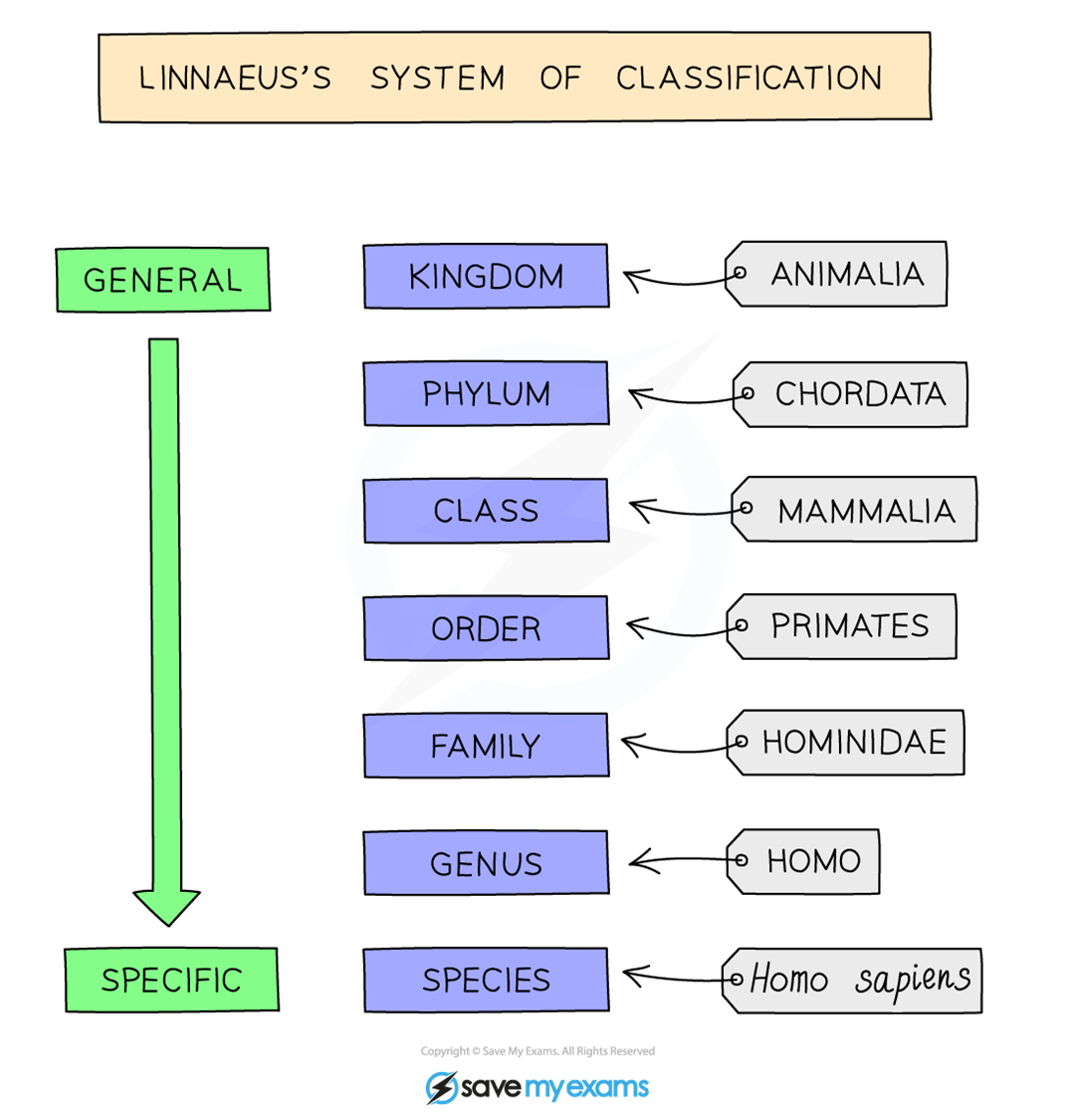
Linnaeus (Swedish naturalist): Developed a system to classify organisms into increasingly specific groups.
Subdivision: The more subdivided → the more features’ organisms share.
Naming (Binomial System):
Scientific name = 2 parts (Latin).
Genus (capital letter) + species (lowercase).
Example: Homo sapiens.
Typed names are always italicised (shows they are Latin).
Classification hierarchy:
Kingdom → Phylum → Class → Order → Family → Genus → Species
Exam Tip – Classification
Mnemonic for order: King Philip Came Over For Gran’s Spaghetti
(Kingdom → Phylum → Class → Order → Family → Genus → Species)
Dichotomous Keys
Definition: Keys identify organisms by asking questions about their features.
Dichotomous = “branching into two”:
At each step → given 2 possible descriptions.
Choose 1 → leads to the next pair of descriptions.
Process:
Pick one organism.
Start at the beginning of the key.
Follow choices until organism is named.
Repeat from the start with the next organism.
Example – Dichotomous Key for Leaves
Question: The diagram shows a leaf. Use the key to identify the leaf.
Key:
Leaf with several small leaflets → go to 2
Leaf with one large leaf blade → go to 3Leaflets broad and flat → A
Leaflets narrow and hair-like → BLeaf with smooth edge → C
Leaf with toothed edge → D
Reflecting Evolutionary Relationships
Purpose of classification: Show evolutionary relationships between species.
Traditional method: Grouped organisms by shared physical features.
More similar features → more closely related.
Limitations:
Using physical traits (colour, shape, size) can be misleading.
Often led to incorrect classifications.
Using DNA to Classify Organisms
Organisms share features due to common ancestry.
Example: mammals → hair, mammary glands, external ears (pinnae).
Early classification: Morphology (form/shape) & anatomy (detailed structure).
Modern methods: DNA sequencing, biochemistry, microscopes.
DNA analysis:
More similar DNA sequences → more closely related species → more recent common ancestor.
Example: Brachinus armiger and B. hirsutus are closely related; DNA differs by only one base.
Amino acid sequences (coded by DNA) can also show relatedness.
The Five Kingdoms
First division in classification: Organisms are placed into one of five kingdoms:
Animals
Plants
Fungi
Protoctists
Prokaryotes
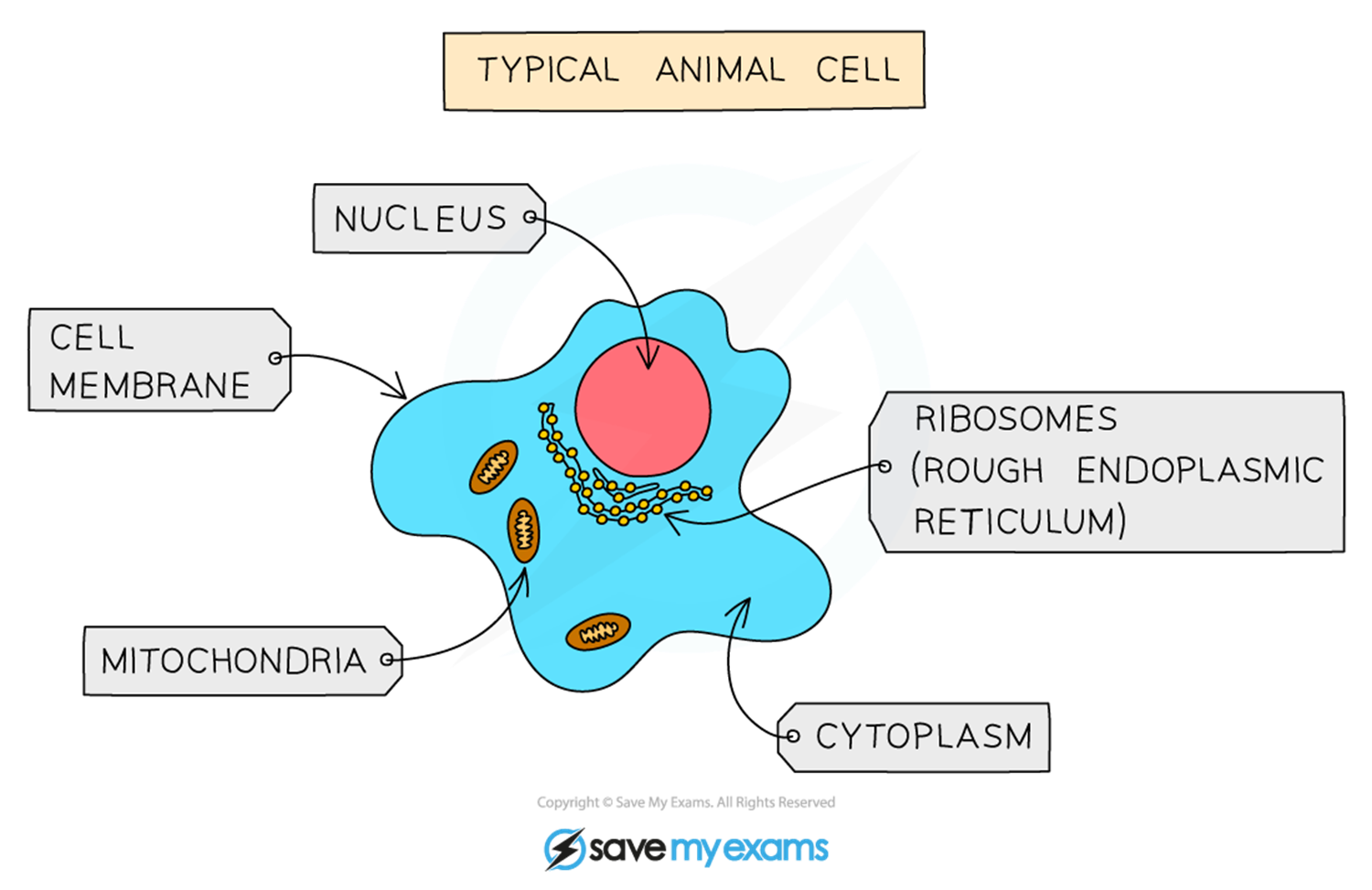
A. Animals – Key Features
Multicellular
Eukaryotic cells (have a nucleus)
No cell walls or chloroplasts
Heterotrophic: feed on organic substances made by other living things
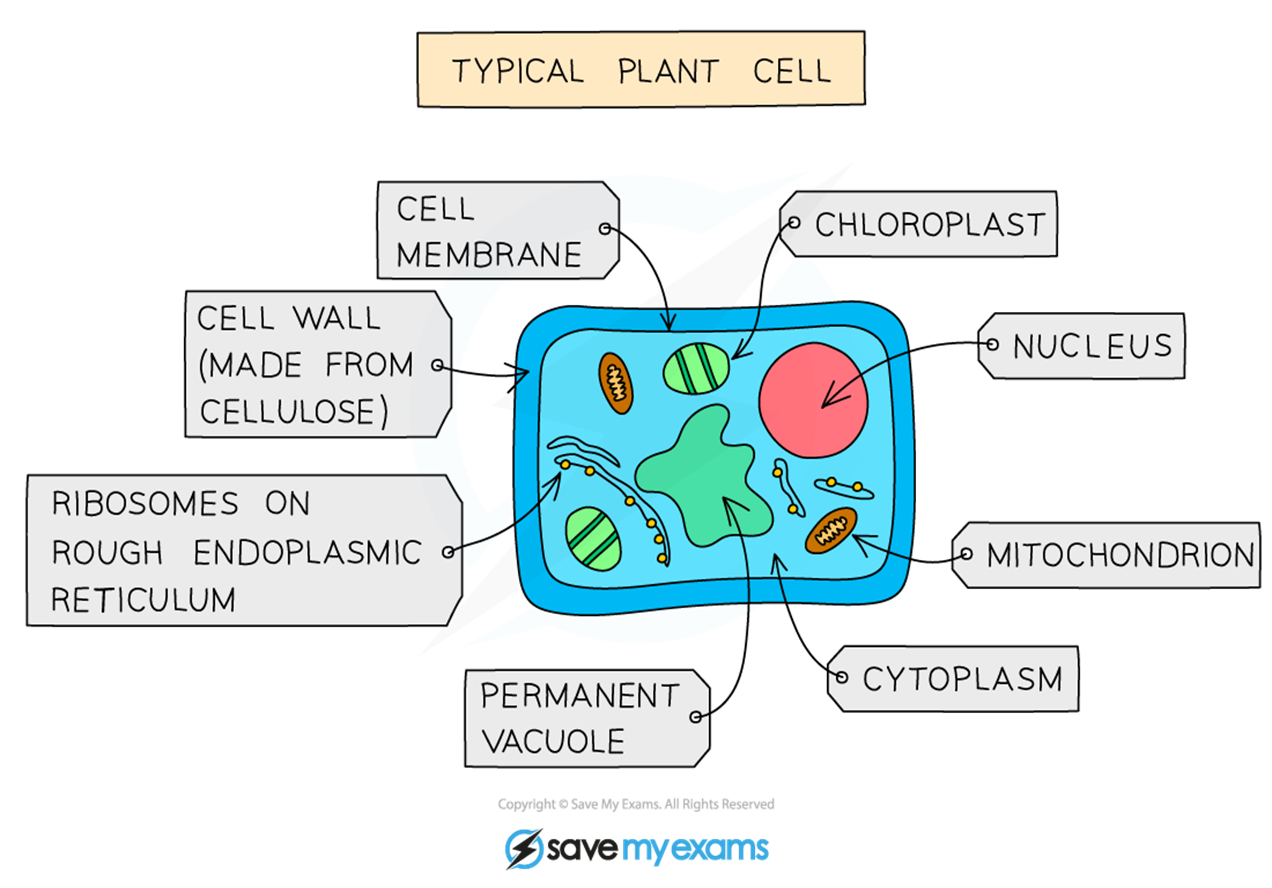
B. Plants – Key Features
Multicellular
Eukaryotic cells: contain a nucleus, chloroplasts, and cellulose cell walls
Autotrophic: feed by photosynthesis
1. Animal Kingdom:
Definition: All vertebrates have a backbone.
Five classes of vertebrates:
I. Mammals
Key Features:
Fur/hair on skin
Placenta
Young feed on milk from mammary glands
External ears (pinnae)
Endothermic
Examples:
Horse
Dog
Squirrel
Human
II. Birds
Key Features:
Feathers covering skin
2 legs + 2 wings (forelimbs modified)
Beak, no teeth
Lay eggs with hard shells on land
Endothermic
Examples:
Parrot
Blue Tit
Eagle
III. Reptiles
Key Features:
Dry, fixed scales on skin
Lay eggs with rubbery shells on land
Examples:
Snake
Turtle
Iguana
IV. Amphibians
Key Features:
Smooth, moist skin
Adults usually live on land (lungs), larvae in water (gills)
Lay eggs without shells in water
Examples:
Frog
Toad
Newt
V. Fish
Key Features:
Loose, wet scales
Gills to breathe
Lay eggs without shells in water
Examples:
Flounder
Grouper
✅ Exam Tip:
Focus on skin covering, reproduction (eggs/milk), thermoregulation, and respiration.
Comparing these features helps answer classification and identification questions.
2. Vertebrates:
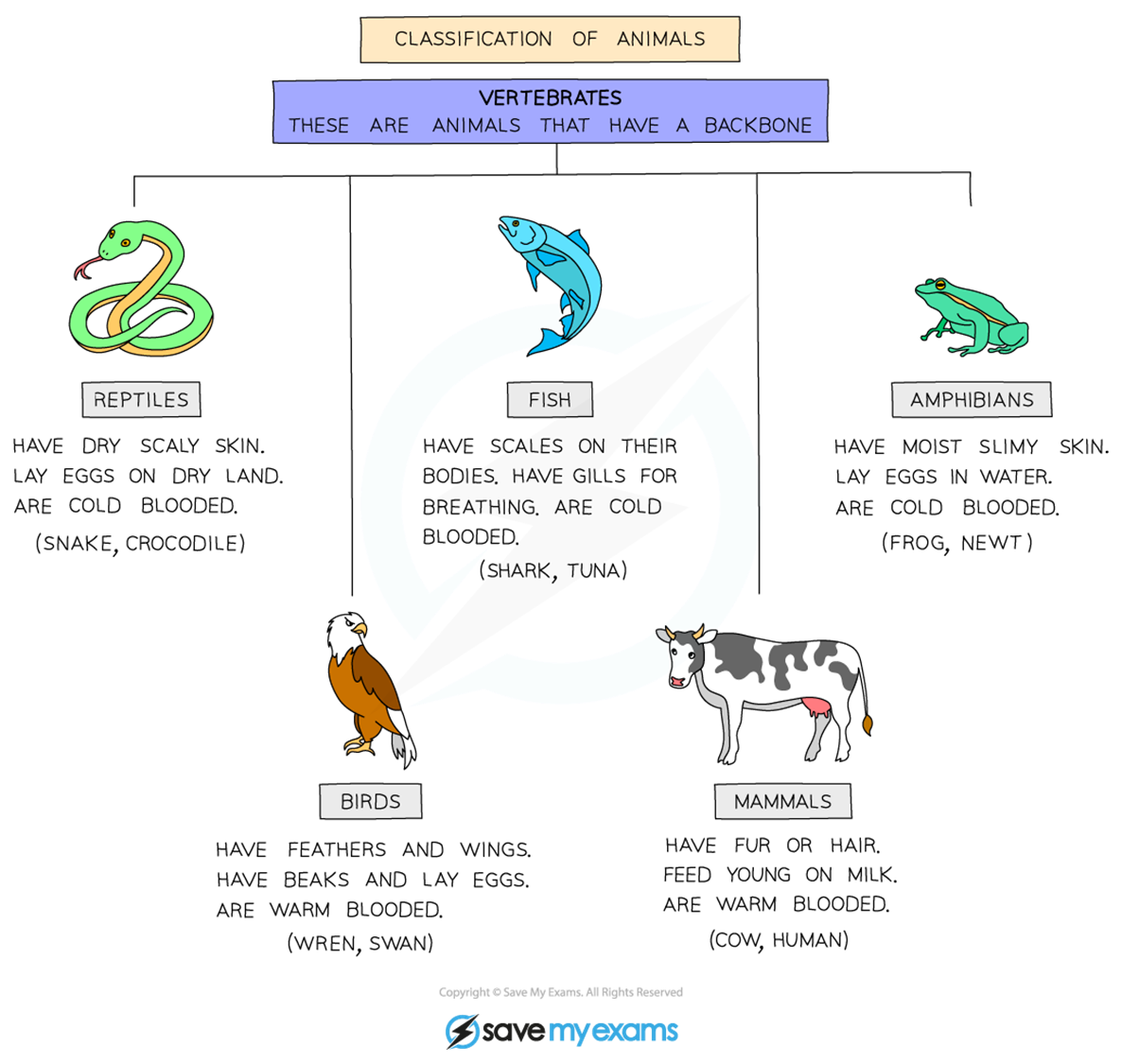
I. Reptiles
II. Fish
III. Amphibians
IV. Birds
V. Mammals
3. Invertebrates:
Definition: Animals without a backbone.
Key classification feature: Presence or absence of legs.
Arthropods: Invertebrates with jointed legs, divided into classes:
I. Myriapods
Body Features:
Body segmented
Legs & Antennae:
≥1 pair of legs per segment
1 pair antenna
Examples:
Centipede
II. Insects
Body Features:
3-part body:
head
thorax
abdomen
Legs & Antennae:
3 pairs of legs
2 pairs of wings (may be vestigial)
1 pair antenna
Examples:
Butterfly
III. Arachnids
Body Features:
2-part body:
cephalothorax
abdomen
Legs & Antennae:
4 pairs of legs
no antennae
Examples:
Spider
IV. Crustaceans
Body Features:
Hard
chalky exoskeleton (calcium)
Legs & Antennae:
>4 pairs of legs
2 pairs antennae
breathe through gills
Examples:
Crab
✅ Exam Tip:
Focus on body segments, number of legs, wings, and antennae — these features often appear in identification questions.
4. Arthropods
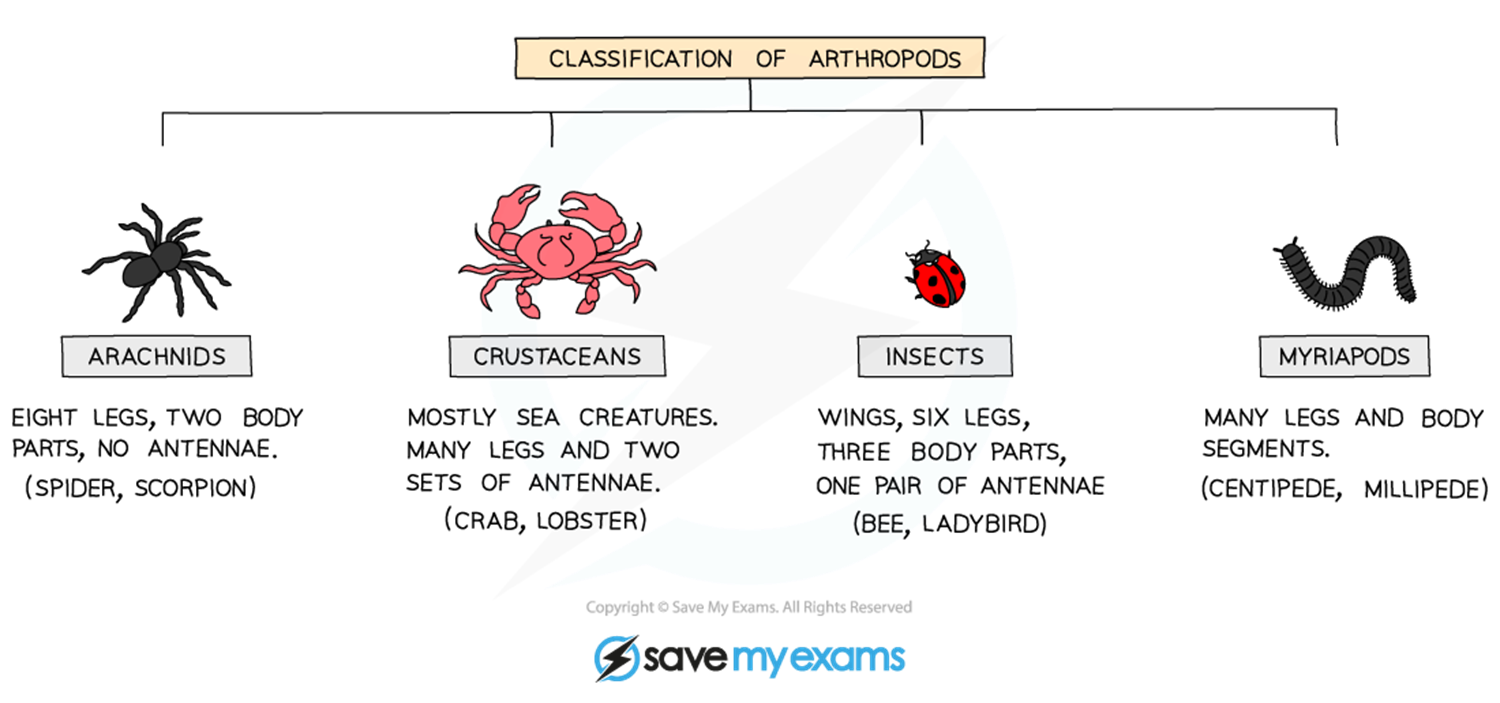
Arachnids
Crustaceans
Insects
Myriapods
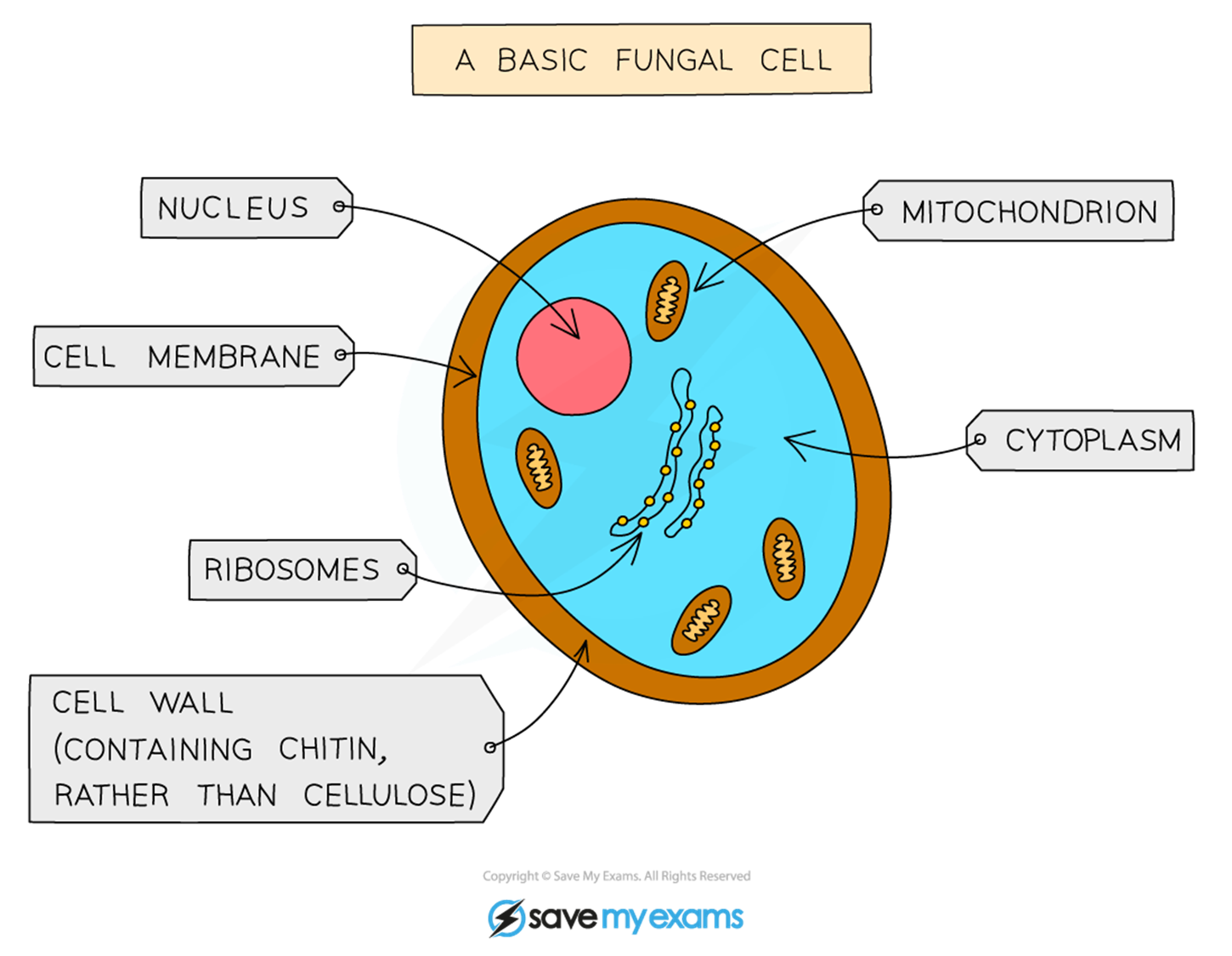
Fungi – Key Features
Usually multicellular (except yeast)
Eukaryotic cells: have nuclei, cell walls not made of cellulose
Heterotrophic nutrition:
Saprophytic – feed on dead/decaying material
Parasitic – feed on living material
Do not photosynthesize
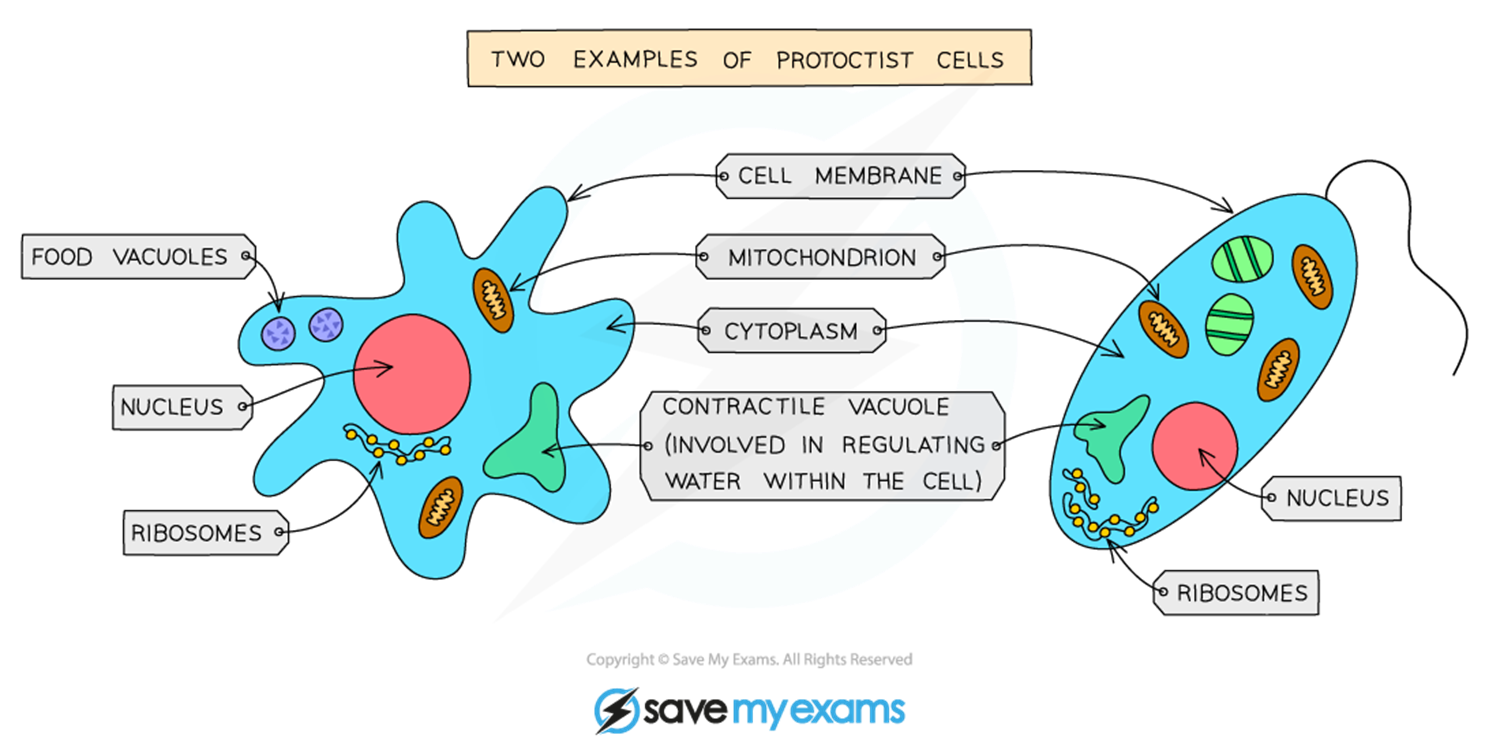
A. Protoctists – Key Features
Mostly unicellular, some multicellular
Eukaryotic cells: all have a nucleus; some have cell walls and chloroplasts
Nutrition:
Some photosynthesize
Some feed on organic substances (heterotrophic)
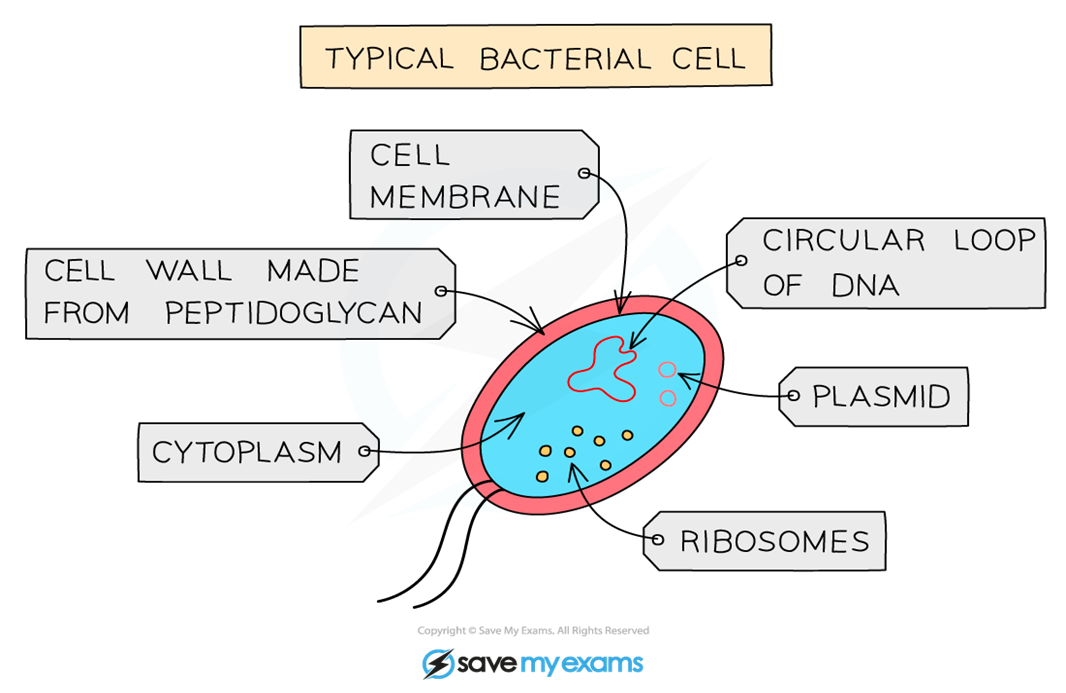
B. Prokaryotes – Key Features
Usually unicellular
Cells: have cell walls (not cellulose) and cytoplasm
No nucleus and no mitochondria
Plants – Key Features (Extended)
Green parts due to chlorophyll → absorbs sunlight for photosynthesis
Includes ferns and flowering plants
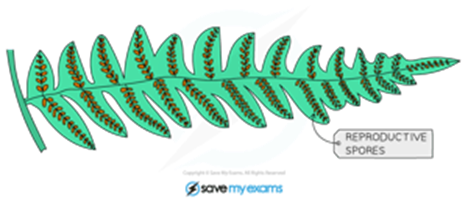
Ferns:
Leaves called fronds
Reproduce by spores on the underside of fronds (no flowers)

Flowering Plants:
Reproduction: Sexual via flowers → seeds
Seeds develop inside the ovary at the base of the flower
Two groups:
Monocotyledons (monocots)
Dicotyledons (dicots)


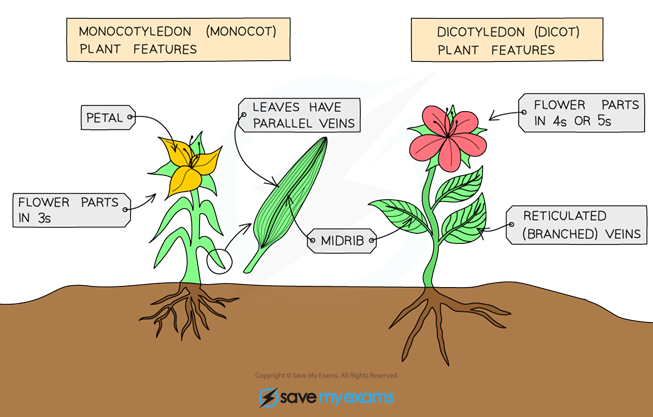
Monocotyledons vs Dicotyledons - how to distinguish
1. Flowers:
Monocots → petals in multiples of 3
Dicots → petals in multiples of 4 or 5
2. Leaves:
Monocots → parallel veins
Dicots → reticulated veins (web-like network throughout the leaf)
Viruses - extended
Not classified in the Five Kingdoms → not considered living
Do not carry out the seven life processes themselves
Take over a host cell’s metabolic pathways to reproduce
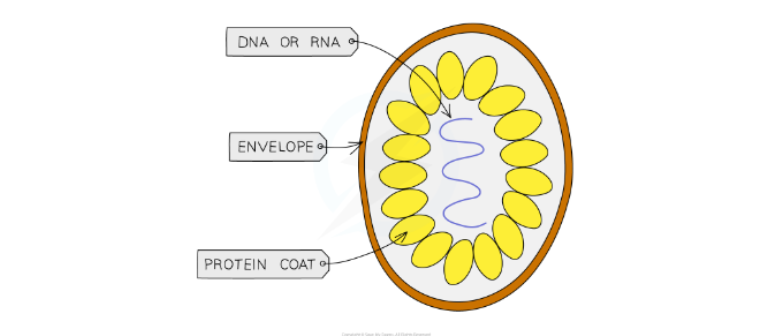
Structure: Genetic material (DNA or RNA) inside a protein coat