AP Modern World History Unit 2 Textbook Notes
The Silk Roads
more than 1300 years after first accounts of travel on Silk Roads, routes fell into disuse
revived by 8th and 9th centuries
land route of silk roads vibrant and essential to interregional trade in 14th and 15th centuries
luxury good demand increase in Europe and Africa
Chinese, Persian, Indian artisans and merchants expanded production of textile and porcelains for export
Causes of Growth of Exchange Networks
Crusades paved way to expanding networks of exchange
lords and armies of knights brought back fabrics and spices from east
silk road trade routes remained in operation in spite of byzantine empire inroads by ottoman turks
sea routes too
china eager for Europe’s gold and silver
Europe eager for silk, tea and rhubarb
global trade increase
Rise of New Empires
first golden age of silk roads came to end after collapse of classical civilizations (e.g. Roman and Han empires)
by 8th and 9th centuries, Arab merchants from abbasid empire revived land route of silk roads and sea routes in Indian ocean
Tang china offered much to newly revived global trade network
compass
paper
gunpowder
porcelain
tea
silk
China imported cotton, precious stones, pomegranates, dates, horses and grapes
luxury goods appealed to rich ppl in Chinese society
reveled in country’s newfound affluence
marked second gold age of silk roads
no other cause as significant on impact of expansion of trade as rise of Mongol Empire
Mongols conquered Abbasid Caliphate in 1258
in 14th century china came under control too
parts of silk roads under different authority / rulers unified in a system under control of authority that respected merchants and enforced laws
increased safety of travel on silk roads bc of Mongols
improved roads
punished bandits
new trade channels between Asian, Middle East, Africa, Europe
survivors of Mongol conquests and descendants benefitted from “reinvigorations” of trade routes not used much since Roman and Han empires
Improvements in Transportation Technologies
travelers on overland silk roads learned traveling w others in caravans safe than traveling alone
learned how to design saddles for camels that greatly increased weight of load that could be carried
china made advances in naval tech to allow control over sea-based trade routes in South China Sea
during Han Dynasty, Chinese scientists developed magnetic compass and improved rudder
Chinese junk developed in Han dynasty
boat similar to southwest asian dhow
multiple sails
400 ft long
Effects of Growth of Exchange Networks
significant effects of expansion and stability of silk roads were series of oases that developed along routes
included thriving cities, commercial innovations
greatly helped to manage increasing trade
Cities and Oases
long stretches of overland silk roads passed through inhospitable terrain
hot arid lands where water was scarce
cities along routes watered by rivers were thriving centers of trade
Samarkand (present day Uzbekistan) was stopping point on silk roads between china and mediterranean
center of cultural exchange and center for trading goods
presence of diverse religions
christianity
buddhism
Zoroastrianism
islam
known for artisans and centers of islamic learning and decorated mosques (kashgar too)
caravanserai
once routes of silk roads became stabilized, inns (caravanserai) sprang up about 100 miles apart
how far camels could travel before they needed water
travelers could rest both themselves and their animals
could sometimes trade animals for fresh ones
caravanserai derived from Persian words caravan and palace
commercial innovations
china developed new financial systems to manage increasing trade
china had long been money economy
using money rather than bartering w commodities
copper coins used became unwieldy to transport for everyday transactions
gov developed system of credit
flying cash
allowed merchant to deposit paper money under name in one place to withdraw at another
flying cash locations model for modern banks
banking houses in european cities
person could present bill of exchange
document stating holder was legally promised payment of set amount on set dates
received money in exchange
Crusades awakened Europeans’ interest in luxury goods from Asia
organized trade of European resources
Hanseatic League alliance formed by cities in northern Germany and Scandinavia
controlled trade in north sea and baltic sea to drive out pirates and monopolize trade in goods such as timber, grain, leather and salted fish
Innovations in Commerce, 500 BCE to 1603 CE
Financial Instrument | Description | Origin Date | Early Location |
coin | minted precious metals with own inherent value | c. 500 BCE | Lydia, Turkey |
caravanserai | inns along trade routes where travelers could trade, rest and replenish | c. 500 BCE | Persian Empire |
paper money | currency in paper form | c. 800 CE | China |
Hanseatic League | first common market and confederation of merchant guilds | 1296 CE | Germany |
banking house | precursor to modern banking | c. 200 BCE | China |
bill of exchange | a written order without interest that binds one party to pay a fixed sum to another party at a predetermined date in the future | c. 700 CE | China |
Mongol Empire and the Modern World
Mongols of Central Asia marched across Eurasia throughout 13th century
reputation for slaughter spread farther than actual conquest
Mongols sparked period of interregional connection and exchange at level that the world had not experienced in 1k years
The Mongols and Their Surroundings
in 12th century Mongols were multiple cals of pastoral nomads who herded goats and sheep
hunter-foragers
north of Gobi Desert in East Asia
expected everyone to be skilled horse riders and highly valued courage in hunting and warfare
surrounded by other tribes
Tatars
Naimans
Merkits
Jurchen
northern China
coveted relative wealth of tribes and kingdoms that were located closer to silk roads
easier access to luxury goods
silk clothing and gold jewelry
Genghis Khan
Mongol leader Temujin born in 1162
spent decades creating tribal alliances and defeating neighboring groups
formed key friends
oldest son married to daughter of neighboring khan (king)
intensely focused on building power
sometimes appointed talented non family members to positions over family members
ruthless
killed own stepbrother
considered loyalty best way to run his growing kingdom
in 1206 Temujin gathered Mongol chieftains at meeting (kuriltai) where he elected khan of Mongolian kingdom
took name Genghis Khan
ruler of all
Beginning of Conquest
in 1210 Genghis Khan and troops headed eat and attacked powerful Jin Empire
established by Jurchens century earlier
now ruled Manchuria, inner Mongolia, northern China
capital city of Zhongdu
modern Beijing
earned reputation as terrifying warrior during campaign
those who resisted were brutally killed in retribution
Mongols sometimes wiped out civilization populations of entire towns after defeating armies
stories of brutality spread in advance of campaigns
some leaders surrendered before attack
conquered both Central asian Kara Khitai Empire and Islamic Khwarazm Empire farther west in 1219
by 1227 Khan’s khanate (kingdom) reached North China Sea to eastern Persia
Genghis Khan at War
Mongolian soldiers strong riders and proficent with short bow
highly disciplined
Kahn developed efficient command structure
to help with communication between units, messenger force crated whose members rode for days without stopping
slept on horses while riding
Mongol armies developed special units that mapped terrain so they were prepared against attacks and knew which way to go to attack enemies
military strats extended to surprise and craft
frequently deployed band of warriors smaller than that of enemy
retreat in defeated
enemy would follow retreat into larger army
sent small group ahead to ask for surrender
if enemy refused he killed all aristocrats, craftworkers, miners and others with skills were recruited for Mongol empire
others used as laborers
Mongols quickly incorporated into military the weapons and tech of ppl the conquered
to keep contact with far reaches of empire, created type of pony express
carried oral messages instead of written letters
Genghis Khan at Peace
period of Eurasian history between 13th and 14th centuries often called Pax Mongolica (Mongolian Peace)
capital of empire at Karakorum
near center of modern Mongolia
consulted w scholars and engineers of Chinese and Islamic traditions
possibly responsible for more new bridges than any other ruler in history
social policies liberal for day
religious freedom
freed from warfare, charge of protecting silk roads
make safe for trade
ushering in third gold age of silk roads
new trade channels established between Asia, Middle East, Africa and Europe
survivors of conquest benefitted from reinvigoration of trade routes not used heavily since days of Roman and Han empires
effort to unify empire by directing scribe captured in 1204 to adapt the Uyghur alphabet to represent Mongol
failed
alphabet still used in Mongolia today
Mongolian Empire Expands
3 of Khan’s grandsons set up own khanates
further expanded empire into Asia and Europe
with each conquest, empire expanded, new people absorbed into economy and networks of exchange
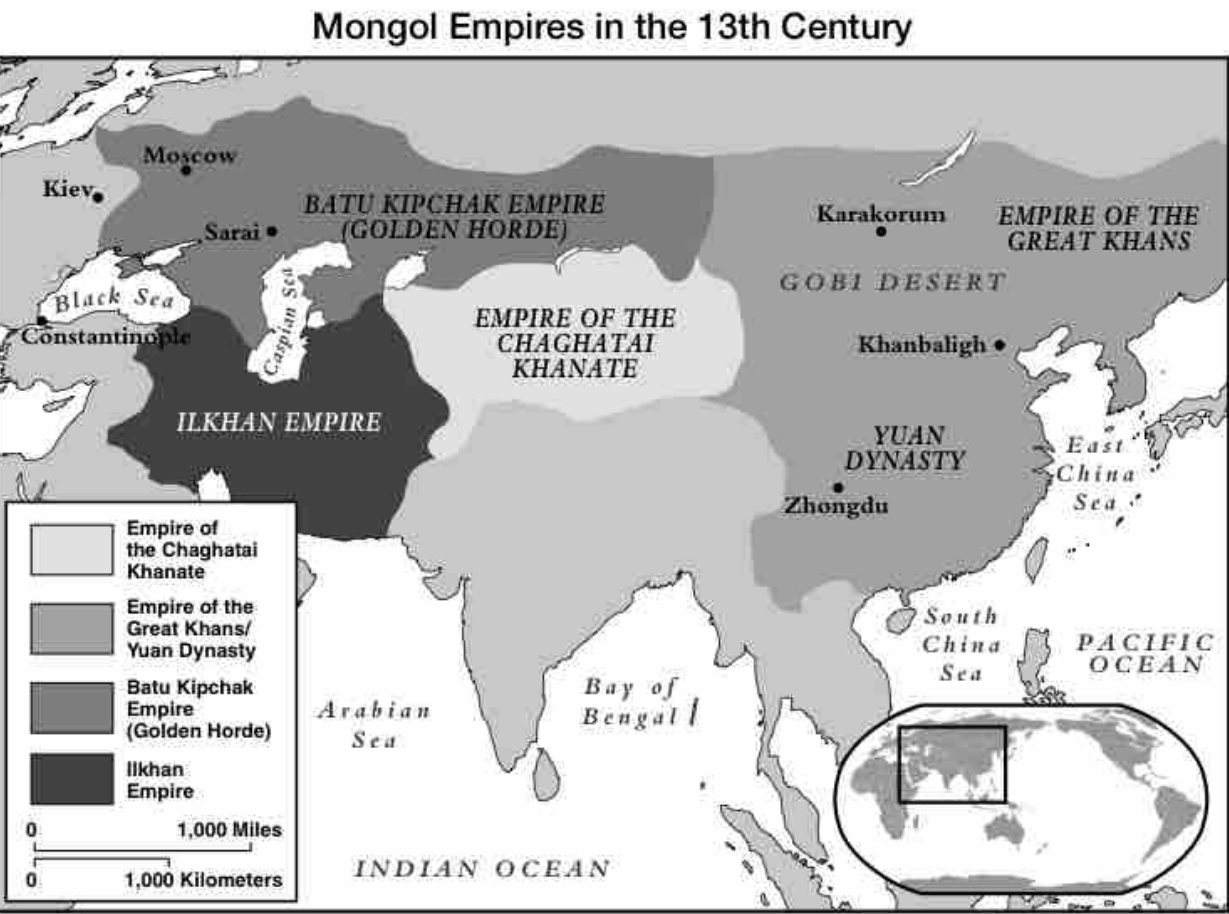
Batu and Golden Horde
in 1236 Batu (son of Khan’s oldest son) led Mongolian army of 100k soldiers into Russia
Russia loose network of city-states and principalities
Batu army came to be known as Golden Horde
marched westward
conquered small Russian kingdom
forced to pay tributes
in 1240 capital city of Kiev was looted and destroyed
Golden Horde continued pushing westward
initial period of sympathy for Mongols based on religious toleration and promotion of trade lost when Golden Horde conquered Christian region (Russia)
in 1241 Batu led GH into successful military encounter with Polish, German, French knights under leadership of King Henry of Silesia
in Karakorum Ogodei Khan (Great Khan’s successor) passed away while Batu was setting sights on Italy and Austria
called off attacks and returned home to attend funeral and see to issues of succession
by time Batu returned to Europe had lost interest in conquering Western Europe
Mongols ruled northern Russia working through existing Russian rulers who sent regular tributes
chose indirect rule bc they did not want to live in forests
rulers of city-state Moscow began collecting additional tributes set aside to develop anti-Mongol coalition among Russian city-states
coalition rose up against Golden Horde and defeated it in 1380 at Battle of Kulikovo
Mongol influence decline after this
by mid 16th century Russia defeated all the descendant khans of Mongols besides Crimean Tatars who was not defeated until late 18th century
Russia began to recover from long-lasting impact on Russia after defeating GH
invasions promoted Russian princes to improve military organization and accept value of more centralized leadership of region
3 centuries of Mongol rule ruined Russian ties w Western Europe
caused Russia to develop more distinct Russian culture
resistance to Mongols created foundation for modern Russian state
Hulegu and the Islamic Heartlands
Batu led wester armies of Hulegu
other grandson of Genghis Khan took charge of southwest region
in 1258 Hulegu led Mongols into Abbasid territories where they destroyed city of Baghdad and killed caliph + 200k residents of city
Hulegu armies pushed west, threatening more of Middle East
in 1260 Hulegu defeated from temp alliance between Muslim Mamluks under military leader Baibaras and Christian Crusader in Palestine
both groups viewed Mongols as serious threat
at time of defeat Hulegu’s kingdom (Il-khanate) in central Asia stretched from Byzantium to Oxus River (Amu Darya modern day)
Mongols ruled kingdom, but Persians served as ministers and provincial and local officials
found this arrangement led to max tax collection
eventually Hulegu and most other Mongols living in Il khanate converted to Islam
after conversion, Mongols supported massacres of Jews and Christians
Kublai Khan and the Yuan Dynasty
in eastern part of Mongolian Empire, Genghis Khan grandson Kublai Khan set sights on China
then ruled by Song Dynasty
China better opponent that those other khans faced
spent 1235-1271 attempting to conquer China'
in 1260 Kublai got title of Great Khan
11 years later defeated the Chinese
Kublai established Yuan Dynasty
adhering more to Chinese tradition rather than forcing Mongolian practices of leadership and control
rebuilt capital at Zhongdu (destroyed by Mongols in 1215) and called it Dadu
skilled at governing large, diverse territory
religious freedom
helped with loyalty in oppressed groups
Buddhists
Daoist
most Chinese ppl initially enjoyed rule of Great Khan
brought prosperity to China bc of cultural exchanges and improved trade w other countries
Mongol women led more independent lives than other at time
tended flocks of sheep and goats
raised children
provided meals for family
rode horses and so wore same leather trousers as men
could remarry after being widowed and could initiate divorce
Mongols Lose Power
despite Kublai Khan’s adoption of Chinese customs, Mongolia leaders eventually alienated Chinese
hired foreigners for gov instead of native-born Chinese
promoted Buddhists and Daoist
dismantled civil service exam system
distressed Chinese scholar-gentry class who were often Confucian
official policy of tolerance
Mongolians tended to remain separate from Chinese and prohibited non-Mongols from speaking Mongolian
Mongolian rulers of China failed to expand beyond
in 1274 tried (and failed) to conquer Japan, Indochina, Burma, island of Java
defeat suggested Mongols not as fearsome as before
in 1350s White Lotus Society began quietly organizing to put end to Yuan Dynasty
in 1368 Zhu Yuanzhang (Buddhist monk from poor peasant family) led revolt that overthrew Yuan Dynasty and founded Ming Dynasty (1368-1644)
Mongol defeat in china paralleled general decline in power elsewhere
empire began to shrink
GH lost territory by 1369
Central Asian territories conquered by Tamerland (Timur the Lame)
The Long-Term Impact of the Mongolian Invasions
Mongolian invasions played key role in history in many ways, positive and negative
Mongols conquered larger area than Romans
bloody rep earned
empire was largest continuous land empire in history
Pax Mongolica (c.1250 - c. 1350) Mongols revitalized interregional trade between Asia, Middle East, Africa, Europe
built system of roads and continued to maintain and guard trade routes
interregional culture exchange
islamic scientific knowledge made way to China
Mongol conquests helped to transmit fleas that carried the bubonic plague (Black Death)
Mongols ruled successfully due to understanding of centralized power
devised and used single international law for all their conquered territories
after Mongols decline in power, kingdoms and states of Europe, Asia, Southeast Asia continued or copied process of centralizing power
Mongol fighting techniques led to end of Western Europe use of knights in armor
heavily clad knights could not react in time to the Mongol’s use of speed and surprise
era of walled city in Europe came to an end
walls proved useless against Mongols’ siege technology
some consider cannon a Mongol invention
made from Chinese gunpowder, Muslim flamethrowers, European bell-casting techniques
Exchange in the Indian Ocean
Dar al-Islam (the House of Islam / Muslim World) might be called worl'd’s first global empire
connected societies from North Africa to South Asia
before missionaries and imperial armies, islam spread by Muslim merchants traveling to non-Muslim lands in search of trading partners
Muslim merchant connections to Dar al-Islam interacted w developments in sailing tech and environmental knowledge to transform Indian Ocean into an economic hot spot during the Postclassical Era
Causes of Expanded Exchange in the Indian Ocean
South Asia (located in center of Indian Ocean) benefitted a lot from trade in Indian Ocean Basin
some cause of expanded trade in Indian Ocean Basin same as those of expanded overland routes, some specific to ocean travel and knowledge
Spread of Islam
expansion of Islam connected more cities than ever before
Indian Ocean trade began in 200 BCE
trading partners in east Africa, east and Southeast and South Asia
Muslim Persians and Arabs were dominant seafarers and crucial in transporting goods to port cities across Indian Ocean
cities on west coast of India became thriving centers of trade bc of interactions w merchants from east Africa and southwest Asia
Cambay
Calicut
became bustling port city for merchants in search of spices from southern India
foreign merchants from Arabia and China met in Calicut to exchange goods from west and east respectively
local rulers welcomed presence of Muslim and Chinese merchants
brought city wealth and prominence
Increased Demand for Specialized Products
as Indian Ocean trade grew, demand for specialized products grew
every region involved in trade had something special to offer
Indian known for high quality of fabrics
especially cotton
merchants traveled to India for woven carpets and high-carbon steel for weapons, tanned leather, artisan-crafted stonework, pepper from southern coastal cities
Modern-day Malaysia and Indonesia became known as Spice Islands bc of fragrant nutmeg, cinnamon, cloves and cardamom exported
Swahili coastal cities of Mombasa, Mogadishu and Sofala exported slaves, ivory, gold
China exported silks
Chinese porcelain coveted worldwide
“fine china”
Southwest Asia exported horses, figs and dates
trade in enslaved people also played role in exchanges in Indian Ocean
long running slave trade in eastern Africa
over land or Indian Ocean, slaves from east Africa sold to buyers in northern Africa, Middle East and India
slaves transported to islands off southeast coast of Africa
Madagascar
trade reached peak in 18th and 19th centuries
slaves in Indian Ocean trade more likely to provide forced labor in seaports in shipping industry and as household servants
some worked as sailors or soldiers
lived in towns of cities
more opportunity to develop communities and to work alongside free laborers
had certain rights in Islamic communities
right to marry
African words, musical styles, customs can be found in Oman, India, etc.
Environmental Knowledge
knowledge of monsoon winds essential for trading in Indian Ocean
in winter months wind originated from northeast
in spring and summer months wind blew from southwest
merchants timed voyages carefully
Advances in Maritime Technology
Arab sailors used sailing tech to aid travel
debatable if invented triangular lateen sails
popular bc could easily catch winds coming from different directions
Chinese sailors during classical period invented stern rudder
gave ships more stability and made easier to maneuver
trade facilitated rapid spread of sailing tech
astrolabe improved by Muslim navigators in 12th century
allowed sailors to determine how far north or south from equator
Growth of States
trading networks in Indian ocean fostered growth of states to institutionalize revenue from trade
Malacca (Melaka) became wealthy by building navy and imposing fees on ships that passed through Strait of Malacca
Sultan of Malacca powerful in 1400s and expanded into Sumatra and southern Malay Peninsula
Malacca’s prosperity based on trade instead of agriculture or mining or manufacturing
sultanate ended when Portuguese invaded city in 1511
hoped by conquering key city on Strait of Malacca could control trade that flowed through it between Europe, India and China
successful enough to generate great wealth for empire
less success than hoped for
conquest touched off conflicts among other states in region and caused traders to diversify routes and ports used
Effects of Expanded Exchange in the Indian Ocean
Diasporic Communities
natural result of waiting for favorable winds, merchants interacted w surrounding cultures and ppls in region
many Arab and East African merchants stayed in western Indian port cities permanently bc married women met there
Arab and Persian merchants settled in East Africa
merchants from Dar al-Islam were first to bring Islam to southern Asia through intermarriage
children generally raised with muslim traditions
settlements of ppl away from homeland
diaspora
in diasporas, settlers intro own cultural traditions into indigenous cultures
cultures influenced culture of merchants
diasporas through trade in many parts of the world
Merchant Community | Region(s) | Products |
Muslim | China, Indian Ocean Basin, Europe | Silk, paper, porcelain, spices, gems, woods, gold, salt, ambers, furs |
Chinese | Southeast Asia, Africa | Cotton, tea, silk, metals, opium, salt |
Sogdian (in Samarkand) | Main caravan merchants along Silk Roads, China | Silk, gold, wine, linens |
Jewish | China, India, Europe | Glass beads, linens, dyes, spices |
Malay | Sri Lanka | Nutmeg, pepper, cloves |
Response to Increased Demand
increased demand for products caused trade to expand
also resulted in several effect w long-lasting impacts
to meet rising demands, producers needed to find ways to become more efficient
grow more crops
make more textiles
manufacture more iron
role of state increased to oversee efforts at efficiency and to raise money through customs and fees for use of seaports
western Indian Rajput kingdom Gujarat became go-tween for trade between East and West
revenue was many times more than entire worth of some European states
Swahili City-States
Indian Ocean trade created thriving city-states along east coast of Africa
Swahili city-states
Swahili means coasters
refers to inhabitants of bustling commercial centers
Kilwa, Mombasa (modern Kenya), Zanzibar (modern Tanzania)
traders of Zanj Coast sold ivory, gold, slaves to Arab training partners
also exotic goods like tortoise shells, peacock feathers, rhino horns
Zanj cities got Chinese porcelain, Indian cotton, manufactured ironwork
Chinese porcelain remain common find among ruins of Swahili cities
trade brought wealth to cities on East African coast
at height of Indian Ocean trade, many mosques and wealthy merchants’ homes made of stone or coral
Significant Cultural Transfers
transfer of knowledge, culture, tech, commerce, religion intensified as result of thriving trade in IOB
in 1405, Min emperor Yongle sent Zheng He on first of seven great voyages
Zheng traveled to Indonesia, Ceylon and other coastal areas on Indian Ocean to Arabia and to east coast of Africa and to the Cape of Good Hope
main purpose to display might of Ming Dynasty to rest of world and receive tribute from people encountered
expeditions won prestige for Chinese government and opened new markets for Chinese goods
Zheng He and crew returned to China w exotic treasures and new understanding of world beyond Chinese borders
first giraffe Chinese had seen
scholars worried greater interaction and trade w foreign cultures threat to China social order
Confucianism
some critics deemed other cultures barbaric and vastly inferior to Chinese culture
some thought voyages too expensive
Zhu Gaozhi — Yongle’s successor — ended Zheng He’s travel and discouraged all Chinese ppl from sailing away from China
made building ship w more than 2 masts punishable offense
Zheng voyages put stop to pirate activities off coast of China and Southeast Asia
Trans-Saharan Trade Routes
few societies inhabited Sahara Desert before arrival of Islam
arid climate made nearly impossible to farm
nomadic communities conducted some trade across Sahara
volume increased w Muslim merchants in 7th and 8th centuries
when empires like Mali took over area in early 1200s, commerce expanded dramatically
merchants and traders used caravans to facilitate commerce
Africans traded gold, ivory, hides, slaves for Arab and Berber salt, cloth, paper, horses
Trans-Saharan Trade
Sahara occupy 3.6 mil square miles
around same size as China
only 800 square miles are oases
places where human settlement impossible bc water from deep underground is brought to surface, making land fertile
sometimes comes naturally, sometimes requires wells
Camels, Saddles, Trade
Muslim merchants from Southwest Asia traveled across Sahara on camel
camels began to appear in North Africa in 3rd century BCE
native to Arabia (Islamic heartland)
camels accustomed to harsh, dry climate of Arabian Desert
adapt well to living in Sahara
camels can consume lots of water at one time compared to horses and not need water for while
began to replace donkeys and horses after 300 CE
up to 15 different camel saddles for different purposes
South Arabian saddle where rider sits in back of hump
makes riding easier bc rider can hold hair of hump
Northern Arabian saddle for sitting on top of hump
greater visibility in battles
being near head gave best possible control over camel
Somalis in Eastern Africa made saddle that can carry loads up to 600 pounds
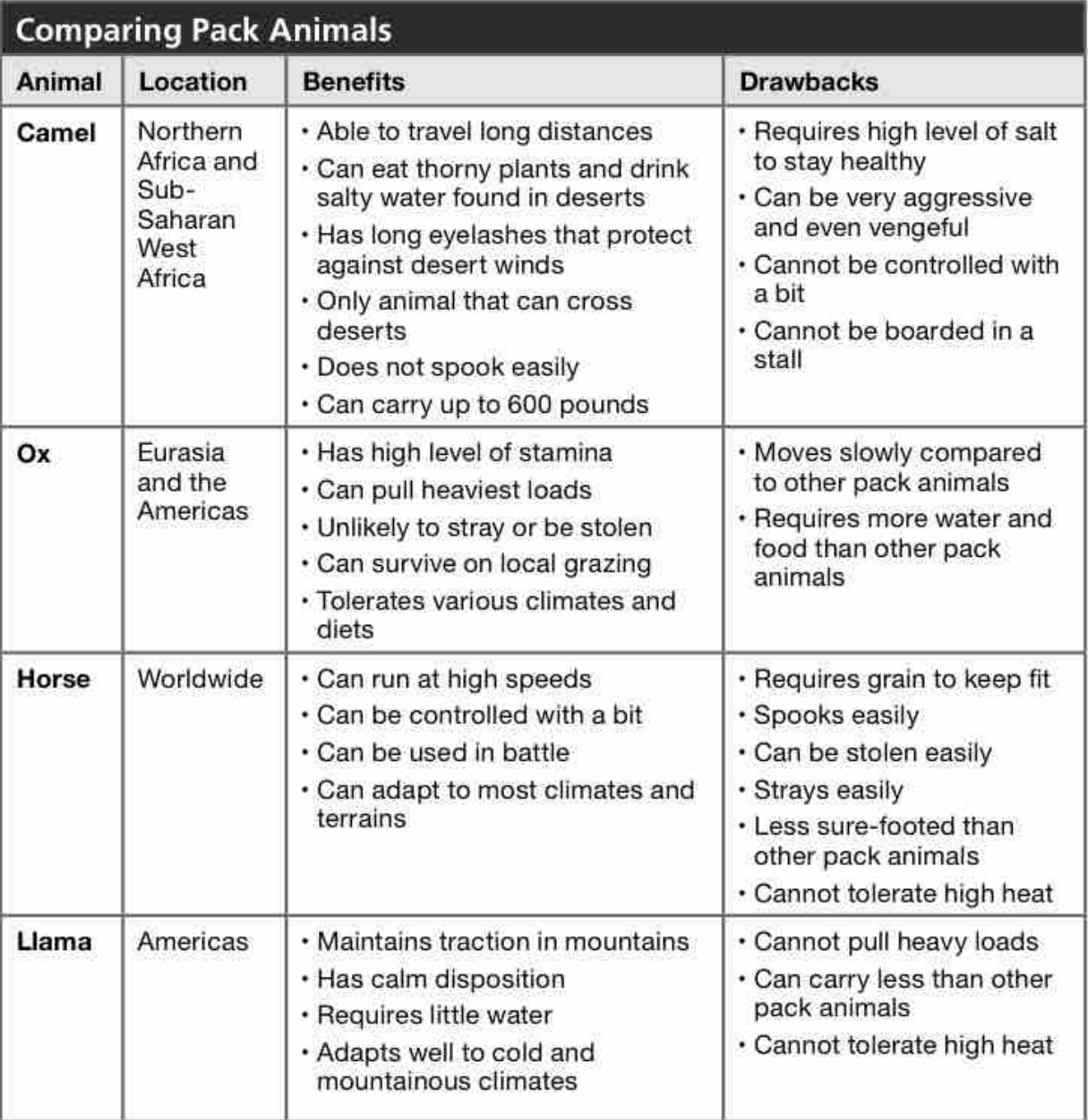
camels usually also had enough to last traveler until next oasis atop of trading goods
ppl leading caravans walked entire way
7 N-S trade routes
2 E-W trade routes
people in Sub-Saharan Africa in touch w expanding number of cultures and trading partners
by end of 8th century CE, trans-Saharan trade famous throughout Europe and Asia
gold most precious commodity
West African merchants acquired gold from waters of Senegal River
foreign traders came to West Africa seeking gold, ivory, slaves
brought salt, textiles and horses in exchange
trans-Saharan trade brought considerable wealth to societies of West Africa
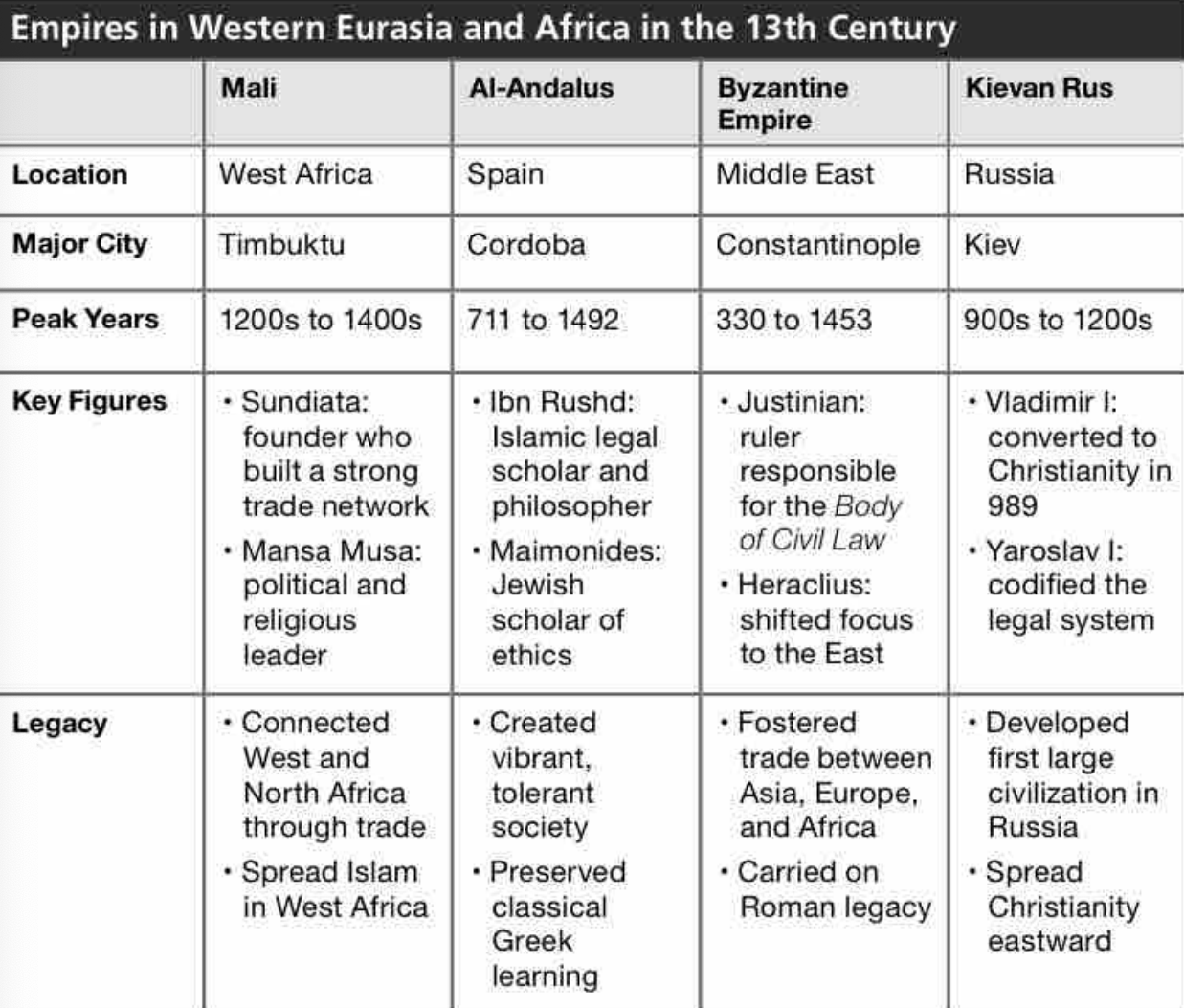
Mali
Ghana
brought Islam
spread into Sub-Saharan Africa
West African Empire Expansion
by 12th century, war w neighboring societies permanently weakened Ghana
in place rose new trading societies
most powerful was Mali
North African traders introduced Islam to Mali in 9th century
Mali’s Riches
gov of Mali profited from the gold trade
taxed nearly all other trade entering West Africa
most residents were farmers
cultivated sorghum and rice
Timbuktu and Gao accumulated most wealth and developed into centers of Muslim life in region
Timbuktu became world-renowned center of Islamic learning
Expanding Role of States
rulers needed to establish currency whose value was widely understood
Mali currency was cowrie shells, cotton cloth, gold, glass beads, salt
rulers needed to protect trade routes and areas where currencies were made / harvested / other trade resources were produced
empires expanded reach to take over resource-rich areas
Mali’s founding ruler is Sundiata
father ruled small society in West Africa (modern Guinea)
when father died, rival groups invaded and killed most of royal fam and captured throne
spared Sundiata bc young prince was crippled and not threat
ended up learning to fight
feared warrior that enemies forced into exile
exile strengthened him and his allies
returned to kingdom of birth, defeated enemies, reclaimed throne
wealth grew under Sundiata’s rule
Mansa Musa
grand-nephew of Sundiata
brought fame to region
known for religious leadership instead of political / economic acumen
Muslim
began pilgrimage in 1324 to Mecca (Islam’s holiest city)
prosperity allowed to take caravan to Arabia consisting of 100 camels, thousands of slaves and soldiers, gold
displayed wealth to outside world
visit to Mecca deepened devotion to Islam
established religious schools in Timbuktu, built mosques in Muslim trading cities, sponsored those who wanted to continue religious studies elsewhere
deepened support of Islam in Mali
decline in Mali less than 100 years after death
by late 1400s, Songhai Kingdom taken place as West African powerhouse
became larger and richer than Mali