(4) Nucleic Acids
Nucleic Acids - carry the cell's genetic blueprint and carry instructions for its functioning
Deoxyribonucleic Acid (DNA) - genetic material in all living organisms, ranging from single-celled bacteria to multicellular mammals.
Double-stranded, double helix, and anti-parallel
Ribonucleic Acid (RNA) - involved in the process of protein synthesis under the direction of DNA.
Single stranded
***DNA & RNA DYANMICS***
The monomers of DNA and RNA are called nucleotides, aka our bases, and when combined in chains, they form polynucleotides
List of nucleotides: Cytosine, Thymine, Uracil, Adenine, Guanine
⭐ Thymine is only present in DNA, while uracil is present in RNA
The linkage of nucleotide to nucleotide is called a phosphodiester bond, where the phosphate residue attaches to the hydroxyl group of the 5′ carbon of one sugar and the hydroxyl group of the 3′ carbon of the sugar of the next nucleotide.
performed through dehydration synthesis

***BASE TYPES***
Pyrimidines - carry a single carbon-nitrogen ring
Purines - carry two carbon-nitrogen rings
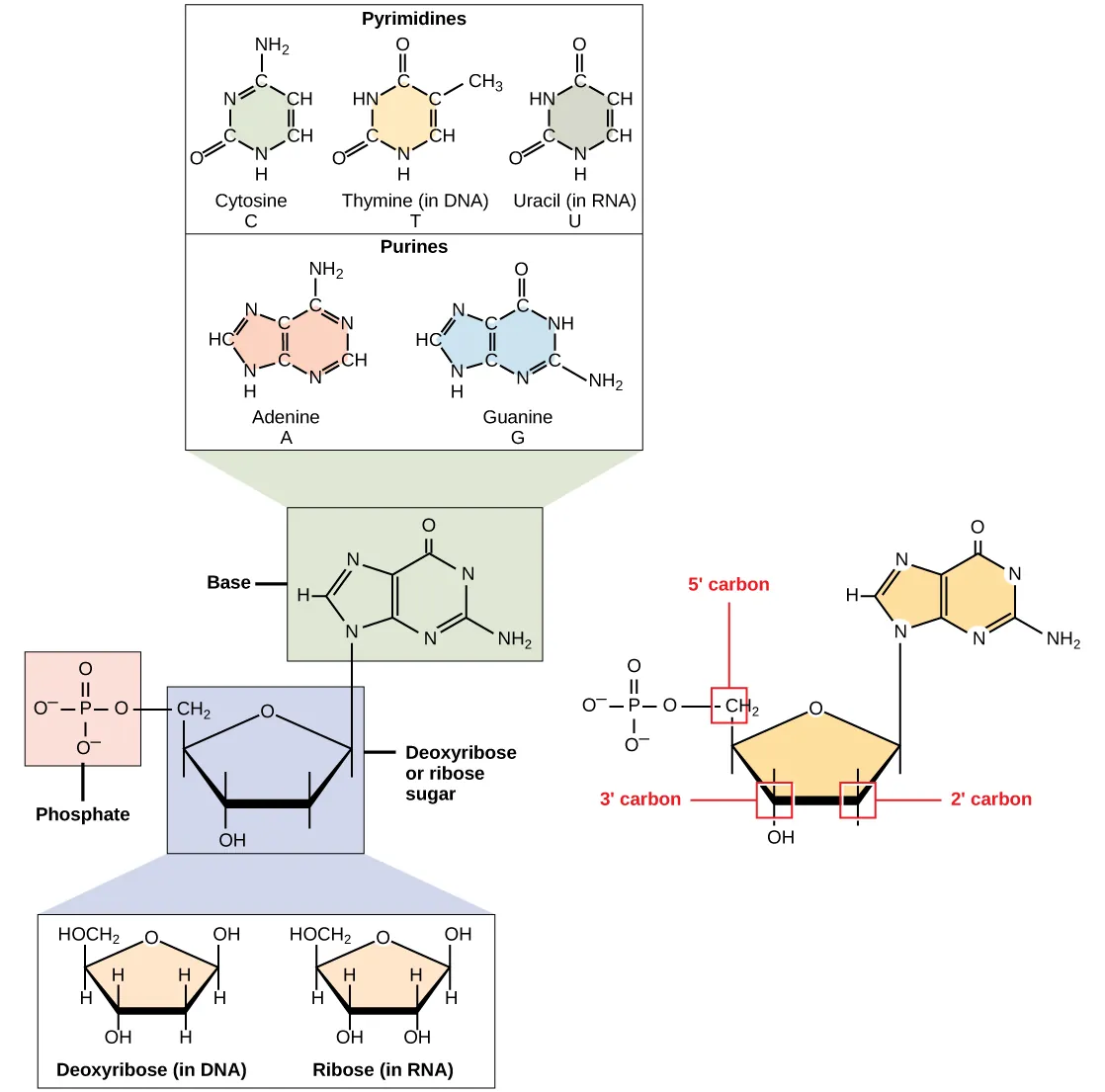
Mnemonic to remember when bases are pyrimidines vs purines:
PURE A Gold
Purines = adenine and guanine
CUT the PY (pie)
Pyrimidines = cytosine, uracil, and thymine
***BASE CONNECTIONS***
DNA strands run in opposite directions when facing each other, and each base from both strands is connected by hydrogen bonding.

Lists of acceptable base pairs: A-T, G-C, A-U
***RNA FUNCTIONS - CENTRAL DOGMA***
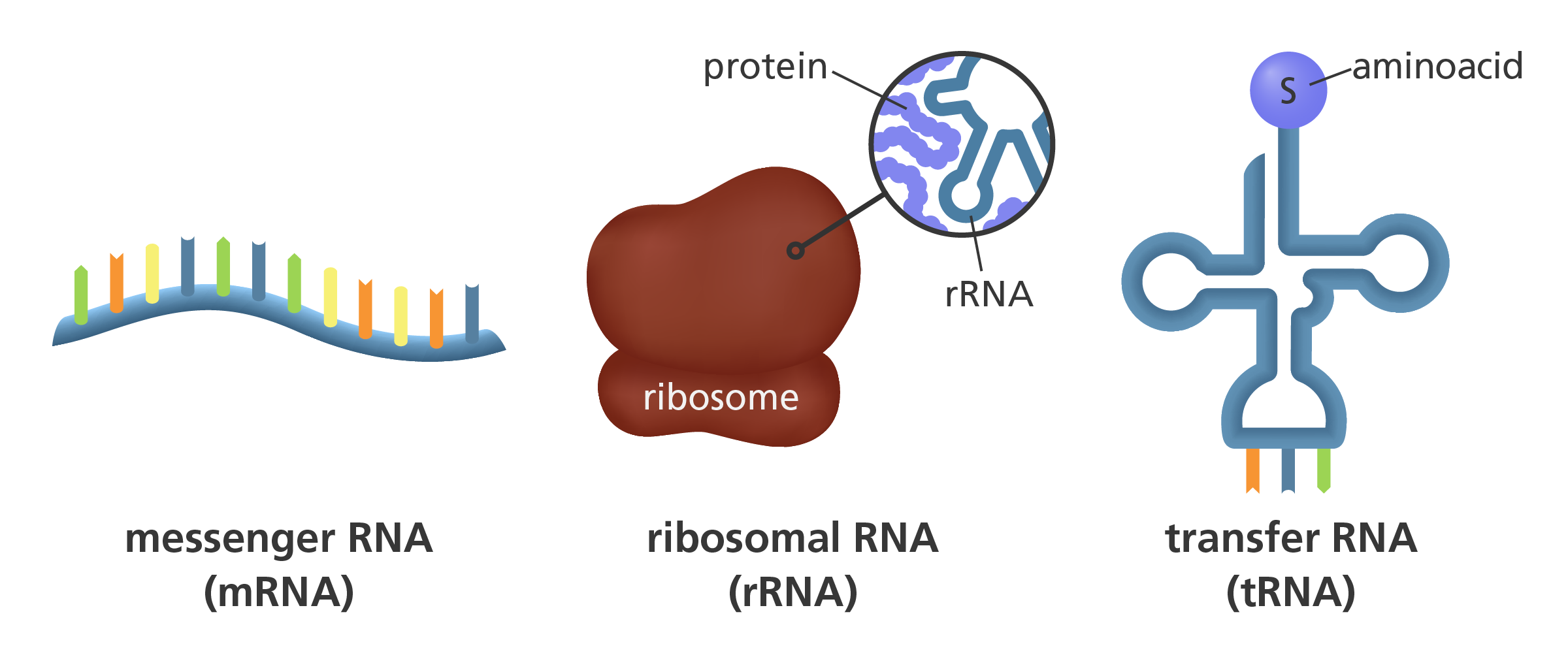
mRNA - a single-stranded nucleic acid molecule that carries genetic instructions from DNA
Read in sets of three bases known as codons along the strand
Transcription (RNA Synthesis): mRNA is synthesized in the cell nucleus from a DNA template using RNA polymerase
Translation: It travels to the cytoplasm, where ribosomes read its three-base codons to assemble amino acids into proteins
After mRNA has left the nucleus, it travels to the ribosome, where tRNA binds to these codons and builds a chain of amino acids.

***CELL CYCLE***
DNA Replication - the cellular process where a double-stranded DNA molecule is copied to produce two identical DNA molecules