Helping & Altruism: Prosocial Behavior
Definition (#f7aeae)
Important (#edcae9)
Extra (#fffe9d)
Altruism: The desire to help another person even if it involves a cost to the helper.
Why people help:
Prosocial behavior:
Any helpful action, benefits another person.
May not necessarily receive any actual benefits for helping, and it may even pose a risk to them if they do help.
Empathy altruism:
Empathy: The capacity to be able to experience others’ emotional states, feeling sympathetic toward them, and taking their perspective.
Empathy- altruism hypothesis: At least some prosocial acts are motivated solely by the desire to help someone in need.
Components of empathy:
Emotional empathy: Sharing the feelings and emotions of others.
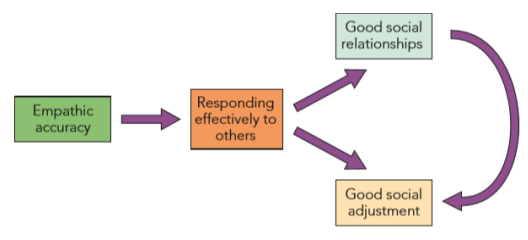
Empathic accuracy: Perceiving others’ thoughts and feelings accurately.
Empathic concern: Feelings of concern for another’s well- being.
Prosocial behavior: Actions by individuals that help others, with no immediate benefit to the helpers. Prosocial can be done to one person or many people and can be done by individuals or groups.
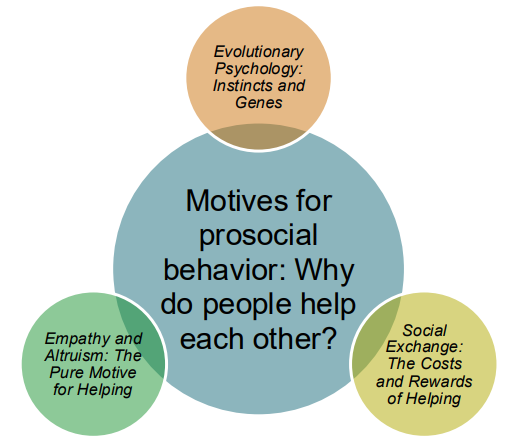
Evolutionary Psychology: Instincts and Genes
Related to Charles Darwin's theory of evolution.
Helping behavior has the goal of survival and the preservation of genes that support survival and reproduction.
Limited in explaining 'Altruism.
Kin selection: Helping on the basis of genetic relationships, family and relatives, to preserve individual genetics.
Norm of reciprocity: Hope that helping others can increase the tendency of others to help us in the future supports survival. Help outside of family and relatives.
Group selection: Maintaining continuity also occurs at the group level.
Altruistic → Higher opportunity to survive
Social Exchange Theory:
Desire to achieve maximum rewards and minimize costs.
Individuals will help if the reward is higher than the cost.
Not related to genetic interests, but to ‘Self-interest’.
Believes that true altruism does not exist.
Negative-state relief: Helping can reduce unpleasant feelings.
Doing good things as an effort to get rid of bad feelings → the higher the perceived distress can be reduced by helping others.
In these circumstances, unhappiness can lead people to engage in prosocial behavior, not based on empathy
Empathic joy: Feeling good by helping others.
Helpers enjoy the positive reactions shown by others whom they help.
Competitive altruism hypothesis:
Compete to do good because they want to get 'reputation'.
Tend to act altruistic in the 'public domain' where individuals will tend to get a reputation than in the private.
Motive: improve social status, especially public recognition
Why people help:
Competitive altruism:
Boosts their own status and reputation.
Large benefits, offsets the costs of engaging in prosocial actions
Kin selection theory:
The greater the genetic similarity, the more likely someone will assist another in need of help.
But we don’t only help relatives, we often help people unrelated to us.
Reciprocal altruism theory: willing to help people unrelated to us because helping is usually reciprocated.
Empathy: The ability to put oneself in the shoes of another person and to experience events and emotions the way that person experiences them.
Components of empathy:
Emotional empathy: Feeling other’s emotions.
Empathic accuracy: Perceiving other people's thoughts.
Empathic concern: Considering the well-being of others.
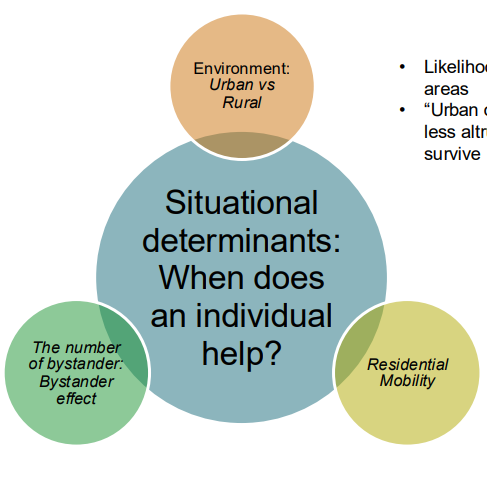
Urban overload hypothesis: Tend to be less altruistic because they are busy to survive.
Prosocial is done by people who stay longer in one community.
Bystander effect: The greater the number of witnesses to a staged emergency, the less likely they were to help the apparent victim.
Bystander effect occurred due to ‘diffusion of responsibility’ → assumed others will do it.
The helper effect: Occurred due to ‘absorption of responsibility’ → when one person act, others would be more likely to aid further.
Diffusion of responsibility:
How much responsibility falls on each person depends on how many bystanders are present in the situation.
If one is alone when an emergency arises, they are 100% responsible. If there are 100 bystanders, each person assumes only 1% of the responsibility.
The more bystanders there are, the less each person feels inclined to help.
Consistent findings that the probability of prosocial behavior is affected by the number of other people present in the situation.
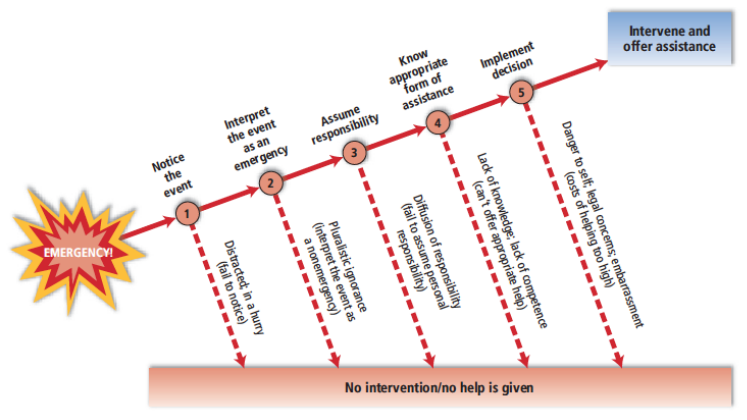
Key Steps in Deciding to Help:
Notice potential emergency
Correct interpretation as emergency:
Pluralistic approach: (wait & see approach)
Social comparison to figure out what to do in a given situation, even though, no one is completely sure as to what is happening.
Often bystanders do nothing, as they use the behavior of the people around them as justification for failing to act.
Bystander must assume responsibility:
If who should take responsibility is not clear, then bystanders in any kind of leadership role assume the responsibility.
Having the right skills to help.
Making decision to help:
Fear of possible negative outcomes for ourselves.
Factors That Increase Prosocial Behavior:
Helping people similar to ourselves.
Exposure to prosocial models.
Playing prosocial video games.
Feelings that reduce self-focus.
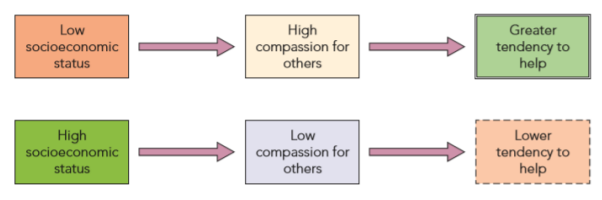
Social class and generosity.
Factors that Reduce Helping:
Social exclusion.
Darkness.
Putting economic value on time.
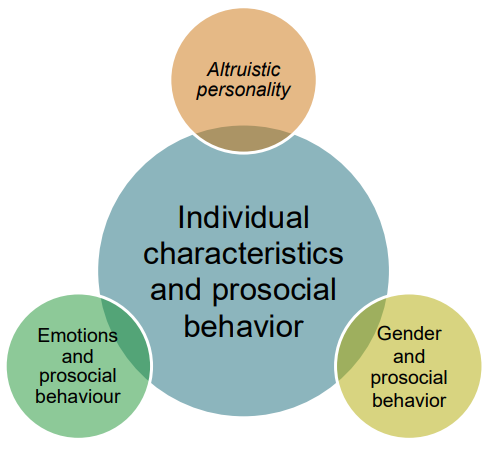
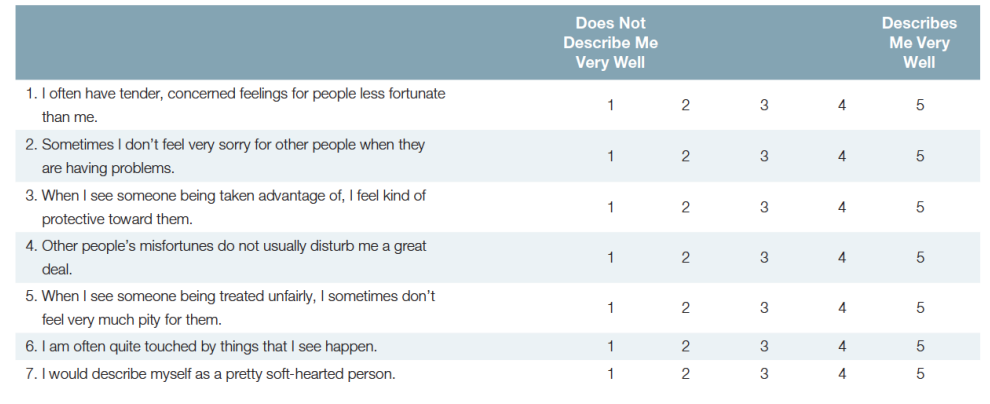
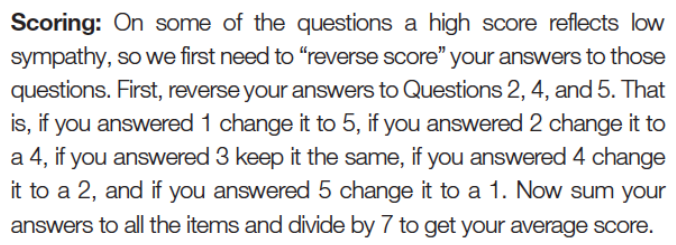
Altruistic personality:
The qualities that cause an individual to help others in a wide variety of situations.
Gender and Prosocial Behavior:
Under the influence of “gender role” in some cultural context, men are expected more to help and women are expected more to nurture.
According to stereotypes, women are more helpful in some contexts as well as men in other contexts.
The implications of stereotypes: women help close people more, while men help strangers more.
Emotions in prosocial behavior:
Positive emotions can increase prosocial behavior.
Sometimes, positive emotions makes us less sensitive to emergency situations.
Seeing people helping others makes us feel elation – inspired, energized.
When feeling negative emotions, there is a tendency to help others.
Factors that can increase prosocial behavior:
Similarities.
The presence of social models.
Music and video games.
Desire to reduce negative feelings; Individuals with low self-importance donate more and are less selfish.
Paying it forward.
Factors that reduce prosocial behavior:
Anonymity.
Social exclusion; Being left out.
Gender and prosocial behavior:
Gender and prosocial behavior: Do women and men differ?
Depends on context.
These differences are consistent with gender roles or stereotypes that suggest that women are more likely to be friendly, unselfish, and concerned with others, while men tend to be masterful, assertive, competitive, and dominant.
Aggression & prosocial behavior:
Sometimes people behave aggressively toward others, not to harm them, but to help better them. Consequences and motives may be the same.
Other factors:
What does research say about the influence of:
Culture
Trauma
Parenting
Other factors
Crowdfunding: Process in which entrepreneurs use money contributed from donors to set up and then run their companies.
Emotions and prosocial behavior:
Positive emotions.
Increases likelihood of helping.
Negative emotions.
Decreases likelihood of helping.
Feelings of elation and helping.