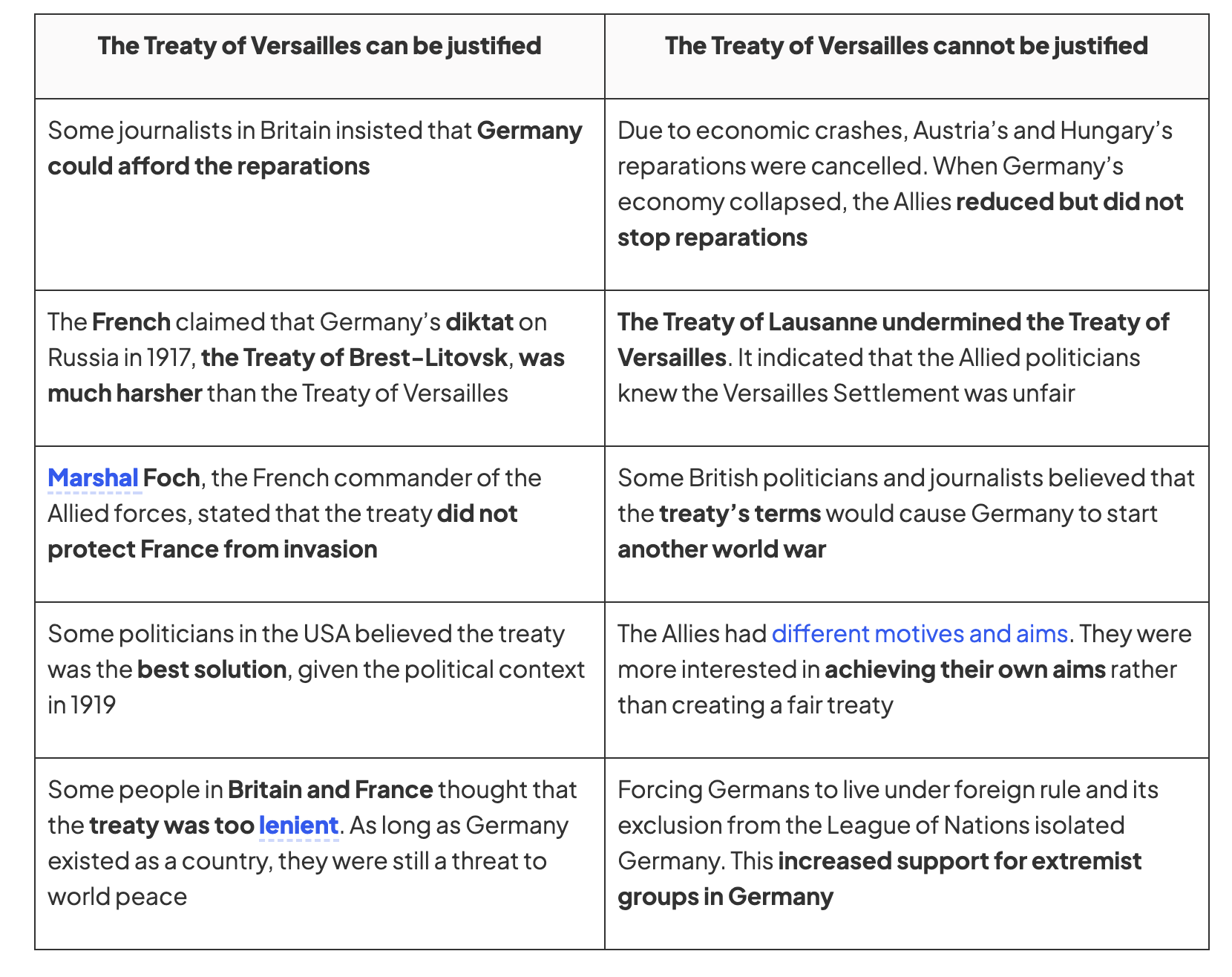
Why was There a Need for the Treaty of Versailles?
What was the TOV:
The Treaty of Versailles was signed by Germany and the Allied Nations on June 28, 1919, formally ending World War I
World War I occurred between the Triple Alliance, or Central Powers, of Germany, Austria-Hungary and their allies and the Triple Entente of France, Britain and Russia.
What was the Schlieen Plan?
Germany launched it in August 1914
It was aimed for Germany to rapidly invade and conquer France by cutting through neutral Belgium.
However, it was a FAIL! which caused the trench warfare
What was the Spring Offensive
Launched by the German Empire in March 1918
Their military leaders were confident that it would result in German victory
Despite its early successes, the gamble of the Spring Offensive did not deliver the necessary defeat of the Allies.
The German army retreated in November 1918, but it was not defeated. Some Germans did not believe in signing the armistice because Germany had not lost the war on the battlefield
What is the Treaty of Brest-Litovsk?
forced Russia to give up around 1 million square miles of land and over a third of its population
The Allies used this treaty against Germany during the Paris Peace Conference
Some European countries argued that Germany should suffer as harsh peace terms as they had forced Russia to endure
Signed on the 3rd March 1918
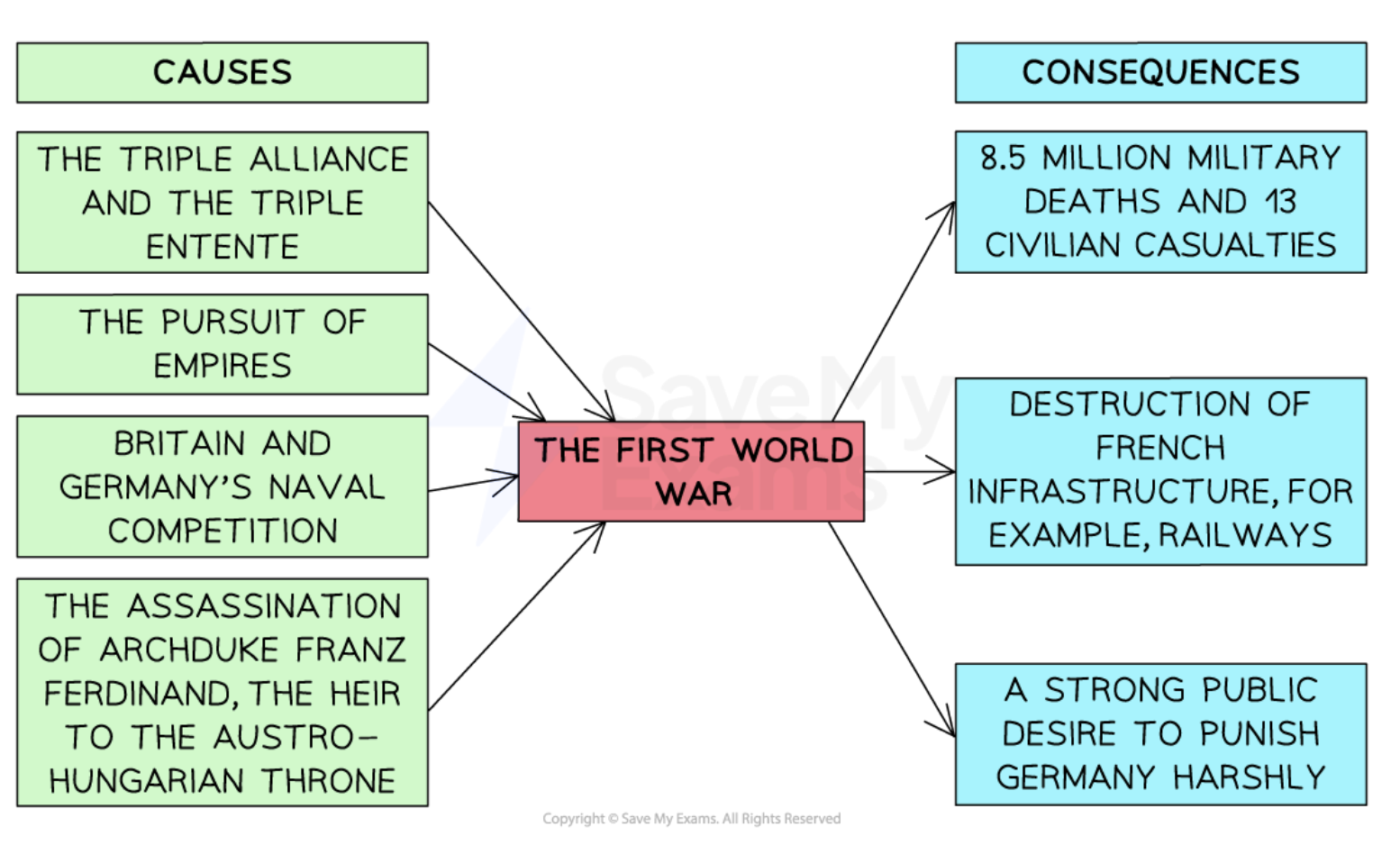
World War 1:
The First World War devastated Europe, causing 8.5 million military deaths and around 13 million civilian casualties, with France experiencing a significant demographic imbalance. Heavy fighting on the Western Front in Belgium and France resulted in widespread destruction, including factories, railways, and roads, which created severe economic problems. This destruction and loss notably influenced the desire for revenge against Germany, shaping the harsh terms of the Treaty of Versailles.
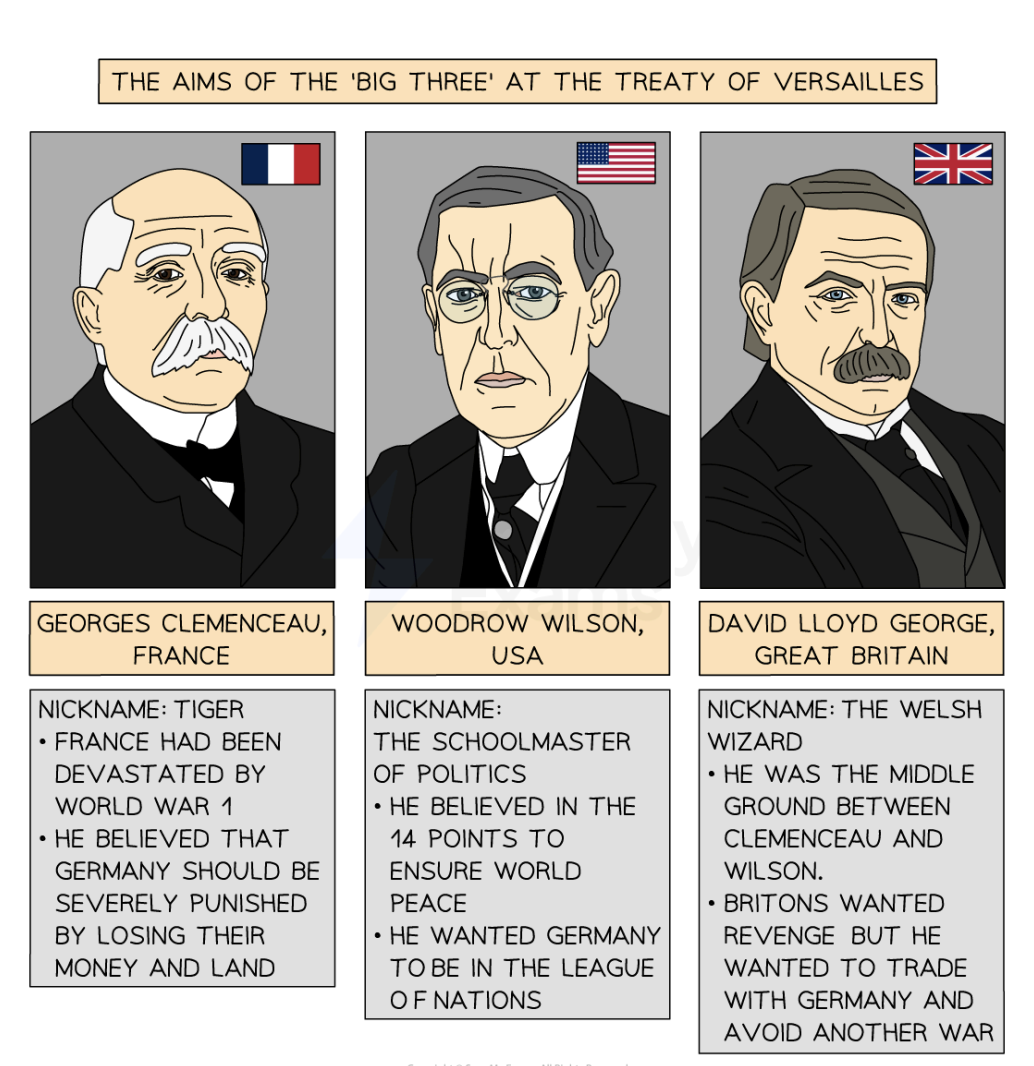
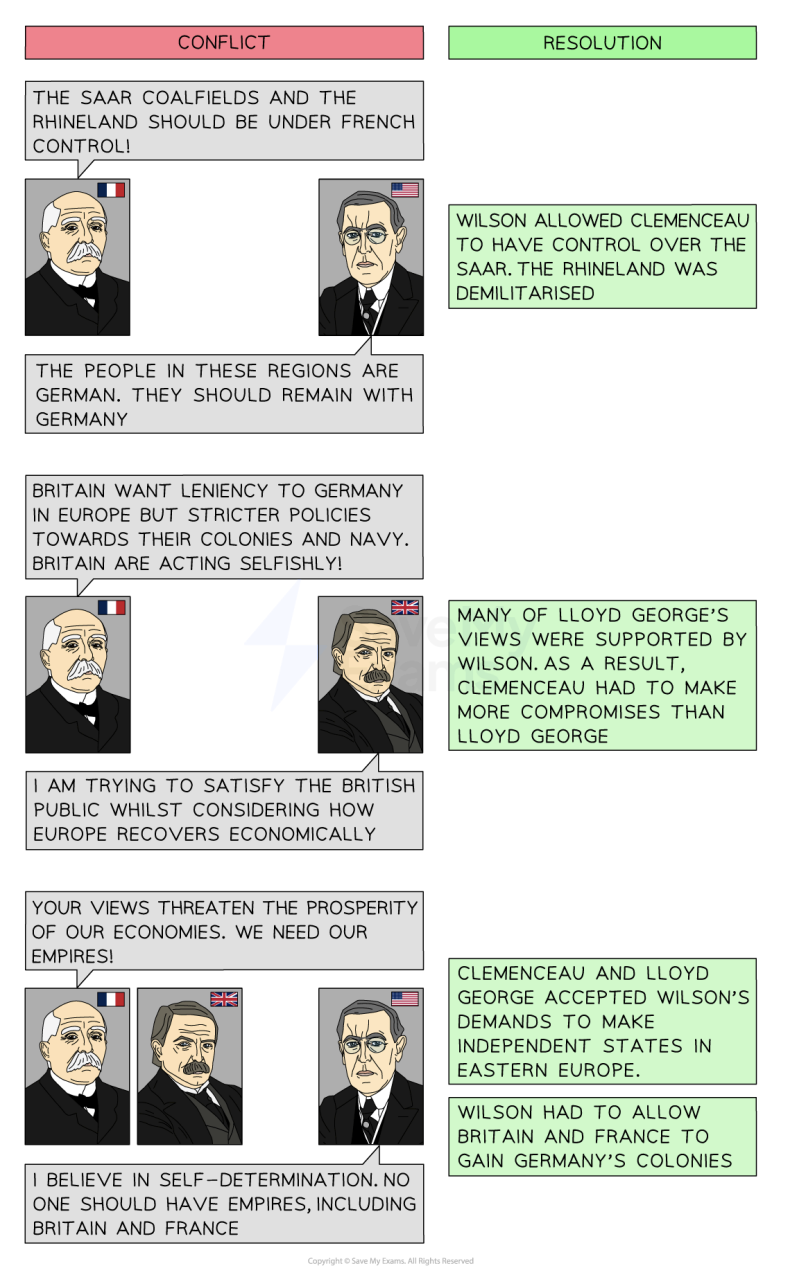
The Big 3: (Paris Peace conference)
The Big 3 were 3 different leaders from 3 countries:
Britain (David Lloyd George)
France (Georges Clemenceau)
USA (Woodrow Wilson)
Each leader had different motives after World War 1
France: (Clemenceau)
had fought twice during the 19th century
When Germany attacked, France lost some of their land called “Alsace-Lorraine”, which France feared the Germans would do again because they shared the border
Wanted to restrict the German army and to pay for the damage that was done
USA: (Wilson)
Created “Wilson’s 14 points of peace”
Pictured the league of nations
Wanted all countries to join the League of Nations
Wanted trade with Germany
Large reparations for Germany to make them “Weak”
Britain: (David Lloyd George)
Agreed with Frances’ motives
Had high casualties like France
Before World War 1, Germany had challenged Britain’s naval power
In 1888, when the German Empire was around, Britain wanted to have the biggest and strongest empire
Supported “Wilson’s 14 points of peace”
The British public hated Germany and wanted revenge
What were the terms of the Treaty of Versailles? (Paris peace conference)
Germany was severely punished by the terms of the Treaty of Versailles. The key points were:
Germany had to accept full blame for the war. This was known as the ‘war guilt clause.’
Germany had to pay full reparations for the damage caused by the war. This was later calculated to be £6.6 billion.
Alsace-Lorraine, which had been taken from France by Germany in the 1871 war, was returned to the French.
Germany was only allowed to have 100,000 soldiers, no tanks and no air force. Their navy could only have 6 battleships.
The Rhineland, an area of Germany on the border with France, was demilitarised.
Anschluss was banned.
Woodrow Wilson’s idea for a League of Nations was agreed. Its aim was to avoid the mistakes that helped cause World War One, although it was largely seen as unsuccessful.
The 'Diktat'
The TOV took action on the 10th of Jan 1920. Many Germans argued that the weimar shouldn’t have signed the TOV. They believed that German politicians committed a ‘dolchstoss’ - or a ‘stab in the back. The people in the German Government who signed the TOV the German people called them “November criminals”. This made the German people feel very humiliated and weak because of the TOV. No German representatives were allowed to attened peace talks. Now Germany HAD to accept the terms of peace.
Rise of Extremism: The Kapp Putsch:
It was to over throw the Weimar Government
It was Right wing party called the “Spartacist Revolt” who were Ex-soilders of the army
Happened in January 1919
5,000 Freikorps members and their leader, Wolfgang Kapp, attempted to overthrow the government in a putsch
Kapp and the Freikorps invited the Kaiser back to govern Germany
Many of the lower classes would not support the Kaiser returning to Germany
They had achieved more rights and freedoms since the Kaiser’s abdication (To the netherlands)
All the Weimar workers went on strike (No water or Electricty)
he Freikorps continued to cause issues in the Weimar Republic after the Kapp Putsch
Within the first three years of the Weimar Republic, there were 376 political assassinations
In August 1921, two members of the Freikorps shot and killed Matthias Erzberger. Erzberger signed the armistice
Occupation of the Ruhr:
French and Belgian troops entered the Ruhr in January 1923
The French responded by bringing their own workers into the Ruhr
The Weimar government could not force the soldiers out of the Ruhr because the Treaty of Versailles:
Restricted Germany’s army to 100,000 men
The French had 750,000 soldiers
The French occupation of the Ruhr destroyed Germany’s economy because the Weimar government:
Insisted on paying wages to the striking workers
Began importing coal from other countries to meet demand
Could not provide factories with enough coal
Germans experienced shortages in everyday items. This increased the prices of these products
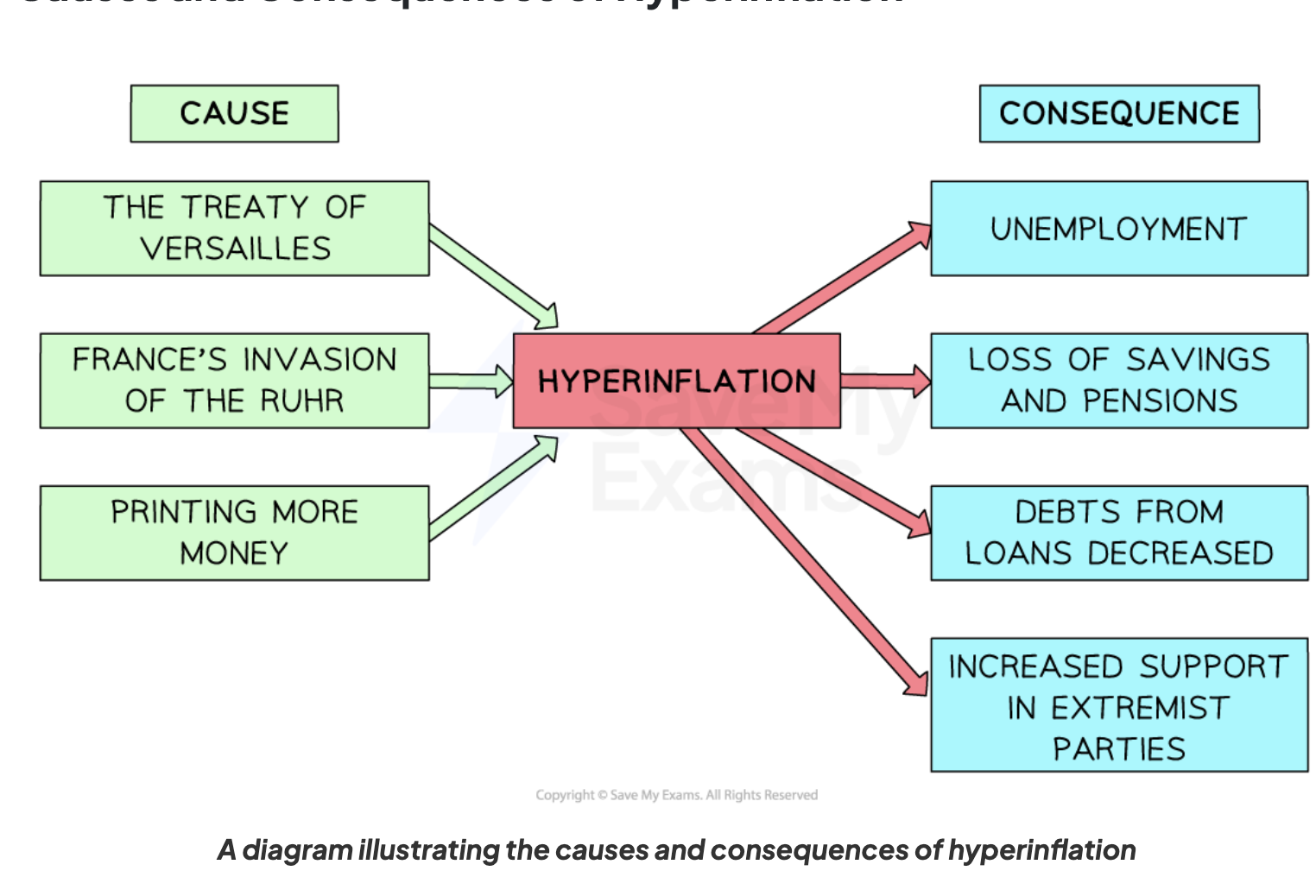
Hyperinflation, 1923
The term inflation means the increase in prices
Inflation happens in an economy over time
For example, a loaf of bread in January 1971 cost 10p. The average price of bread in January 2023 was £1.06
Inflation is measured as a percentage
Hyperinflation is when prices rise rapidly and become out of control
Wages struggle to match the cost of living
In extreme cases, a country’s currency loses its monetary value
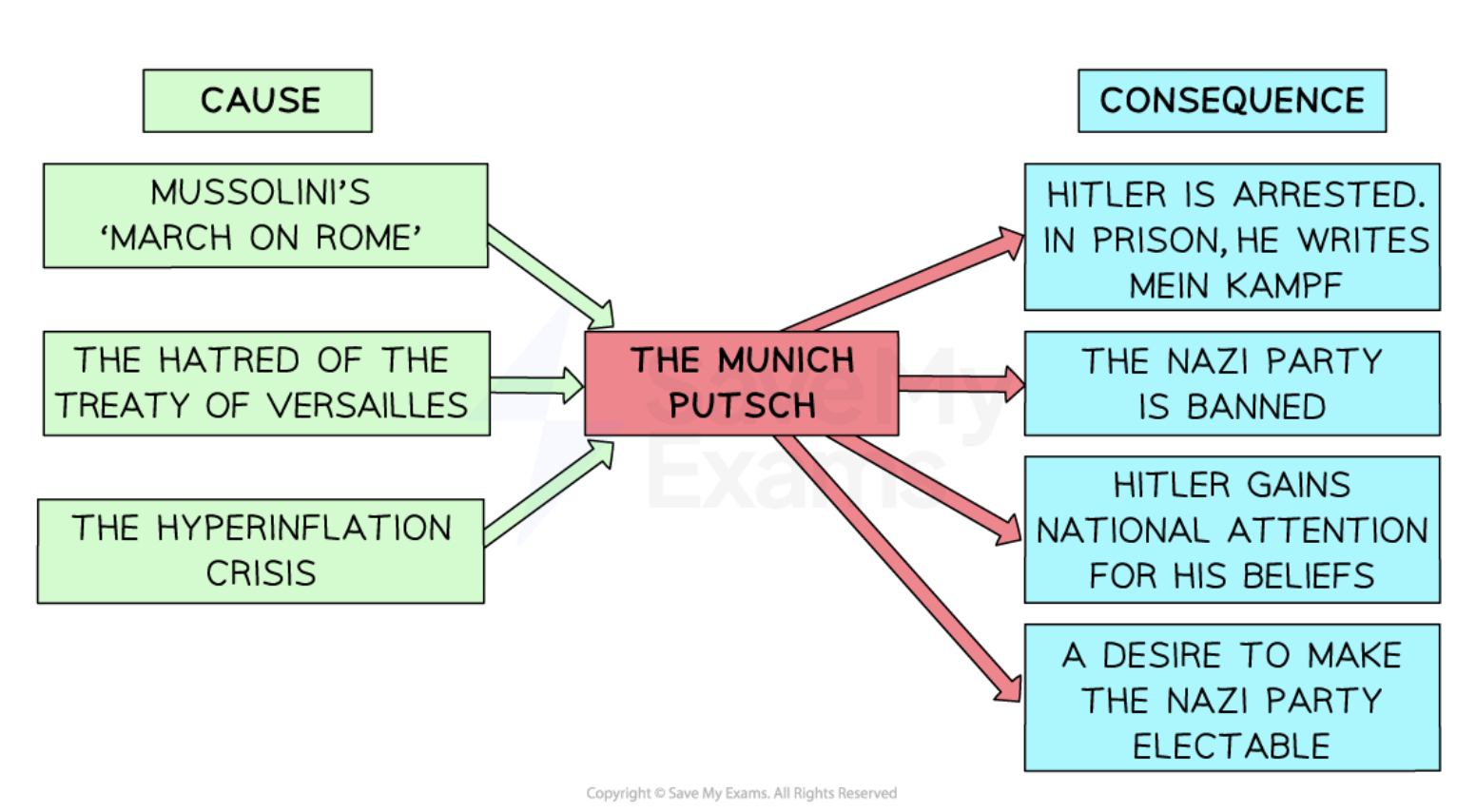
Rise of Extremism: The Munich Putsch
The Post-War Treaties
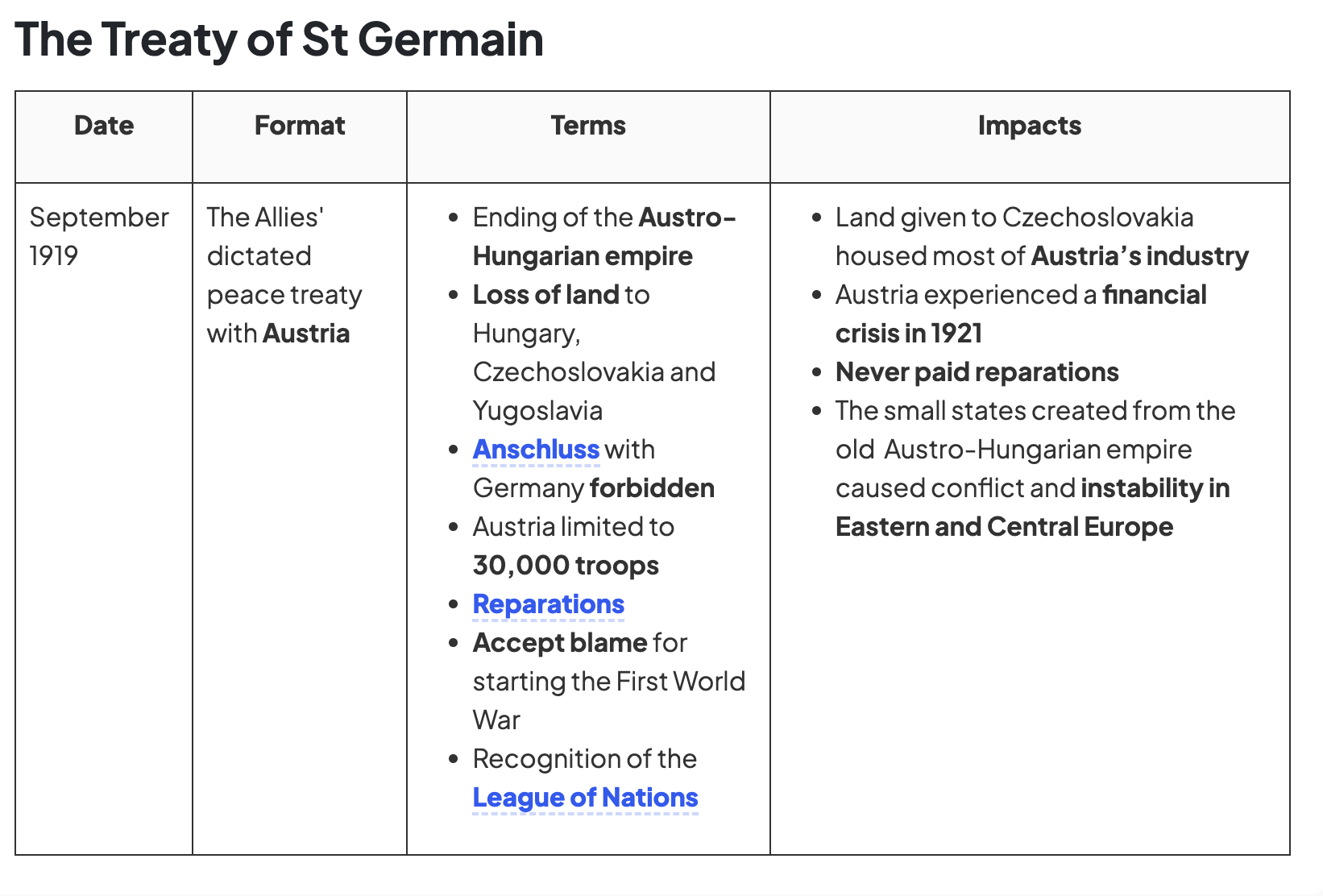
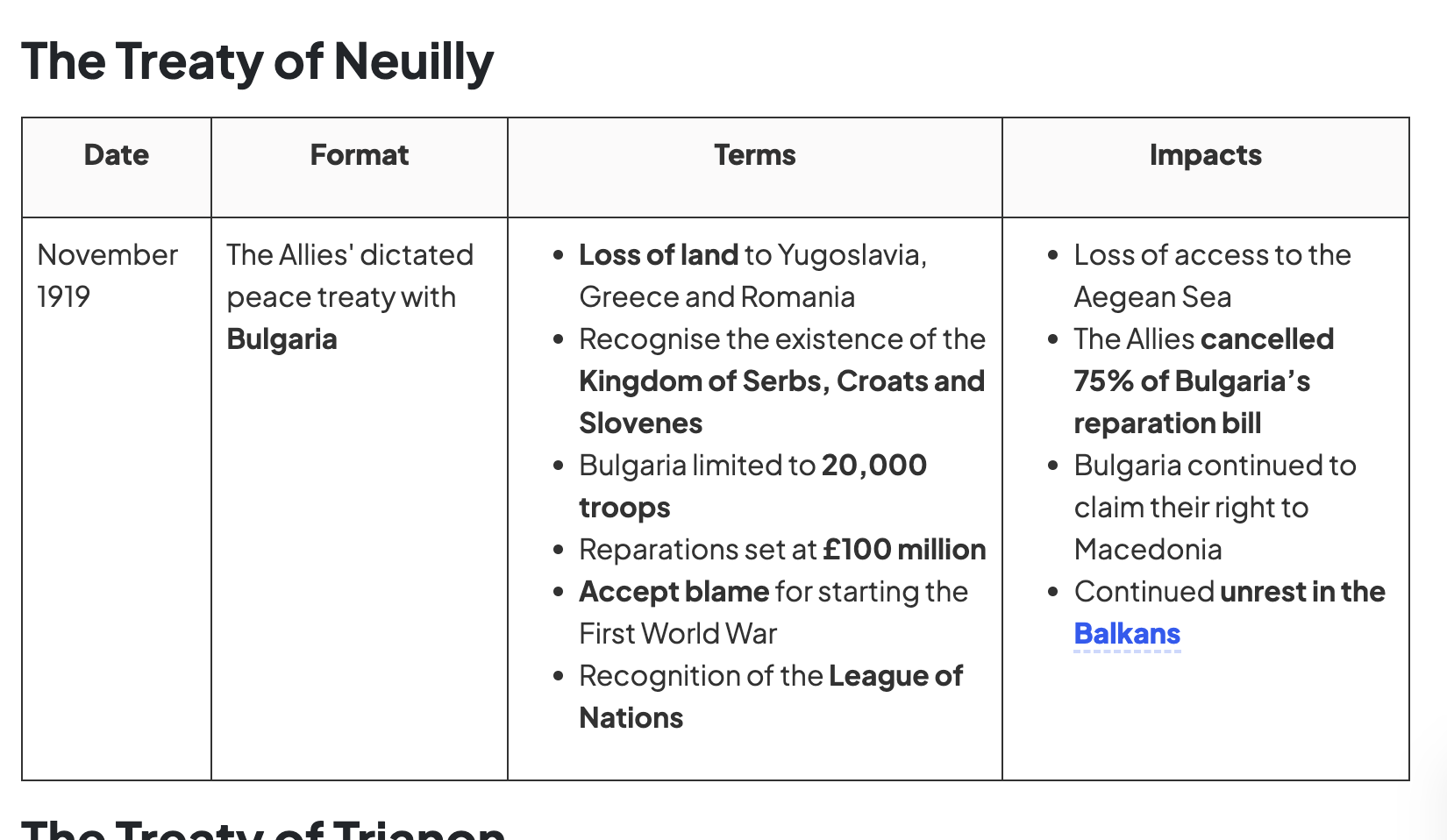
Four other treaties created the Versailles Settlement. These are:
The Treaty of St Germain
The Treaty of Neuilly
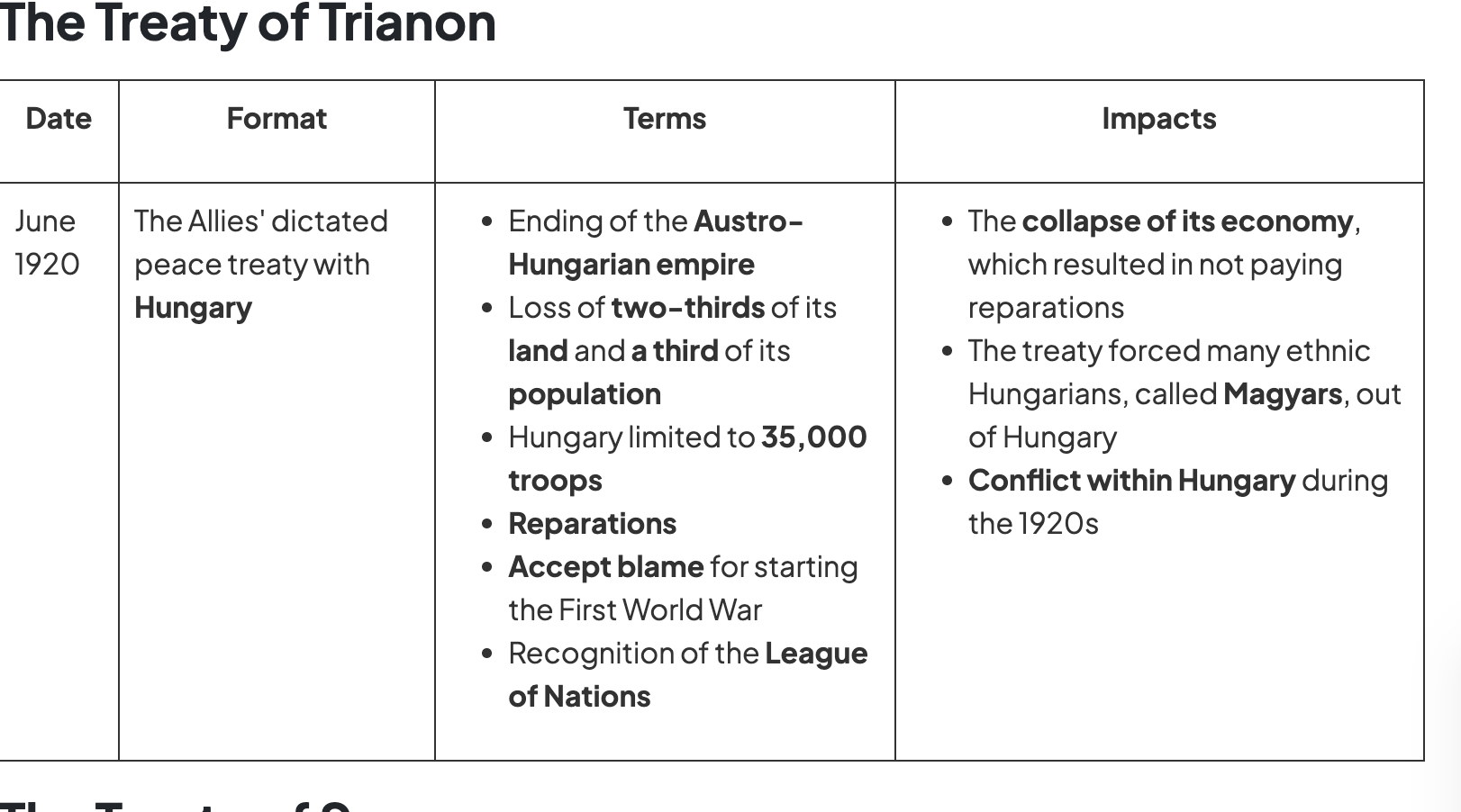
The Treaty of Trianon
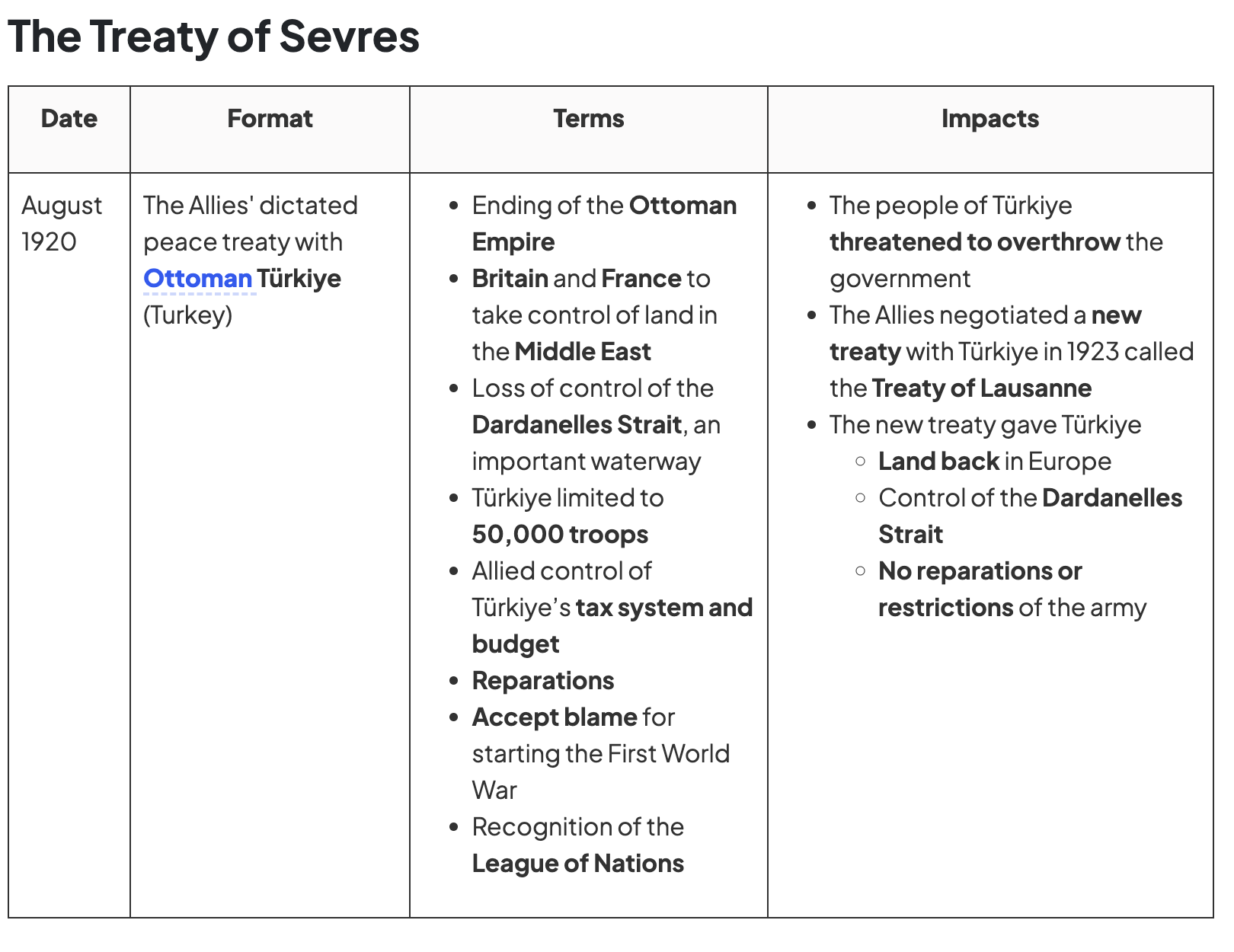
The Treaty of Sevres
IMPORTANT!!!!