virtuopsy
Virtopsy and Forensic Science
Definition: Virtopsy is an innovative, noninvasive approach to postmortem examination that leverages virtual imaging technology.
Integration of Disciplines: Combines principles from forensic science, pathology, radiology, image processing, physics, and biomechanics.
Traditional Autopsy Limitations
Conventional Autopsy Process: Involves dissection and interpretation to determine the cause of death, often perceived as intrusive.
Causes distress among bereaved families due to potential mutilation of the body.
Cultural objections from religious groups who may oppose autopsy procedures.
Difficult to reassess findings post-examination.
Emergence of Virtopsy
Origins: Developed in the late 1990s, prompted by a forensic need to analyze a victim's skull without physical alteration.
**Etymology:
"Virtus" (Latin) meaning useful, good, efficient.
"Autopsy" (Greek) translates to "to see with one’s own eyes."
Technical Aspects of Virtopsy
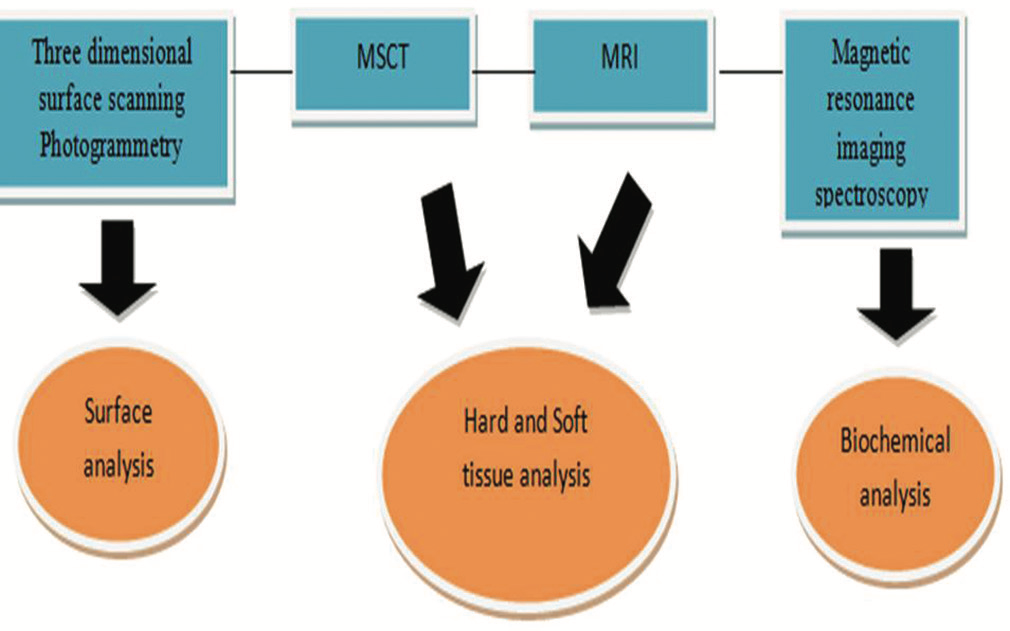
Core Technologies: Four key imaging modalities that underpin the virtopsy framework:
3D Surface Scanning: Utilizes triangulation and photogrammetry for detailed surface imaging.
Multi-slice Computed Tomography (MSCT): Provides detailed images of hard tissue structures.
Magnetic Resonance Imaging (MRI): Focuses on soft tissue imaging for injury verification.
MRI Spectroscopy: Analyzes postmortem biochemical changes to determine the time of death.
Specialized Equipment
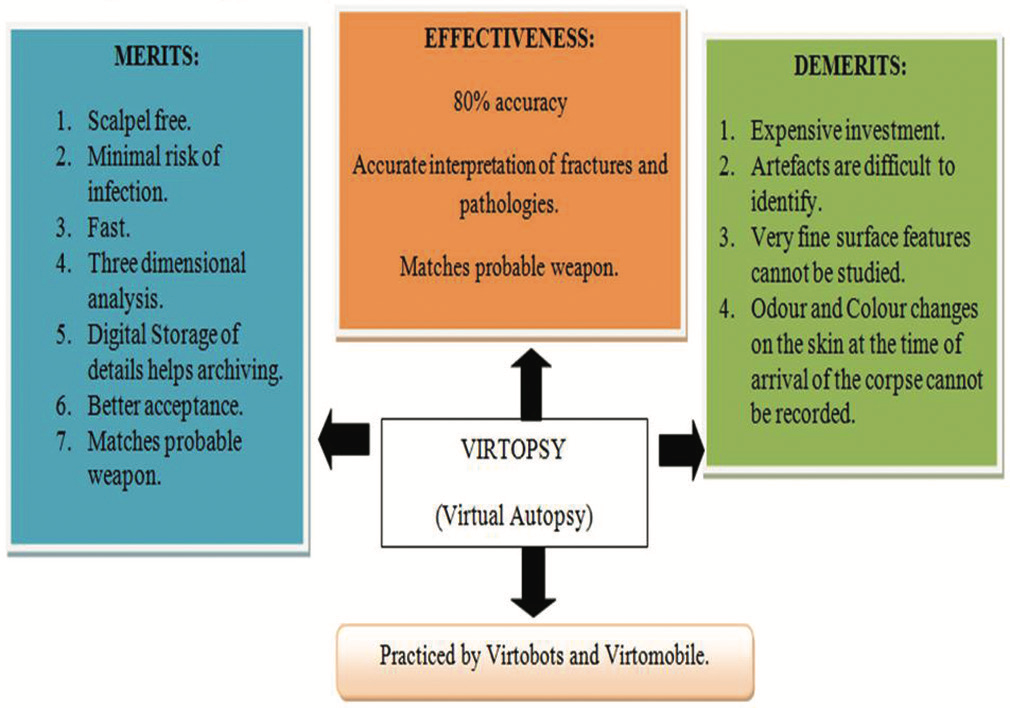
Virtobot: An advanced, integrated imaging system capable of performing virtopsy efficiently.
Virtomobile: A portable version of the Virtobot designed for use in disaster scenarios, facilitating on-site examinations.
Advantages of Virtopsy
Noninvasive Approach: Eliminates the risk of infection and respects cultural sensitivities associated with body integrity.
Time-Efficient: Allows for immediate release of the body post-examination, expediting legal processes.
High Precision: Enhances understanding of trauma and potential weapons without physical alterations to the body.
Disadvantages of Virtopsy
Cost Issues: High initial investment in equipment is a barrier, particularly in developing countries.
Limited Database: Lack of extensive comparative studies with traditional autopsy restricts its application range.
Diagnostic Limitations: Not all pathologies can be diagnosed with virtopsy, especially subtle injuries.
Effectiveness and Accuracy
Comparative Effectiveness: Virtopsy demonstrates approximately 80% concordance in cause of death determination compared to traditional autopsy.
Enhanced Visualization: Offers superior visualization of complex conditions, such as skull base pathologies and intricate injuries.
Applications in Forensic Odontology
Legal Support: Used in cases requiring rapid, accurate forensic assessments to aid legal decisions.
Identification Aid: Helps in matching ante- and post-mortem records for identification through radiographic analysis and injury pattern simulation.
Conclusion
Ethical Considerations: Virtopsy is gaining traction in forensic practices, contributing to more ethical examination standards while respecting diverse cultural beliefs.
Future Potential: With advancing technology, virtopsy is poised to revolutionize forensic science, promising greater acceptance and efficacy in postmortem analysis.