Testosterone & Female Reproductive Structure
I) Testosterone
A) Intro to Testosterone
A steroid hormone that is produced in the interstitial cells of the testes.
Produced in response to luteinizing hormone (LH) from the anterior pituitary gland.
B) Functions of Testosterone
Stimulates spermatogenesis (production of sperm) in the seminiferous tubules.
Stimulates the development of secondary sexual characteristics: signals of sexual maturity.
Facial & body hair
Enlargement & lengthening of the larynx
Increased production of body oil & pheromones
Increased both skeletal and smooth musculature (i.e., male dermis is 40% thicker than female)
Change in bone structure and proportion
Maturation of the penis & testes, which are the primary sexual characteristics (used for gamete production & delivery)
Behavioural effects: sex dive
Increased muscular development: Anabolic steroids are testosterone-like drugs.
C) Regulation of Testosterone Production
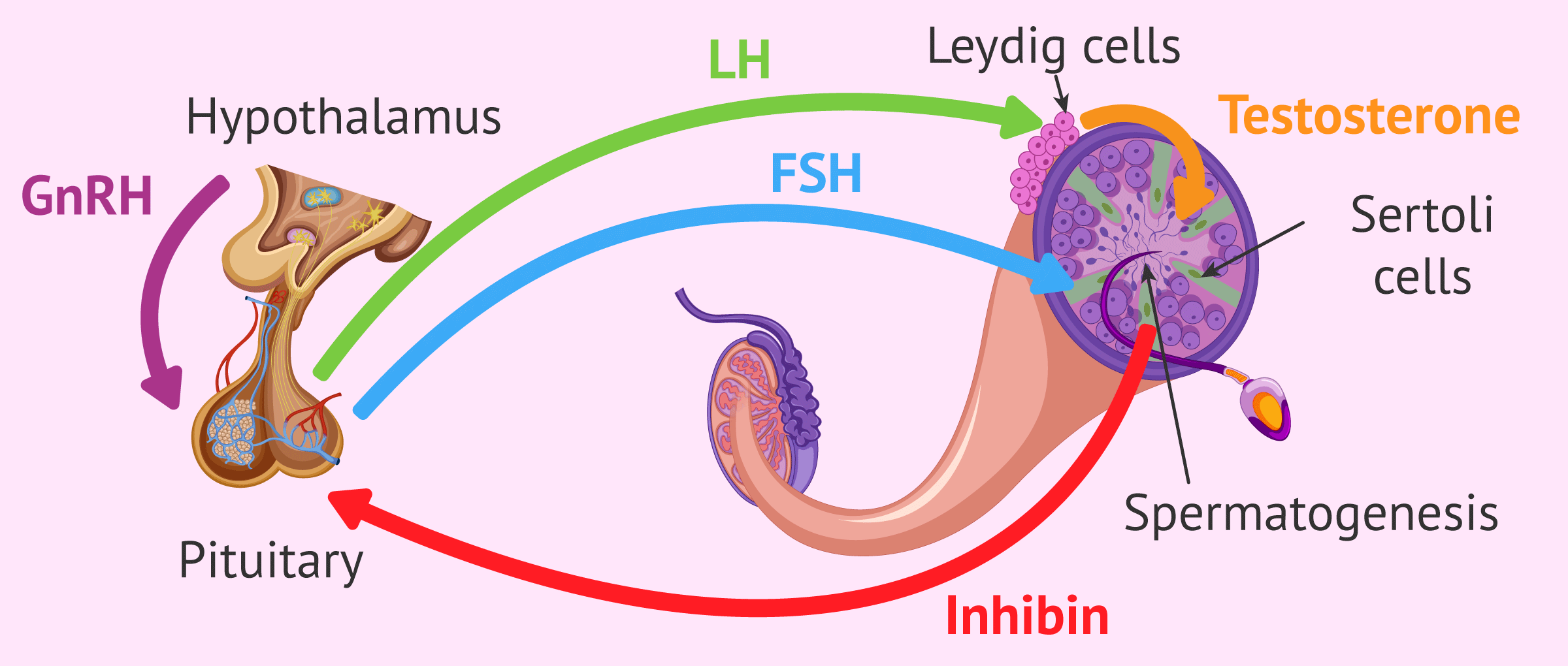
At the age of 10, the hypothalamus matures and secretes gonadotropin-releasing hormones (GnRH), which target the anterior pituitary gland (this occurs in both males and females).
In response, the anterior pituitary releases 2 hormones targeting different tissues:
Follicle-stimulating hormone (FSH): targets the testes, which stimulates the development & maintenance of the seminiferous tubules.
Luteinizing hormone (LH): targets interstitial cells in the testes
Causes the interstitial cells to make and release testosterone.
Testosterone can then act on its target tissue (e.g., seminiferous tubules).
Hypothalamus: centre of homeostasis, monitoring the levels of testosterone
If the testosterone level is too high, it will reduce the GnRH release.
This causes the anterior pituitary to reduce FSH and LH release.
Therefore, the testes produce less testosterone & sperm cells.
II) Female Reproductive Tract
A) Main Structures
1. Ovary
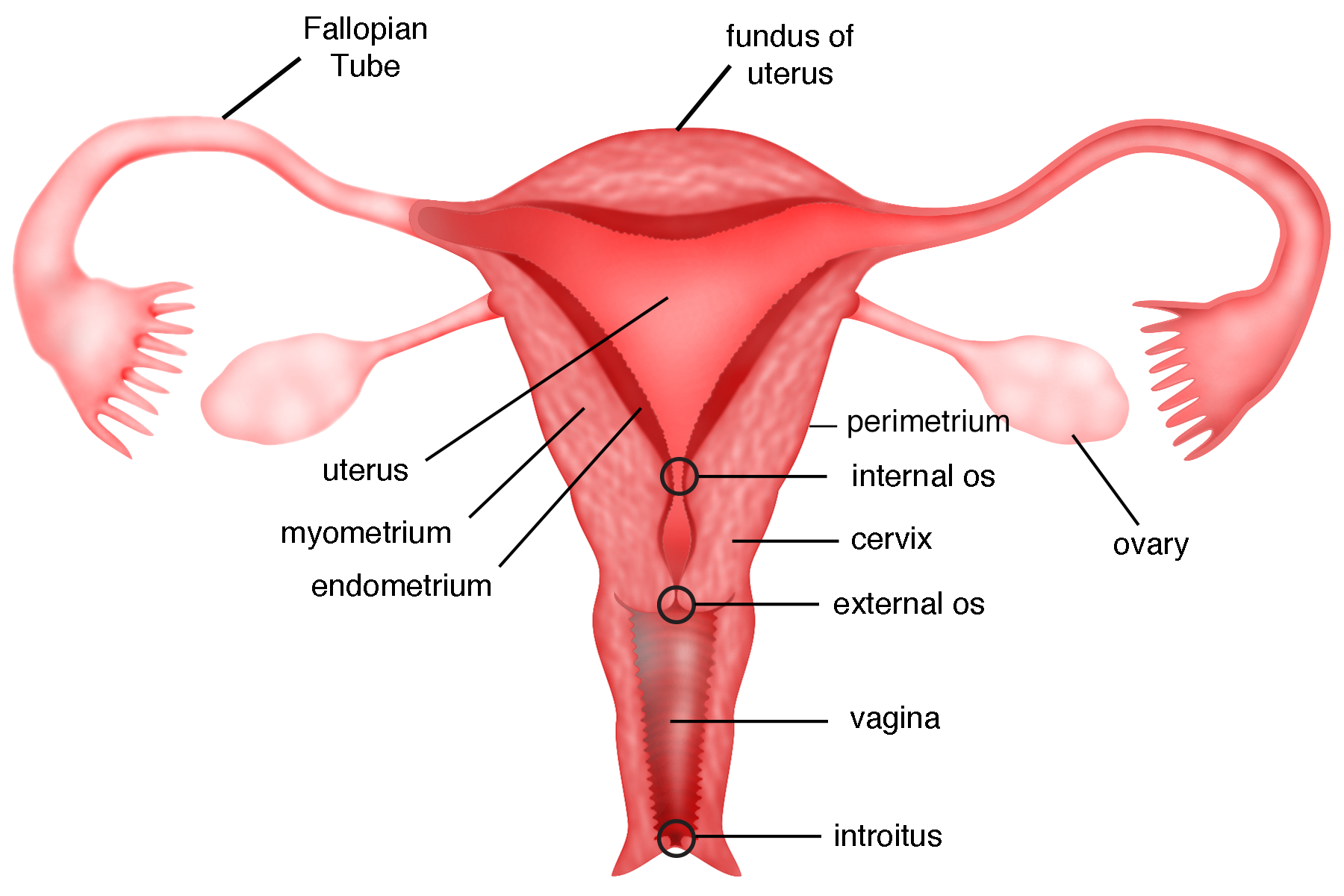
Produces ova and hormones (estrogen & progesterone).
Size & shape of almonds, close to the wall of the pelvic cavity, held in place with loose connective tissue & pelvic ligaments.
Follicles: contain maturing ova in response to FSH from the anterior pituitary, and release 1 ovum during “ovulation”.
Corpus luteum: remnants of follicles left in the ovum that become a temporary gland in response to LH from the anterior pituitary.
Produces estrogen & progesterone
If no pregnancy, it disintegrates.
2. Oviduct (aka “fallopian tubes”)
Receives ovum following ovulation.
Not directly connected to the ovary: fingerlike “fimbrae” catch the ovum as it bursts from the ovary wall.
Lined with beating cilia to sweep the ovum down lengthwise. Also performs peristalsis.
Location of fertilization: the ovum begins to disintegrate upon leaving the ovary. By the end of the oviduct, the ovum is no longer capable of being fertilized by sperm, so fertilization must occur before this.
3. Uterus
Receives ovum or a zygote (a fertilized ovum) and nourishes the fetus during pregnancy.
Fist-sized, inverted pear in shape.
Thick walls of smooth muscle.
The inner face is lined with special tissue: endometrium
Has many capillaries for lots of transport to and from the fetus.
Contains glands that secrete a nutrient medium to nourish the zygote.
4. Cervix
Narrow opening at the base of the uterus.
Usually plugged with mucus to prevent the entry of bacteria, but it is also a barrier for sperm.
During ovulation, mucus becomes watery so sperm can pass.
Allows the endometrial layer to be shed during menstruation.
Keeps developing the fetus inside the uterus through pregnancy, but during birth, it dilates to ~ 10 cm (diameter of the baby’s head) to allow exit.
A common site of cancer, often caused by HPV, is transferred from the head of the penis.
HPV is detected by the Pap Smear Test.
5. Vagina
Receives penis during sexual intercourse, birth canal for baby exit (& endometrium during menstruation).
A stretchy elastic muscular tube that leads from the cervix to the outside of the body.
6. Clitoris
An organ of sexual stimulation, analogous to the male penis.
In front of the vagina, short (~ 2 cm) tissue with the same nerve endings as the head of the penis.
Usually, neccessary to stimulate for female orgasm.