EXTRA study stuff
IgG: Main form and Most abundant type of antibody in circulation
production increases after infection or immunization
secreted during secondary response
IgA: secreted in mucosal membranes and breast milk
activity can prevent infection
mucosal membranes (respiratory tract, digestive tract, reproductive tract, urinary tract) are in external environment
IgA within these regions can neutralize pathogen before it gets into tissues, interstitial fluid, or blood /lymph, preventing infection
good target for certain types of vaccines
IgE: Responsible for allergic reactions in immediate hypersensitivity reactions (e.g. anaphylactic shock)
IgM: antigen receptor on B cell surface prior to infection / immunization
secreted during primary response
B cell surface receptors
First antibody produced in response to infection.
IgD: antigen receptor on B cell surface prior to infection / immunization
Sexual Reproduction
Human Life Cycle
Anisogamy: different-sized gametes
Female Gametes: These are large, referred to as Ova.
Male Gametes: These are small, referred to as Spermatozoa.
Gamete Formation:
games are formed through meiosis within the gonads
testes: gonads for males
ovaries: gonads of females
Gametes contain only one copy of each chromosome
gametes are haploid = 1n (n= number of chromosomes)
fertilization: union of two gametes to produces zygote
The fusion of an ovum and spermatozoon.
zygote = diploid (2n)
contains two copies of each chromosome
new individual progresses from zygote embryo fetus
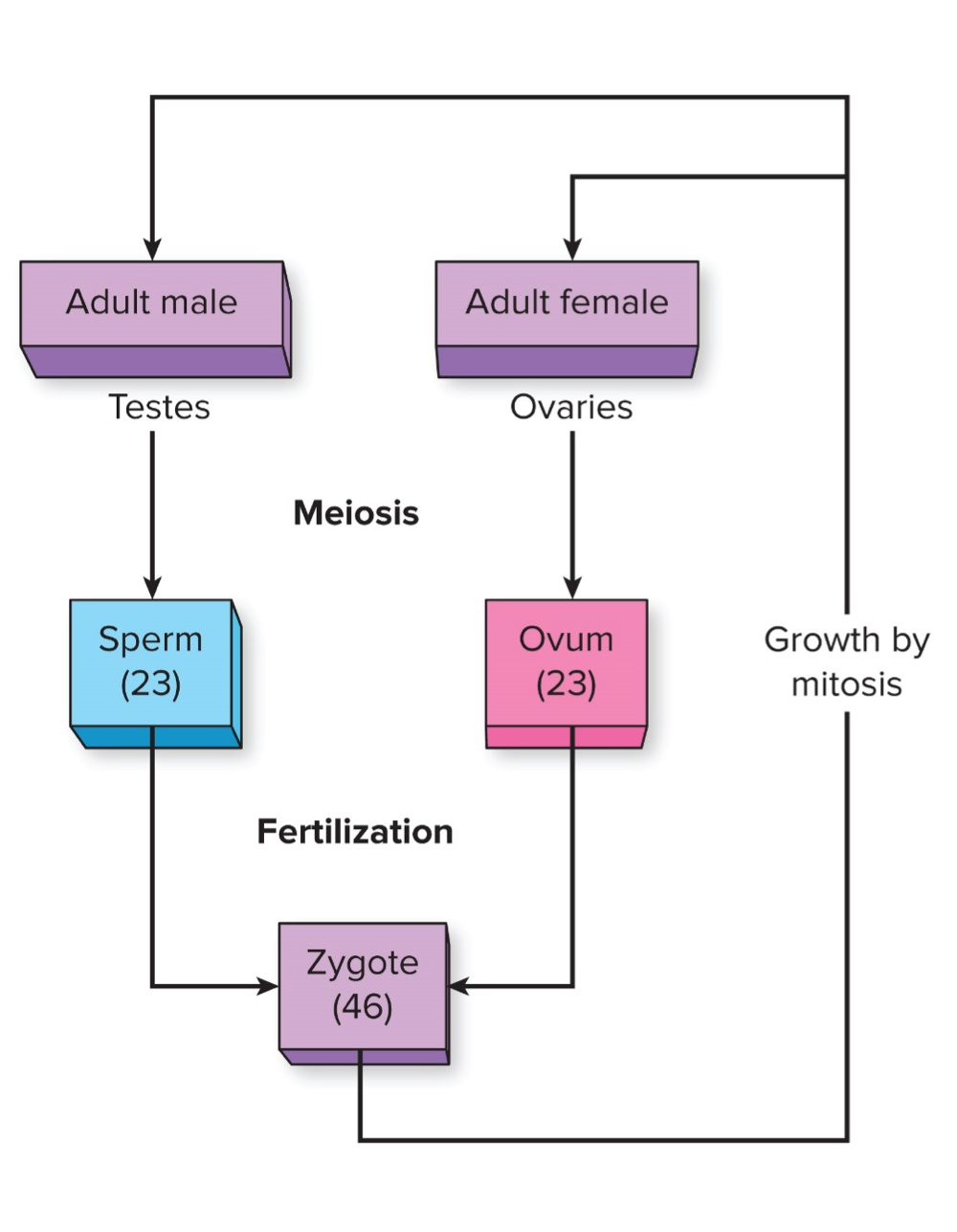
mitosis: daughter cells identical to parent cells
meiosis: formation of gametes
Sex Chromosomes
autosomal chromosomes: first 22 pairs of chromosomes, other than the sex chromosomes.
Sex chromosomes: The X and Y chromosomes; the unequal pairs of chromosomes involved in sex determination (which depends on the presence or absence of a Y chromosome).
Females: have two chromosomes ().
Males: have one and one chromosome ().
male can only pass on either an or a chromosome
Y chromosome has many testis-specific genes
testis-specific genes: genes that are related only to development of the testes
sex of child is determined by contributing sperm
Bare Bodies
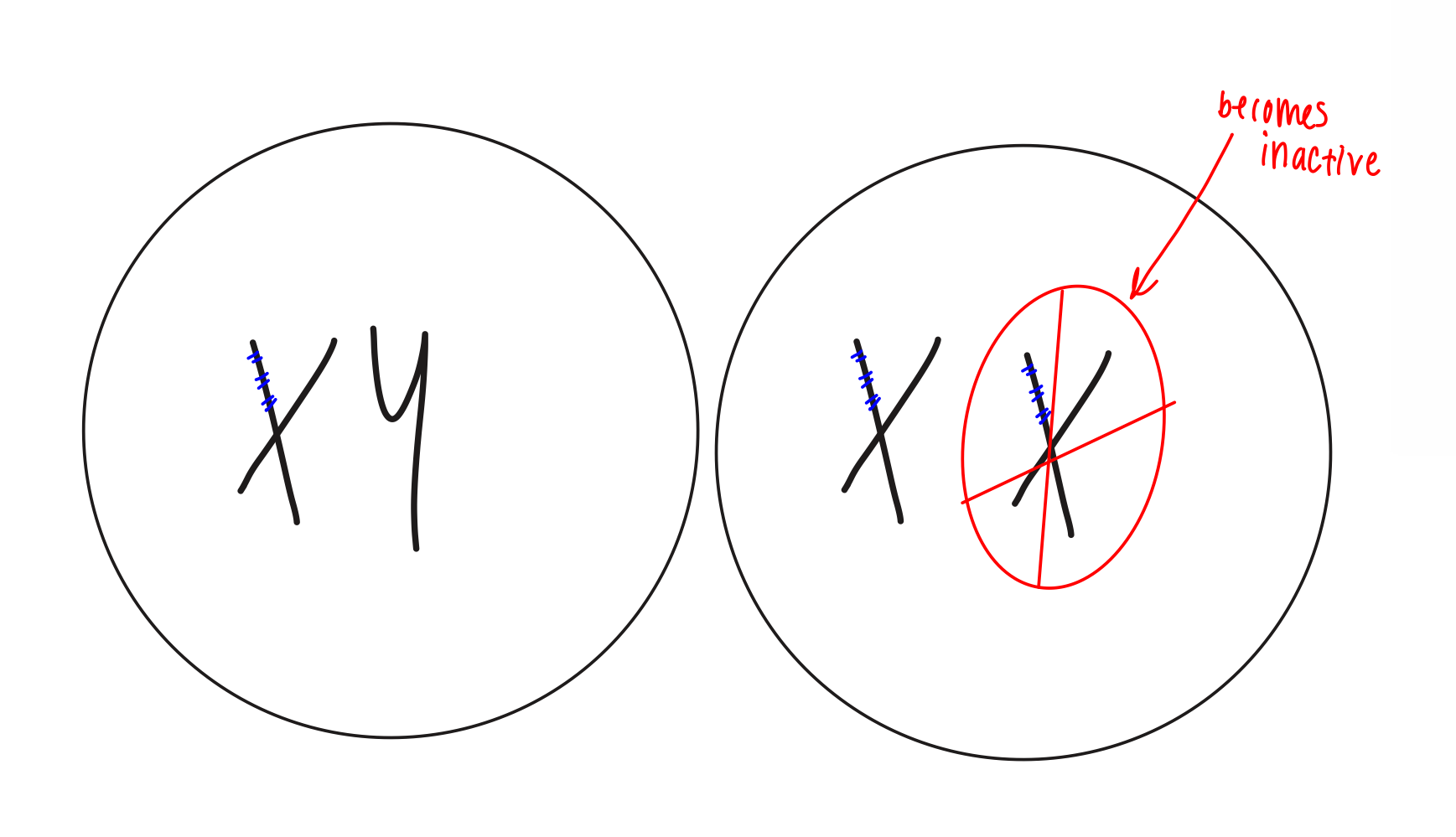
X chromosome inactivation: In females, ONE of the two chromosomes is inactivated
This inactivation produces a visible Barr Body
ensures that males and females have the same number X-linked genes
serve as an easy way to visually determine the sex of a cell.
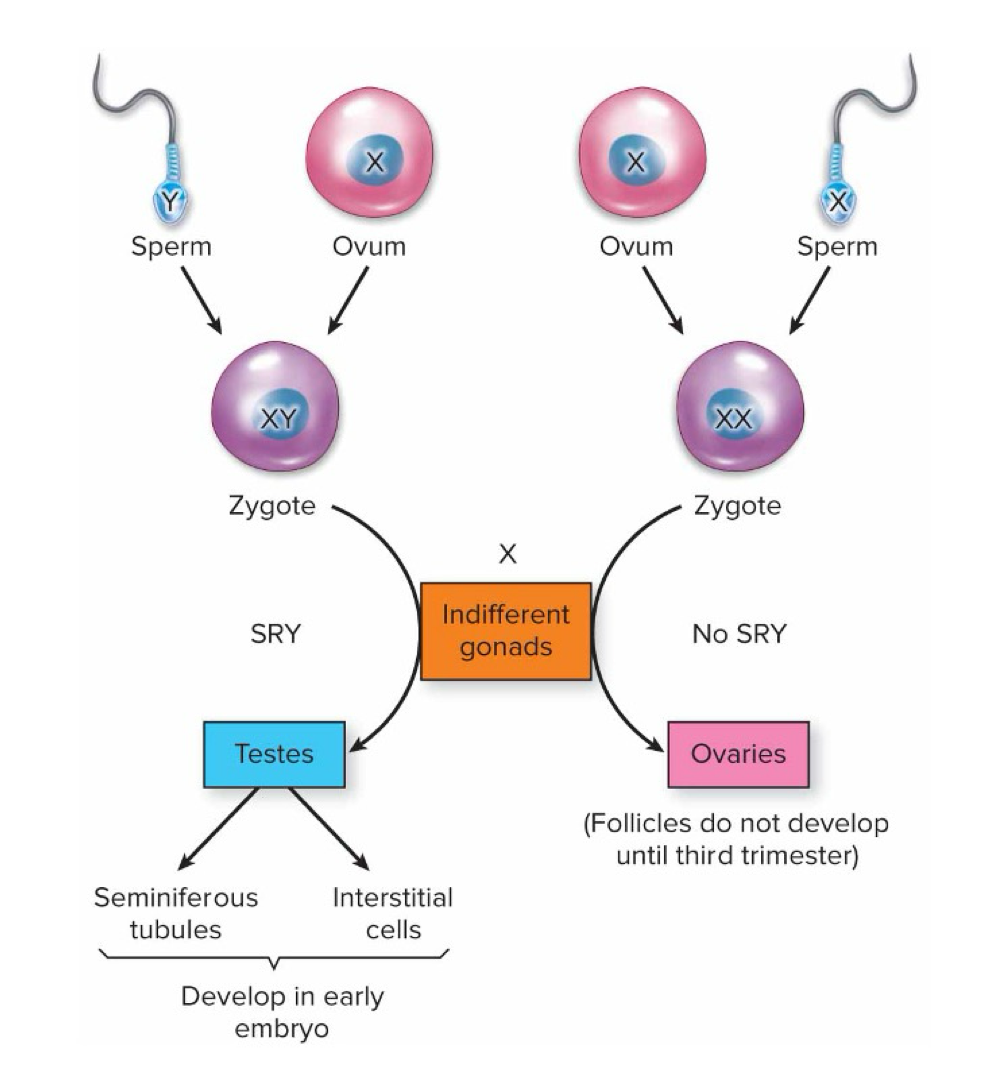
Chromosomal Sex and Embryonic Gonads
SRY: a specific gene contained in a Y chromosome that codes for a substance known as Testis Determining Factor (TDF).
Testis Determining Factor (TDF): converts indifferent gonads into testes
In the absence of TDF, indifferent gonads naturally become ovaries.
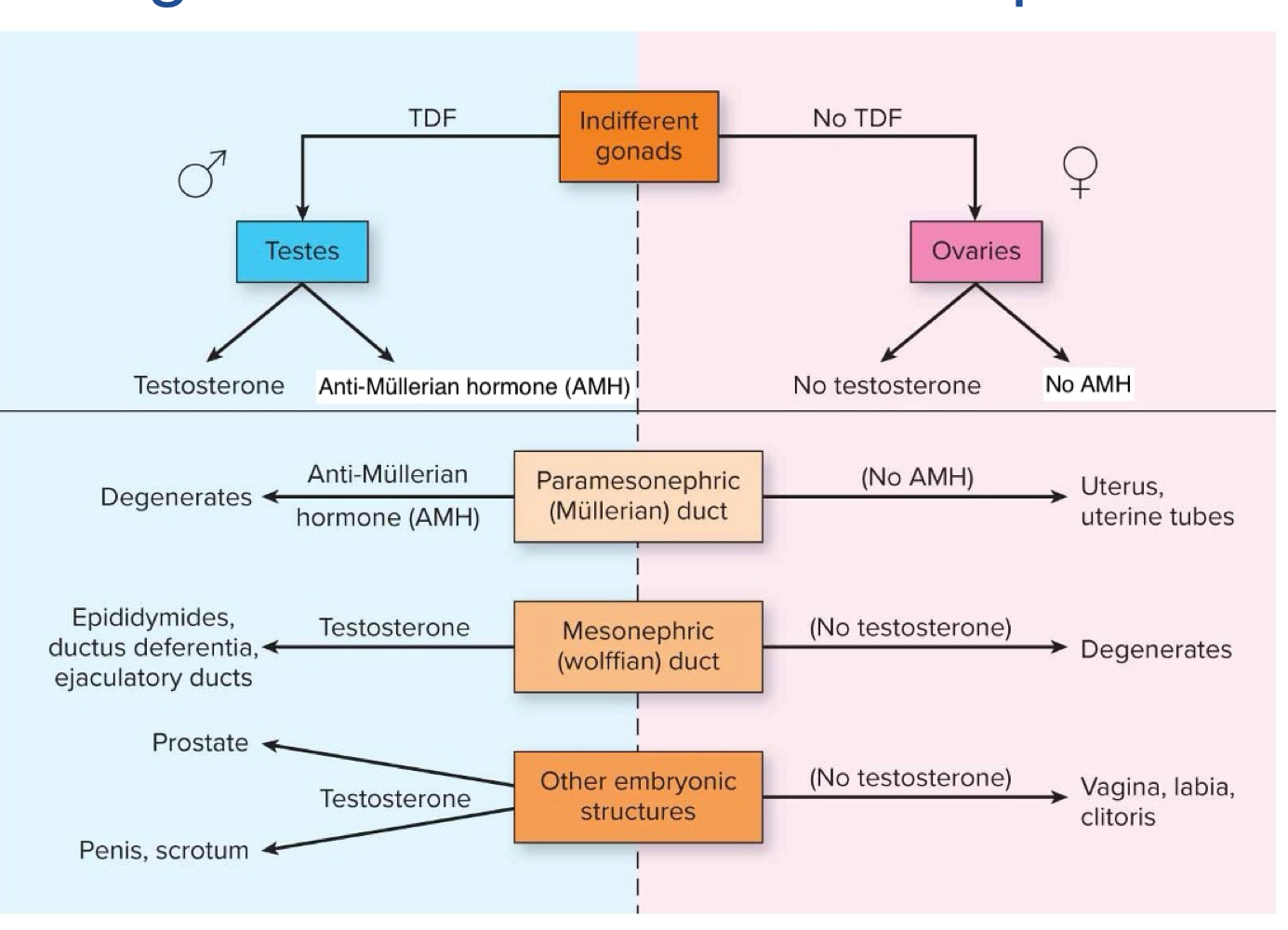
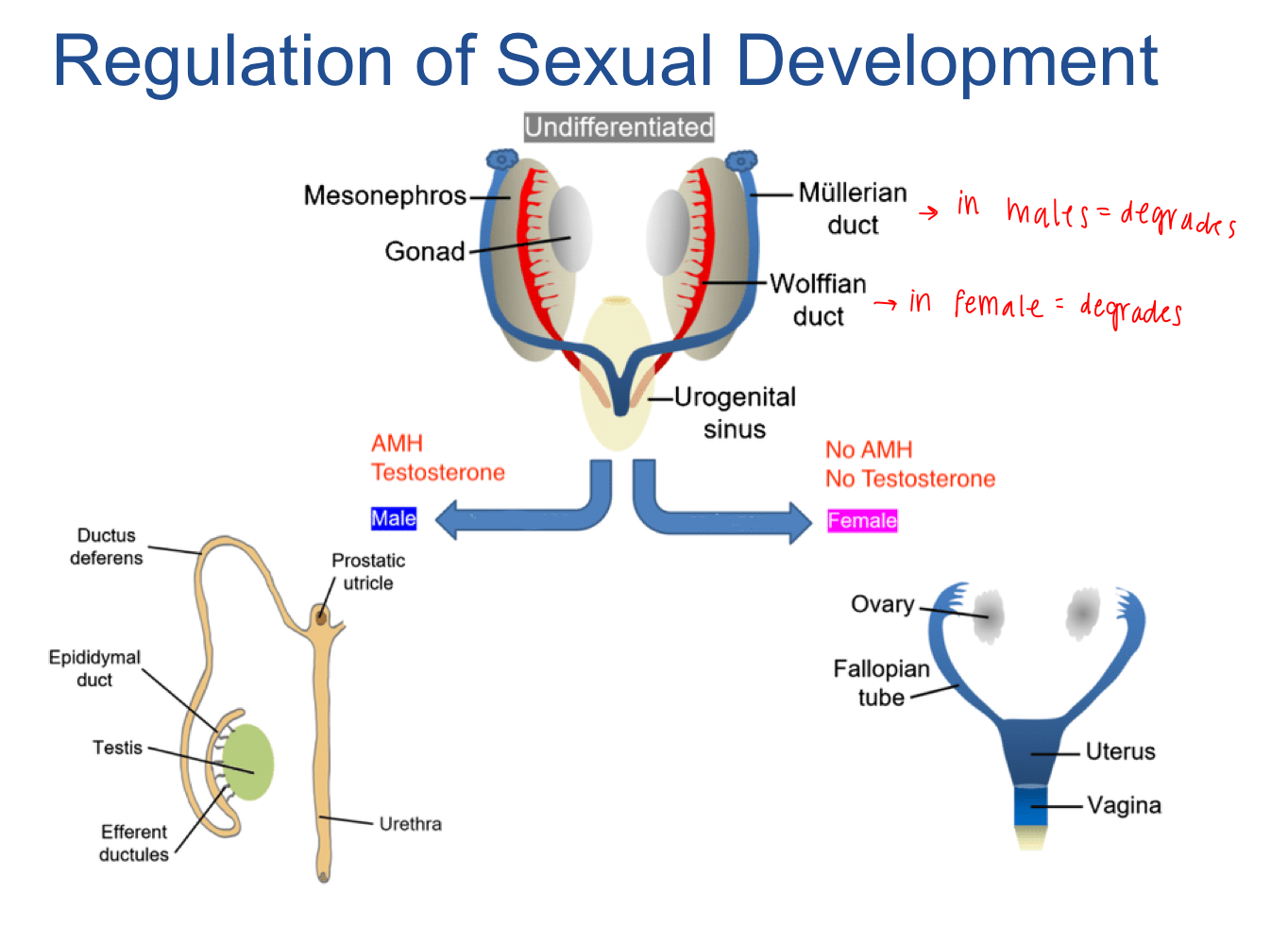
Regulation of Sexual Development
indifferent gonads in presence of TDF results in formation of testes
testes will secretes two hormones:
anti-mullerian hormone (AMH)
testosterone
anti-mullerian hormone (AMH):
degenerates paramesonephric (Mullerian) duct
testosterone:
turns mesonephric (wolffian) duct into:
epididymides
ductus deferentia
ejaculatory ducts
turns other embryonic structures into:
prostate
penis
scrotum
indifferent gonads without presence of TDF results in formation of ovaries
Ovaries will secrete NO AMH and NO testosterone:
NO anti-mullerian hormone (AMH):
turns paramesonephric (Mullerian) duct into:
uterus
uterine tubes
NO testosterone:
degenerates mesonephric (wolffian) duct
turns other embryonic structures into:
vagina
clitoris
labia
Development of External Genitalia
in males and females for the first 6 weeks, they have the same undifferentiated structures:
testosterone masculinizes these into scrotum, prostate gland, spongy urethra, and penis
without testosterone, these become the labia and clitoris
Overview of Endocrine Regulation for Males and Females
Generalized Functions of FSH and LH
anterior pituitary gland structure:
Neurons secrete regulatory hormones into capillary bed called hypophyseal portal system at the base of the hypothalamus
then delivered to a secondary capillary bed in anterior pituitary gland
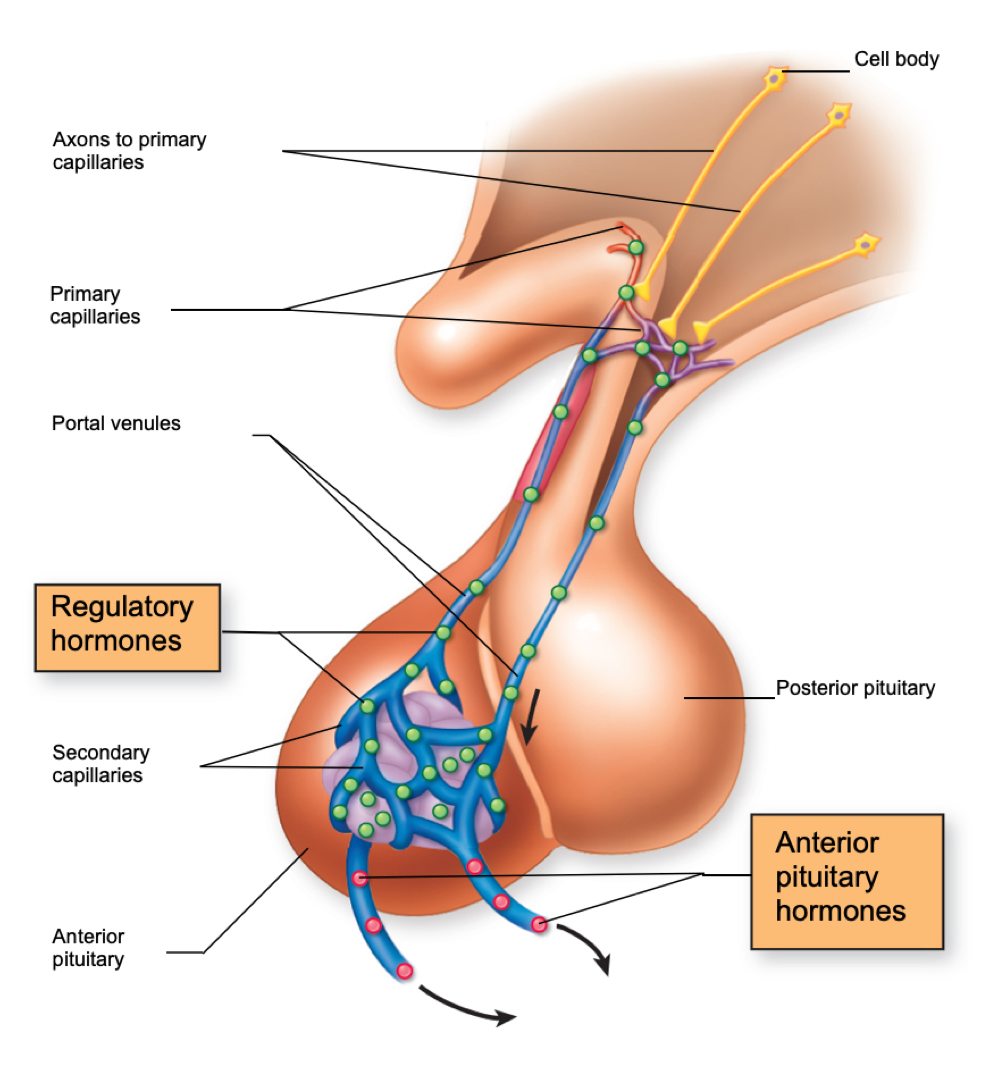
Two important hormones produced in the anterior pituitary glands of both males and females
Follicle Stimulating Hormone (FSH)
Luteinizing Hormone (LH)
FSH and LH are both TROPIC hormones
TROPIC hormones: hormones that target another endocrine gland
secretion of FSH and LH is stimulated by hypothalamus secreting gonadotropin-releasing hormone (GnRH)
gonadotropin-releasing hormone (GnRH): stimulate release of Follicle Stimulating Hormone (FSH) and Luteinizing Hormone (LH)
tropic hormone because targets another endocrine gland
target gonads (testes and ovaries)
Functions of FSH and LH:
Stimulation of spermatogenesis (in males) or oogenesis (in females)
Stimulation of gonadal hormone secretion
Maintenance of the structures of the gonads
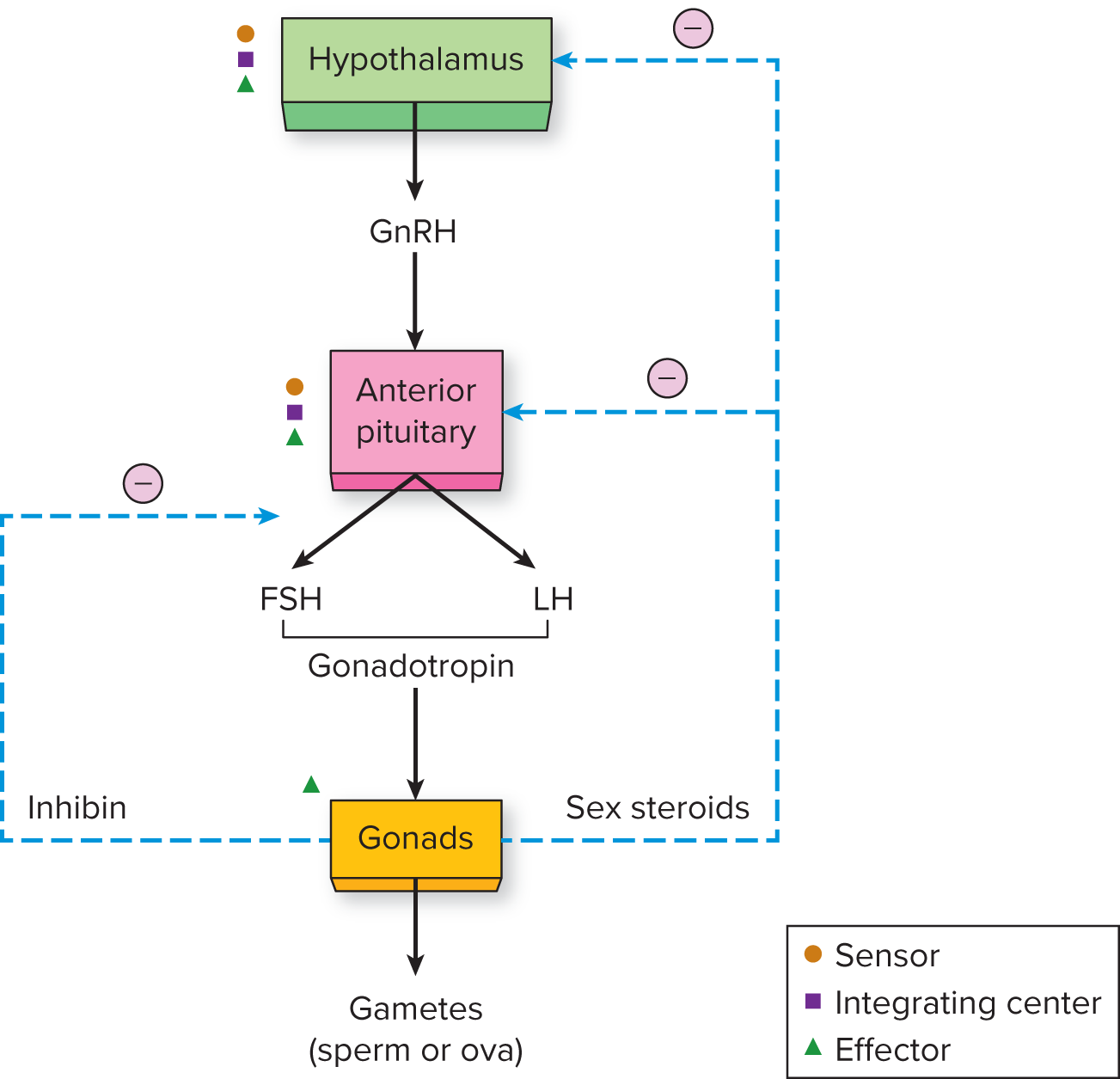
Generalized Regulation of FSH and LH
Regulation of FSH and LH:
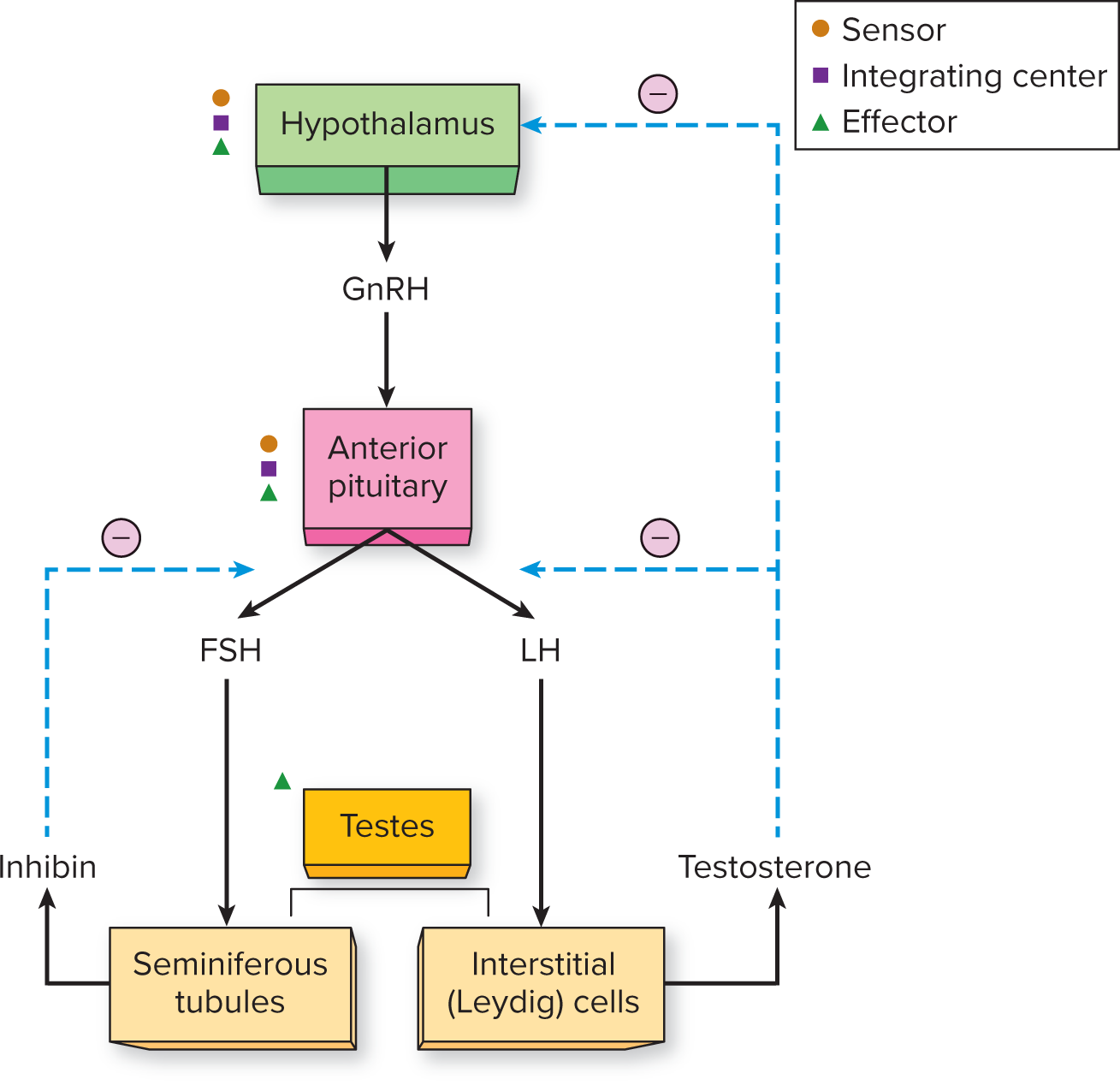
hypothalamus releases Gonadotropin-releasing hormone (GnRH)
GnRH stimulates the anterior pituitary gland to secrete both Follicle Stimulating Hormone (FSH) and Luteinizing Hormone (LH)
FSH and LH stimulates the gonads produce gametes (sperm or ova)
gonads are the effectors
FSH and LH also stimulates the secretions of sex steriods and inhibin
inhibin: hormone secreted by the seminiferous tubules of the testes that specifically exerts negative feedback control of FSH secretion from the anterior pituitary.
sex steroids facilitate a negative feedback loop at two different levels:
hypothalamus:
increase in sex steroids causes decrease in (down regulates) hypothalamus’ secretion of Gonadotropin-releasing hormone (GnRH)
hypothalamus has receptors that detect elevated levels of sex steroids
leads to decreased secretion of GnRH
hypothalamus acts as sensor, integrating center, and effector
Anterior Pituitary Gland:
increase in sex steroids down regulates anterior pituitary’s responsiveness of Gonadotropin-releasing hormone (GnRH)
anterior pituitary has receptors that detect elevated levels of sex steroids, decreasing responsiveness to GnRH
leading to a reduction in FSH and LH secretion
anterior pituitary acts as sensor, integrating center and effector
Inhibin facilitate a negative feedback loop on FSH:
increase in inhibin down regulates the anterior pituitary’s secretion of FSH, without affecting the secretion of LH
anterior pituitary has receptors that detect elevated levels inhibin, decreasing the secretion of FSH
The Male Reproductive System
Organs of the Male Reproductive System
testes: male gonads, location where spermatogenesis takes place
produces sperm
epididymis: coiled tubule where sperm mature or are reabsorbed if not ejaculated
semen: combination of sperm and seminal fluid
seminal fluid: collection of fluid from seminal vesicles, prostate gland, and bulbourethral gland
seminal fluid is:
bicarbonate rich
male and female reproductive tracts are acidic, bicarbonate neutralizes acidic environment for sperm
fructose rich
gives semen fuel/ energy source to travel
Testis Structure and Specialized Cells:
Testes contains seminiferous tubules and interstitial fluid
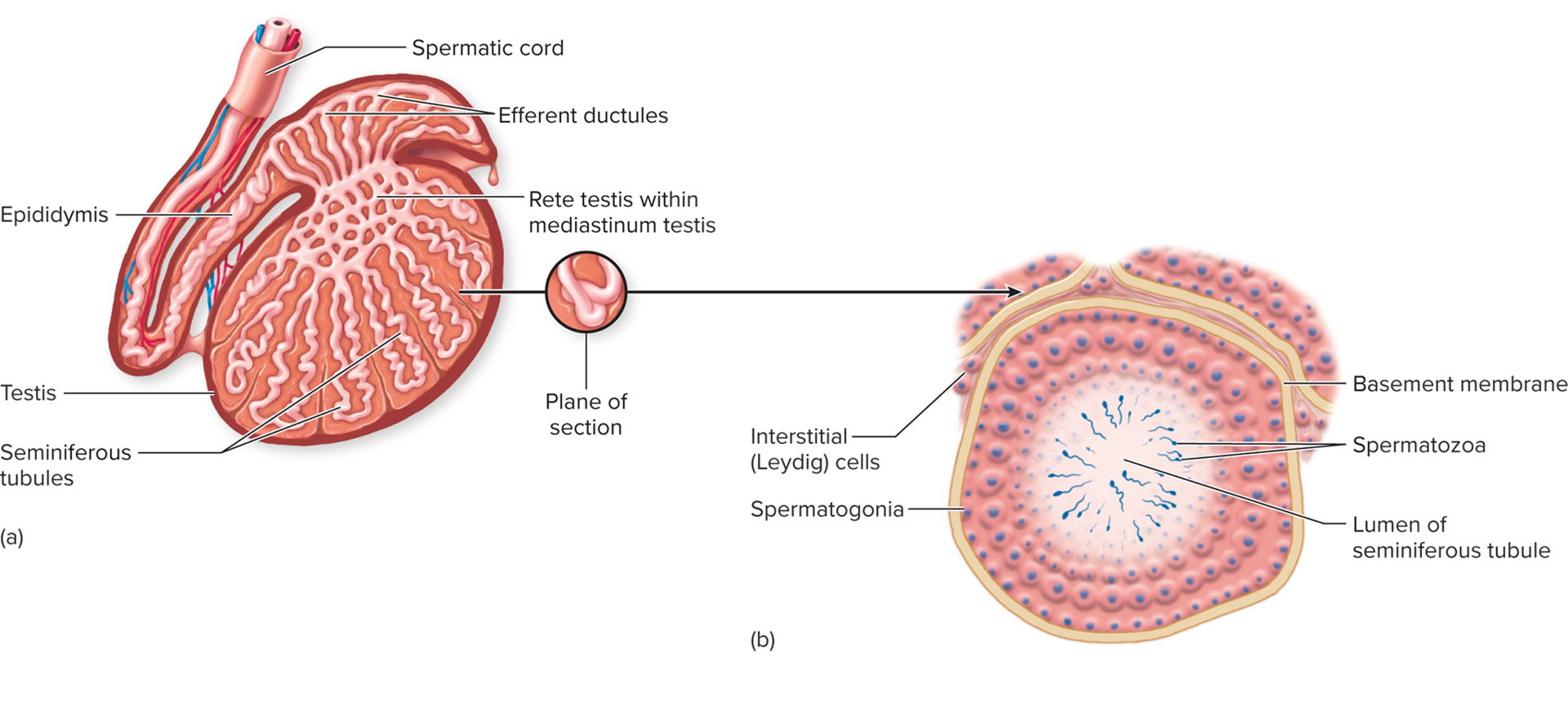
Seminiferous tubules contains sertoli cells:
Stertoli cells: have Follicle Stimulating Hormone (FSH) receptors that influence spermatogenesis
sertoli cells cytoplasm surround developing spermatocytes, forming blood-testes barrier
blood-testes barrier: barrier formed by Sertoli cells around the seminiferous tubules, which separates the antigens in the spermatogenic cells from the immune system in the blood.
protects developing sperm
molecules must pass from through cytoplasm of of sertoli cells before entering developing sperm cells f
stermatogenesis is stimulated to FSH
Interstitial fluid within the testes (between seminiferous tubules) contain Leydig cells:
leydig cells: have Luteinizing Hormone (LH) receptors that secretes testosterone in response to LH
Effects of FSH and LH in Males
Regulation of FSH and LH in males:
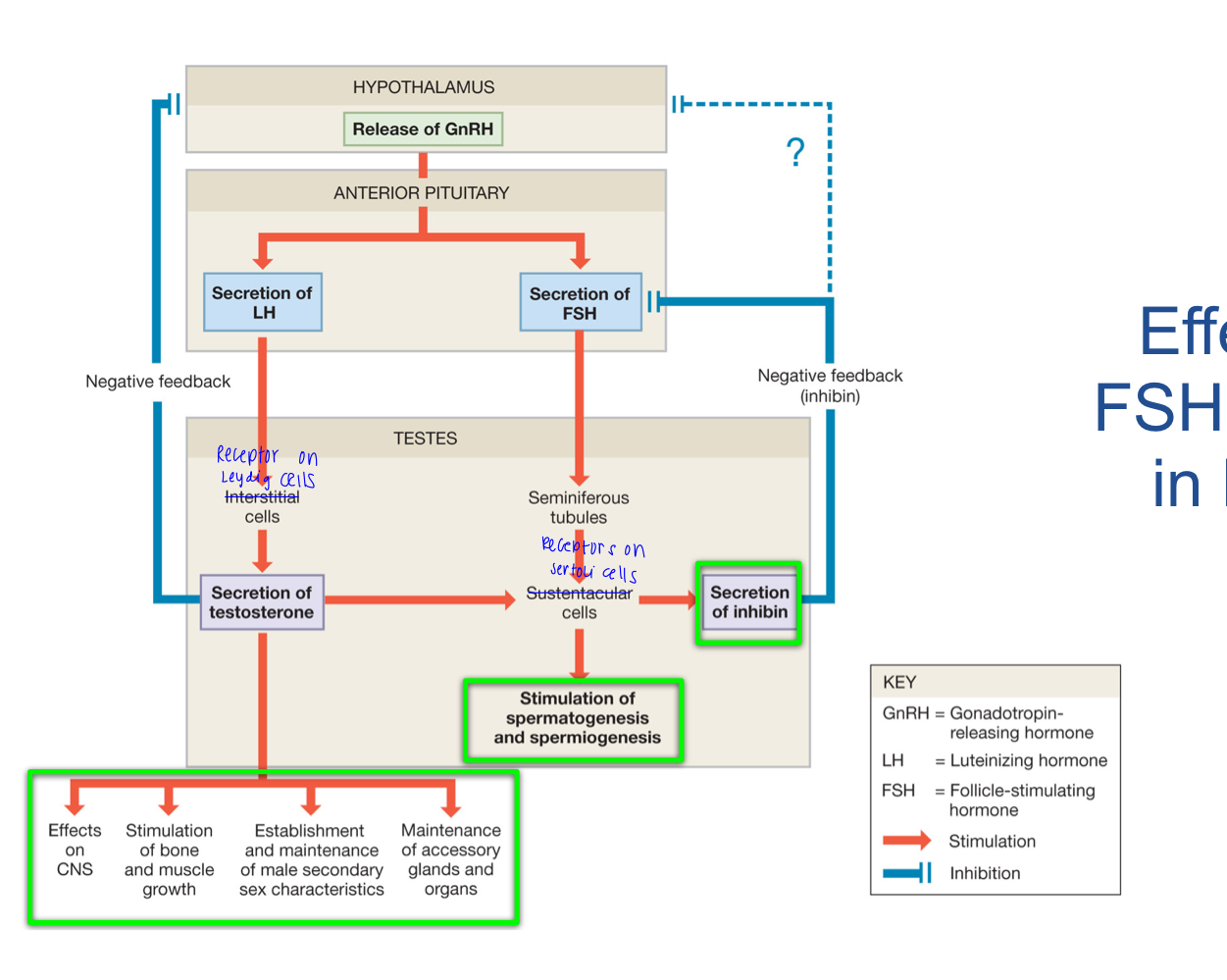
hypothalamus releases Gonadotropin-releasing hormone (GnRH)
GnRH stimulates the anterior pituitary gland to secrete both Follicle Stimulating Hormone (FSH) and Luteinizing Hormone (LH)
in the testes, receptors on the leydig cells sense the increase in LH
leydig cells secrete testosterone in response
secretion of testosterone causes:
effects on CNS
stimulation of bone and muscle growth
establishment and maintenance of male secondary sex characteristics
maintenance of accessory glands and organs
in the seminiferous tubules of the testes, receptors on the sertoli cells sense the increase in FSH
sertoli cells stimulate spermatogenesis and spermiogenesis in response
sertoli cells also secrete inhibin in response
inhibin: inhibits the anterior pituitary’s secretion of FSH, without affecting the secretion of LH
Testosterone facilitate a negative feedback loop at two different levels:
hypothalamus:
increase in testosterone inhibits hypothalamus’ secretion of Gonadotropin-releasing hormone (GnRH)
hypothalamus has receptors that detect elevated levels of testosterone
leads to decreased secretion of GnRH
Anterior Pituitary Gland:
increase in testosterone inhibits anterior pituitary’s secretion of LH, without affecting the secretion of FSH
anterior pituitary has receptors that detect elevated levels of testosterone, inhibiting the further release of luteinizing hormone (LH)
testosterone level is not efficient enough to suppress FSH - needs inhibin to do this
leading to a reduction in LH secretion
Inhibin facilitate a negative feedback loop on FSH:
increase in inhibin inhibits the anterior pituitary’s secretion of FSH, without affecting the secretion of LH
anterior pituitary has receptors that detect elevated levels inhibin, decreasing the secretion of FSH
Spermatogenesis vs Spermiogenesis
Spermatogenesis: formation of 4 viable sperm
starts during puberty and lasts entire male life span
starts with spermatogonium (germ cells)
Process of Spermatogenesis:
spermatogonium:
spermatogonium (2n) goes through mitosis, forming duplicate of itself called the primary spermatocyte (2n)
primary spermatocyte:
primary spermatocyte (2n) then goes through meiosis I, resulting in two secondary spermatocytes (1n)
meiosis I is basically mitosis, forming two identical cells
secondary spermatocytes:
two secondary spermatocytes (1n) then proceed to meiosis II, forms four spermatids (1n)
spermatids go through spermiogenesis:
four spermatids develop into four spermatozoa ( )
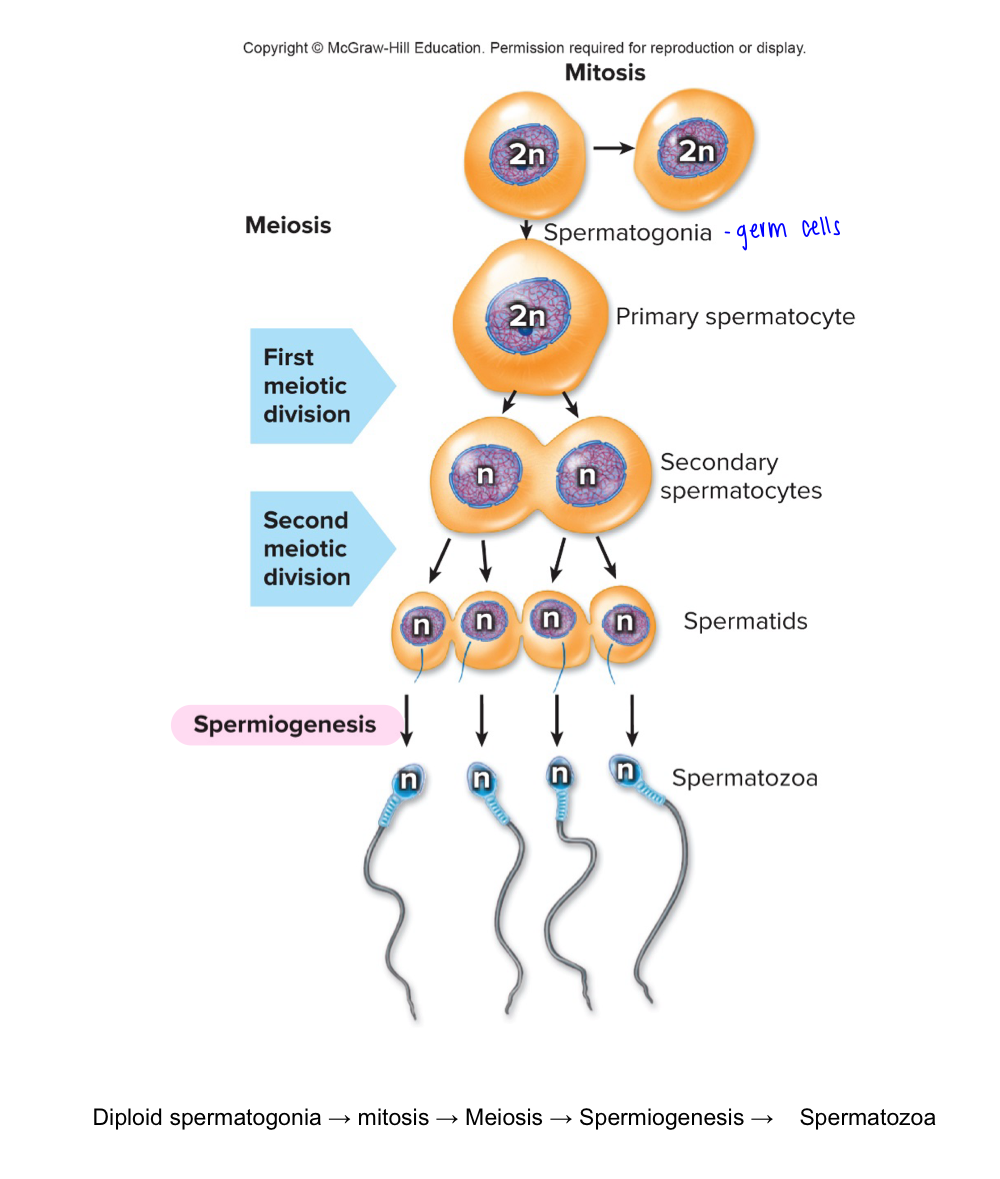
Spermiogenesis: development of spermatids into spermatozoa, when spermatids get rid of excess cytoplasm and form the flagellum to become efficient for motility
occurs in the last stage of spermatogenesis
requires the sertoli cells
sertoli cells assist spermatids get rid of excess cytoplasm and develop flagellum
Fertilization, Pregnancy, and Parturition
Major processes:
Capacitation
Fertilization
Implantation
Gestation
Parturition
Lactation
Capacitation
Over 300 million sperm enter the female at ejaculation, but only about 100 of these live to enter the fallopian tube.
Sperm must become capacitated to enter the fallopian tube to reach the ovum and for fertilization to occur
capacitated: making sperm flagellum hyperactive
Changes that occur within spermatozoa in the female reproductive tract that enable them to fertilize ova
causes flagellum to swim more forcefully
takes at least 7 hours after ejaculation
can only be capacitated in right environment:
increase pH and increase progesterone causes Hyper-activation of the flagellum (capacitation)
Capacitated sperm are guided to the oocyte by chemotaxis and thermotaxis
chemotaxis: chemical secretions from the ovum that attract capacitated sperm
thermotaxis: warmer temperatures attract the capacitated sperm
Fertilization
Fertilization usually occurs in the uterine tubes.
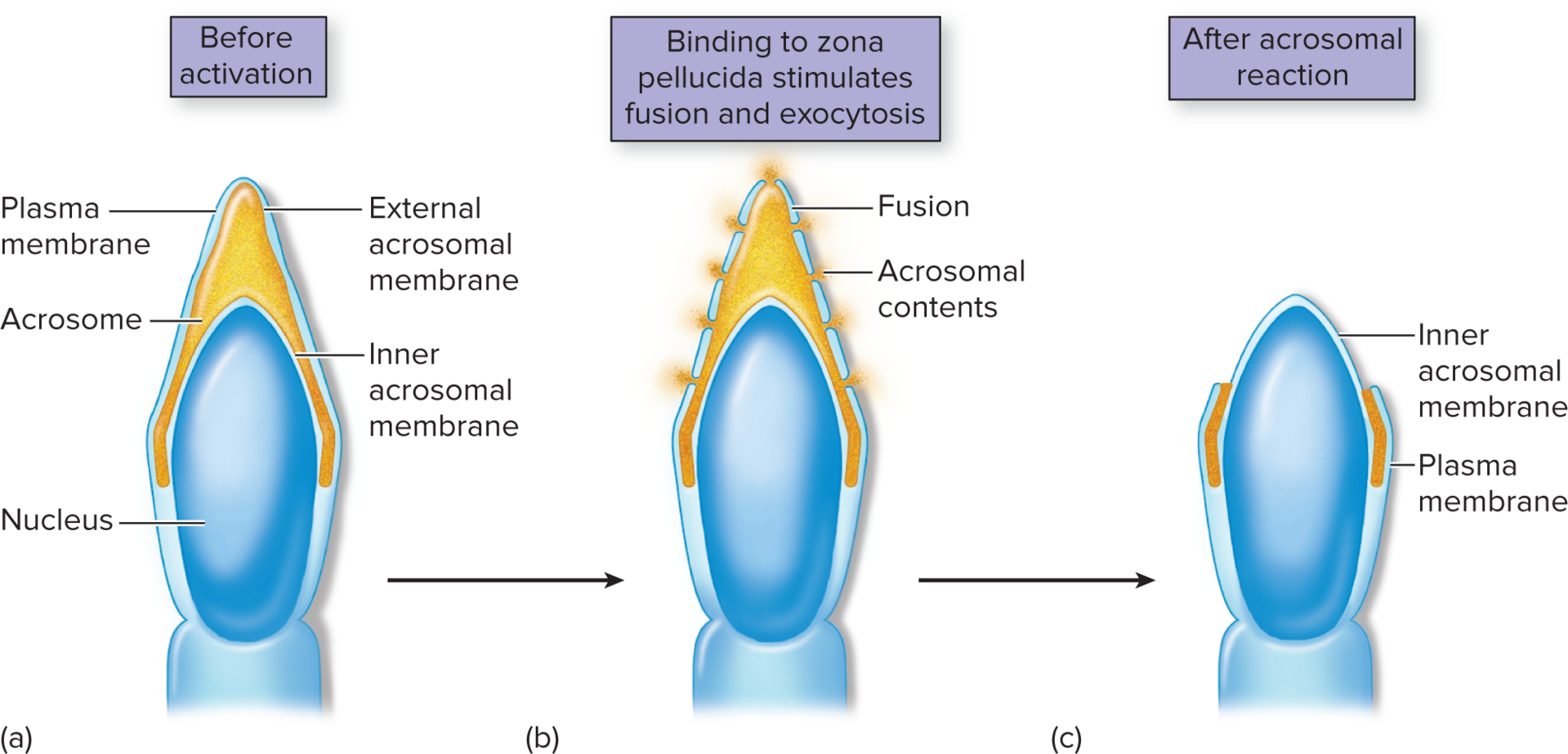
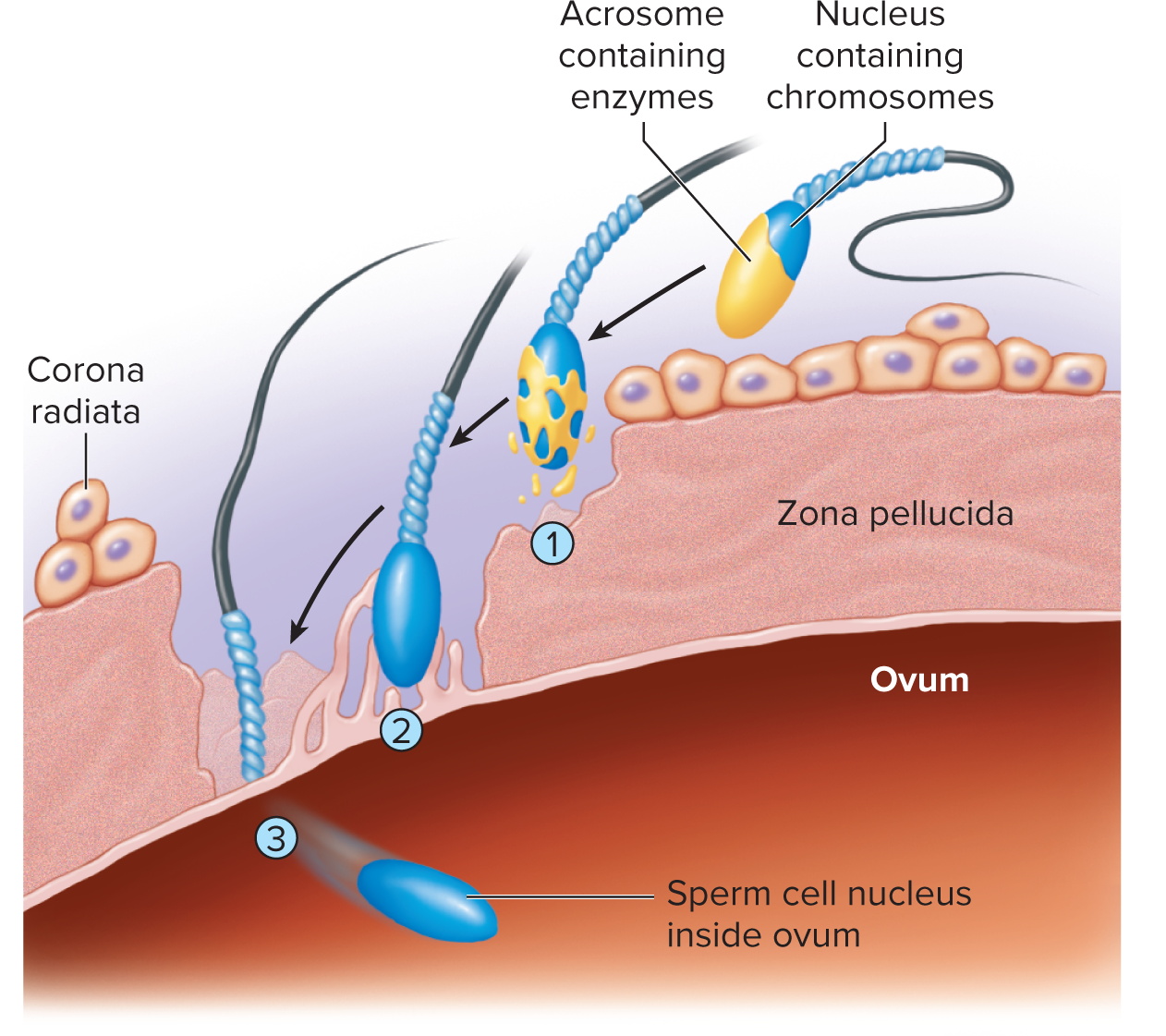
Acrosomal enzymes on the sperm digest the zona pellucida on its way into the oocyte.
zona pellucida: protective molecular layer around the ovum
Acrosome: membranous cap on the head of a sperm that contains digestive, acrosomal enzymes.
During fertilization, an acrosomal reaction releases the acrosomal enzymes to digest the zona pellucida
allows sperm to tunnel through the zona pellucida and reach the plasma membrane of the oocyte.
prevents multiple sperm from entering
Implantation
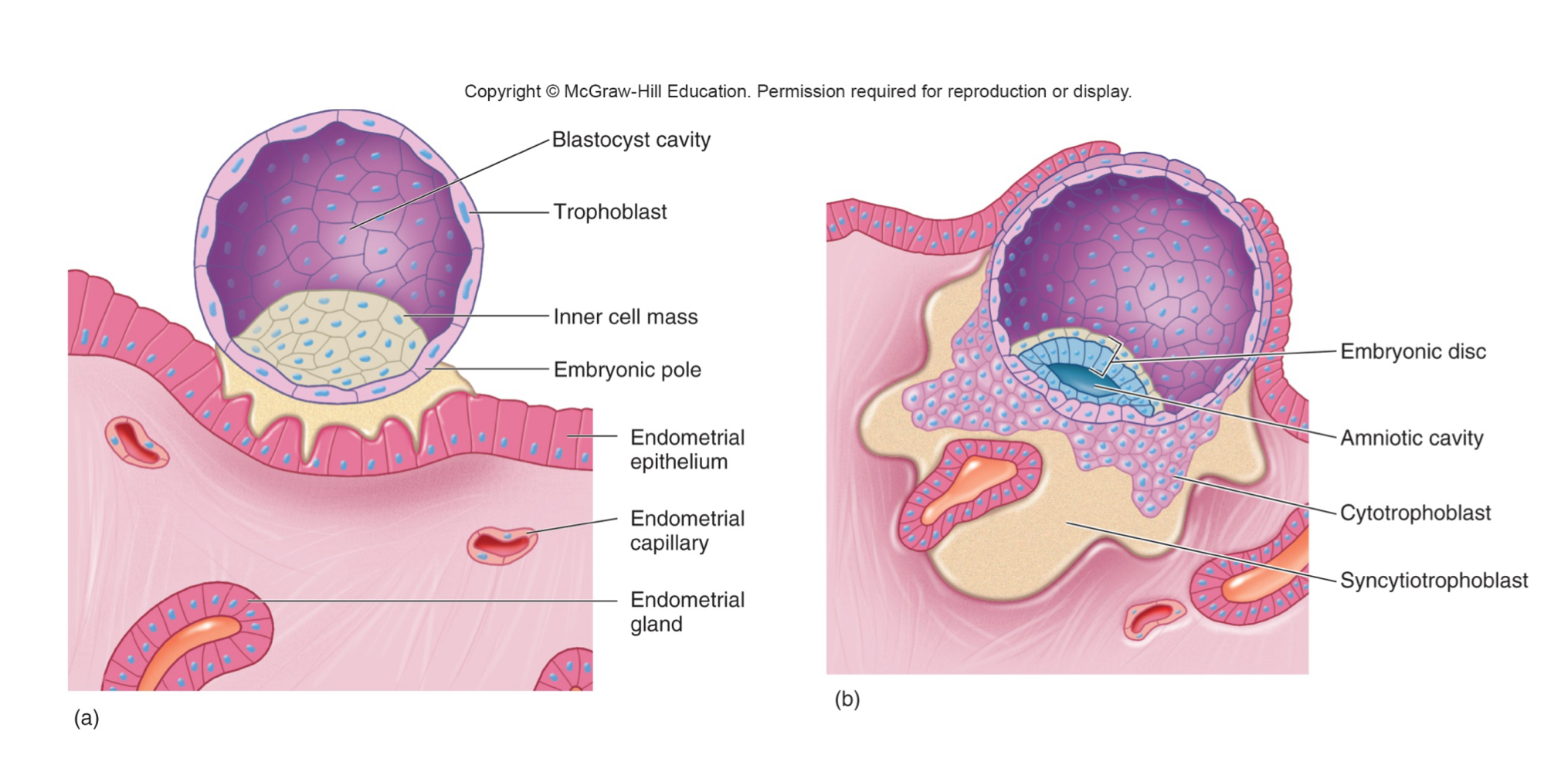
when sperm gets to uterus, implantation of blastocyst occurs around 6 days after fertilization
blastocyst: the form of the embryo that implants in the endometrium of the uterus beginning at about the fifth day following fertilization.
Gestation
gestation: approximately 38 weeks long
blastocyst secretes hCG (human chorionic gonadtoropin) which stimulates corpus luteum to continue to secrete estrogen and progesterone
Human chorionic gonadtoropin (hCG): activates LH receptors in the corpus luteum of the mother’s ovaries to maintain the corpus luteum for the first 10 weeks of pregnancy.
stimulates corpus luteum to continue to secrete estrogen and progesterone
prevents menses from occurring since there is NO decrease in estrogen and progesterone
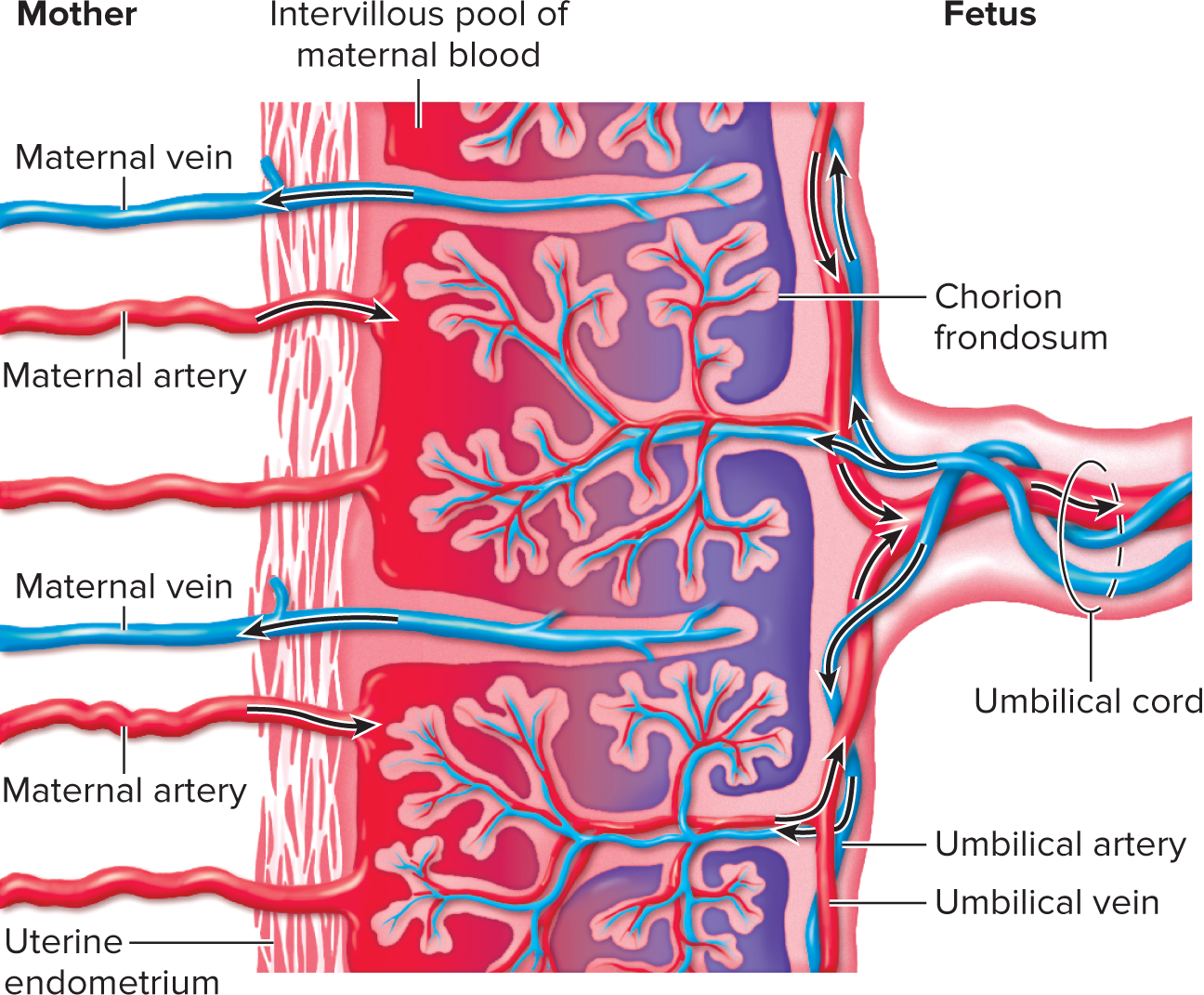
placenta: operational by week 5
placenta functions:
serves as digestive, respiratory and excretory system for fetus
secretes estrogen, progesterone and hCG
takes over the secretion of estrogen, progesterone and hCG after the corpus luteum has been degraded
isolation barier
prevents mixing of blood from mom to fetus
placenta contains capillary beds that facilitate nutrient and gas exchange between maternal and fetal circulation, but prevents transfer of blood
fetal hemoglobin has a substantially higher affinity for oxygen than mother
allows for fetus to efficiently absorb oxygen from the maternal blood supply
Parturition
Parturition: The process of giving birth
requires dilation of cervix and contractions of the uterus
relaxin: hormone secreted by corpus luteum and placenta to loosen connective tissue between plevic bones
oxytocin: induces uterine contractions
Lactation
several hormones are associated with mammary development and milk production
prolactin: induces synthesis of enzymes needed for milk production
oxytocin: essential for milk letdown, where milk is pushed through the ducts
Two Classes of vitamins:
Fat soluble vitamins: stored in fatty tissues and are not excreted from the body - can overdose on these on Vitamins, since they stay stored in fatty tissues
Vitamin A: involved in dim light vision
Vitamin D: needed for calcium absorption
Vitamin E: strong antioxidant
Vitamin K: needed to make clotting factors
Water Soluble Vitamins: cannot be stored in the body; if intake excess of these vitamins, its excreted out
Vitamin B’s:
Thiamine (vitamin B1): needed to convert pyruvate to acetyl CoA
Riboflavin (vitamin B2) and Niacin (vitamin B3): needed to make coenzymes FAD and NAD
Pyridoxine (vitamin B6): needed for amino acid metabolism
Vitamin C: antioxidants, inactivates free radicals