Topic 6 Magnetism and electromagnetism
Magnets and magnetic fields
All magnets have 2 poles north and south
Magnetic field is a region where magnetic materials experience a force
They are used to show the size and the direction of magnetic fields. They always have a point from north to south
Placing the north and south poles of two permanent bar magnets near echother creates uniform filed between the 2 magnets
Like magnates repeal echother (North to north)
Electromagnetism
Current-Carrying Wire: Generates a magnetic field around it.
Straight Wire: Magnetic field forms concentric circles, determined by the right-hand rule.
Flat Circular Coil: Stronger magnetic field in the center, with straight emerging lines.
Solenoid: Creates a uniform magnetic field inside, similar to a bar magnet.
Magnetic Materials:
Soft: Easily magnetized and demagnetized.
Hard: Retain magnetization, used for permanent magnets.
The motor effect
Current in a Magnetic Field: A wire carrying an electric current experiences a force when placed in a magnetic field. This is due to the interaction between the magnetic field and the charged particles (electrons) in the wire.
Direction of the Force: The force acting on the wire is perpendicular (90 degrees) to both the direction of the magnetic field and the direction of the current. This relationship is crucial for understanding how motors and other electromagnetic devices work.
Fleming's Left-Hand Rule: This rule is a mnemonic to determine the direction of the force:
Thumb: Points in the direction of the force (motion) on the wire.
First Finger: Points in the direction of the magnetic field (from North to South).
Second Finger: Points in the direction of the current (flow of positive charge).
By applying Fleming’s Left-Hand Rule, you can easily visualize the interaction of the current, magnetic field, and resulting force.
Electric motors and loudspeakers
Forces Acting on the Coil:
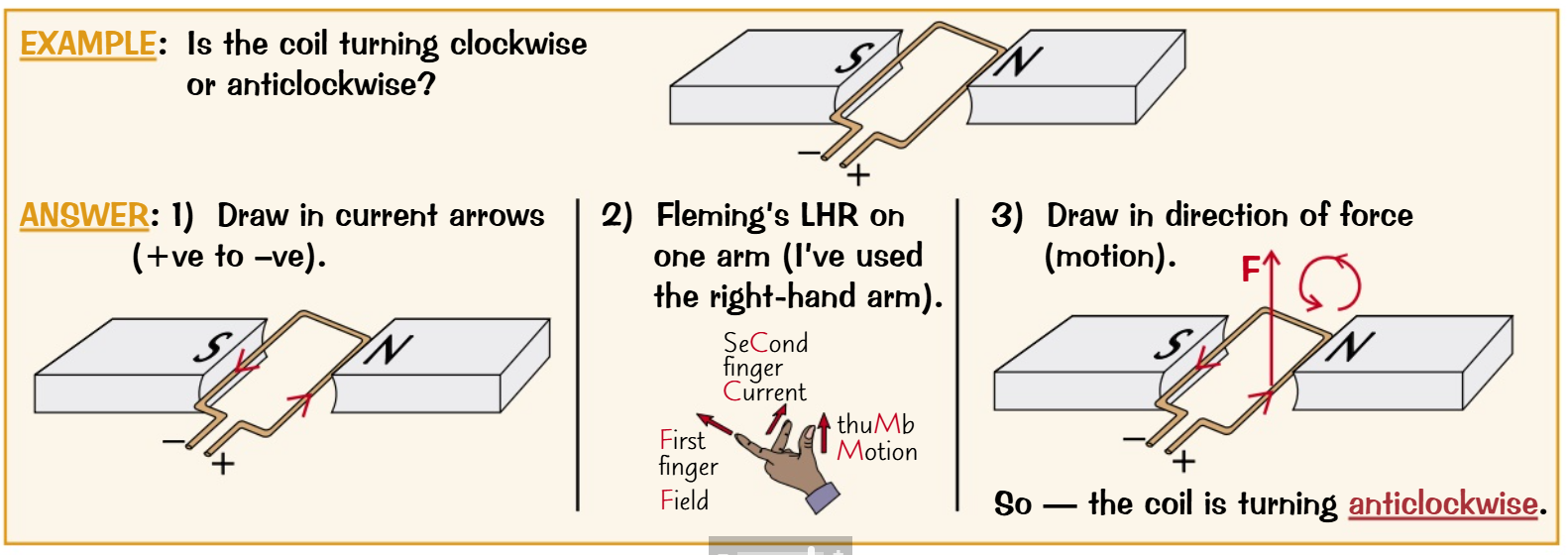
The coil experiences forces on both sides when current passes through it in a magnetic field, causing it to rotate.
Factors that Speed Up the Motor:
More Current: Increasing the current through the coil enhances the magnetic force, resulting in greater torque.
More Turns in the Coil: Adding more turns increases the magnetic field interaction, boosting the motor's effectiveness.
Stronger Magnetic Field: A stronger external magnetic field amplifies the forces acting on the coil.
Split-Ring Commutator: This component reverses the current direction as the coil rotates, maintaining continuous motion.
Function of the Split-Ring Commutator:
It switches the connections to the power supply, ensuring that the direction of current and resulting magnetic forces are always aligned for consistent rotation.
Using Fleming’s Left-Hand Rule: This rule can help determine the direction of rotation of the coil.
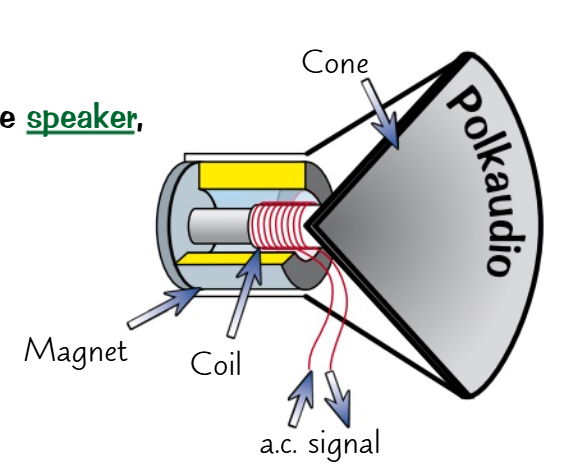
Loud speakers work because of the motor effect

Electromagnetic induction
Electromagnetic induction : The creation of a voltage and mabye current in a wire which is experiencing change in magnetic feild.
Dynamo Effect: Electromagnetic induction generates electricity by converting kinetic energy, as seen in a turbine.
Electrical Conductor in Motion: When an electrical conductor (like a wire) moves through a magnetic field, it induces voltage.
Changing Magnetic Field: If the magnetic field around a conductor changes (grows, shrinks, or reverses), it also induces voltage.
Testing Induced Voltage: You can use an ammeter to measure the induced voltage when moving a conductor through a magnetic field. The direction of current will reverse if the direction of movement changes.
To ger a bugger voltage you can increase
The strength of the magnet
The number of turns on the coil
The speed of movement
A.C generators just turn the coil and theres a current
Dynamo Effect: Electromagnetic induction generates electricity by converting kinetic energy, as seen in a turbine.
Electrical Conductor in Motion: When an electrical conductor (like a wire) moves through a magnetic field, it induces voltage.
Changing Magnetic Field: If the magnetic field around a conductor changes (grows, shrinks, or reverses), it also induces voltage.
A.C. Voltage Production: A.C. generators produce alternating current with multiple peaks and higher voltage, used by power stations to generate electricity.

Transformers
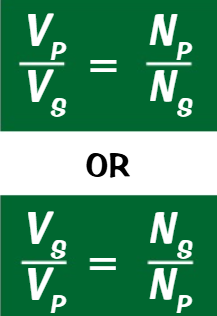
Transformers: Devices that change the voltage of alternating currents using two coils (primary and secondary) connected by an iron core.
Function: An alternating voltage applied to the primary coil induces a different voltage in the secondary coil.
Transformer Types:
Step-Up Transformers: Increase voltage; have more turns on the secondary coil.
Step-Down Transformers: Decrease voltage; have more turns on the primary coil.