Plant Reproduction
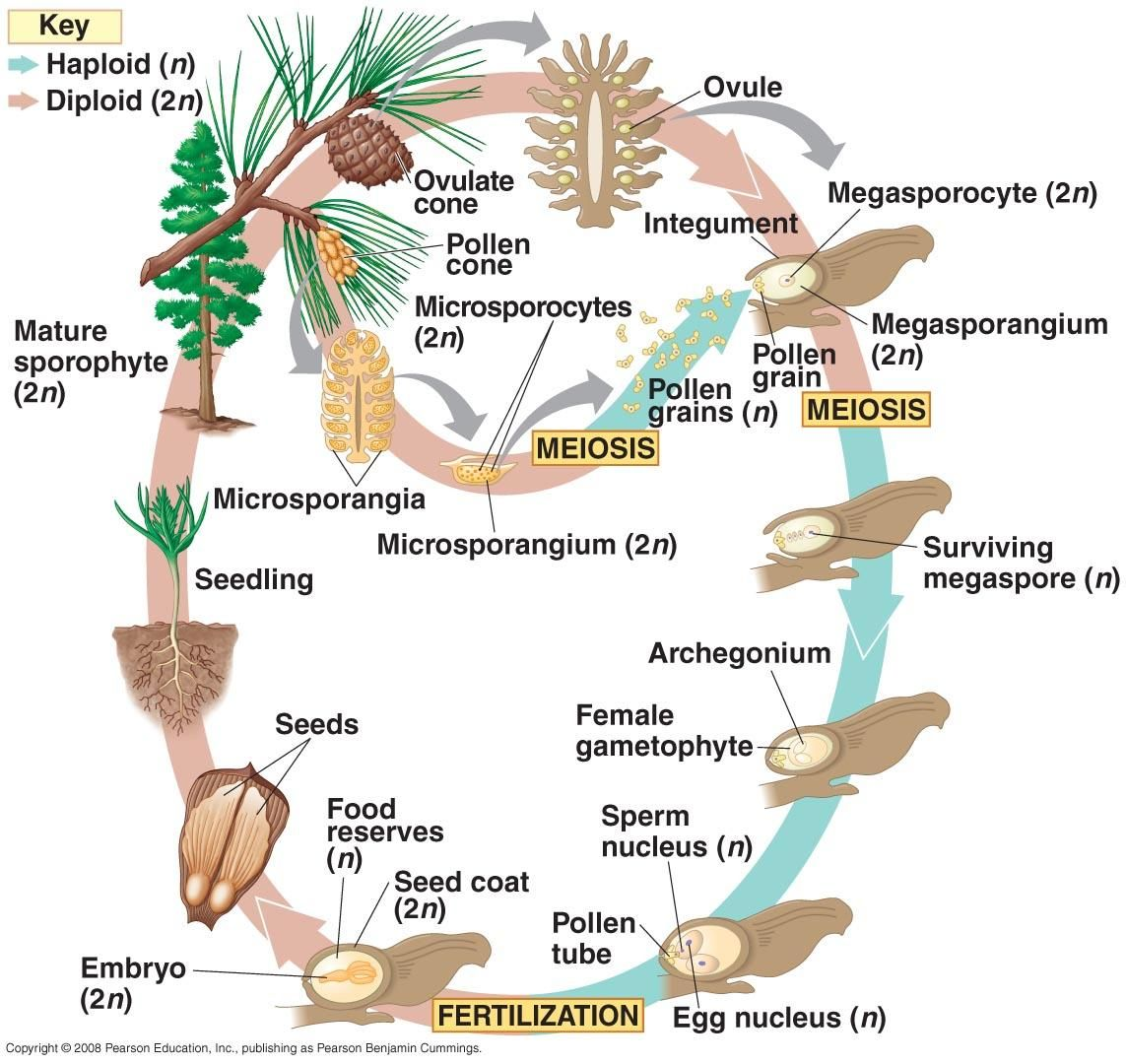
- Pollen grain outer wall: develops elaborate structure and secretes chemicals that can interact with those on the stigma to prevent self pollination.
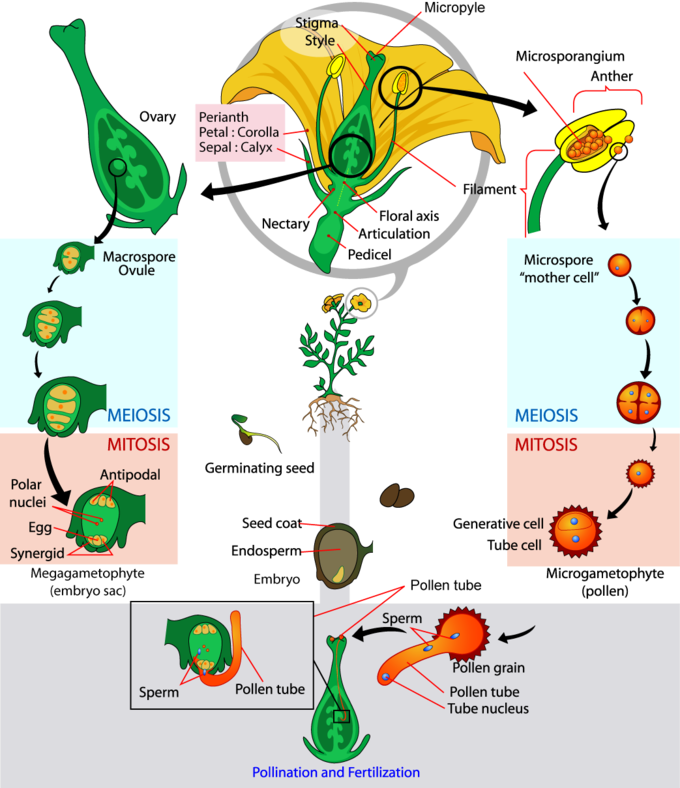
- The female gametophyte is composed of 8 cells that make up the embryo sac.
- Plants can avoid self pollination by:
- Self- incompatibility
- Pollen being developed and dispersed before eggs are matured (temporal separation)
- eggs devolving before pollen is ready (temporal separation)
- Dioecious: Male and female flowers occur on separate plants (spatial separation)
- Monecious: Male and female structures on different flowers (spatial separation)
- The 8 cells of the female gametophyte are composed of: 2 polar nuclei, 1 egg, 2 synergids, and 3 antipodals
- Double fertilization: Occurs only in angiosperms
- One sperm fertilizes the egg producing a diploid zygote
- The other sperm meets with the two polar nuclei to become the triploid endosperm
- Asexual reproduction often occurs in plants living in harsh environments.
- Methods of asexual reproduction:
- Runners/stolons: Above ground stems that produce a new plant. Ex. strawberries
- Rhizomes: Underground stems that produce a new plant. Ex. quack grass
- Suckers: Roots that develop into new plants. Ex. chokecherries
- Adventitious plantlets: Baby plants that develop off of leaves. Ex. Mexican hat
- Germination: The emergence of the radicle through the seed coat. Conditions for germination:
- Moisture
- Oxygen
- Temperature above 5C
- Some require scarification, stratification, or a specific wavelength or intensity of light