Exam 1
4 questions per 50 min lecture
CNS Structure/Function and Pharmacology (1-20)
Name major structures of the brain and be familiar with their associated functions.
Neurology — structure function
Psychiatry — Mind/Subjective experience
Brain protection
Meninges
subarachnoid space → fluid → protection
Cerebrum
4 lobes
Frontal
voluntary motor function (motor cortex)
planning and executive functions
reasoning
personality
Parietal
sensory function (somatosensory cortex)
Occipital
visual input
Temporal
Auditory perception
Longitudinal Fissure — divides brain into left and right
Left = language
Right = sensory input
Cerebral Cortex — majority dedicated to motor function in face and hands
Primary motor cortex
posterior of frontal lobe
contralateral control (right controls left side of body)
Primary somatosensory cortex
contralateral inputs
anterior temporal lobe
Cerebellum
body movement coordination
sense of balance
Brain stem
automatically regulates critical body functions
essential for life
Internal brain structures
Thalamus - middle of the brain
integration and relay of sensory messages to cortex
Hypothalamus
regulation of HR, body temp, appetite, water balance, and sleep/wakefulness
Basal ganglia - around central structures
coordinate and smooth out movements
Limbic system structures
Hippocampus
memory formation
Amygdala
experience and expressions of emotions
*more emotionally charged memories are easier to retrieve because hippocampus and amygdala are close
Blood Supply to brain
supplied by two major arteries
Front — carotid arteries
Back — vertebral arteries
branch off to form cerebral arteries
some form the circle of Willis → provides wiggle room for blood flow to brain, protects blood flow in case of emergency
Blood Brain Barrier
Formed AT cerebral capillaries
Formed BY endothelial cells
Transport
Polar ☹
requires active transport mechanisms
Lipophilic 🙂
Describe the structure and function of a neuron.
Cell body (soma) — contains nucleus and other organelles - essential for cell function
Dendrites — major site for synaptic terminals — receive signal
made by axonal endings of other nerve cells
degree of arborization determines number of inputs
Axon — extension from the neuronal cell body - for signal conduction to synaptic terminal - carry electron signal
Myelin Sheath — layers of closely packed glial cell membranes
ex. oligodendrocytes in CNS, Schwann cells in periphery
acts as electrical insulator → speeds up prorogation of action potential
generation of the active, voltage gated currents occurs at gaps in myelin sheath called nodes of Ranvier (saltatory condition)
Hierarchical Systems
clear delineated pathways involved in perception and motor control
excitatory projection neurons w/ long axons and inhibitory local circuit neurons
Nonspecific or diffuse systems
monoamines and acetylcholine
neuronal cell bodies location in small discrete nuclei → project diffusely throughout the brain
Understand the process of neurotransmission and recognize factors that affect its outcome.
Chemical Synapses — voltage gated channels
Electrical action travels: axon → cell body → terminus @ synapse
Change in membrane potential: opens voltage gated Ca2+ channels → influx of Calcium
Rise in Ca levels: synaptic vesicles fuse with presynaptic plasma membrane → release contents to synaptic cleft (exocytosis)
Synaptic Cleft: neurotransmitters diffuse across it → they bind to specific receptors on membrane of postsynaptic neuron
binding → response from receptor
Neurotransmitter removed from synapse via enzymatic degradation/reuptake/or diffusion
Neurotransmitter
chemical signal between neurons
NEED:
present in presynaptic neuron
released in response to depolarization (presynaptic)
Substance receptors located on postsynaptic neuron
Effects: depend on type of receptor activated and nerve type and location
there are multiple receptor types for each neurotransmitter**
Ionotropic Receptors - fast neurotransmission
Ligand-gated ion channels
neurotransmitter binds → the channel opens → ions flow across the membrane
G-protein coupled receptors - indirect binding
neurotransmitter binds to receptor → g-protein is activated → g-protein subunits or intracellular messengers modulate ion channels → ion channel opens → ions flow across membrane
Signal Transduction
Purpose: activation of complex chemical processes with varied effects
G-protein coupled systems → produce chemical second messengers cAMP or IP3
second messengers → activate other messengers (protein kinases) → changes in protein activation or gene expression
targeted gene products: synthetic enzymes (for neurotransmitters), ion channels, receptors
Gene-mediated Effects of Neurotransmission
Changes in gene expression → changes in rate of synthesis of receptors
Downregulation: via receptor activation by neurotransmitter OR agonists → yields decreased sensitivity of neurotransmission
Upregulation: via receptor antagonists → yields increased sensitivity of neurotransmission
Time: days
Time Table for Neurotransmission
binding of neurotransmitter to opening of ion channel or production of second messengers: milliseconds to seconds
alterations of gene expression: hours
ultimate biochemical events triggered by altered genetic expression (long lasting effects): hours to days
Recall the effects of agonists/antagonists at selected receptors.
Examples of G-protein coupled receptors as drug targets:
Neurotransmitter Antagonists
Dopamine: for D2 receptor — antipsychotic
Norepinephrine: for Alpha 2 receptor — antidepressant
Neurotransmitter Agonists
Serotonin: for 5-HT1A receptor— Anti-anxiety (anxiolytic) and antidepressant
Examples of Ion channel-linked receptors as drug targets:
Neurotransmitter Antagonists
Glutamate: for NMDA receptor— Hallucinogenic, anesthetic, antidepressant
Neurotransmitter Agonists
GABA: for GABA-A receptor — anxiolytic effects
Adverse effect pharmacology
Noradrenergic
Alpha-1 blockade — orthostatic hypotension
Histaminergic
H1 blockade — sedation, weight gain
Cholinergic
M1 blockade — “no see, no spit, no pee, no shit” and cognitive impairment, and tachycardia
Medications for Movement Disorders (1-20)
Know which neurons and pathways are affected in Parkinson’s Disease (PD).
Pathway effected: Nigrostriatal Pathway — substantia nigra to striatum (dorsal) — control of movement
Loss of dopamine neurons
Understand the life cycle of dopamine, from synthesis to metabolism, and be aware of receptors targeted by dopamine (D1 and D2-like).
Biosynthesis
phenylalanine
phenylalanine hydroxylase
L-tyrosine
Tyrosine hydroxylase*
L-DOPA
L-aromatic amino acid decarboxylase
Dopamine
*rate limiting step
Metabolism
Dopamine
COMT
2 Methoxytyramine
MAO/ALDH
HVA
OR
Dopamine
MOA/ALDH
DOPAC
COMT
HVA
Receptors targeted by dopamine
Direct pathway — D1 — disinhibition = wanted movements
Indirect pathway — D2 — inhibition = no unwanted movements
Dopamine Pathways
Dopamine activates the direct pathway through D1 promoting movement while it inhibits the indirect pathway via D2 suppressing unwanted movement
Know characteristic symptoms of PD and understand the disease progression may start prior to the characteristic triad of signs (i.e. prodromal phase).
Symptoms of PD
Clinical Triad
resting tremor
rigidity
bradykinesia
Other
depression
dementia
sleep disturbance
loss of sense of smell
dysfunction of GI
Understand pathological indicators of PD, namely, loss of dopaminergic neurons (nigrostriatal pathway; primary) and Lewy body progression.
Dopaminergic Cell
PD causes degeneration of dopaminergic cells in substantia nigra
may also show Lewy Bodies
Present as intraneuronal lesions
acetylcholine relationship with dopamine ????
Cinpanemab ??
Prasinezumab ??
Be aware of putative causes of PD, including: genetics, environmental exposure. These potential causes may present future drug targets. In addition, be aware of possible molecular mechanisms of PD pathogenesis.
Genetic risk factors
polymorphic risk variants and pathogenic gene mutations
Epigenetic risk factors
histone modification — methylation
Environmental risk factors
pesticide exposure
well water
heavy metal exposure
solvents and other organic exposure
head injuries
Molecular Mechanisms
Key pathways affects — microbiome
mitochondria
inflammation
impaired protein clearance → Lewy bodies
Drug targets
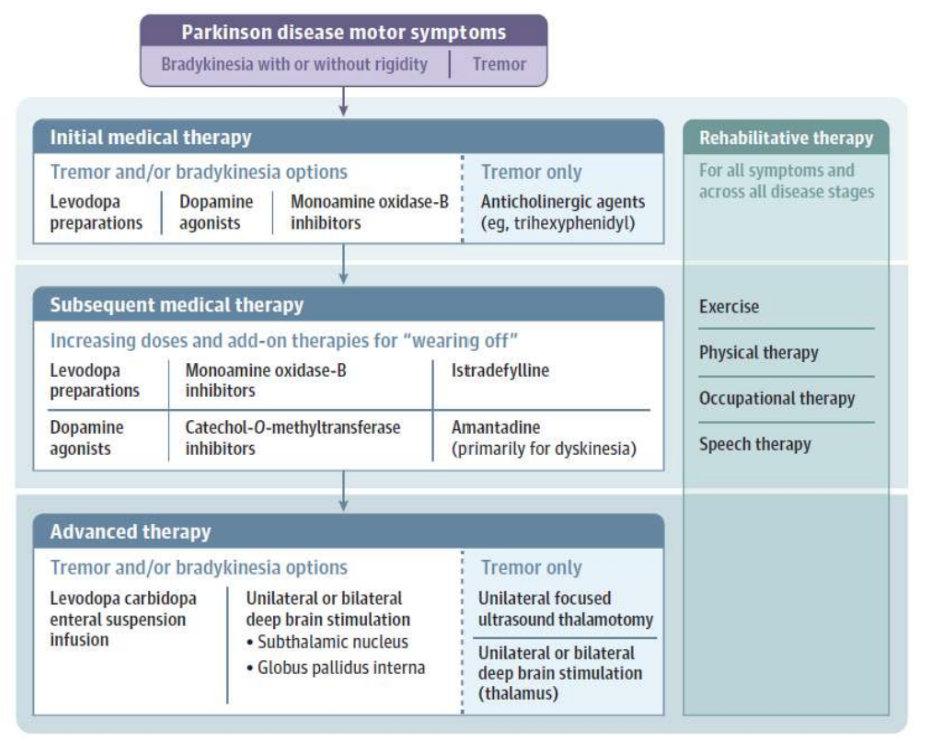
Understand general approaches for pharmacotherapy for PD, specifically, symptomatic relief aimed at replacement of dopamine.
Current treatment goal: symptomatic treatment — replacement of dopamine (5 options)
Augment synthesis of dopamine
Levodopa (L-DOPA)
most effective
pro-drug/precursor for dopamine
cross BBB
Problem — peripheral metabolism
1. decarboxylation
2. methylation
Side effects:
N/V, psychiatric disturbances, dyskinesia prevent peripheral effects when use Peripheral decarboxylase inhibitors
Solution: always with carbidopa — prevents peripheral breakdown in the body before reaching the brain (carbidopa will NOT CROSS BBB)
When combined with Carbidopa = 4:1 ratio L-DOPA: Carbidopa
Decrease dopamine metabolism
Monoamine oxidase A and B forms —
A
in neurons and GI tract
Can cause HTN due to inhibition of break down of tyramine in diet
B — Selegiline, rasagiline, and safinamide
non neuronal cells (astrocytes)
reduces dopamine metabolism — extend duration of dopamine/L-DOPA
Benefit:
effect motor fluctuations
Liver metabolism
Side effects/specifics
Selegiline (amphetamine) → cardiovascular and psychiatric side effects
Rasagiline → no amphetamine metabolites
Safinamide → reversible, add on to levodopa/carbidopa, may inhibit Glu release
COMT inhibitors - Tolcapone, Opicapone
block activity of COMT → preserves dopamine activity → reversible
prolongs action of L-DOPA, add on
Special
Tolcapone → can be hepatotoxic
Opicapone → once a day
directly stimulate dopamine receptors
Dopamine receptor agonists
don’t require function al dopaminergic nerve terminals — don’t need to make dopamine
D2 receptor full or partial agonists — little to no D1 activity
longer duration of action compared to L-DOPA
less motor fluctuations
used with L-DOPA/Carbidopa
Examples
Tavapadon — D1/D5 selective partial dopamine agonist
Ropinirole — D2/D3, well tolerated, mono-therapy or combo, First line
Pramipexole — D2/D3, ????
Rotigotine — D2/D3, little D1, transdermal patch, High 1st pass metabolism
Apomorphine — D2/D1, cross BBB, lipophilic, distribute well into CNS, quick action
stimulate dopamine release; decrease dopamine uptake through presynaptic sites
NMDA Glu Receptor antagonists — neuroprotective by preventing excessive influx of calcium into neuronal cells that could lead to excitotoxicity
Examples
Amantadine (Symmetrel) — NMDA receptor antagonist
promotes dopamine release from intraneuronal vesicles
prevents dopamine reuptake
LDOPA-induced dyskinesia (lessens)
Istradefylline — adenosine A2A receptor antagonist
add on therapy for levodopa/carbidopa
unknown MOA
Acetylcholine-Blocking (Antimuscarinic) Drugs — treat tremor and rigidity, ease dystonia/cramping from wearing off, reduce saliva
Benztropine
adjunct to levodopa
Trihexyphenidyl
adjunct to levodopa
Be aware of L-DOPA induced dyskinesia, what it is and why problematic for L-DOPA use.
Prolonged use of L-DOPA cause cause dyskinesia, fluctuation of too much and too little compared to the therapeutic window
Understand molecular targets for specific spasmolytic drugs discussed in lecture and whether centrally or peripherally acting.
Clinical Features of Spasticity
Spasticity — intermittent, sustained involuntary contraction of skeletal muscle, causing stiffness, interferes with mobility and speech
Skeletal muscle spasms — involuntary, repetitive, sustained movements
Increased/abnormal basal tone — enhanced response to muscle stretch, along with muscle weakness
Damaged pathways — descending pathway, spinal cord
Hyperexcitability of motor neurons
Skeletal Muscle Relaxants — for acute local muscle spasm
more selective for modulating effects mediated by the spinal cord, produce less sedation than sedative hypnotics
Examples
Antodyne and mephensin
Chlorphenesin and methocarbamol
not used
centrally acting
unknown MOA
Carisoprodol
pro-drug → meprobamate
centrally acting
unknown MOA
Maybe: GABA receptor target? abuse potential
Metaxalone
lacks sedation
abuse potential
unknown MOA
Chloroxazone
centrally acting
unknown MOA
idiosyncratic hepatotoxicity
Orphenadrine
structurally related to antihistamines
anticholinergic (tremors in PD)
centrally acting → several targets
Side effects
reversible non-specific CNS depression, sedation, dizziness, and muscle weakness
Skeletal Muscle Relaxants — Muscle Spasticity Agents — treating spasticity
Diazepam
Site — central acting, GABA-A
Positive allosteric activatior
ionotropic receptor
Baclofen
Site — GABA-B agonist + glutamate receptors → increase GABA = ↓ excitatory transmission
central acting
Dantrolene
Site — Peripheral on muscle
Ryanodine Receptor antagonist
cross BBB
CNS depression
Tizanidine
Site — alpha-2 receptor on glutamate neuron
adrenergic receptor agonist
↓ glutamate signaling
MOA unknown
Botulinum Toxin
toxin from botulism
affects cholinergic signaling
doesn’t travel far
NET: muscle relaxation
Neuro-palliative Care (1-21)
Recommend safe and effective pharmacotherapy for management of symptoms associated with severe acute brain injury, Parkinson’s disease, and amyotrophic lateral sclerosis (ALS).
Severe acute brain injury
Stroke
Acute phase
neurostorming — sudden and exaggerated neurological response
pain
depression
delirium
seizures
Chronic phase
pain → use analgesics, benzos (may cause sedation, mental cloudiness)
fatigue
depression/anxiety
Symptom management — Central Post Stroke Pain
Neuropathic pain syndrome (most painful)
TCA’s — anticholinergic effects
Preferred: Nortriptyline (Pamelor) or Imipramine (Tofranil) — less anticholinergic effects
Amitriptyline (Elavil)
Lamotrigine (Lamictal)
Venlafaxine (Effexor)
Gabapentin (Neurontin)
AVOID/Not beneficial
Not Beneficial
Levetiracetam (Keppra)
Pregabalin (Lyrica)
Carbamazepine (Tegretol) — can cause hyponatremia
AVOID
NSAIDS — exacerbate HTN and bleed risk
ketamine
lidocaine
cannabinoids
botulinum toxin
Fatigue
non pharm — sleep hygiene, exercise regimines, examine medication list for sedating medications
Pharm — modafinil (provigil), amantadine (gocovri), methylphenidate (ritalin)
Depression
medications — SSRIs [increased bleed risk] + psychotherapy
End of Life Care
Mechanical ventilation
withdrawn in 35-60% of strokes
survive < 24 hours after extubating (50-70%)
labored breathing after extubating
Symptom Management
Pain and dyspnea → opioids
Agitation (terminal delirium) → haloperidol
avoid benzodiazepines
Death Rattle (Pooling of oropharyngeal secretions)
reposition, suctioning
Glycopyrrolate — cost prohibitive
AVOID scopolamine or atropine
Parkinson’s Disease
Palliative care needs increase as disease progresses
Sleep disturbances
Rem sleep behavior disorder → Quetiapine (seroquel)
Preferred for others → Melatonin
Behavioral disturbances — Psychosis
LAST RESORT — medication management
Quetiapine (Seroquel)
Clozapine (Clozaril)
Pimavanserin (Nuplazid) — selective serotonin inverse agonist
AE — worsening psychosis, QTc prolongation, CYP DI
BLACK BOX — ?
orthostatic hypotension
Clinical — dizziness, lightheadedness during normal activity
Medical — degeneration of sympathetic pathways by alpha-synuclein inadequate release of NE → inability to maintain PVR
Treatment - NOT NORMOTENSION
evaluate Rx for:
dopaminergic agents, antihypertensives, anticholinergics, beta-blockers, vasodilators, preload reducing agents
Non-pharm
crossed legs, compression socks, elevate head, diet, exercise
Pharm - overall titrate up medications to the max before adding. GOAL: NOT normotension, symptom management
Midodrine (ProAmatine) — significant improvements in dizziness
vasoconstriction — via alpha-1 agonism by desglymidodrine (active metabolite)
Adverse Effects — supine hypertension (increased BP while lying down)
Pearl — last dose at least 4 hours before bedtime
Droxidopa (Northera)
vasoconstriction — via alpha-1 agonism by NE
Adverse Effects — supine hypertension
pearl — last dose at least 3 hours before bedtime
urinary symptoms
1st line — non pharm
restricting fluids after 6pm
bladder training
bedside commodes or urinals
know anticholinergics that worsen urinary symptoms (go back there is a chart)
2nd line — medications
Mirabegron (Myrbetriq)
MOA — B-3 adrenergic agonist
AE — hypertension
Amyotrophic Lateral sclerosis (ALS)
Symptoms
muscle weakness, atrophy, twitching, cramps, and pain
Dysarthria, dysphagia
Dyspnea
Emotional liability, frontotemporal dementia
Pseudobulbar Affect (PBA)
Tx
Tricyclic antidepressants
SSRIs
Dextromethorphan/Quinidine (Nuedexta)
significant reductions in PBA episodes
AE — falls, dizziness, headache, diarrhea, fatigue, QTc prolongation
Administration — tablets, compounded for other admin
Manage potentially inappropriate medications, which may exacerbate non-motor symptoms in Parkinson’s disease.
AVOID the following:
Anticholinergic meds
Propantheline, Oxybutynin, Tolterodine, Hyoscyamine, Trospium, Darifenacin, Solifenancin, Fesoterodine
Alpha blockers → worsens orthostasis
terazosin, doxazosin, tamsulosin, alfuzosin, silodosin
Antiseizure Drugs (1-21)
Know mechanistic targets for antiseizure drugs.
Target — the excitability of the neuron
Cation Channels — modulation
Na Channels *most common
MOA — blockade, prolong inactivation
K Channels
MOA — potentiation, positive allosteric modulation
Ca Channels
MOA — inhibition, target t-type Ca channels
GABA neurotransmission
MOA — inotropic, positive allosteric modulation of GABAa
Binding — at allosteric site that enhances GABAa binding
Metabolism —
Reuptake — inhibit reuptake → keeps GABA in synapse
Location — neurons, astrocytes
Synaptic Vesicle Protein (SV2A)
MOA — vesicular function change release of neurotransmitters, ↓ Glu release; changes with GABA mechanism
Alpha-2-Beta ligands
MOA — protein subunit of a Ca channel modulate Ca signaling, ↓ Glu release
Glu Receptors - Ionotropic
MOA — decrease synaptic excitation mediated by ionotropic Glu receptors (blockade)
Understand the basic, core structure found in antiseizure drugs.
Ureide Structure
Be aware of classes or structural elements that contribute to activity or toxicity.
Know characteristics of an “ideal” drug.
Ideal Drug
completely suppress seizures
be well tolerated
devoid of undesirable side effects
Clinical Pharmacokinetics of Antiepileptics (1-21)
Understand factors determining PK profiles of phenytoin, carbamazepine, and valproic acid and the impact of changing doses.
Phenytoin
MOA — blockage of voltage-gated sodium channels, briefly stabilizing inactive state → elongation of inactive state reduces neuronal cell firing → increased cellular depolarization
Admin
Oral — faster absorption (suspension and tablets), slower absorption (capsules)
IV — monitor for cardiac events, hypotension, and arrhythmias
PK
non linear — Michaelis-Menten kinetics
steady state concentration disproportionally increases compared to dose
~90% plasma protein bound
small therapeutic window (10-20ug/mL)
Carbamazepine
Valproic Acid
Recognize how changes in dose forms affect PK profiles.
Identify mechanisms responsible for drug-drug interactions.
Identify the known CPIC guidelines for HLA-B and CYP2C9 in the context of anti-epileptics.
Epilepsy (1-22)
List common/serious adverse effects and other important counseling points/clinical pearls for available antiseizure medications (ADMs).
Rescue Medications — SE — seizures that last more than 5 minutes
Diazepam — outpatient
rectal gel or nasal spray
Midazolam — outpatient
nasal spray
1st line — IV lorazepam or diazepam — inpatient
Barbiturates
Coverage — Focal, generalized (all but absence)
PK
Metabolism — hepatic
Half lives — PB longer @ 50-140 hrs
Monitoring
PB range in adults — 20-40mcg/mL
Steady state after 2-3 weeks
ADEs
CNS — sedation, dizziness, ataxia, hyperactivity in children
reduction w/ bedtime dosing
greater neurotoxicity with PRM
GI — N/V (PRM)
Cognitive impairment
Rash — SJS
risk within 2 months of initiation
Examples
Phenobarbital
Admin — oral, IV, IM
Class IV control
Primidone
Admin — oral
Not controlled
Phenytoin
Admin — Oral, IV, never IM
Coverage — focal, generalized tonicclonic
PK
Metabolism — liver CYP2C9 and 2C19
Highly protein bound
Effected by — hypoalbuminemia, renal failure, hyperbilirubinemia, DDI (VPA)
Get free level vs total level when binding is effected
Michaelis-Menten Kinetics
higher phenytoin conc = plasma level increased with increased dose due to saturable clearance
ADEs
CNS — lethargy, sedation, drowsiness, dizziness, ataxia
Vision — blurred nystagmus
GI — N/V
Cognitive impairment
Blood dyscrasias
Rash — SJS
Gingival hyperplasia — overgrowth of gum tissue
Hirsutism — excessive hair growth
Purple glove syndrome (IV admin)
Black box — Severe hypotension/Cardiac arrhythmias with IV
Know the max rate per hospital/law
Monitoring
Baseline — CBC, hepatic function panel
Therapeutic drug monitoring
Target Serum — Total 10-20mcg/mL, Free 1-2mcg/mL
High Serum → exacerbate seizures >50mcg/mL
Fosphenytoin
Pearl — better for NON-maintenance treatment inpatient
Admin — IV, IM
What — water soluble prodrug of phenytoin — dosed in phenytoin equivalents
Advantages vs Phenytoin
Lower risk of hypotension/bradycardia and phlebitis → IV influsion can be given rapidly (more than phenytoin)
IM safely
Ethosuzimide
Admin — oral
PK — hepatic metabolism
Coverage — absence
ADEs
GI — give in divided doses to prevent
CNS — drowsiness, ataxia
Psychotic symptoms
Rash
Blood dyscrasias
Monitoring
CBC — periodic — d/c if WBC <3500 cells/mm3
Therapeutic Drug — serum conc 40-100mcg/mL
Benzodiazepines
Coverage — all types
Status epileptical and seizure clusters
Control — Class IV
PK — hepatic metabolism
ADE
sedation
dizziness/ataxia
cognitive slowing/confusion — from long term use
amnesia
respiratory and cardiovascular depression
Monitoring
sedation and respiratory depression monitoring
Tolerance
decreased sedative and anticonvulsant effects at the same dose
require increase dose
decreased utility for chronic seizures
Withdrawal
agitation, anxiety, insomnia, nausea, tachycardia, HTN, tremor
Seizures that could be fatal
Lorazepam
Admin — oral, IV, IM
Metabolism — less effected by hepatic impairment (because of Phase II metabolism), intermediate half life
Diazepam
Admin — oral, IV, IM, rectal, intranasal
Long half life
Midazolam
Admin — IV, intranasal, buccal (off label)
Metabolism — short half life
Clonazepam
Admin — oral
Long half life
Clobazam
Admin — oral
Approved as adjunct for Lennox-Gastaut syndrome
Long half life
less sedation ADE
Carbamazepine
Admin — oral
Coverage — focal, generalized tonic-clonic
PK — hepatic metabolism
Autoinduction — half life shortens in weeks after initiation, steady state time 21-28 days
ADEs
CNS — sedation, dizziness, ataxia
GI — minimized with food, reduced dose, switching to ER (Carbatrol, Tegretol XR, Equetro)
Hyponatremia
Black box — Agranulocytosis and aplastic anemia (rare)
ANC <1000 cells → d/c
Black box
Rash — SJS, specifically in Asians
Monitoring
Baseline — CBC, Electrolytes, Hepatic function, (BB) HLA-B 1502 (Asian decent)
Drug monitoring
target — 4-12mcg/mL
Check 1-2 weeks after initiation, 3-4 weeks after
Oxcarbazepine
Admin — Oral
Coverage — focal, generalized tonic-clonic
PK — renal and hepatic clearance
no autoinduction
Rapid hepatic metabolism to active metabolite
Monitoring — don’t typically follow serum levels
ADEs
CNS — sedation, dizziness, ataxia
GI
Hyponatremia
monitor for Symptoms of hyponatremia (N/V, altered mental, increased seizure frequency)
Rash — cross reactive with Carbamazepine rash
Hematologic — less than Carbamazepine
Eslicarbazepine
Admin — oral
Coverage — focal, maybe generalized tonic-clonic
What — major active metabolite of oxcarbazepine
Valproate
Admin
Valproic acid — oral, IV
Divalproex sodium — oral
Coverage — focal, generalized (all types)
PK — hepatic metabolism
highly protein bound — interfere with phenytoin
divalproex ER — 15% less bioavailablity than DR (enteric coated)
ADEs
GI — N/V
tolerance within 1-2 weeks
CNS — somnolence, dizziness
Postural tremor — dose related
lower the dose, divide dose, switch to ER
Alopecia, weight gain — can cause higher d/c rate
Polycystic ovarian syndrome (PCOS)
Thrombocytopenia — low platelet risk
dose dependent
Hyperammonemia
Rash
Black Box — hepatic failure
primary risk — age <2yrs, ASM polytherapy
transient benign elevations in LFTs can occur
Symptoms — malaise, weakness, facial edema, anorexia, jaundice, vomiting
D/c if LFTs >3x ULN
Black box — pancreatitis
Monitoring
Baseline — LFTs, CBC
Ammonia level — altered mental status
Periodically — LFTs (6mo), CBC
Drug monitoring — target = 50-100mcg/mL
level prior to next dose especially with ER tablets qd
Lamotrigine
admin — oral
coverage — focal, generalized (all types)
PK — hepatic and renal clearance
ADEs
CNS — dizziness
GI — nausea
Diplopia
Arrhythmias w/ heart disease
Black box — rash
3-4 weeks from initiation
generalized, erythematous & morbilliform → progress to SJS
Risk — w/ valproate, rapid dose titration/high dose, childhood, rash with other ASMs
follow FDA titration schedule to prevent
rash with fever → HLH
Overall well tolerated
Monitoring
baseline — renal and hepatic function
observe for rash — d/c at first rash sign
Lacosamide
admin — oral, IV
coverage — focal, generalized tonic-clonic
Class V control
PK — renally cleared
100% bioavailability oral
ADEs
CNS — dizziness, ataxia, fatigue
GI — N/V
blurred vision
headache
PR interval prolongation — depending on dose
Monitoring
baseline — ECG for cardiac disease
Levetiracetam
admin — oral, IV
coverage — focal, generalized tonic-clonic, myoclonic
PK — renally cleared
oral bioavailability 100%
ADEs
CNS — sedation, dizziness
GI — N/V
Asthenia
behavioral disturbance — irritability, agitation, anxiety, depression
Monitoring
renal function
observe for behavior changes
Brivaracetam
admin — oral, IV
coverage — focal
Class V control
PK — hepatic metabolism
Oral bioavailability 100%
ADEs
CNS — somnolence, dizziness, ataxia
GI — nausea
Behavioral disturbance — irritability, agitation, anxiety, depression
Monitoring
baseline — hepatic function
Topiramate
admin — oral
coverage — focal, generalized tonic-clonic, generalized seizures associated with Lennox-Gastaut syndrome, all generalized seizure types
PK — renal clearance
ADEs
CNS — somnolence, fatigue, dizziness, nervousness, word-finding/concentration/memory problems
slow initial titration to decrease effects
weight loss
paresthesias
nephrolithiasis — counsel to maintain hydration
metabolic acidosis
Symptoms — hyperventilation, fatigue, anorexia, cardiac arrhythmias, stupor
Oligohydrosis — decreased sweating = increase body temp
hyperammonemia
acute myopia w increased intraocular pressure
blurred vision and/or ocular pain and/or red eyes
Monitoring
baseline — renal
body weight
Periodic — bicarb (early especially)
Acidosis risk factors — renal disease, diarrhea, coadmin with carbonic anhydrase inhibitors, respiratory disorder, status epilepticus, surgery, ketogenic diets
Ammonia level — unexplained lethargy or mental status change
Zonisamide
admin — oral
coverage — focal, likely generalized
PK — hepatic and renal
long half life
ADEs
CNS — dizziness, sedation, cognitive impairment
GI — nausea
Weight loss
paresthesias
nephrolithiasis — hydration
metabolic acidosis
oligohydrosis
rash
avoid in pts with sulfonamide allergy
Rare — agranulocytosis, aplastic anemia
Monitoring
baseline — renal
body weight
Periodic — bicarb
Gabapentin
admin — oral
coverage — focal (not most effective)
PK — renal
half life dependent on GFR
bioavailability decreases at higher doses b/c of saturable absorption
ADEs
CNS — somnolence, dizziness, ataxia
weight gain — dose related
lower extremity edema
behavioral disturbance — children
breathing difficulites — respiratory risk factors
Monitoring — renal function
Pregabalin
admin — oral
coverage — focal
class V control
PK — linear absorption, renally cleared
ADEs
CNS — somnolence, dizziness, ataxia
weight gain — dose related
lower extremity edema
blurred vision
breathing difficulties — respiratory risk factors
Rare — angioedema, thrombocytopenia, rhabdomyolysis
Monitoring
renal function
creatine kinase — unexplained muscle pain, tenderness, weakness
Cenobamate
admin — focal
ADEs
risk fatal hypersensitivity reactions — adhere to recommended initial titration
QT shortening — contraindicated in pts with familial short-QT syndrome
Cannabidiol
Admin — oral dosed by weight
Coverage — Lennox-Gastaut syndrome, Dravet syndrome
NOT controlled
ADEs
CNS — sedation, somnolence, lethargy
Elevated LFTs (d/c if LFTs >3x ULN)
Weight loss/decreased appetitie
anemia
infections
Felbamate
Black box — aplastic anemia and acute hepatic failure
Tiagabine
doesn’t work well
Rufinamide
lennox gastaut syndrome
Vigabatrin
Black box — permanent vision loss
Perampanel
black box — neuropsychiatric symptoms — aggression, homicidal ideation
Stiripentol
black box — only for dravet syndrome
BIG DDIs
PAN-inducers — Phenobarbital, Primidone, Phenytoin, Carbamazepine
interfere with CYP drugs — reduce drug level
Lamotrigine
valproate increased lamotrigine levels 50%
lower starting dose
phenytoin CBZ, phenobarbital, and primidone decrease lamotrigine levels 50%
higher starting dose
Discuss when ASMs should be initiated and important factors in ASM selection for an individual patient.
Goals
maximal seizure control w/ minimal side effects
remission — 5 years without seizures
Monotherapy — sufficient in 50-70% of patients
Initiation of therapy should take into account risk of seizure recurrence
1st unprovoked seizure = 25-50% chance of recurrence
risk — tumors, abnormal EEG, occurrence during sleep
2nd seizure = 70% chance of recurrence
Initiation
1st seizure
treatment with lengthen time between 1st and 2nd seizure but NOT reduce chance of epilepsy
rarely started after first seizure
2nd seizure
initiation of treatment
Factors determining treatment
type of seizure
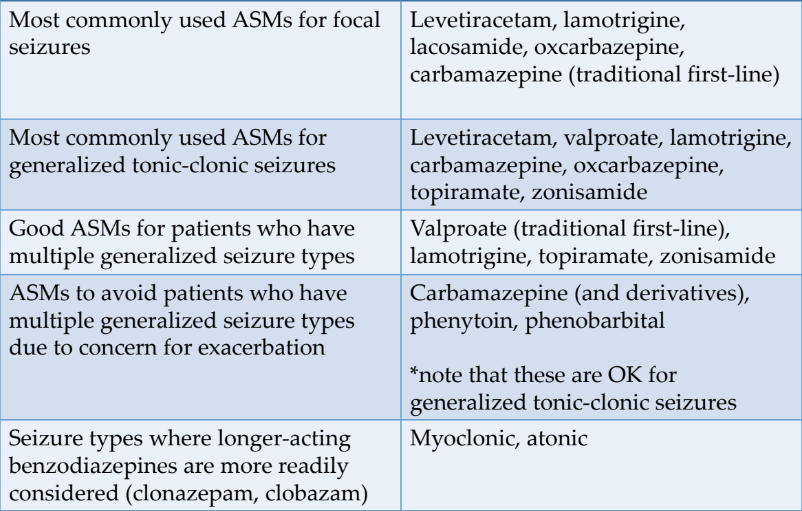
adverse effects of drugs
patient age
preferences
medical conditions/medications
regimen complexity
cost/insurance
AVOID switching between brand and generic, monitor after switching to a generic, never go back and forth
Discuss considerations for discontinuation of ASMs.
Successful withdrawal factors
seizure free 2-5 years
seizure control within 1 year of onset
single seizure type
normal neuro exam and EEG
Titration
taper slowly, many recurrences happen during 1st year downward titration
Discuss considerations for treatment of epilepsy in special populations.
Suicidal ideation
Monitor for behavioral changes
CBZ, OXC, VPA, felbamate, gabapentin, pregabalin, lamotrigine, levetiracetam, tiagabine, topiramate, zonisamide
Management
taper off ASMs
antidepressants — low doses NO bupropion
Bone Health
high risk for falls and fractures by default due to disease
decreased bone density with the following
phenytoin, primidone, phenobarbital, CBZ, VPA, OXC
Recommendation — supplemental calcium and vitamin D while taking those meds
DRESS
Associated with following
phenytoin, phenobarbital/primidone, carbamazepine, lamotrigine, zonisamide, levetiracetam, clobazam
EVEN MORE WITH cross reactivity with following
phenytoin, carbamazepine, and phenobarbital
Management — d/c drug and treat with corticosteroids
avoid future use of offending drugs
SAFE after reaction — valproate and benzos (NOT clobazam)
Pregnancy
Treatment — folic acid (0.5-4mg/d)
monotherapy if possible
Fetal Valproate syndrome + carbamazepine
Black box — cause neural tube defects — cardiac, facial, skeletal, and other defects
Black box — increased risk of impaired cognitive development in children exposed in utero
Children
1st line — cabamazepine, valproate, phenytoin, phenobarbital
cognitive behavioral effects may occur — phenobarbital most common
Side effects may differ form adults
Lamotrigine — increase rash risk
gabapentin and levetiracetam — increased behavioral disturbances
topiramate and zonisamide — increased oligohydrosis risk
Elderly
more vulnerable to seizure sequelae
AVOID — barbiturates
start low go slow
Multiple Sclerosis and Neuroimmunology (1-22)
Describe pathophysiology and symptoms of neuroimmunology conditions.
Multiple sclerosis
Cause — unknown
inflammatory and neurodegenerative
permanent damage to axons and neurons
accumulation of damage
white matter in MRI — changes in macroscopic and microscopic
chronic and unpredictable
Symptoms
optic neuritis — vision pain
weakness — tingling/numbness in extremities
sensory disturbances
MS hug — dysesthesia
L’hermitte’s Sign — looking down = electrical shock down spine
Heat intolerance
Patient specific therapy decisions
Therapies prevent flares
No treatment for damage caused by past fares, irreversible
MS mimics
infection — lyme, HIV, syphilis
inflammation — lupus, sarcoidosis, Behcet’s
microvascular — HTN, migraines, smoking
Genetic disorder — leukodystrophy, CADASIL, mitochondrial disease
nutritional deficiency — B12, folate, vitamin E, copper
Tumor
post vaccine reaction
post-infection myelitis
neuromyelitis optical spectrum disorder (NMOSD)
Distinguish between the goals of symptomatic therapy and disease modifying therapy.
Acute treatment
goal — during an MS flair → shorten time to recovery
Tx — steroids (prednisone, methylprednisolone)
DOES NOT ALTER LONG TERM COURSE OF DISEASE
Symptomatic treatment
goal — manage symptoms and improve quality of life
Tx
baclofen — muscle spasms
oxybutynin — incontinence
gabapentin — nerve pain
modafinil (Privigil) — fatigue
dalfampridine (Ampyra) — walking speed
Disease modifying therapy
goal — reduce MS relapses
can only prevent future damage and reduce likelihood of future disease flares
Determine appropriate therapy based on patient-specific factors.
Interferons
ADEs
depression and suicidal ideation
do not start if uncontrolled depression
fatigue, headache, flu-like symptoms
injection site reactions
lymphopenia and transaminitis
Monitoring — CBC w/differential and LFTs @ baseline, 3 month, and q6months
Pregnancy — likely safe
Examples + admin
Interferon beta-Ia
Avonex — IM once weekly
Rebif — SubQ 3 times weekly
Plegridy — SubQ or IM every 14 days
Interferon Beta-Ib
Betaseron and Extavia — SubQ every other day
reconstituted lyophilized powder
Glatiramer Acetate
ADEs
Black box — anaphylactic reactions
Pearls
low potency
safest MS DMT
Pregnancy — safe
Monitoring — none required
Monomethyl Fumarate Pro-Drugs
ADEs
flushing, GI upset, rash
Lymphopenia — progressive multifocal leukocytopenia
Pregnancy — avoid
Monitoring — CBC w/diff and LFTs @ baseline, every 3-6 months
Pearls
low dose for 7 days → then maintenance dose
Examples
Dimethyl fumarate (Tecfidera)
Diroximel fumarate (Vumerity)
Monomethyl fumarate (Bafiertam)
Sphingosine 1-Phosphate Receptor Modulators
MOA — reduces lymphocyte migration to CNS
ADEs
cardiac — arrhythmias
macular edema
hypertension
Lymphopenia
PML
Pearls
Rebound disease fare up @ d/c
Pregnancy — AVOID
Examples
Fingolimod (Gilenya)
Monitoring — first dose monitoring with EKG
Siponimod (Mayzent)
genetic testing for CYP2C9 genotype required
Ozanimod (Zeposia)
indicated for ulcerative colitis as well
Ponesimod (Ponvory)
Teriflunomide (Aubagio)
Admin — daily oral tab
MOA
Pregnancy — Teratogenic Category X
active metabolite detectable 2 years after last dose
found in sperm as well
ADEs
GI, hair thinning, hepatotoxicity, neuropathy
Monitoring — CBC w/diff and LFTs @ baseline, then q6months
Pearls
No live vaccines
FluMist — nasal
Zostavax — prefer shingrix
MMR, Rotavirus, Varicella, Smallpox, Yellow fever
Natalizumab (Tysabri)
MOA — monoclonal antibody against alpha-4-integrin
anti inflammatory and highely potent
Admin — monthly IV
Pearls
1st line against aggressive disease
Rebound flare up at d/c
approved → removed due to PML → reintroduced with REMs program
Monitoring
JC virus testing @ baseline
JCV antibody index at each infusion OR q3months
Regular MRIs