DNA profiling
Satellite DNA
some sections of DNA can be repeated multiple times
Particularly in introns, telomeres, and centromeres
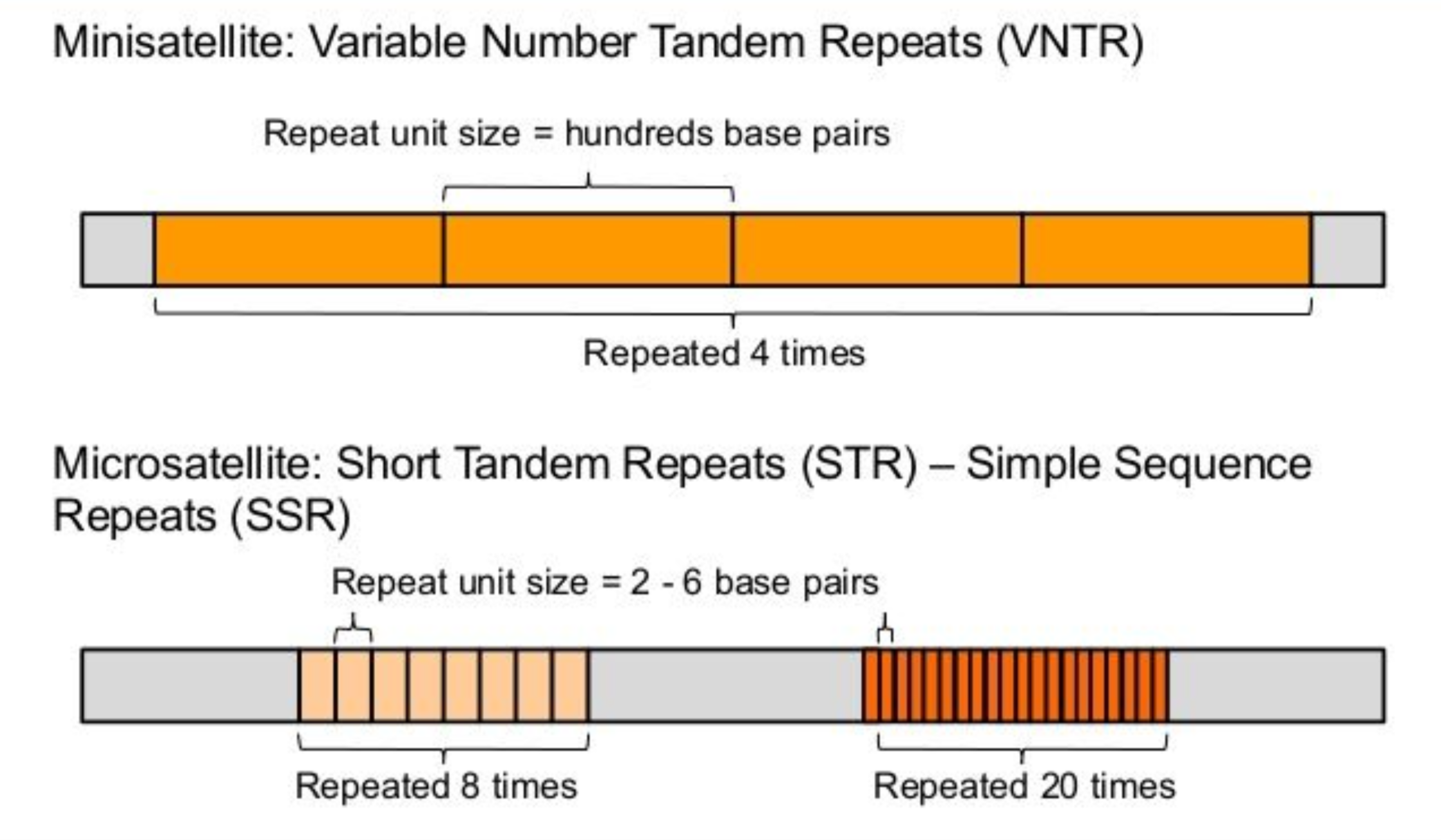
Minisatellites
20-50bp section repeated from 50-100s of times
VNTR (variable number tandem repeat)
Microsatellites
2-4 bases repeated 5-15 times
STRs (short tandem repeats)
Variation in satellites
Both types of repeat unit occur throughout the genome
The locus for a particular repeat is always the same but the number of repeats can vary in individuals
They are inherited from both parents so the pattern of satellite DNA is unique to each person
The more closely related you are the more similar the patterns will be
Different people can have different numbers of repeats at each loci
DNA profiling stages
Extracting DNA
Digesting the sample
Separating fragments
Hybridisation
Viewing the sample
Extracting the DNA
DNA is extracted from a tissue sample
Eg blood
PCR (polymerase chain reaction) is carried out to increase the amount of DNA available
Digesting the sample
restriction endonuclease (enzymes that cut DNA at specific base sequences or recognition sites) are used to cut the DNA into smaller pieces
The restriction enzymes are choses so that the satellite repeating regions are left intact
Separating the fragments
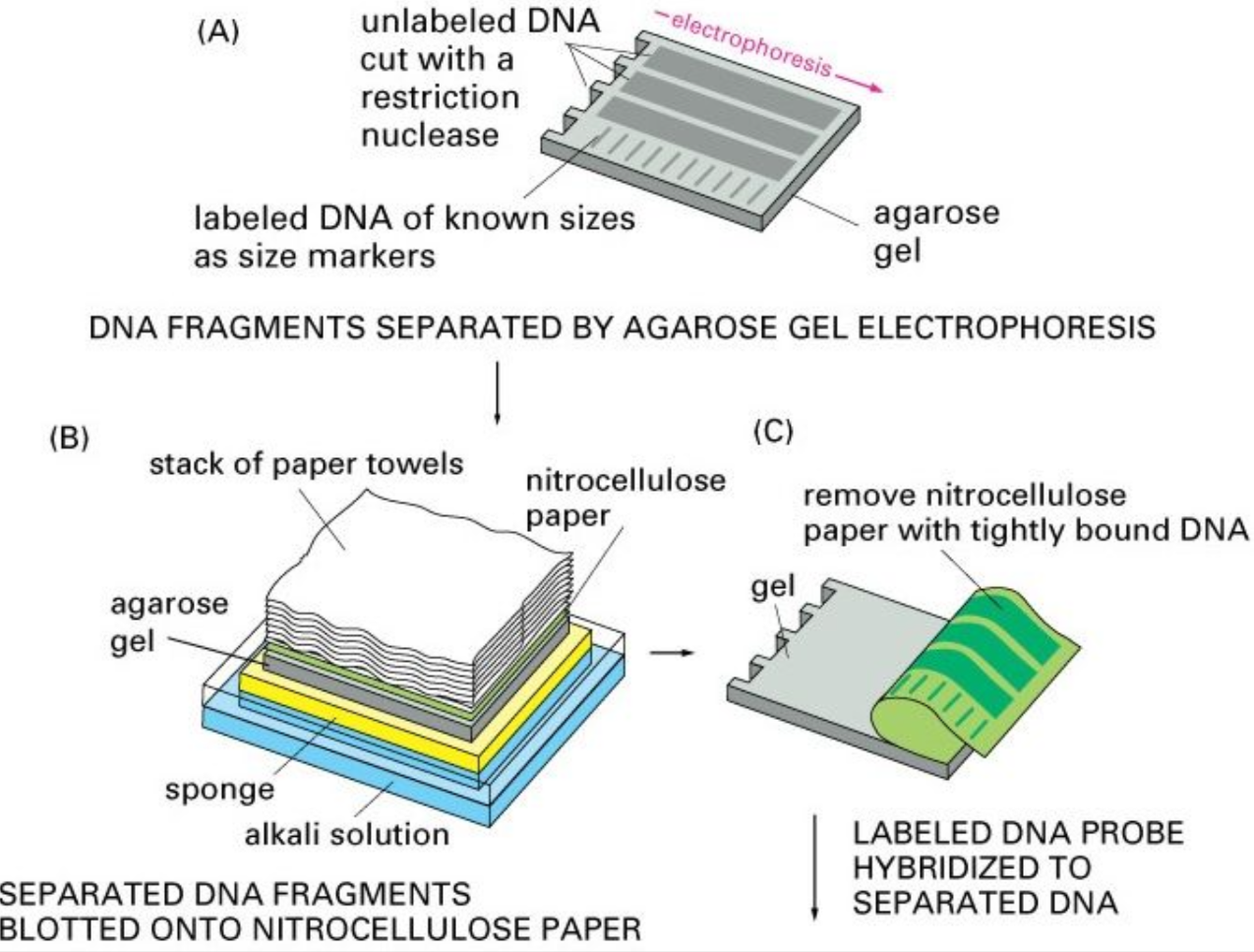
the DNA fragments are separated according to size using electrophoresis and southern blotting
Electrophoresis
DNA molecules are loaded onto a gel
An electric current is passed through the gel
DNA molecules are negatively charged and so move towards the positive electrode
Small molecules move faster than larger molecules
Southern blotting
The DNA molecules in the gel are transferred to a nylon membrane
The gel is soaked into alkali to separate the double stranded DNA into single strands
Capillary action is used to transfer DNA to the membrane in the same positions as it was on the gel
The DNA is fixed in place by heating or exposing the membrane to UV light
Hybridisation
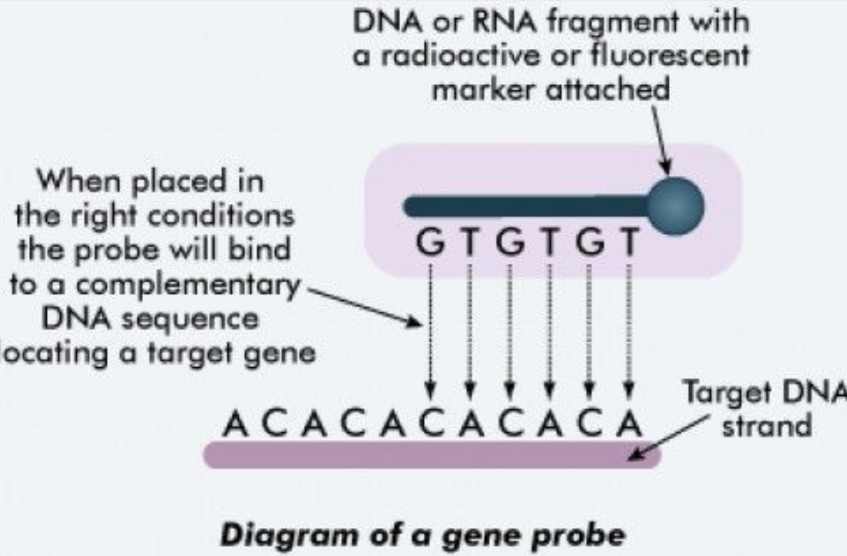
to identify the satellites present probes must be used to visualise the DNA
A probe is a short single stranded piece of DNA with the complementary sequence to the piece of DNA you want to find
Because the DNA on the membrane is single stranded they can bind together
The DNA probe has a radioactive or fluorescent label attached so can be viewed using an x-ray image or UV light respectively