Basic Components of Art (note + flashcards)
In this note, you will learn about the different components of art.
Information: click the arrow to view the information
- Color - An element of art that is derived from reflected light
- You see color because light waves are reflected from objects to your eyes
- There are 3 things that make up the colors we see, hue, intensity, and value
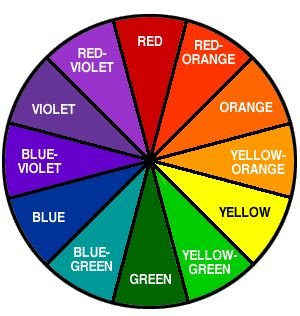
- Hue - the name of a color in the color spectrum
- Red, yellow, and blue are the primary hues
- Secondary hues are created by mixing primary hues together
- Orange, violet, and green are the secondary hues
- There are six intermediate hues, they are created by mixing primary and secondary colors
- Color wheel - the color spectrum bent into a circle
- Value - art element that describes the darkness or lightness of a color
- The amount of light a color reflects determines its color value
- Black, white, and grey are considered neutral colors
- You can change the value of any hue by adding black or white
- Tint - a light value of a hue
- Adds white
- Shade - a dark value of a hue
- Adds black
- Intensity - brightness or dullness of a hue
- Bright hues are called high-intensity colors
- Dull hues are called low-intensity colors
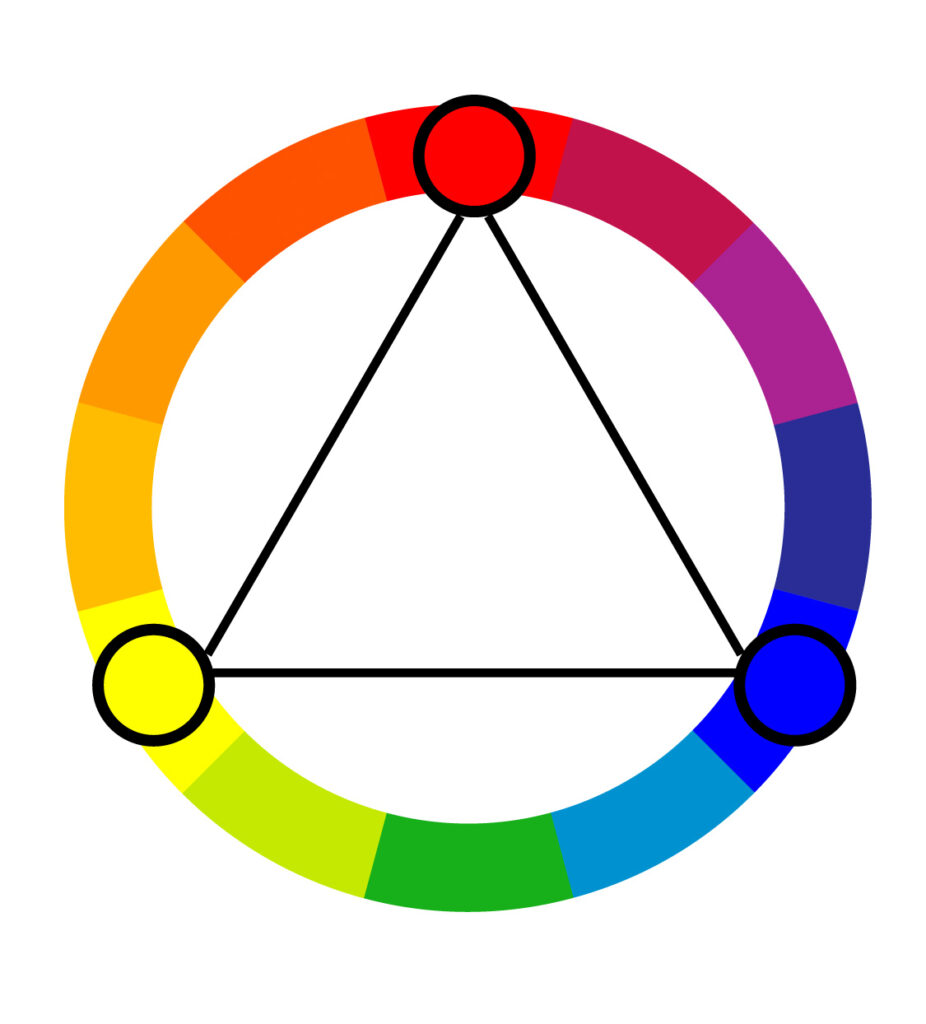
- Complementary colors - colors across from each other on the color wheel
- Color scheme - a plan for organizing colors
- Monochromatic color scheme - a color scheme that uses only one hue, tints, and shades of one color
- Analogous color scheme - colors that sit side-by-side on the color wheel and have a common hue
- Color triad/Triadic color scheme - composed of three colors evenly spaced - 3 in between each color
- Split complementary - a combination of one hue plus the hues on each side of its complementary color
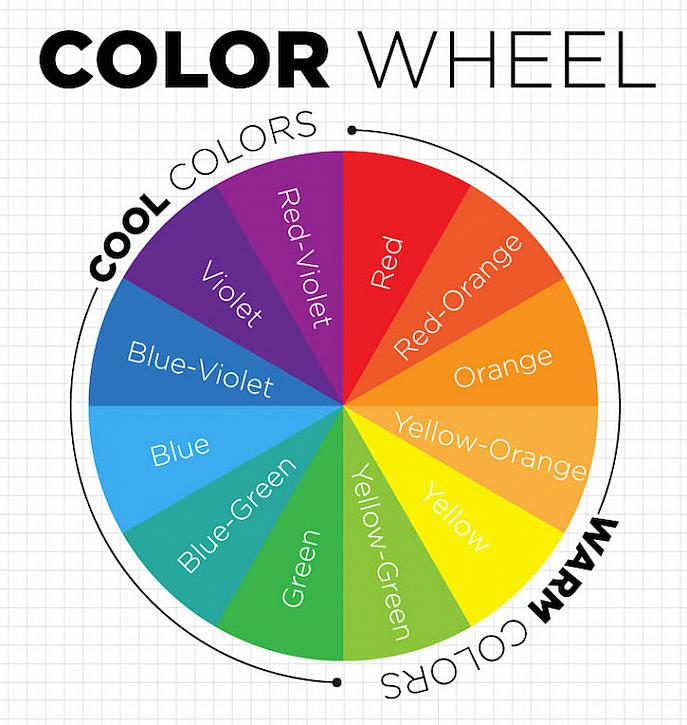
- Colors are split into 2 groups:
- Warm colors - associated with warm things such as sunshine and fire
- Red, orange, and yellow
- Cool colors - associated with cool things such as ice and snow
- Blue, green, and violet
 \n
\n