AP Exam vocab:
1:perspectives
map projection: represents the world in two dimensions
robinson: globe like
mercator: flat
graduated symbol map: uses symbols
functional: has a node (metro systems)
2.population/migration
centripetal: pulls together
centrifugal: forces apart (Yugoslavia)
Environmental degradation:
Stage 4 (DTM): core countries develop
Demographic Transition Model Limitations: Based on the experiences in Western Europe
Other: East Asia is 1 of 4 most densely populated areas.
3.culture
acculturation: when a minority adopts a majority’s trait.
assimilation: when a country adopts almost all of another’s country’s traits.
syncretism: combination of traits of cultures
Isolates: found in mountainous areas
4. political space
state: has sovereignty, defined borders, and permanent population
define: legally delimit: drawn demarcated: physical
antecedent borders: defined before colonization
subsequent borders: defined after colonialization
consequent borders: consider cultural differences (religion, language)
annexation: claiming a state (like Puerto Rico)
autonomous: some authority to govern its borders separately from federal government
sovereign: the right of government to control its territory
territoriality: attempt to control people by asserting control over a geographic area
irredentism: attempt to take over neighboring states inhibited by people of the same origin.
neocolonialism: use of economic, cultural, or political pressures to influence other countries.
devolution: central power in a state is broken up among regional authorities (Soviet Union)
supranational organization: 3 more more states that work together to reach common goals.
nation state: country that only has one ethnic group within (Iceland)
federal: shared power throughout the state
unitary: central power separates from local areas.
5.agriculture:
subsistence: farming on small land intensively
intensive: much work and effort to have high profit
extensive: less labor (slash/burn, transhumance, herding)
agritourism: type of agribusiness for women that is alternative to standard food distribution
bid-rent: determines how farmers will use the land
precision agriculture: maximize crop yields, reduce waste, and preserve the environment.
long-lot system:
Quota: government restricting amount or crop farmers can sell.
biotechnology: genetic manipulation to create new crops
Genetic engineering: increase food supply to be more affordable at all scales.
Other: agriculture diffusion/Columbian Exchange both affect global exchange
6. urbanization:
rank size rule:
ecological footprint: amount of land required to sustain an area’s resources
Gravity Model: Two largest cities have more interaction
7.industrialization
Fordism: associated with mass production
Offshore Outsourcing:
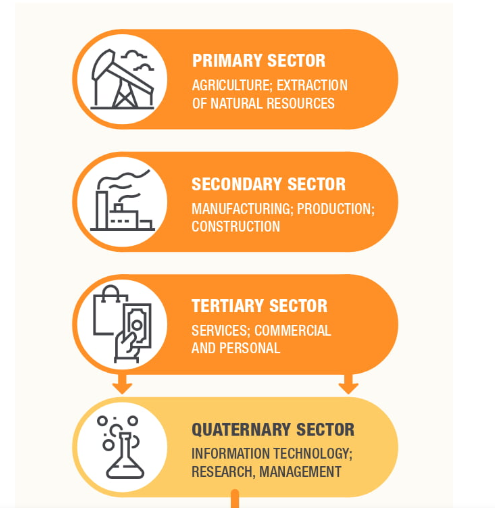
Primary: extraction of natural resources
Secondary: manufacturing and production
Tertiary: services and commercial
Quaternary
Quinary: highest level of education and leadership