Amino acid biosynthesis/metabolism & Urea Cycle
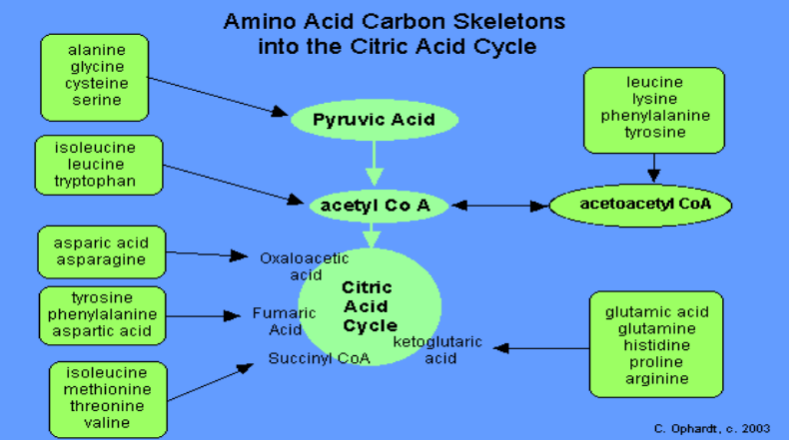
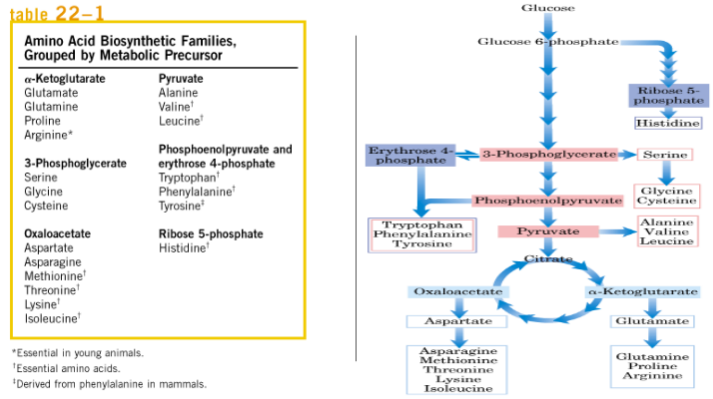
Amino Acid Carbon Skeletons
transaminase
3-carbon a-keto acid pyruvate is produced from alanine, cysteine, glycine, serine, & threonine. Alanine deamination via Transaminase directly yields pyruvate
The 4-carbon Krebs Cycle intermediate oxaloacetate is produced from aspartate & asparagine. Aspartate deamination via transaminase directly yields oxaloacetate . Aspartate also is converted to fumarate in the Urea Cycle. Fumarate is then converted by Krebs Cycle enzymes in the cytosol (fumerase) to malate, and by Mdh to oxaloacetate
The 4-carbon Krebs Cycle intermediate succinyl-CoA is produced from isoleucine, valine, & methionine
Propionyl-CoA, which is an intermediate on these pathways, is also a product of β-oxidation of fatty acids with an odd number of C atoms fatty acid chains.
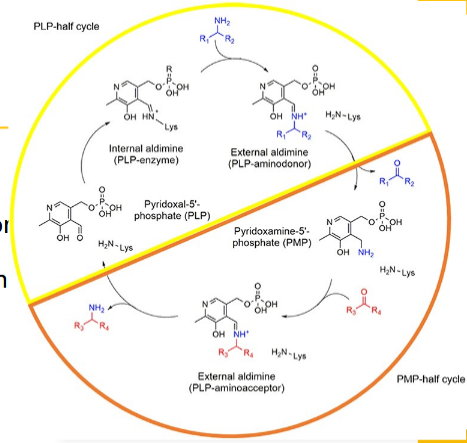
Catalytic cycle of Transaminases.
The amino donor is colored blue and the amino acceptor molecule in red.
carbamoyl phosphate synthase I: regulate by N-acetylglutamate
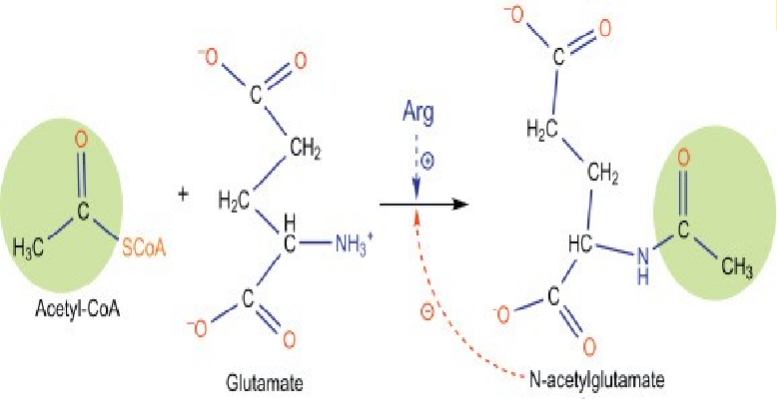
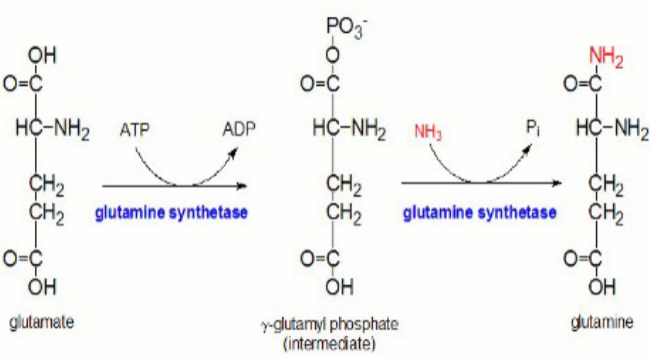
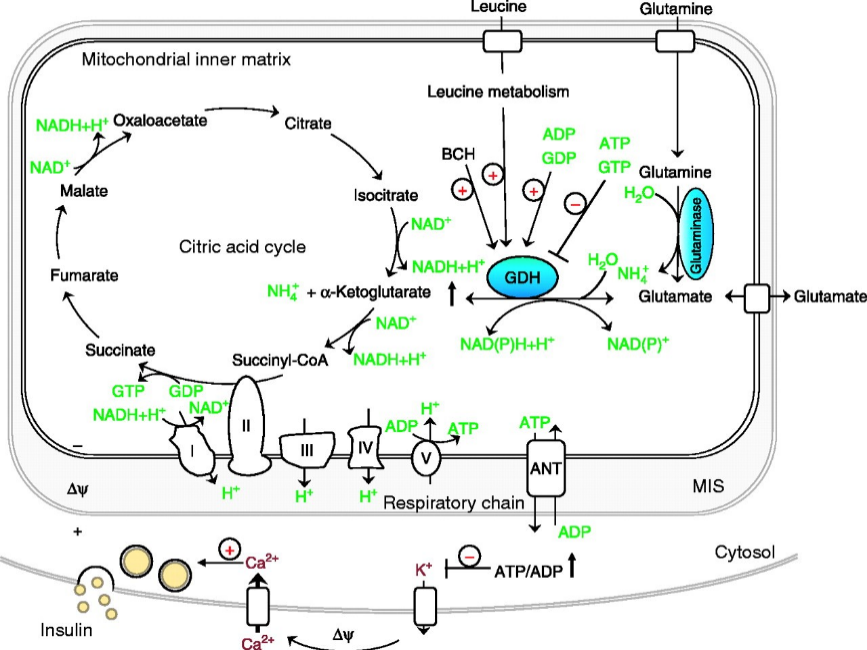
glutaminase - matrix of the mitochondria of the liver
very exothermic - no reverse reaction
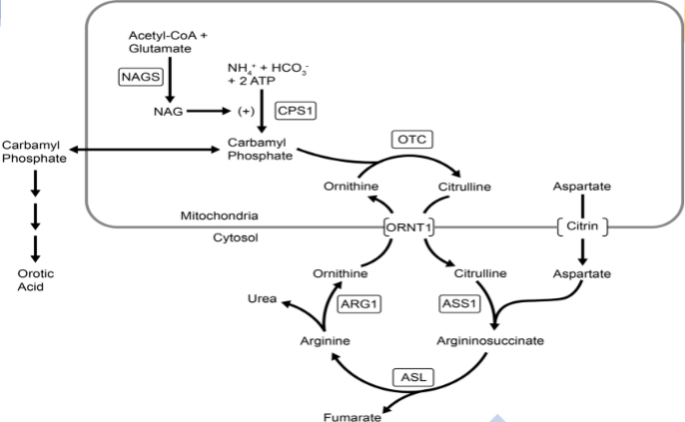
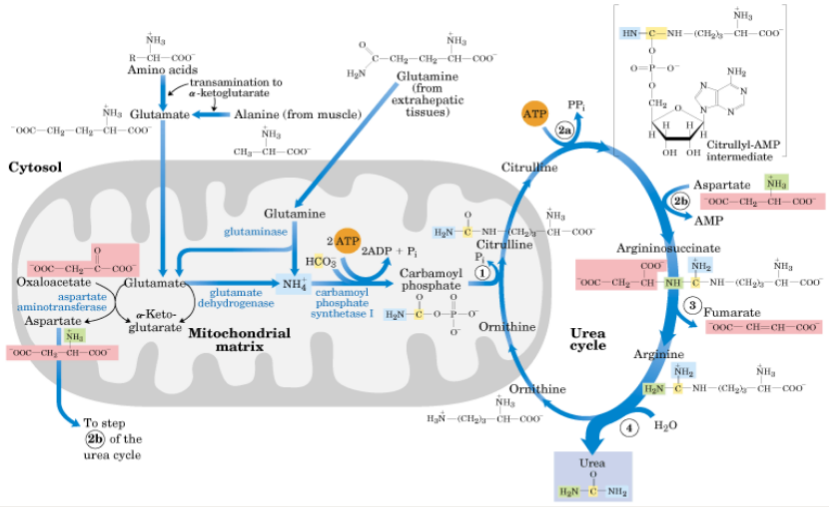
ornitine-citruline antiportert
glutamine → liver via other cells
all cells: glutamine synthase (homoduodecamer (8/10/12 subunits int two face to face rings → bifunnel), VERY Allosterically controlled, six way radial symmetry, 3 substrate binding sites: nucleotide, ammonium, amino acid)
ATP binds to the top of the bifunnel that opens to the external surface of GS. Glutamate binds at the bottom of the active site. The middle of the bifunnel contains two sites in which divalent cations bind (Mn+2 or Mg+2). One cation binding site is involved in phosphoryl transfer of ATP to glutamate, while the second stabilizes active GS and helps with the binding of glutamate.
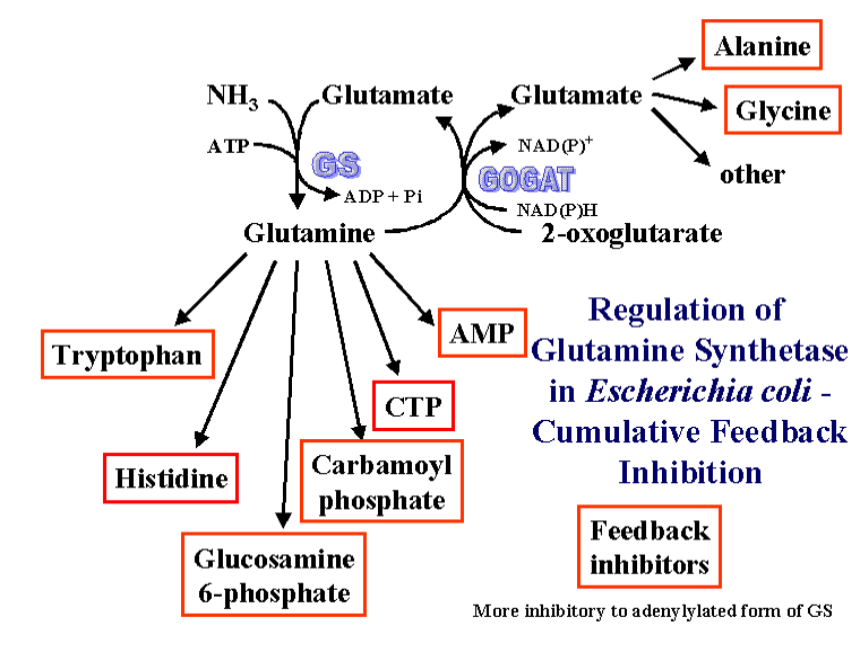
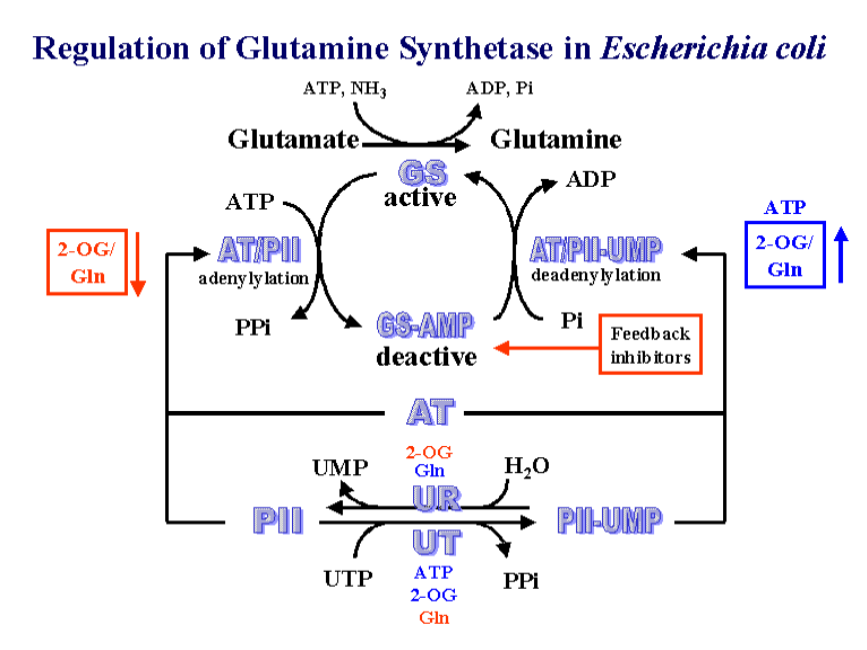
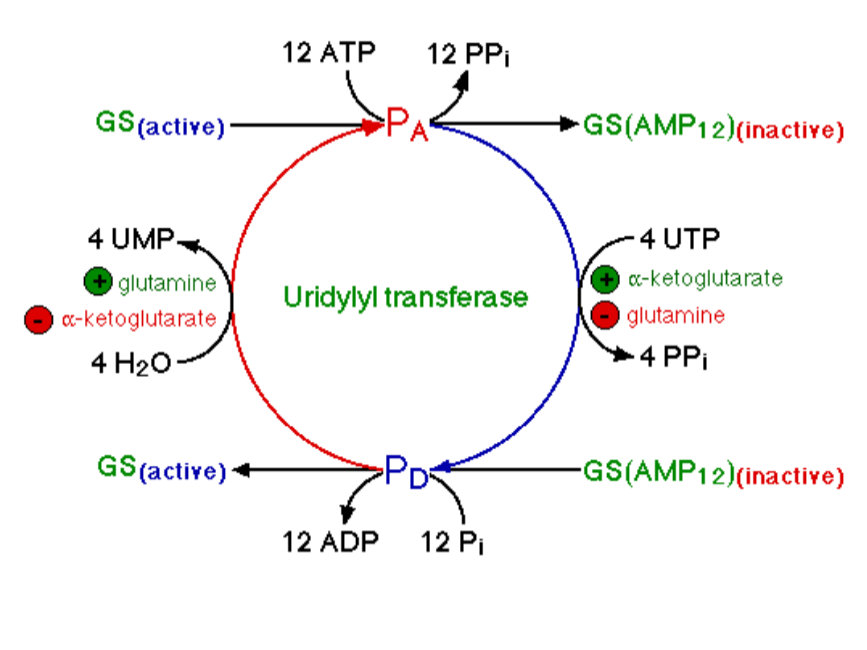
arginine
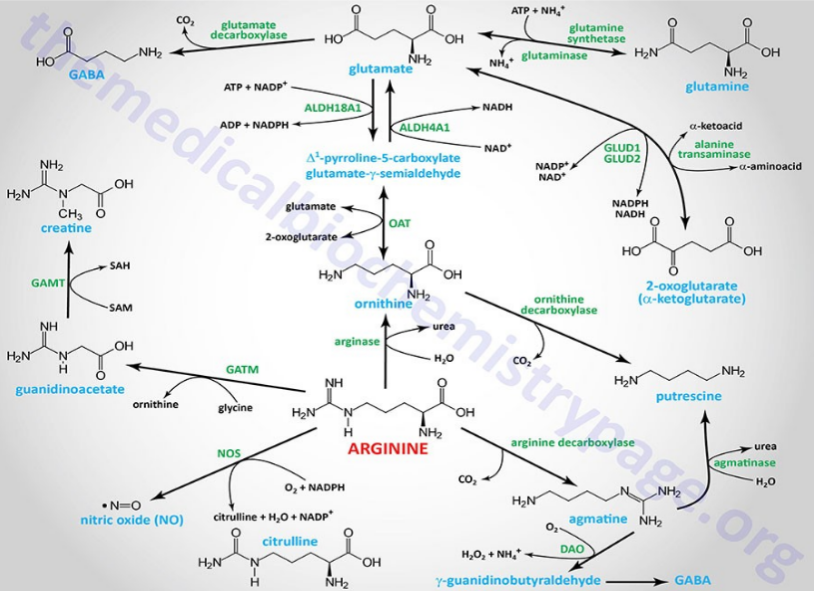
controlled by pH
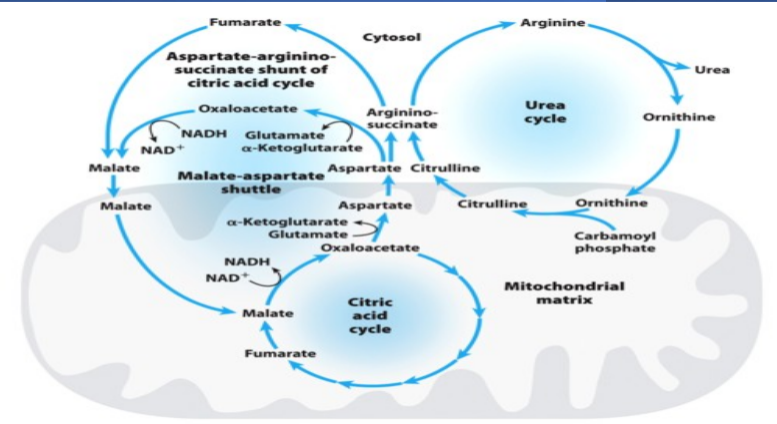
all these cycles share the same rate - controlled by amount of ketoacids being produced & N-acetylglutamate
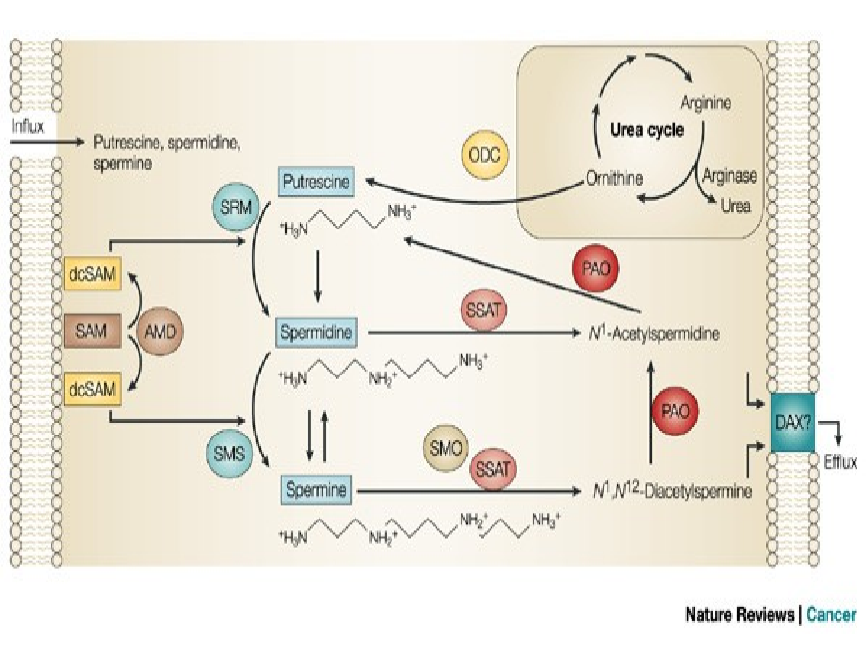
ornithine starting material for polyamine synthesis
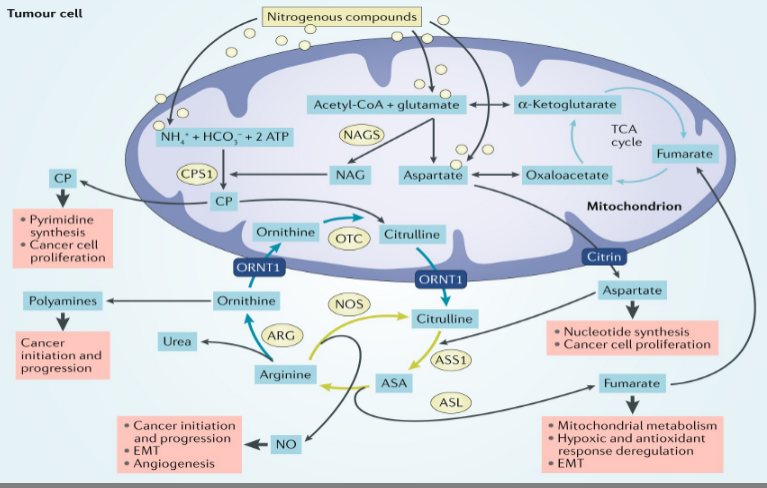
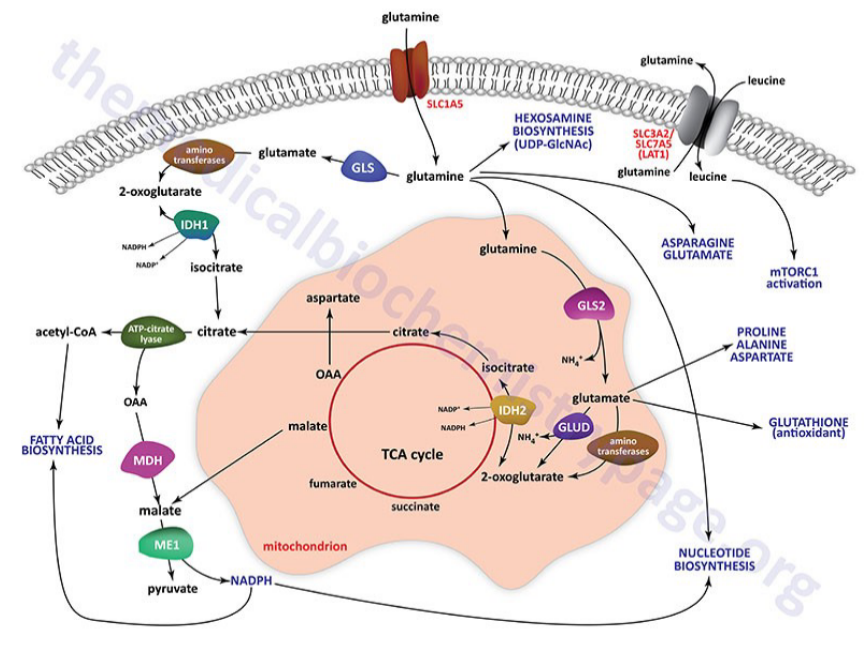
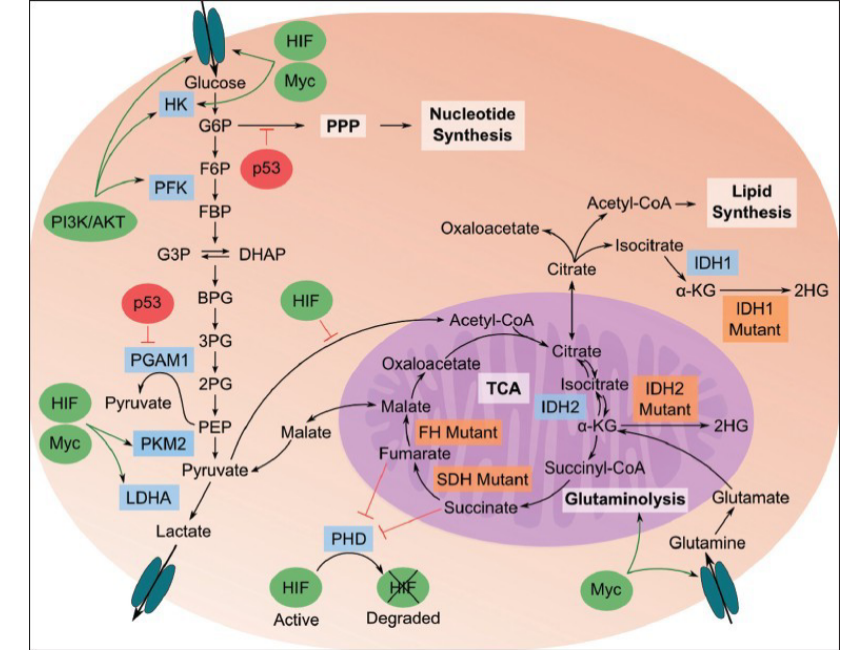
IDH2 - tumor marker - reversible
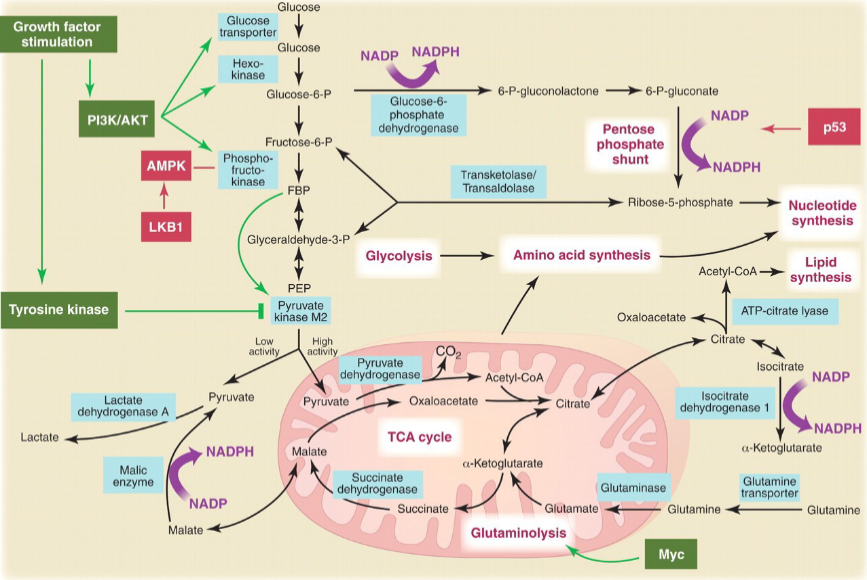
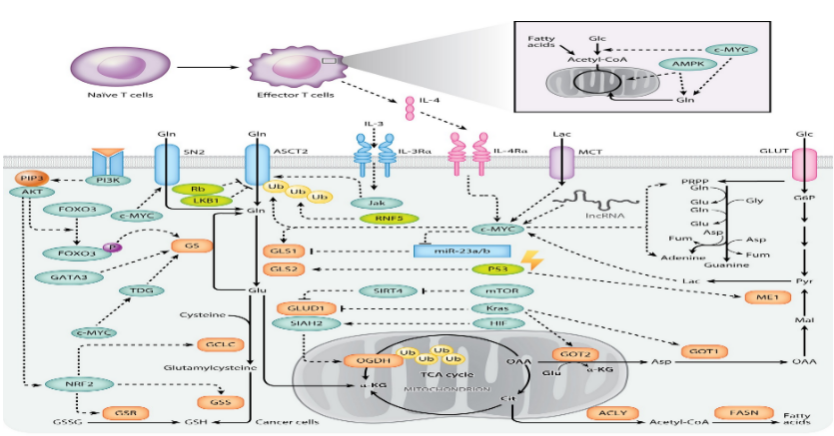
signal transduction cascade
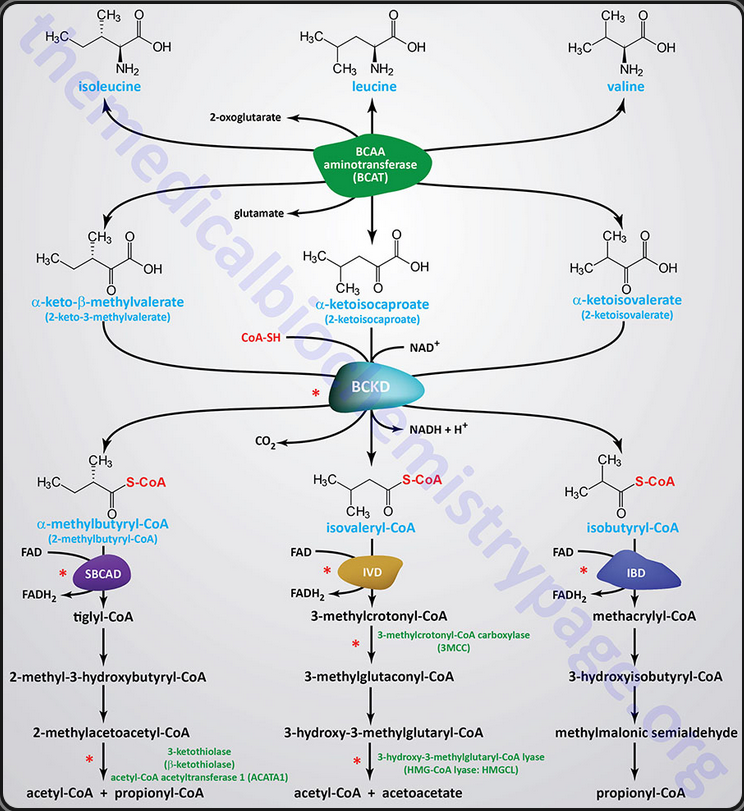
branched chain amino acids
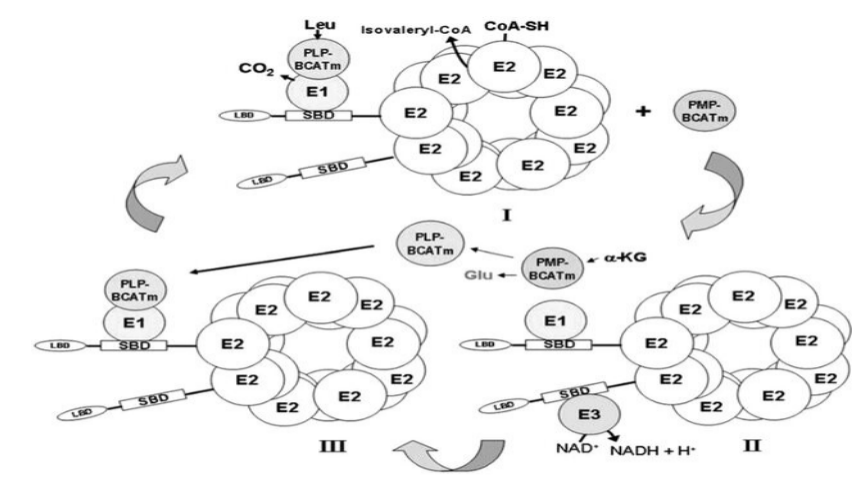
E1: binds any amino acid
leucine → alpha-ketoisocaproate + O2 → HMB (+ CO2)→ HMG-CoA → cholesterol
Methionine
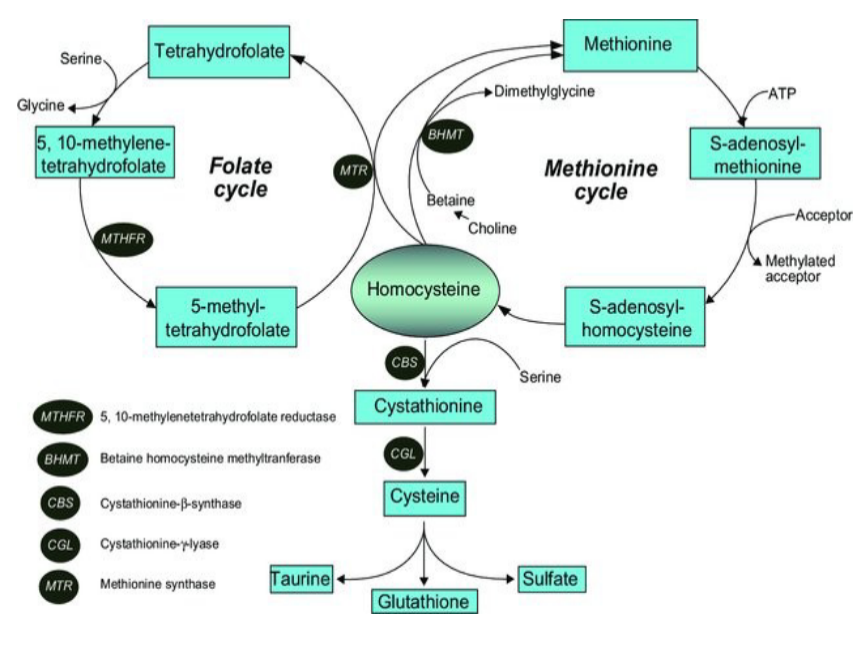
SAM synthase
polyamine synthesis