Adaptive Immunity
Specific Immunity: The Adaptive Line of Defense
third line of defense - acquired
dual system of
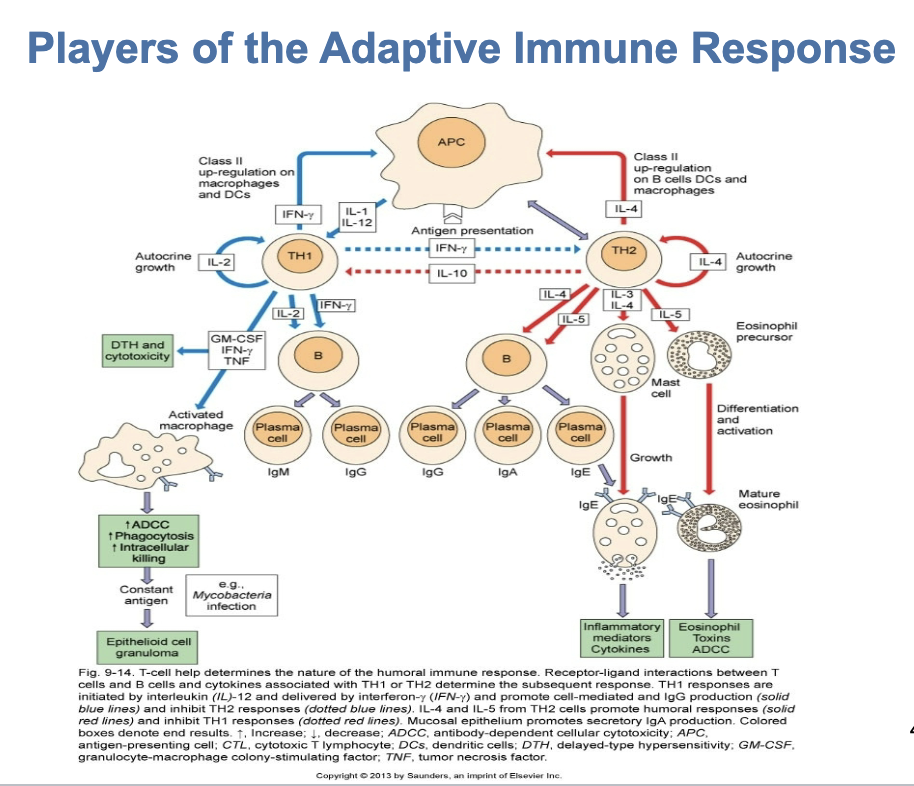
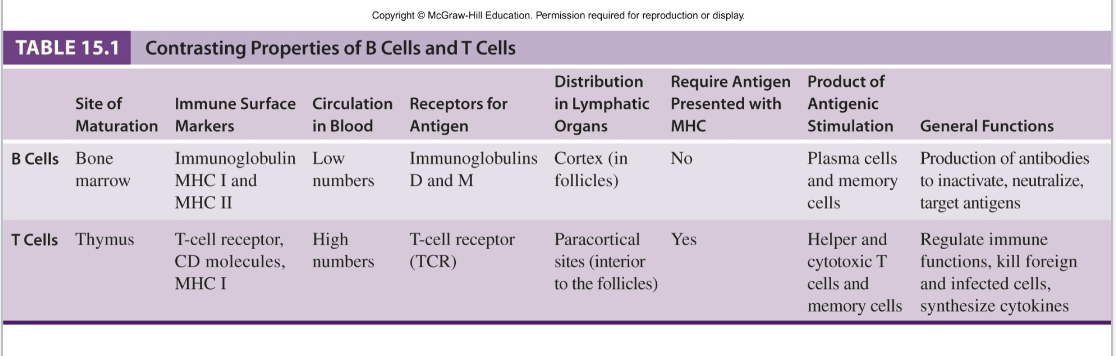
B lymphocytes (humoral immunity)
T lymphocytes (cell mediated or cellular immunity)
uses antigens - molecules that stimulate a response by T and B cells
Two features that characterize specific immunity:
specificity - antibodies produced, function only against the antigen the antigen that they were produced in response to
memory - lymphocytes are programmed to ‘recall’ their first encounter with an antigen and respond rapidly to subsequent encounters
B Cells and T Cells
Antibody Generator
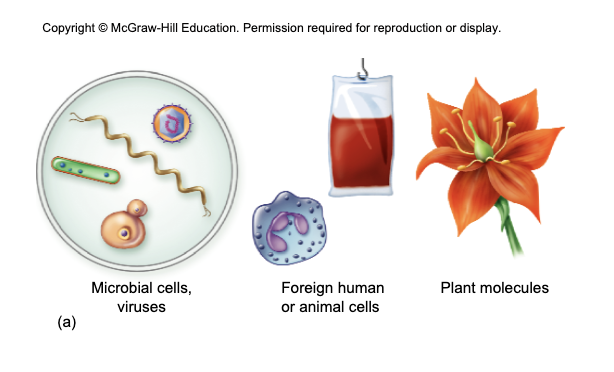
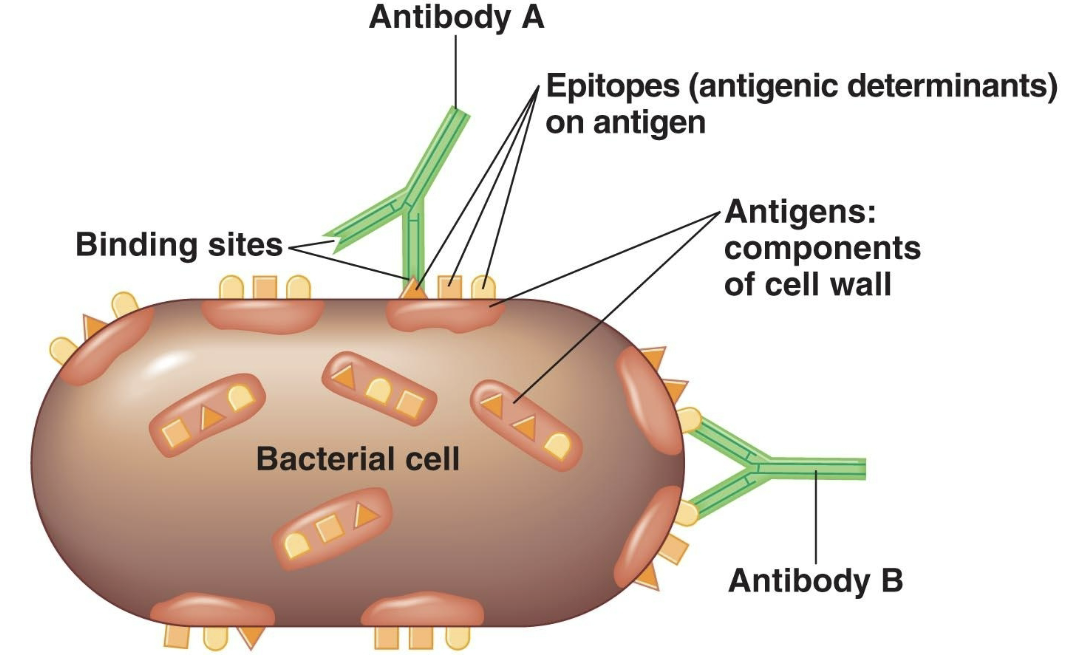
antigen (Ag) is a substance that provokes an immune response in specific lymphocytes
property of behaving as an antigen is antigenicity
foreignness, size (larger), shape (definite shape), and accessibility can all improve antigenicity
Characteristics of Antigens
perceived as foreign
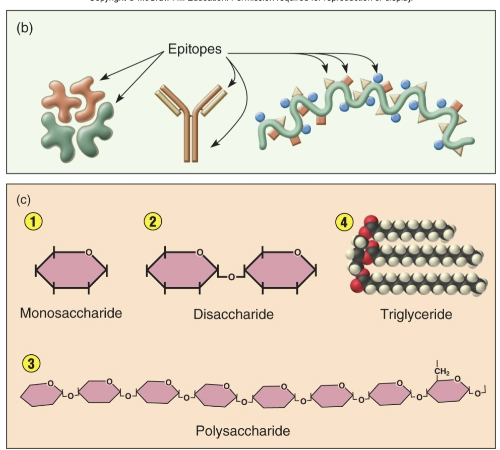
antigenic determinant, epitope - small molecular group that is recognized by lymphocytes
molecules and cells have many antigenic determinants
Antigens
Haptens
small foreign molecules that consist only of a determinant group
not antigenic unless attached to a larger carrier
carrier group contributes to the size of the complex and enhances the orientation of the antigen
Special Categories of Antigens
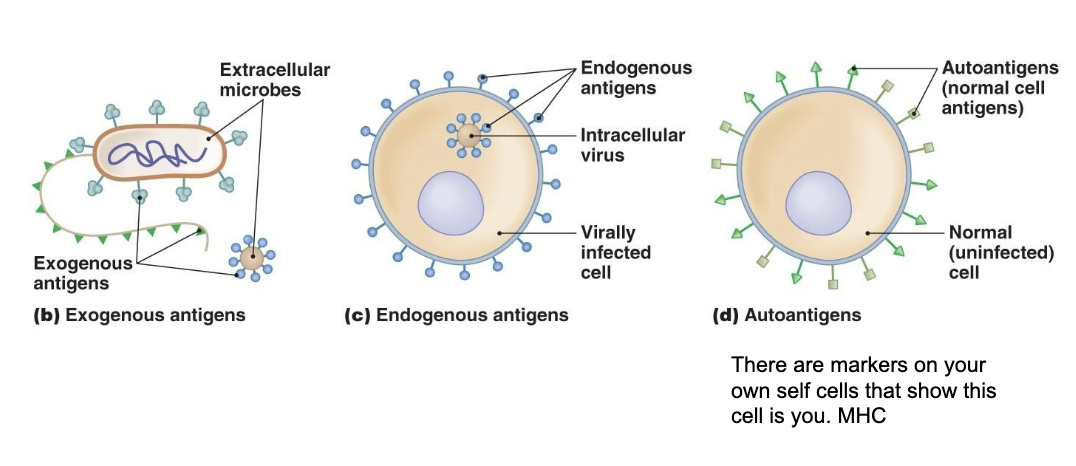
alloantigens - cell surface markers and molecules that occur in some members of the same species but not in others
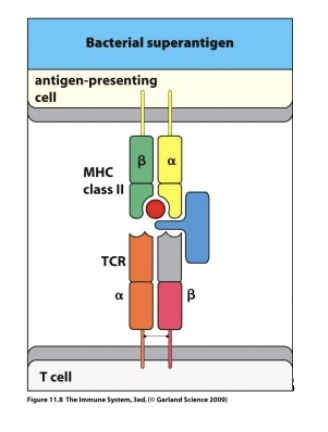
superantigens - potent T cell stimulators; provoke an overwhelming response
allergen - antigen that evokes allergic reactions
autoantigens - molecules on self tissues for which tolerance is inadequate
Primary and Secondary Immune Response
Development of the Immune Response System
cell receptors or markers confer specificity and identify of a cell
major functions of receptors are:
to perceive and attach to nonself or foreign molecules/cells
to promote the recognition of your own (self) molecules/ cells
to receive and transmit chemical messages among other cells of the system
to aid in cellular development
Major Histocompatibility Complex (MHC)
receptors found on all cells except RBCs
AKA human leukocyte antigen (HLA)
plays a role in recognition of self by the immune system and in rejection of foreign tissue
Functions of MHC
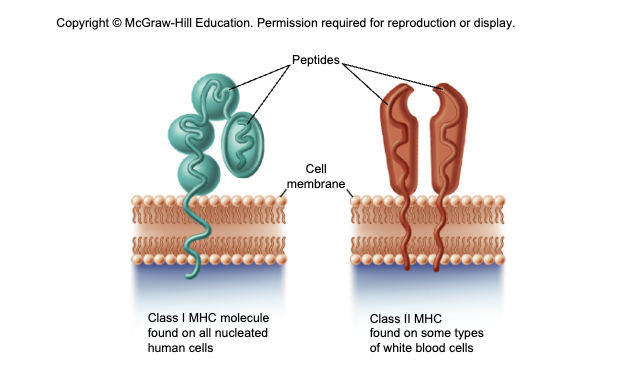
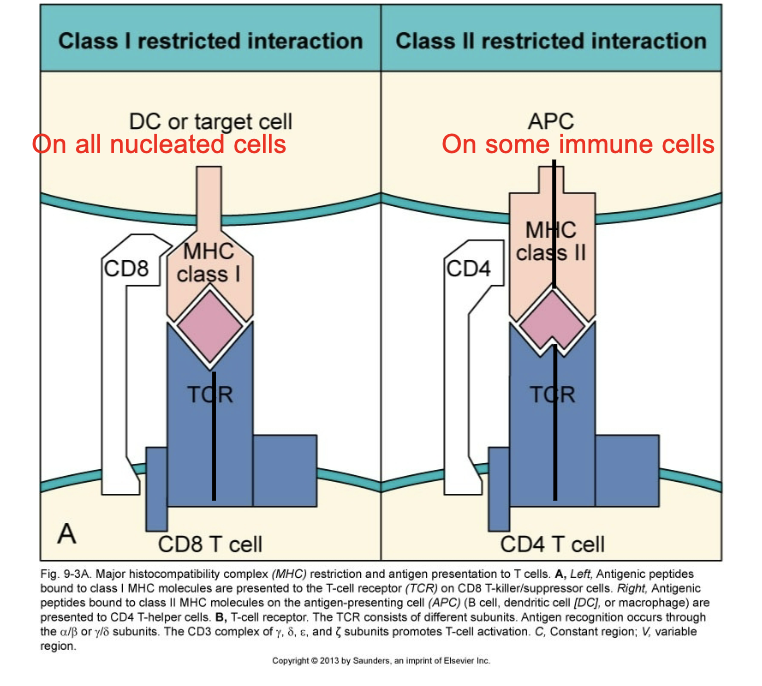
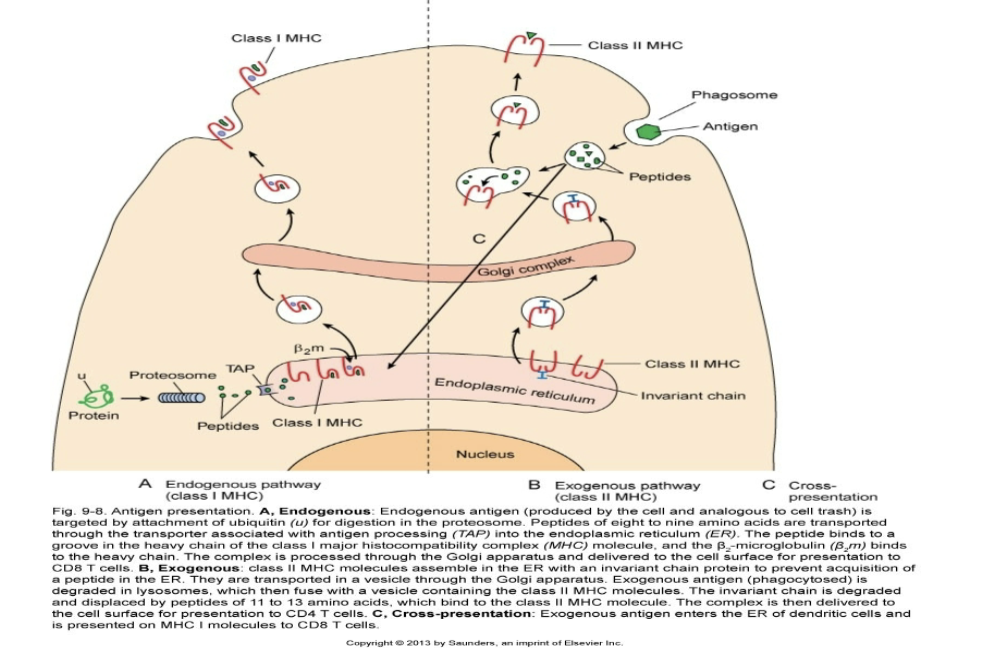
class I - markers that display unique characteristics of self molecules and regulation of immune reactions
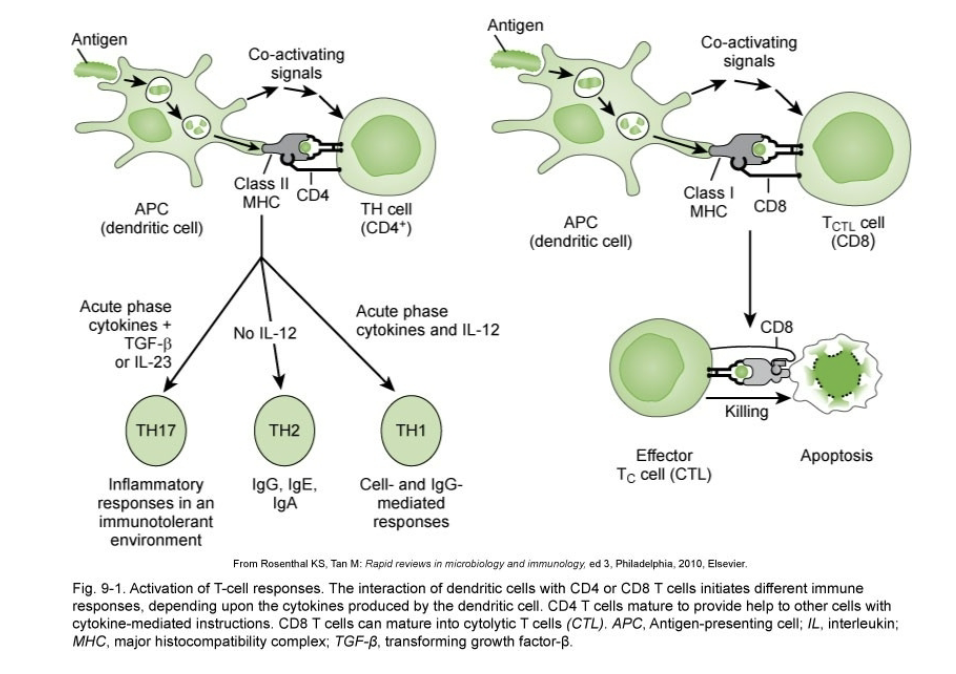
involved in presenting antigen to CD8 T-cells
class II - regulatory receptors found in macrophages, dendritic cells, and B cells
found only on the above WBC
involved in presenting antigen to CD4 T-cells
Lymphocyte Receptors
surveillance and recognition is a function of their receptors
b- cell receptors - bind free antigens
t - cell receptors - bind processed antigens together with the MHC molecules on the cells that present antigens to them
Clonal Selection Theory
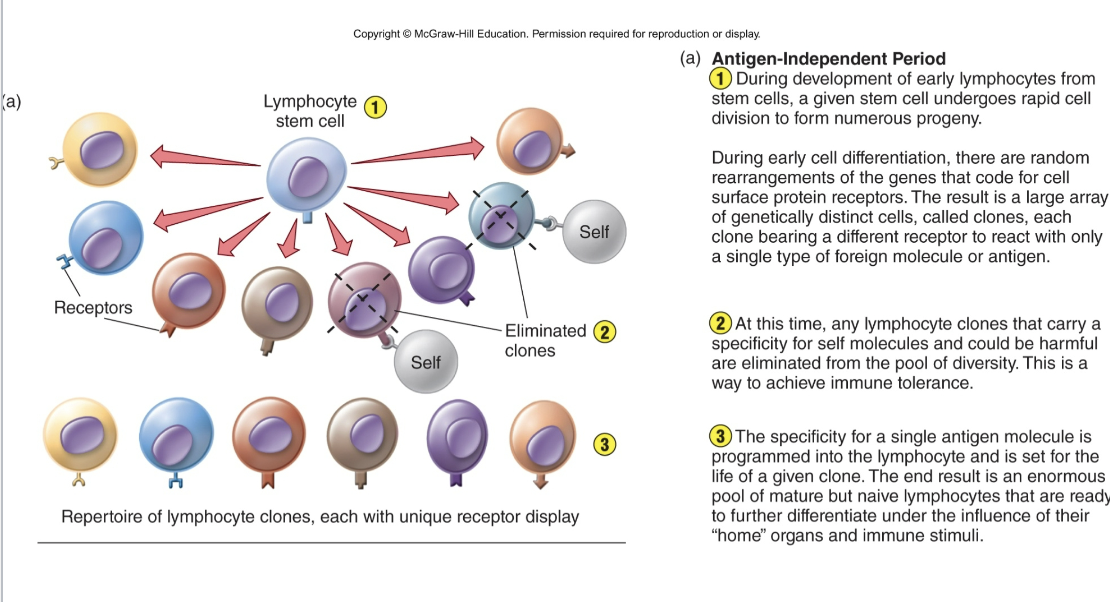
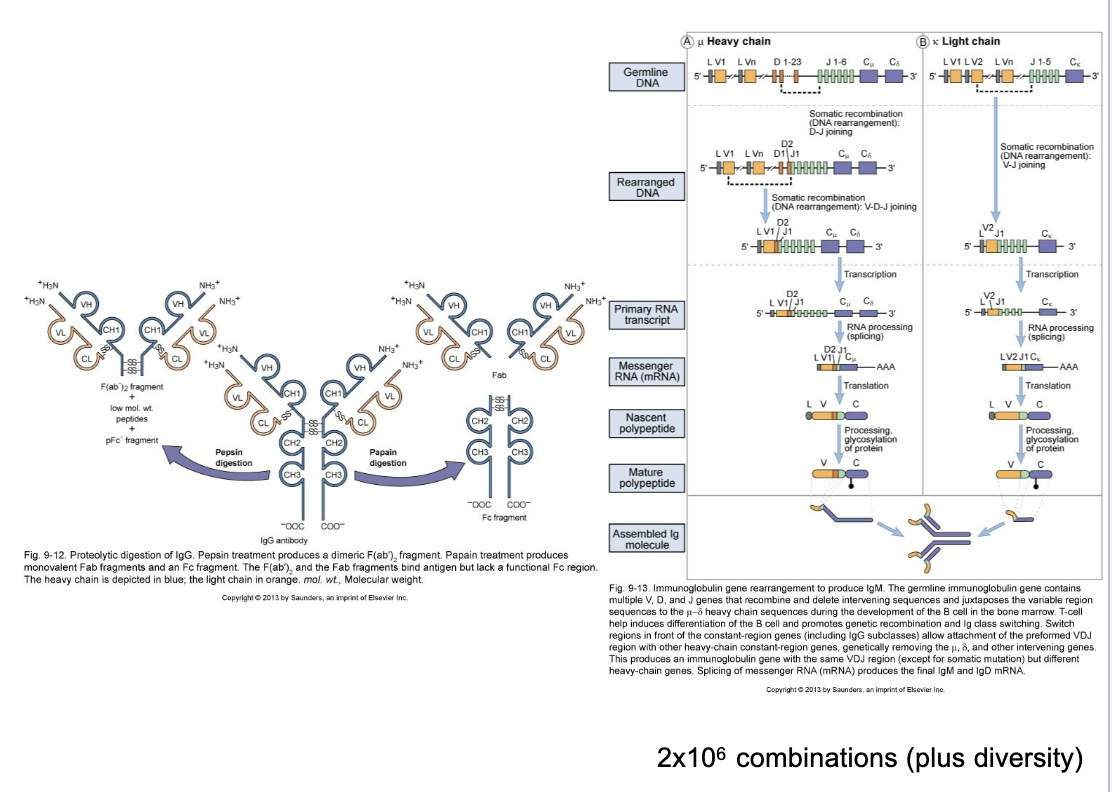
500 genes = variety of specific receptors
continuous series of divisions and genetic changes that generate millions of different cell types
each cell has a particular/unique receptor specificity
over 15,000,000 combinations of variable, diversity and joining gene segments are possible!!
The Development of Lymphocytes
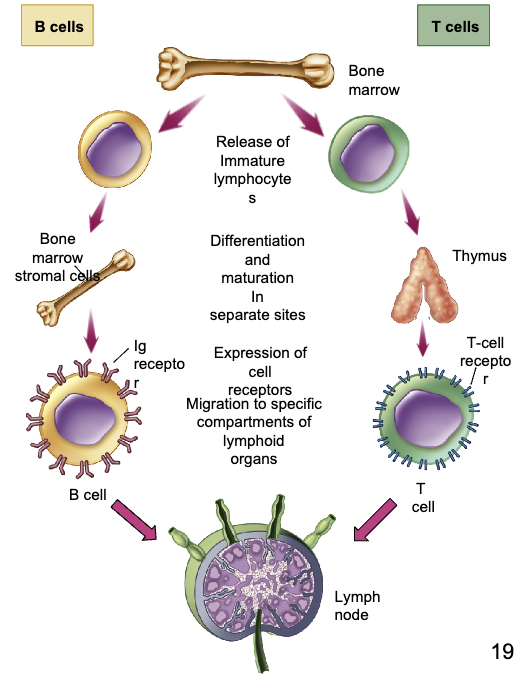
in the bone marrow, lymphocytic stem cells differentiate into either T or B cells
B cells stay in the bone marrow
T cells migrate to the thymus
both T and B cells migrate to secondary lymphoid tissue
Lymphocyte Development
Clonal Selection
Specific B-Cell Receptor: Immunoglobulin
4 polypeptide chains:
2 identical heavy chains (H)
2 identical light chains (L)
Y shaped arrangement - ends of the forks antigen binding sites
variable regions and constant regions
B- cell receptors are embedded in the membranes of B cells. the variable regions of all of the receptors on a single cell bind the same specific antigen
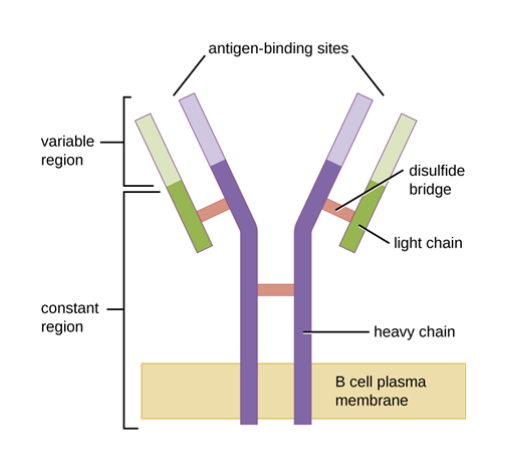
Antigen-Antibody Binding
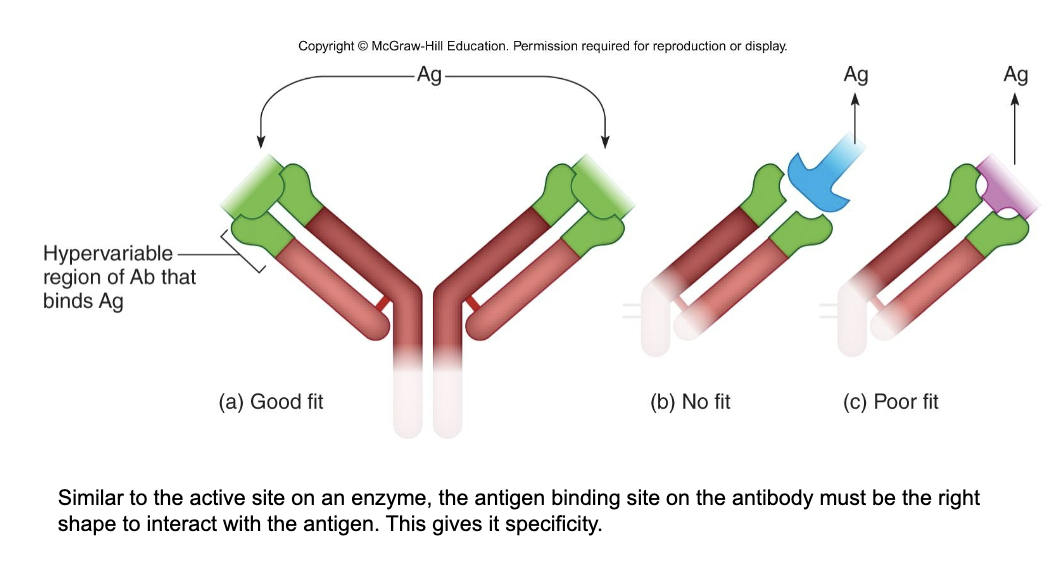
Lymphocyte Responses and Antigens
B-cell maturation:
directed by bone marrow sites that harbor stromal cells, which nurture the lymphocyte stem cells and provide hormonal signals
millions of distinct B cells develop and ‘home’ to specific sites in the lymph nodes, spleen, and GALT
come into contact with antigens throughout life
have immunoglobulin as surface receptors for antigens
B Cell Responses
B-cell activation and antibody production
B cells process the Ag
interact with TH cells
stimulated by growth and differentiation factors
to enter the cell cycle in preparation for mitosis and clonal expansion
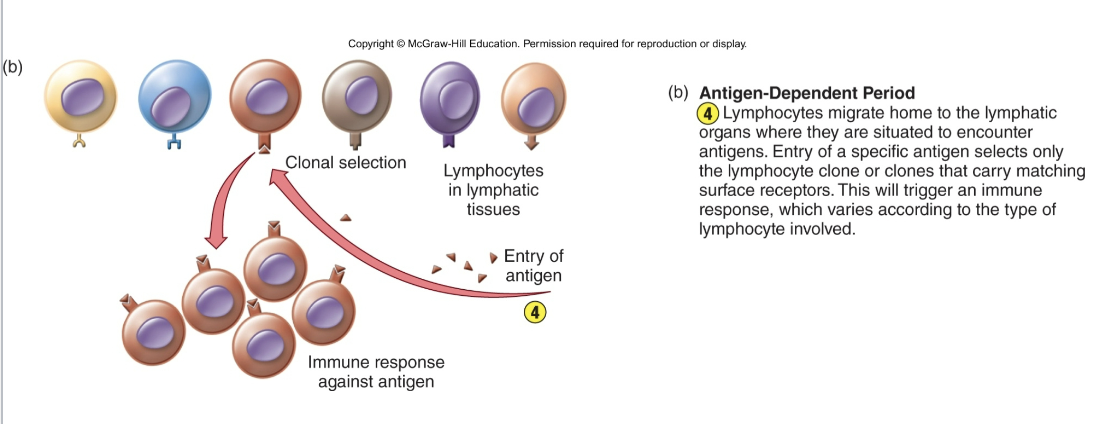
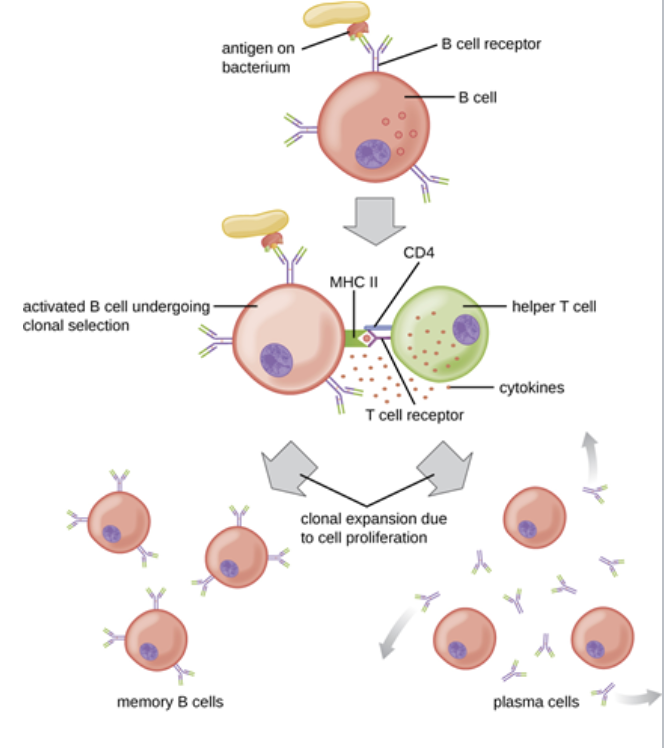
divisions give rise to plasma cells that secrete antibodies and memory cells that can react to the same antigen later
B Cell Activation and Differentiation
in T cell-dependent activation of B cells, the B cell recognizes and internalizes an antigen and presents it to a helper T cell that is specific to the same antigen
the helper T cell interacts with the antigen presented by the B cell, which activates the T cell and stimulates the release of cytokines that then activate the B cell
activation of the B cell triggers proliferation and differentiation into B cells and plasma cells
Antibody-Antigen Interactions
agglutination - Ab aggregation; cross-linking cells or particles into large clumps
complement fixation - activation of the classical complement pathway can result in the specific rupturing of cells and some viruses (IgM best)
precipitation - aggregation of particulate antigen
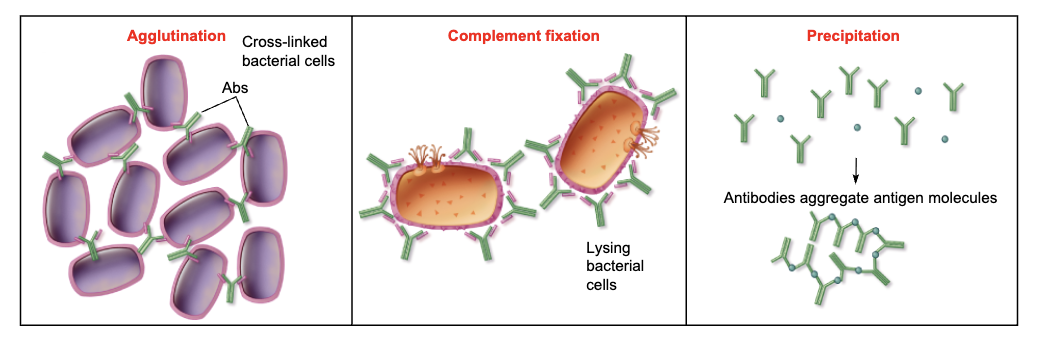
opsonization - process of coating microorganisms or other particles with specific antibodies so they are more readily recognized by phagocytes (IgG best)
neutralization - abs fills the surface receptors on a virus or the active site on a microbial enzyme to prevent it from attaching
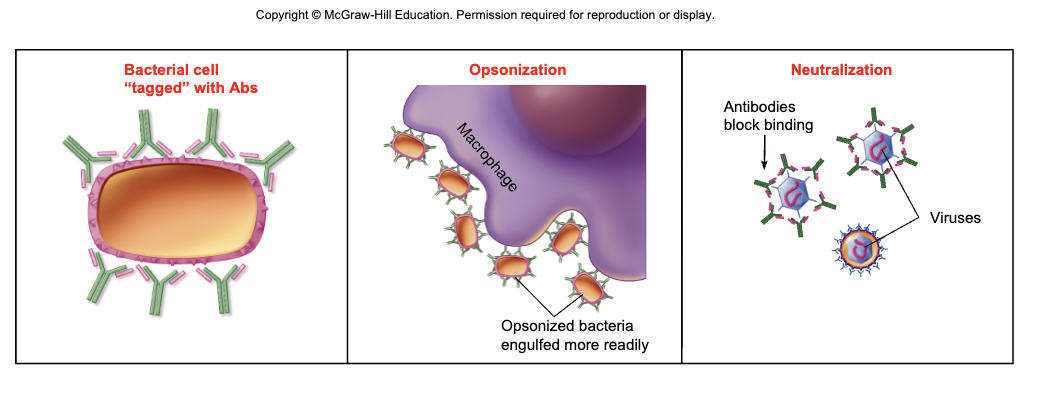
activation of mast cells - IgE
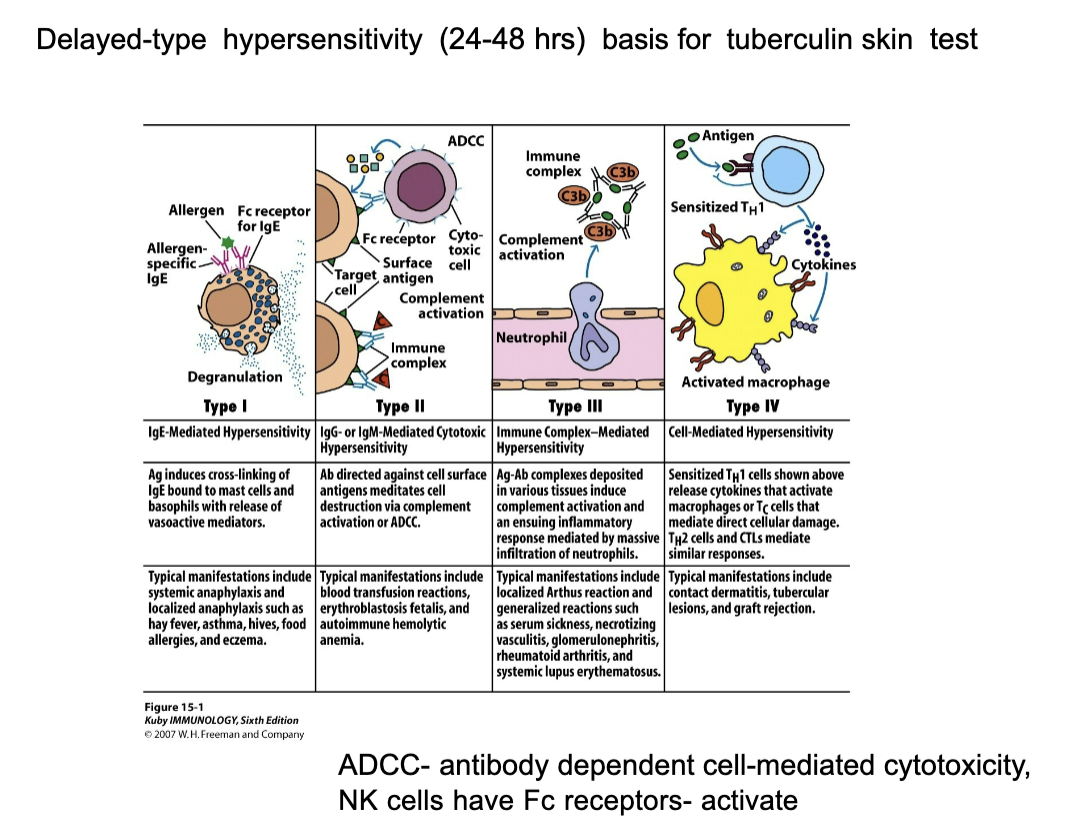
antibody dependent cell mediated cytotoxicity (ADCC): activate killing by NK cells
protection of different sites -
mucosal surfaces: IgA
crosses placenta: IgG
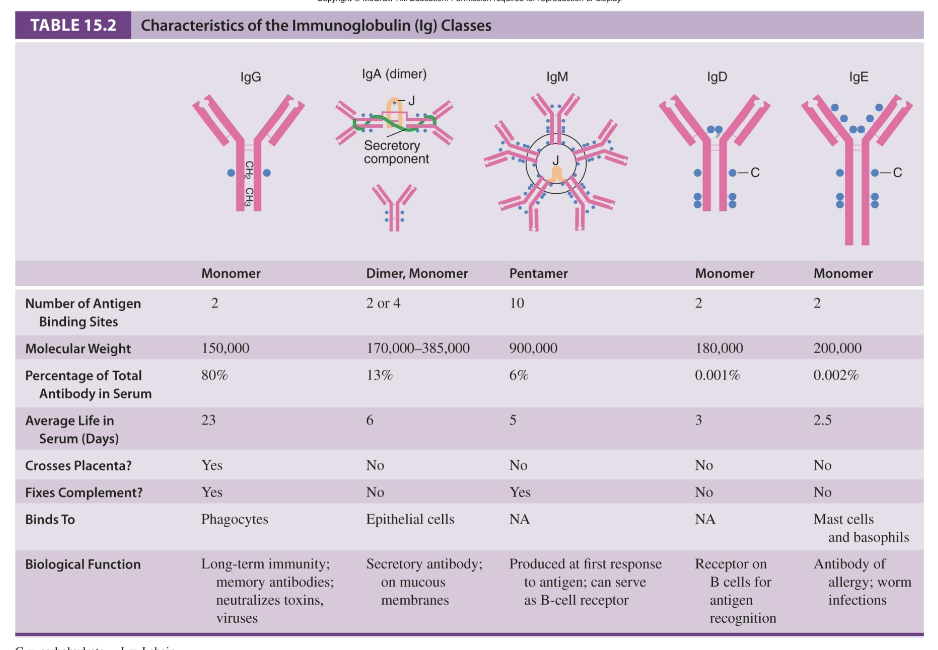
5 Classes of Immunoglobulins
IgG - produced by plasma cells (primary response) and memory cells (secondary), most prevalent, crosses placenta
IgA - dimer, secretory, mucous membranes, & breastmilk
IgM - five monomers, first class synthesized following Ag encounter, receptor for antigen on B cells
IgE - involved in allergic responses and parasitic worm infections
IgD - serves as a receptor for antigen on B cells, not secreted
Think of GAMED to remember the classes
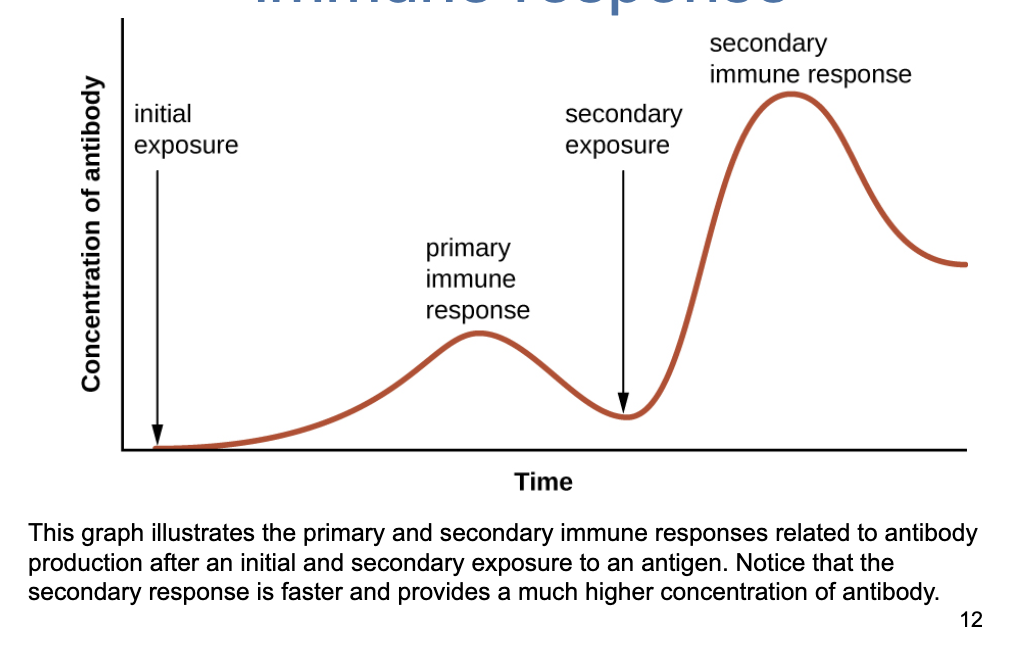
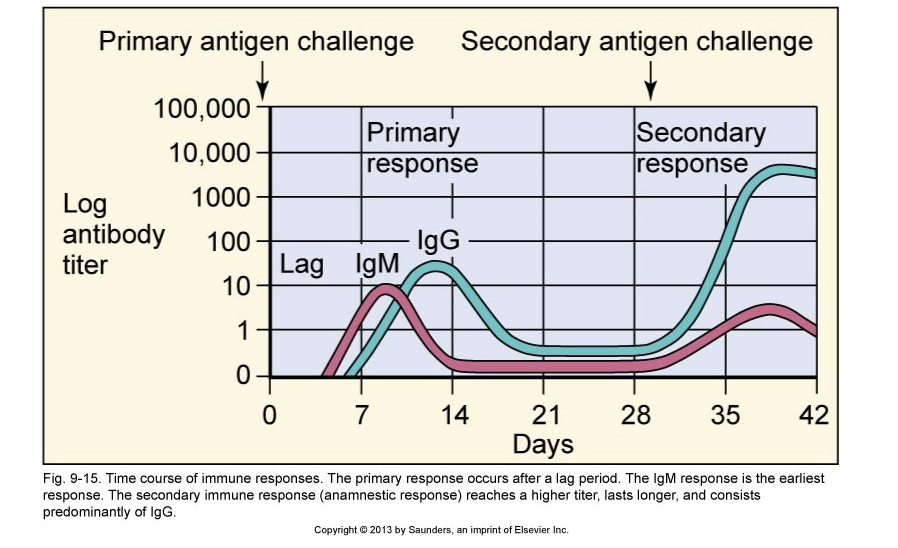
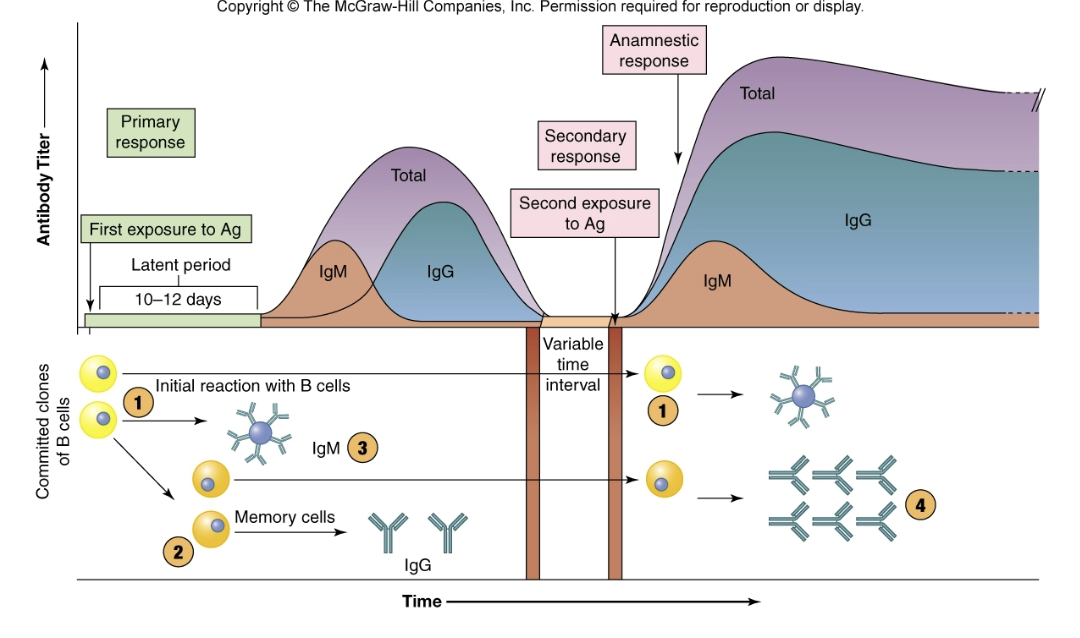
Primary and Secondary Response to Antigen
primary response - after first exposure to an Ag immune system produces IgM and a gradual increase in Ab titer (concentration of antibodies) with the production of IgG
secondary response - after second contact with the same Ag, immune system produces a more rapid, stronger response due to memory cells
Monoclonal Antibodies
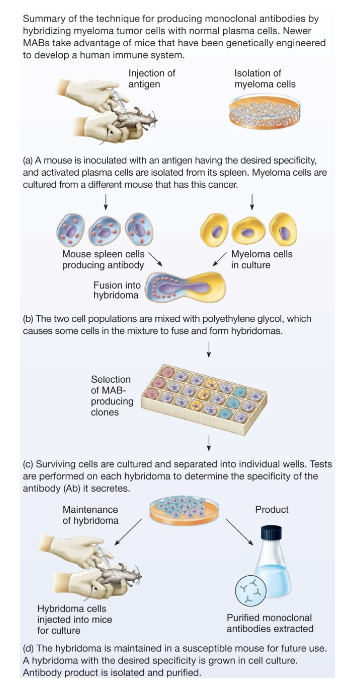
originate from a single clone and have a single specificity for antigen
to make a monoclonal antibody, researchers first have to identify the right antigen to attack
used in diagnosis of disease, identification of microbes and therapy
T- Cells
i don’t see antigen unless it is presented by antigen presenting cells
T Cell Receptor
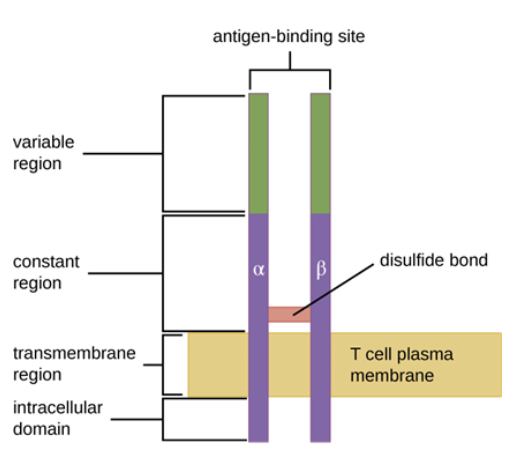
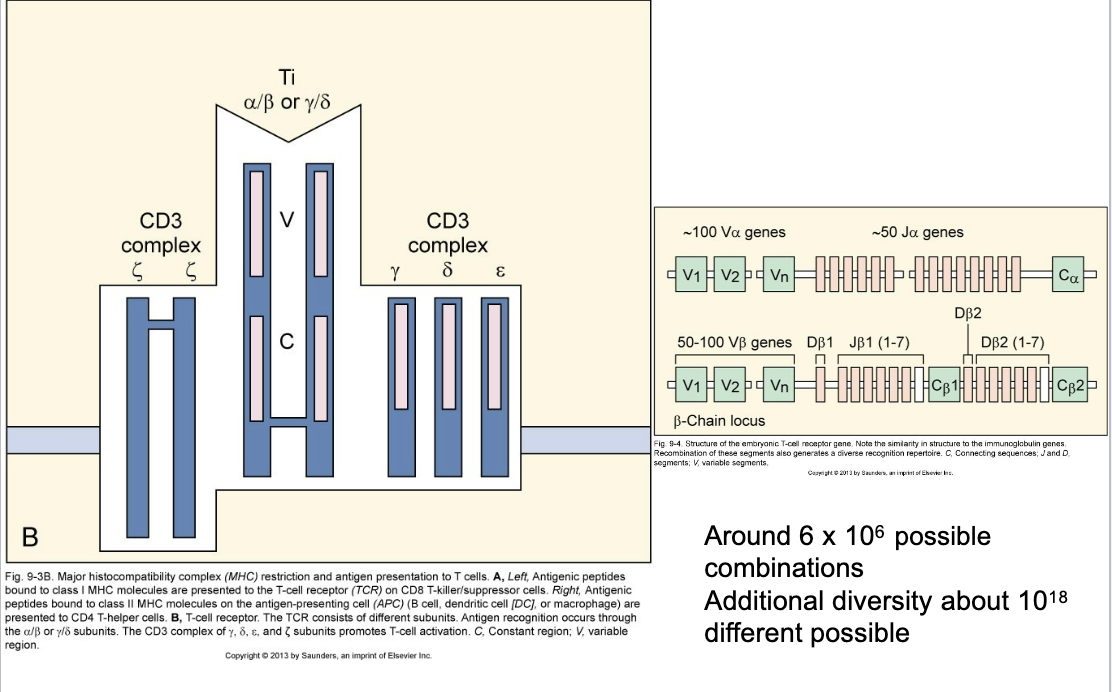
a T- cell receptor spans the cytoplasmic membrane and projects variable binding regions into the extracellular space to bind processed antigens associated with MHC I or MHC II molecules
formed by genetic recombination, with variable and constant regions
2 parallel polypeptide chains
small, not secreted
Lymphocyte Responses and Antigens
T-cell maturation
maturation is directed by the thymus gland and its hormones
different classes of T-cell receptors termed CD- cluster of differentiation
CD4 and CD8
mature T cells migrate to lymphoid organs
T Cells and Cell-Mediated Immunity
T Lymphocytes
T-cells can directly act against Ag and foreign cells when presented in association with an MHC carrier
T cells secrete cytokines that act on other cells and stimulate them to react
sensitized T cells proliferate into long-lasting memory T cells
Types of T Cells
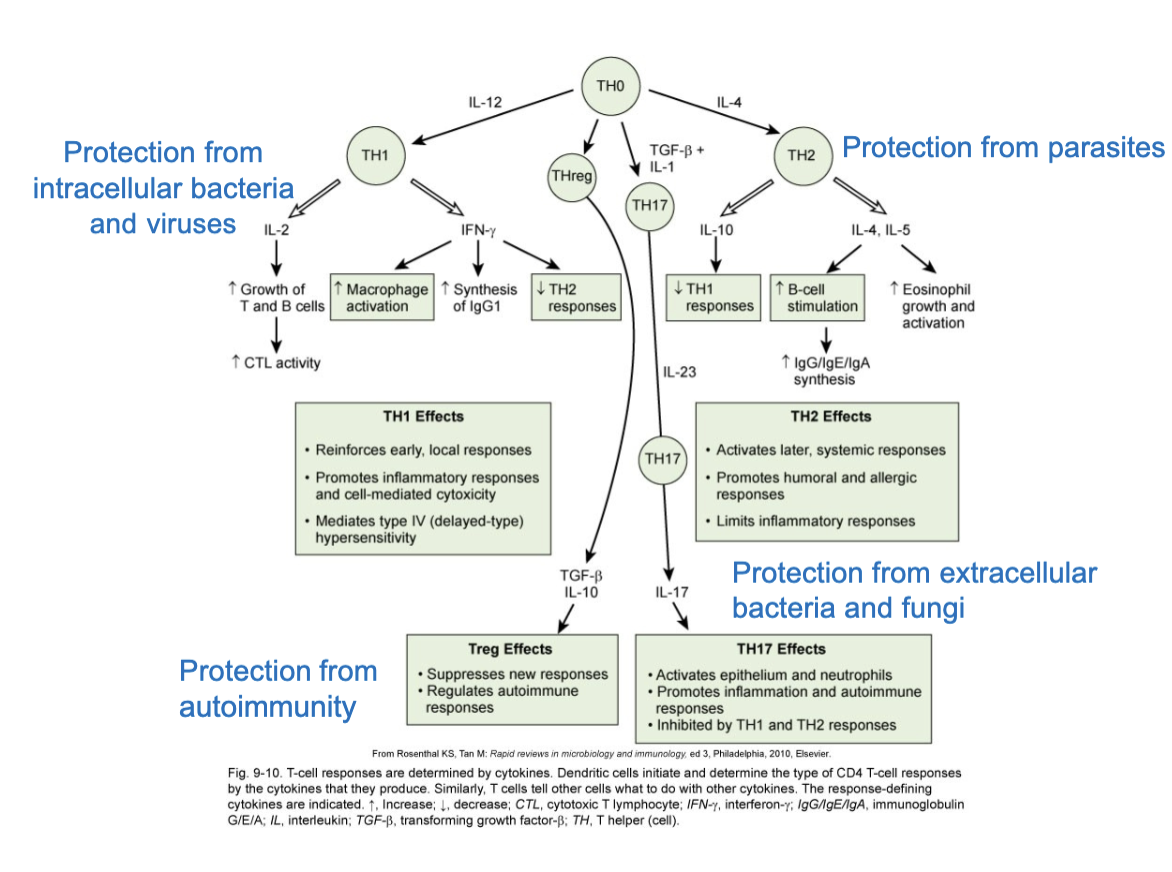
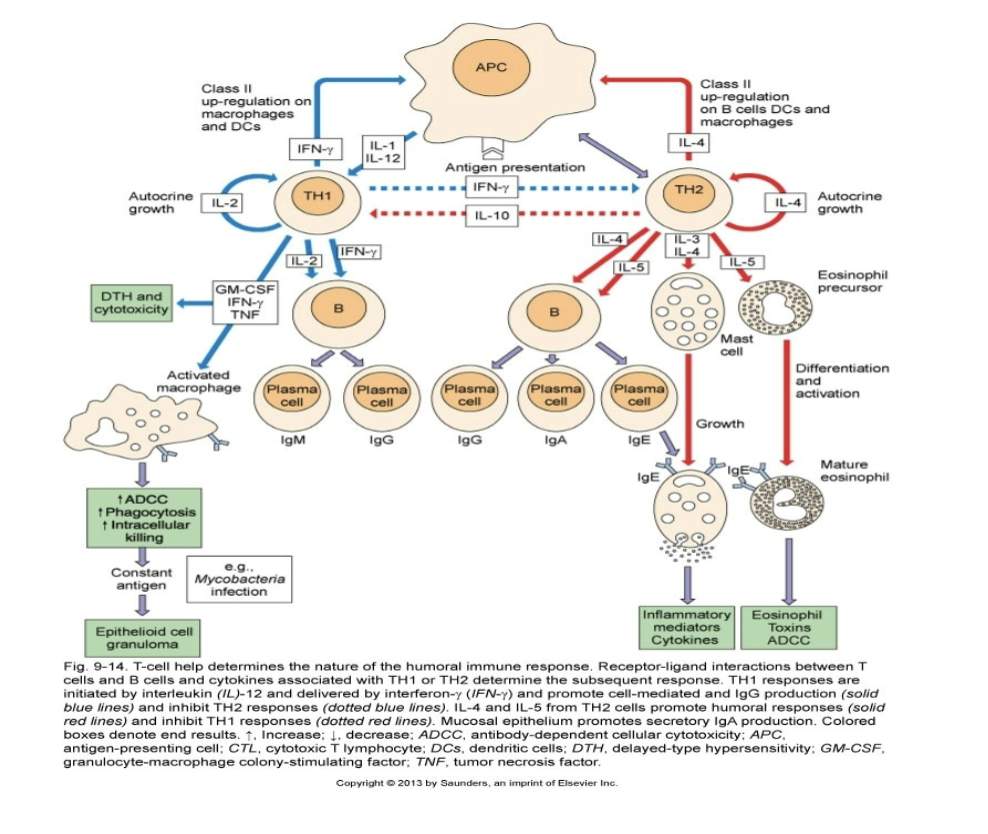
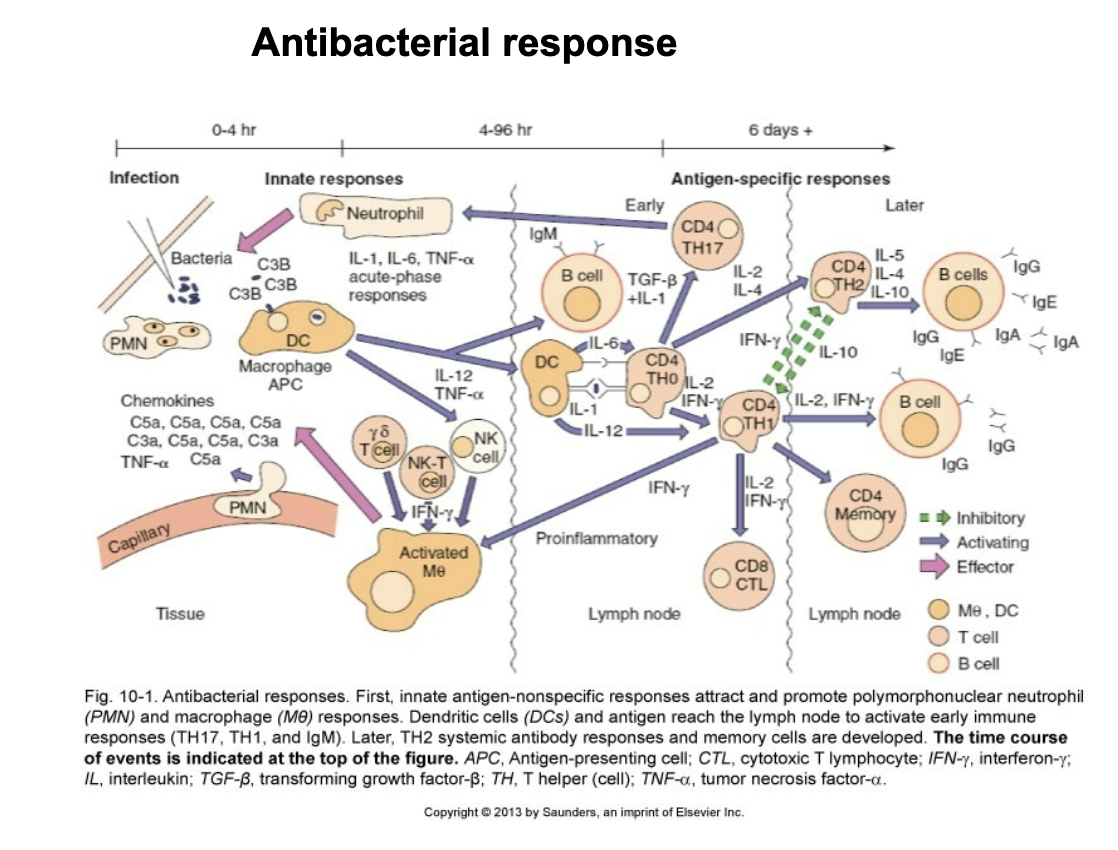
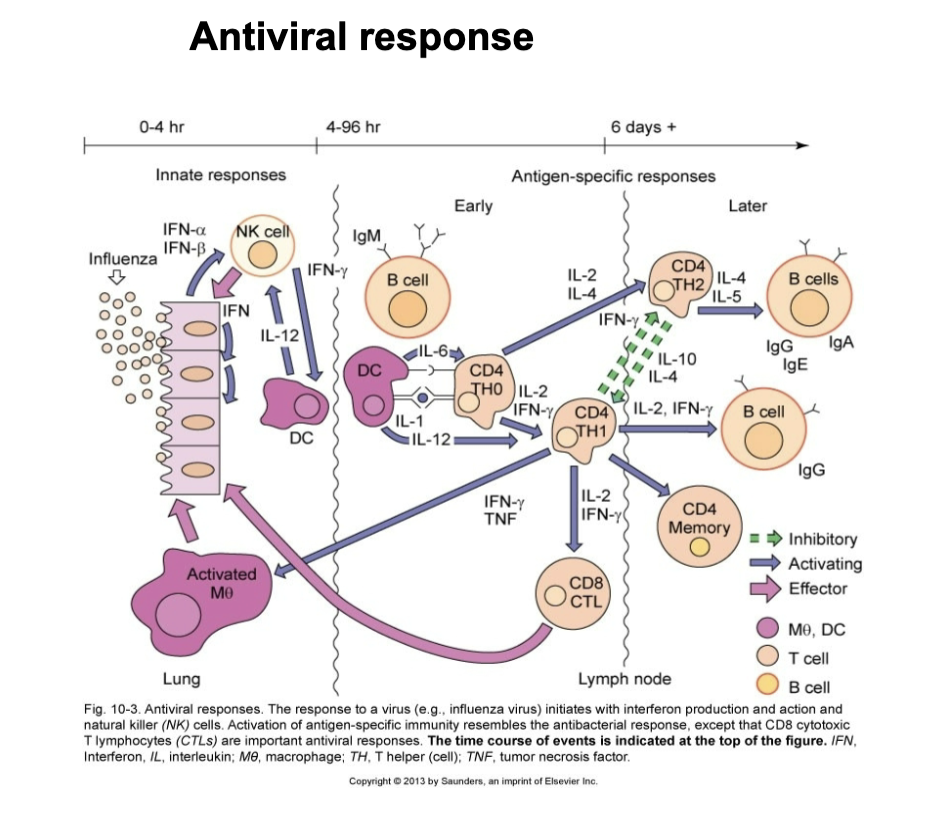
T helper cells (CD4 or TH) most prevalent type of T cell
regulate immune reaction to antigens, including other T and B cells
also involved in activating macrophages and increasing phagocytosis
differentiate into
TH1- activate Tc cells, macrophages, make IFN
TH2- activate B cells, IL-4, IL%
Th17- recruit innate cells, IL-17
Treg- turn down specific responses, 1L10 and TGF
Cytotoxic T cells (CD8 or Tc) destroy foreign or abnormal cells by secreting perforins that lyse cells
natural killer T-cells - lack specificity; circulate through the spleen, blood, and lungs and bind to certain tumor cells and virus-infected cells without the stimulation of antigens, and kill them by the insertion of granules containing perforin
Antigen Processing and Presentation to Lymphocytes
antigen presenting cells (APC) - T helper cell
APCs modify the antigen; then the Ag is moved to the APC surface and bound to MHC receptor
T Cells and Superantigens
superantigens are a form of a virulence factor
non-specifically activate CD4 T-cells
provoke overwhelming immune responses by large numbers of T cells
release of cytokines
blood vessel damage
toxic shock
multiorgan damage
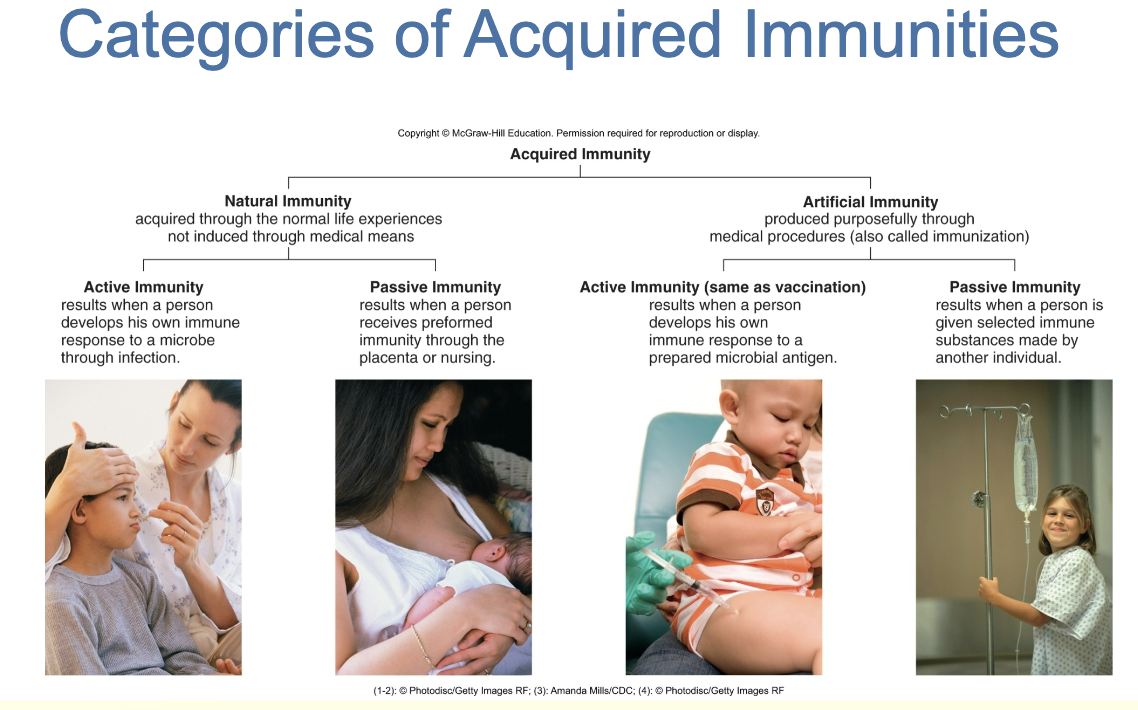
Classifying Immunities
active immunity - results when a person is challenged with antigen that stimulates production of antibodies; creates memory, takes time, and is lasting
passive immunity - preformed antibodies are donated to an individual; does not create memory, acts immediately, and is short term
natural immunity - acquired as part of normal life experiences
artificial immunity - acquired through a medical procedure such as vaccine
Artificial Passive Immunity
immunotherapy
administration of antiserum containing preformed antibodies
provides immediate protection
protection lasts 2-3 months
Antisera have several limitations
contain many antibodies not just what you want
allergic reactions- serum sickness can occur
viral pathogens may be present
antibodies degraded relatively quickly
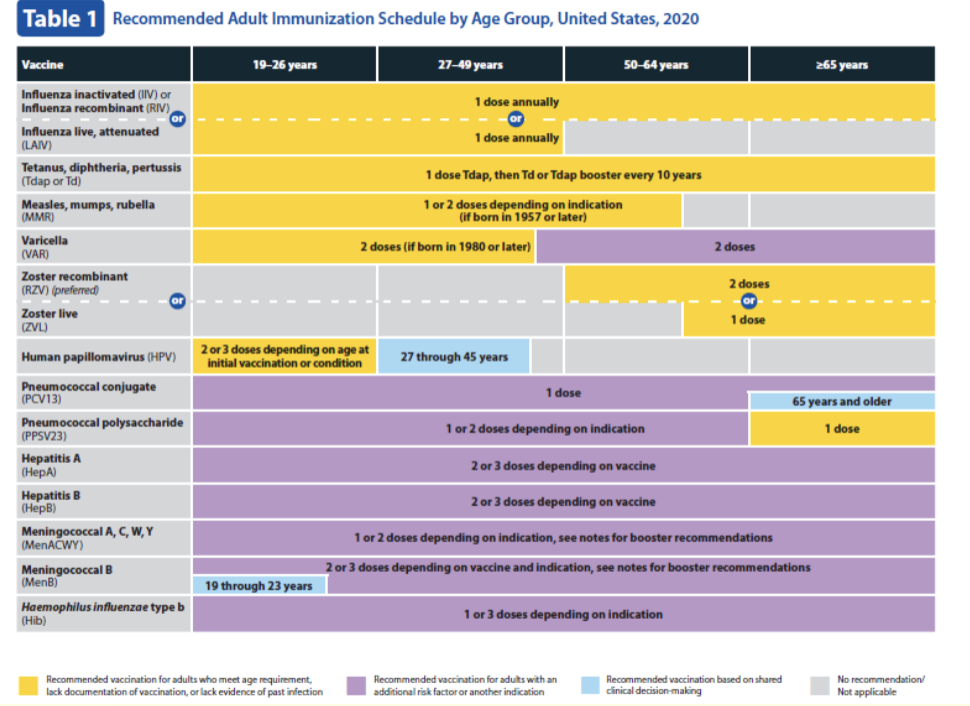
Artificial Active Immunity = Vaccination
vacinnation - deliberate exposure of a person to material that is antigenic but not pathogenic
principle is to stimulate a primary and secondary amamnestic response to prepare the immune system for future exposure to a wild virulent pathogen
response to a future exposure will be immediate, powerful, and sustained
Vaccine Types
Live, attenuated cells or viruses
killed whole cells or inactivated viruses
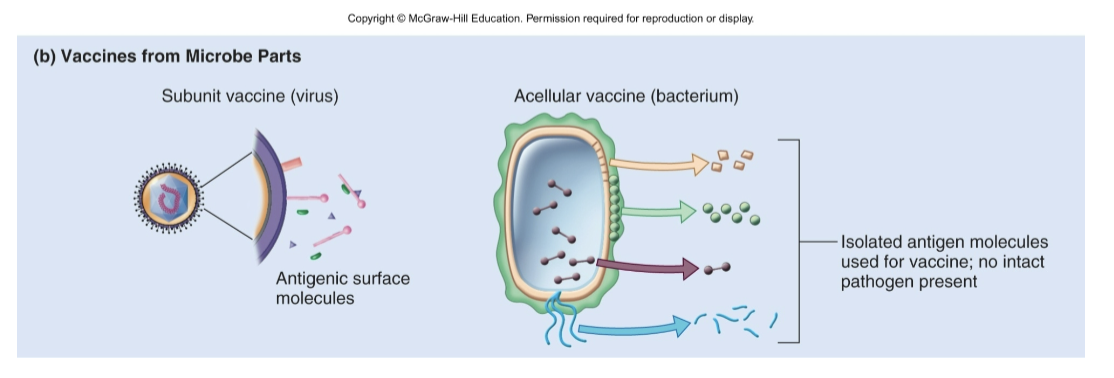
subunit-antigenic molecules derived from bacterial cells or viruses
toxoid vaccines
conjugate vaccines
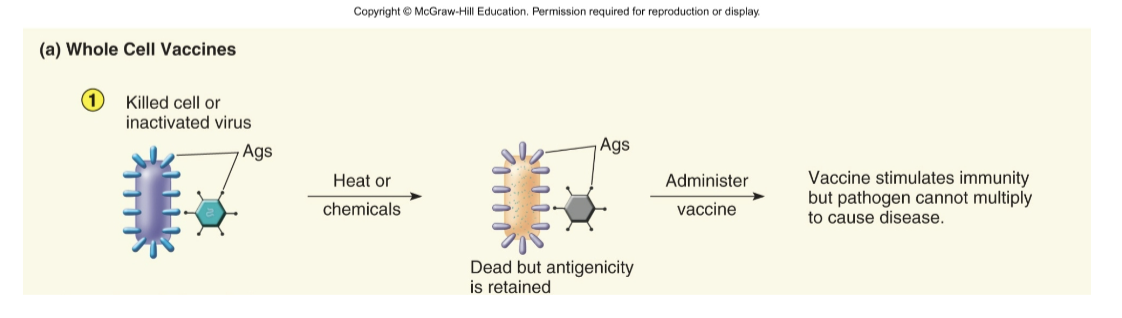
Killed of Inactivated Vaccines
treat strain with some agent that kills the pathogen but does not destroy its antigenicity
often need larger dose and more boosters
Live Attenuated Cells or Viruses
uses pathogens with reduced virulence
elicits strong immune because it is live
typically long lasting immunity
can provide contact immunity - the attenuated virus is shed and others may come into contact with it
usually require fewer doses and boosters
limitations
mild infections possible
require special storage
can be transmitted to other people
can conceivably mutate back to virulent stain
Antigenic Molecules
acellular or subcellular vaccines (subunit- if a virus)
exact antigenic determinants can be used when known:
capsules- pneumococcus, meningococcus
surface protein- anthrax, hepatitis B
exotoxins (toxoid)- diphtheria, tetanus
Toxoid Vaccines
contain inactivated bacterial toxins, called toxoids
prevent diseases in which bacterial toxins play an important role in pathogenesis
limitations
protective against toxin but not bacterial infection
may need boosters
Conjugate Vaccines
type of subunit vaccine that consists of a protein conjugated to a capsule polysaccharide
developed to enhance the efficacy of subunit vaccines against pathogens that have protective polysaccharide capsules that help them evade phagocytosis
limitations:
children under the age of 2 years do not respond effectively to these vaccines
costly to produce
no protection against antigenic variation
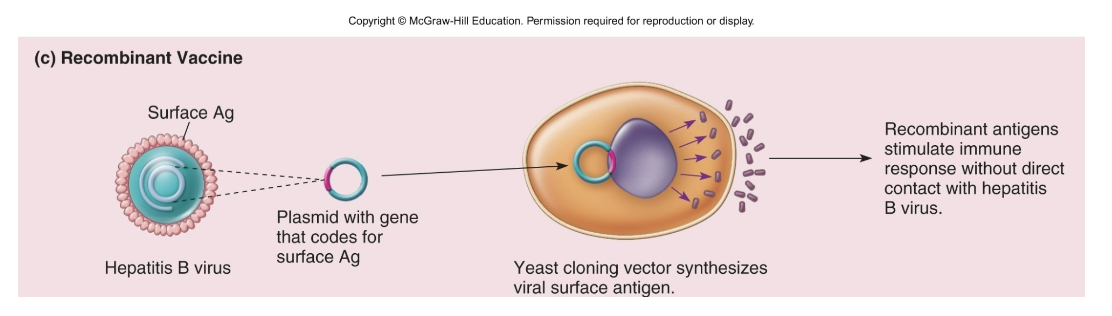
Genetically Engineered Vaccines
insert genes for pathogen’s antigen into plasmid vector, and clone them in an appropriate host cell
stimulated the clone host cell to synthesize and secrete a protein product (antigen), harvest and purify and protein- hepatitis
Route of Administration and Side Effects
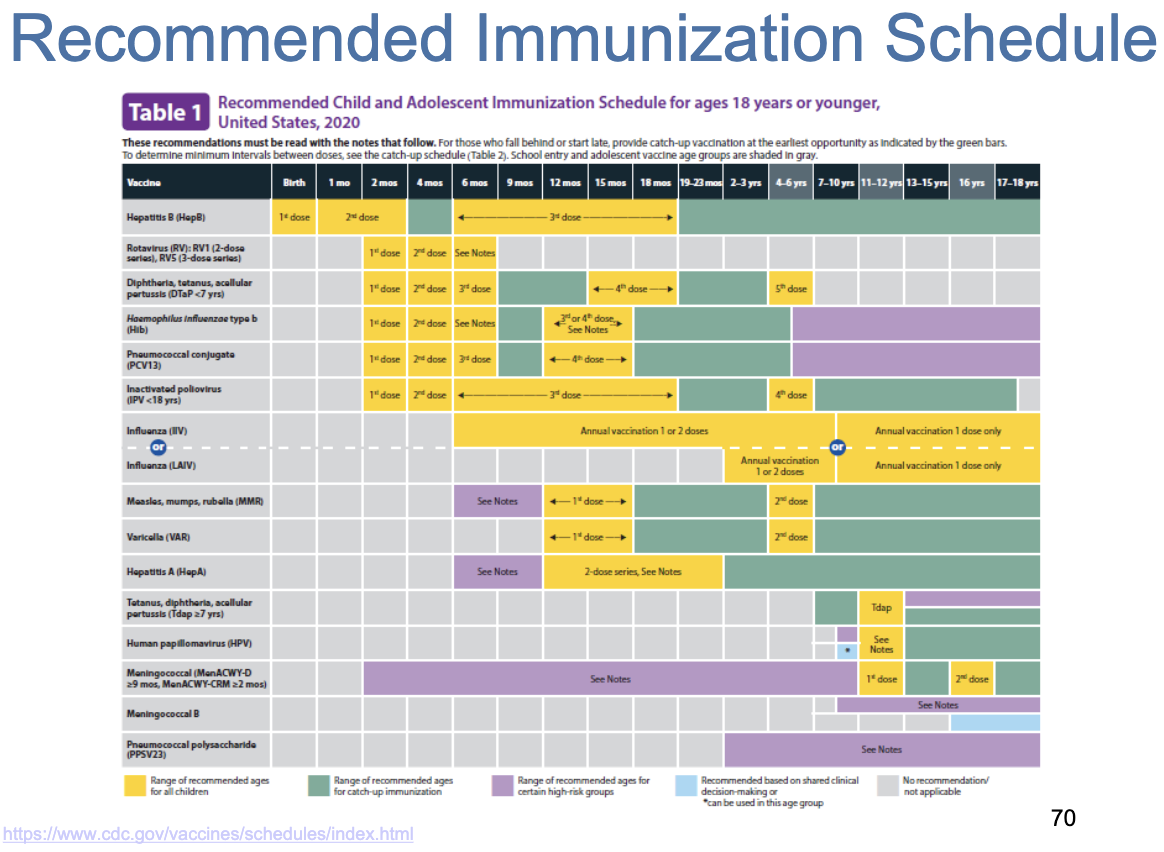
most administered by injection; few oral, nasal
some vaccines require adjuvant to enhance immunogenicity and prolong retention of antigen
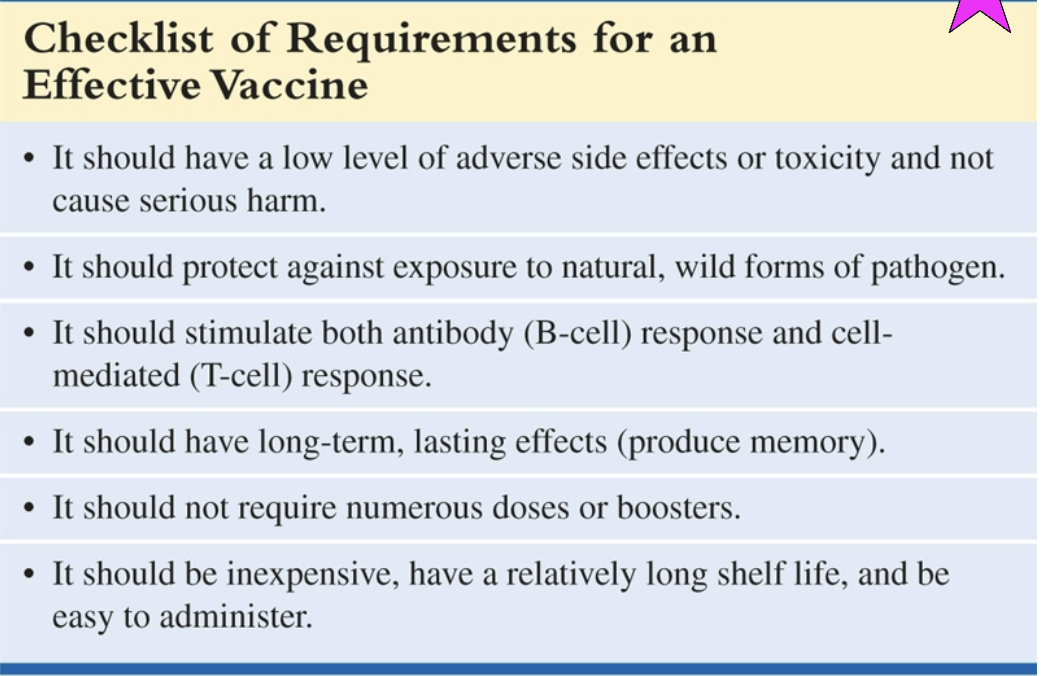
stringent requirements for development of vaccines
More benefit than risk
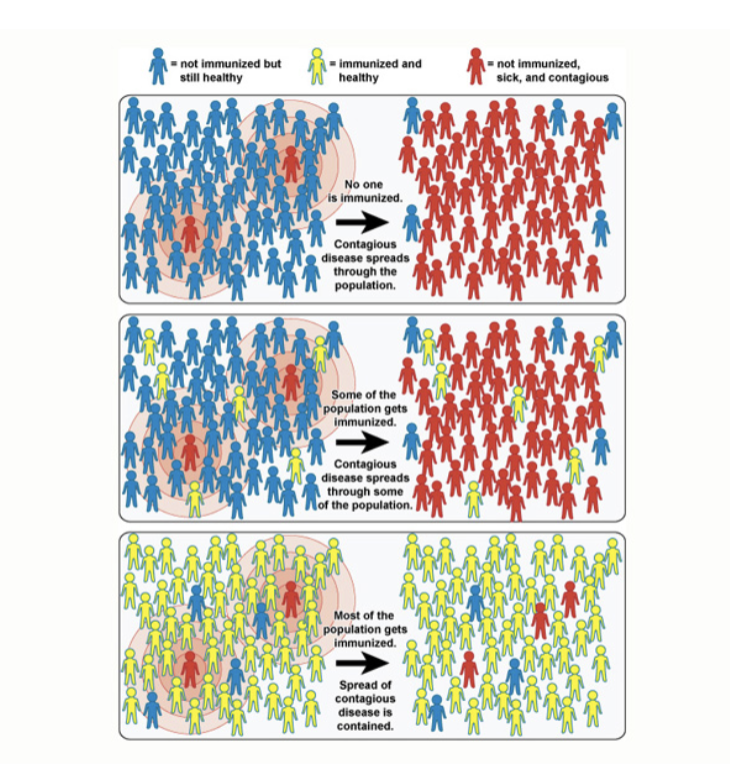
Herd Immunity
immune individuals will not harbor it, reducing the occurrence of pathogens- herd immunity
less likely that a non-immunized person will encounter the pathogen
Summary
third line of defense- specific and acquired through life
involves B and T cells
makes memory so you remember past infections
B cells - made and mature in bone marrow
produce antibodies which bind to specific antigens
primary response and secondary response to infection and antibody production
Summary
t cells - made in bone marrow and mature in the thymus
2 specific types of cells
helper T cells - recruits help
cytotoxic T cells - kills infected cells
immunity
active and passive
natural and artificial
vaccines- provide an artificial way to be exposed to infections but not get sick
B and T cells make memory to vaccines