Electromotive Force and Potential Difference
Heat energy is given out at every point in the circuit as the current flows. This energy comes from the battery.
Most of the heat energy is given out in the bulb since it is more difficult for the charges to pass through it.
In the battery chemical energy is converted to electrical energy. The electric charges get electric potential and kinetic energy as they pass through the battery.
As they move around the circuit their average kinetic energy remains constant but they lose electric potential energy. This lost potential energy appears as heat.
Power
Rate at which energy is transferred.
SI Unit: watt (W)
1 watt is 1 joule per second
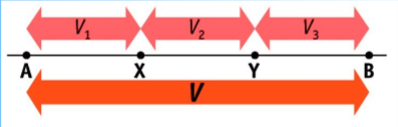
Voltages in Series
The potential difference across two or more consecutive parts of a series circuit is equal to the sum of the potential differences across each part.
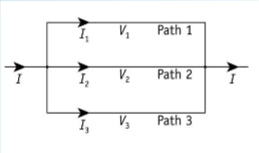
Voltages in Parallel
The potential difference across each of a number of conductors connected in parallel with eachother is the same.
EMF
A voltage when applied to a circuit.
e.g the mains, a simple cell, a thermocouple, etc.
A Simple Cell
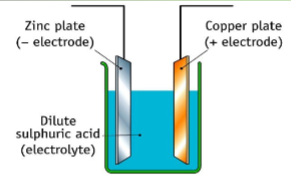
A typical simple cell consists of a copper plate and a zincw plate in a beaker of dilute sulphuric acid.
The plates react chemically with the acid causing the zinc to become negatively charged and the copper positively charged.
When current flows the chemicals get used. When they are fully used you can get no more current from the cell. Therefore they cannot be recharged.
Lead Acid Accumulator
e.g. car battery
It is used to start the engine and power other electrical components when the car engine is not running.
Batteries Connected in Series
If a number of batteries are connected in series wtih the positive terminal of one connected to the negative terminal of the next then the total EMF of the combination is the sum of the individual EMFs.
Total EMF of combination: