unit 1 biomed pltw
Activity 1.1.1 A sketchy scene
At 10:00 a.m., Taylor Diaz placed a call to 911. Diaz, a 19-year-old college student, reported finding the body of Anna Garcia, a fellow classmate. Diaz found Garcia lifeless inside the Gentry Life Science Building. The 911 operator notified the local police. They arrived on campus and began securing the scene by 10:10 a.m.
DECEDENT: In forensic investigations and medical cases, the person who has died is often referred to as the decedent
Activity 1.1.2 Reliable Witnesses?
A person of interest is someone who law enforcement thinks may have information related to a possible crime.
Biological reactions to stimuli that can be felt, detected, and/or measured are known as our physiological response. Many of these physiological responses are involuntary, meaning we cannot directly control them
Polygraph tests use simple, straightforward yes/no questions because the responses can easily be labeled as truthful or untruthful.
What was the independent variable? lying
What was the dependent variable? The physiological responses being measured. In this case, respiratory rate and heart rate.
How did you analyze the data collected?
A set of baseline data was established through control questions which was then compared to experimental data to look for changes.
How might you communicate the findings?
A few examples of ways to communicate your findings would be to write a paper, deliver a presentation, or create an infographic or other visual.
What could be some possible sources of error in your experiment?
Some examples of sources of error include: subjects moving during the interview, user error due to unfamiliarity with the sensors and/or software, subject being nervous during the entire interview (resulting in skewed data during control questions), subject able to remain calm while lying (resulting in no difference between control and experimental data).
Activity 1.1.3 the traces we leave behind
Locard’s exchange principle, which hypothesizes that it is impossible for a criminal to act without leaving traces.
trace evidence—such as hairs, fibers from clothing or carpeting, or pieces of glass that can help tell the story of what happened
Forensic technicians can work in the lab or in the field to process crime scenes. Processing a scene of a possible crime includes documenting the scene through observations, notes, sketches, and photographs. Evidence is then collected, cataloged, and delivered to the appropriate labs.
At the microscopic level, hair can provide information about the person’s characteristics, such as race, sex, and possibly age.
Cuticle , cortex, medulla (cucome)
anagen (the hair grows)
catagen (the follicle shrinks)
telogen (the hair sheds)
Digital forensics is a branch of forensic science(opens in a new tab) that focuses on evidence found on devices that store data, such as computers, smartphones, or tablets
investigators captured and saved the digital evidence on Anna’s phone at 11:00 a.m. on the day, so timestamps are relative to that time.
Activity 1.1.4 blood evidence
Human blood is composed of three main types of cells or cell fragments—red blood cells (also called erythrocytes , white blood cells (also called leukocytes and platelets (also called thrombocytes
all floating in a liquid called plasma
Presumptive testing is the initial testing that suggests a sample may be blood.These tests identify blood based on the properties of hemoglobin(opens in a new tab), a protein found inside red blood cells that transports oxygen. Hemoglobin contains iron, a mineral that binds to the oxygen molecules. There are different types of presumptive tests.
Kastle-Meyer- the most common presumptive blood test. This test uses a compound known as phenolphthalein, which reacts with the iron carried by hemoglobin (Figure 3). This is the test you will use in the lab.
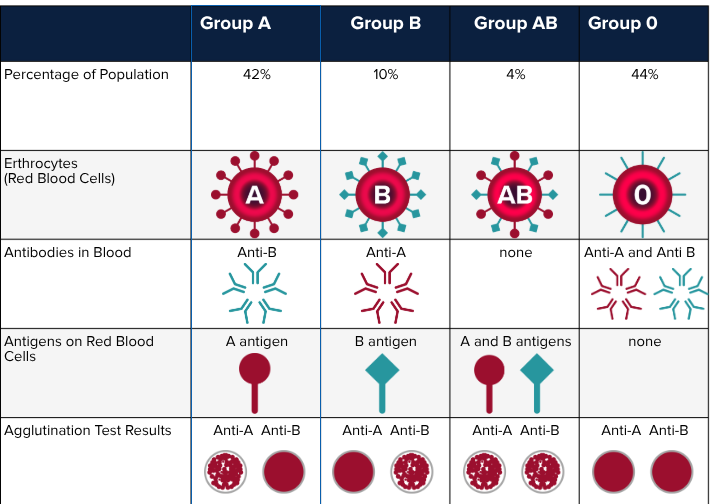
Confirmatory testing relies on other unique properties of blood, such as structures present on the surface of red blood cells called antigens(opens in a new tab). These tests confirm the presence of blood at a scene.
Because many people have the same blood type, the blood type alone cannot be used as a definitive identification test. To definitively determine identity, further testing must be completed, such as a DNA test.
A crime scene investigator or forensic scientist specializing in collecting and analyzing blood is called a blood spatter analyst. Blood spatter analysts examine the location, distribution, and shape of blood droplets, stains, puddles, and pools.
Activty 1.1.5
Deoxyribonucleic acid, DNA, is a negatively charged molecule found in the cells of all living things. Animals, plants, fungi, protists, and bacteria all have DNA. Even some viruses, which are nonliving, have DNA. DNA’s chemical code provides the instructions to build proteins(opens in a new tab); large molecules that are essential for life. DNA lays the foundation for how an organism grows, what they look like, their predisposition for disease, and so much more. DNA is inherited, meaning it is passed down from biological relatives. This is why families often share many physical characteristics.
DNA is made up of four building blocks, called nucleotides. Each nucleotide is formed by combining a phosphate group, a sugar, and one of four different nitrogenous bases. These nucleotide link together in a series, spiraling clockwise around a central axis, forming a twisted ladder called a double helix.
adenine - A component of nucleic acids found in DNA and RNA and in the energy-carrying molecule, ATP. Adenine is a purine base.
thymine- A component of the nucleic acid, DNA; a pyrimidine base.
guanine - A component of nucleic acids (DNA and RNA); a purine base.
cytosine- A component of nucleic acids (DNA and RNA); a pyrimidine base.
DNA is double stranded, composed of two single strands, and the strands are joined together through pairing of these bases. Adenine always pairs with thymine and cytosine always pairs with guanine
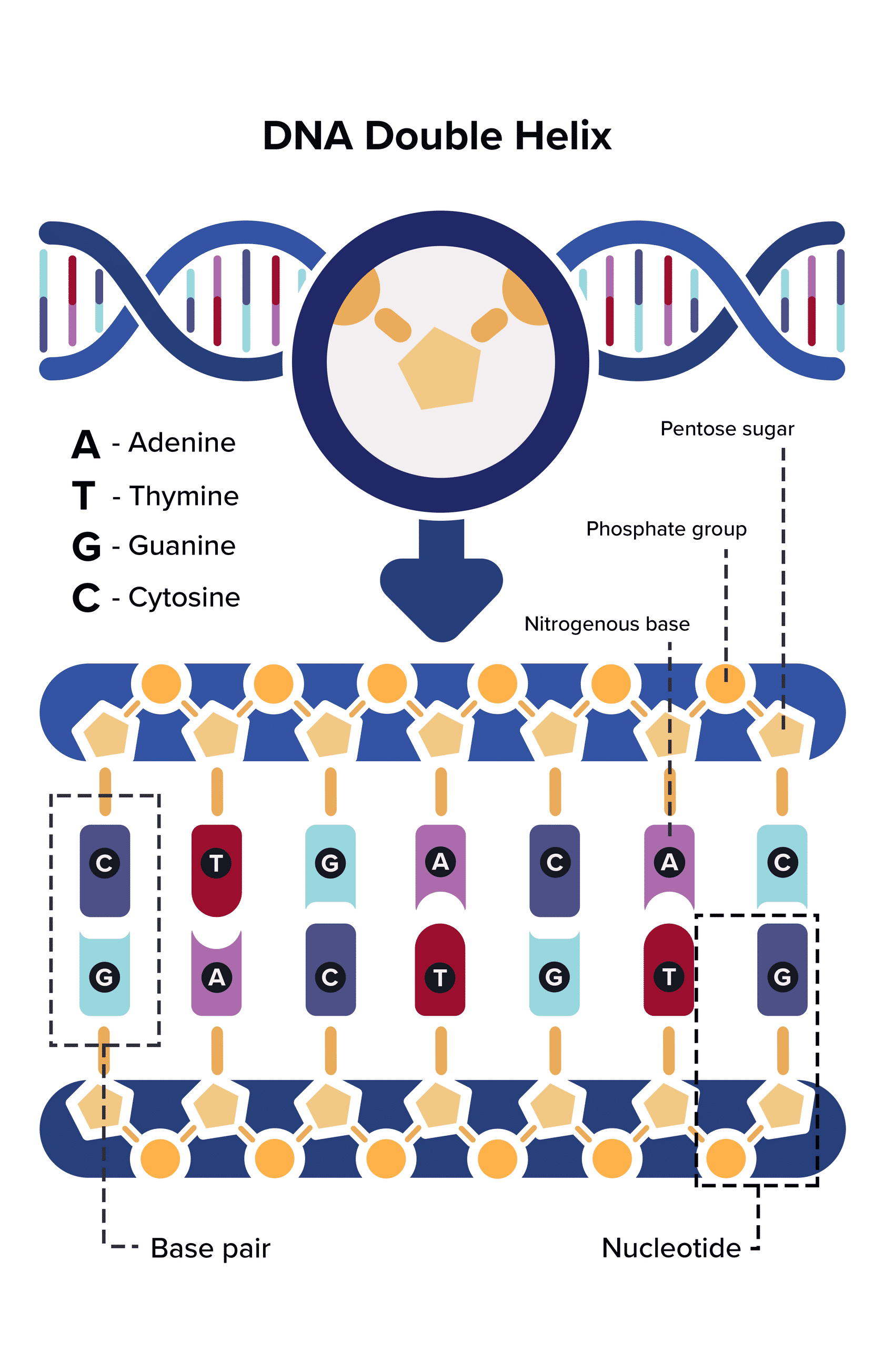
In 1947, Erwin Chargaff determined that while the four nucleotides were not present in equal amounts in the DNA from different organisms, the amount of adenine was always the same as thymine and the amount of guanine was always the same as cytosine. This is what is known as Chargaff’s Rules.
Genes are a set of instructions for a specific protein, such as a hormone, an enzyme, hair color pigment, and more
All of the DNA in one organism is called a genome and it contains the entire set of instructions for building an organism. Every organism has a unique genome, and this is what makes DNA so useful in forensic investigations. DNA can link a person of interest to a scene or identify a nameless victim.
Organelles are tiny structures that perform a function within a cell. Functions of organelles can include producing energy, packaging proteins, housing DNA (the function of the nucleus), and more.
Mitochondria are organelles that function in the production of energy for the cell. Ribosomes are organelles that assist in the production of proteins. The nucleus, the control center of the cell, contains DNA and controls all of the cells activities.
Eukaryotic cells (Figure 7) make up animals, plants, fungi, and protists and have organelles
Prokaryotic cells (Figure 8) do not have any membrane-bound organelles and only include bacteria.
Bacteria are living organisms and have DNA; however, they do not have a nucleus. Their DNA is held in a region of the cell called the nucleoid.
Within the nucleus of a eukaryotic cell, DNA primarily exists in loose strands. At times, the DNA strands organize into tightly coiled packages of DNA called chromosomes(opens in a new tab).
There are 46 chromosomes in a healthy human cell. Sex cells (sperm and egg) only have 23 chromosomes.
DNA strands wind around small proteins called histones(opens in a new tab).
The uniqueness of an individual’s DNA gives us each a one-of-a-kind DNA fingerprint, also known as a DNA profile. This fact makes DNA very valuable in forensic investigations
red blood cells do not have dna but white blood cells do because they contain a nucleus that houses the DNA, which is essential for their function in the immune response and the production of antibodies.
After locating possible sources of DNA evidence, you have to extract the DNA from those sources. Remember that DNA is found inside cells, so to access it, you need to break open the cells. Fortunately, DNA extraction is a relatively simple process consisting of four basic steps:
Break open the cell and nucleus.
Purify the DNA of any cell proteins, cell waste, other organelles, cell membrane components, and more.
Bundle the DNA by adding alcohol. DNA is dissolved in water but clumps together in alcohol. By adding alcohol to the purified DNA, it becomes a solid; it looks like white string. Now that it is visible, it can be easily picked up for processing.
Clean the DNA of any proteins still attached. Histones are an example of a protein that the DNA may still be clinging to.
Polymerase Chain Reaction (PCR)(opens in a new tab) enables scientists to produce millions of copies of a specific DNA sequence from a small amount of DNA.
This technique uses restriction endonucleases(opens in a new tab) (commonly called restriction enzymes), which are molecular scissors that can cut DNA in specific locations, called recognition sites(opens in a new tab); denoted by a “^” in the DNA sequence. DNA that has been cut with restriction enzymes is said to have undergone restriction digestion(opens in a new tab) and been “digested.”
Activity 1.1.6 DNA analysis
DNA pieces can be separated and compared using a process called gel electrophoresis
The agar, when prepped, forms a porous gelatin-like material that acts to filter DNA by the size of the DNA molecules.
DNA has a negative charge
Following gel electrophoresis, the fragments of DNA are invisible to the eye, and scientists must stain them to make them visible (or to see them). Restriction fragment length polymorphisms (RFLPs)(opens in a new tab), differences in the pattern of these DNA fragments, result from variation in the DNA sequence recognized by restriction enzymes. RFLPs are responsible for the unique “DNA fingerprint” of an individual.
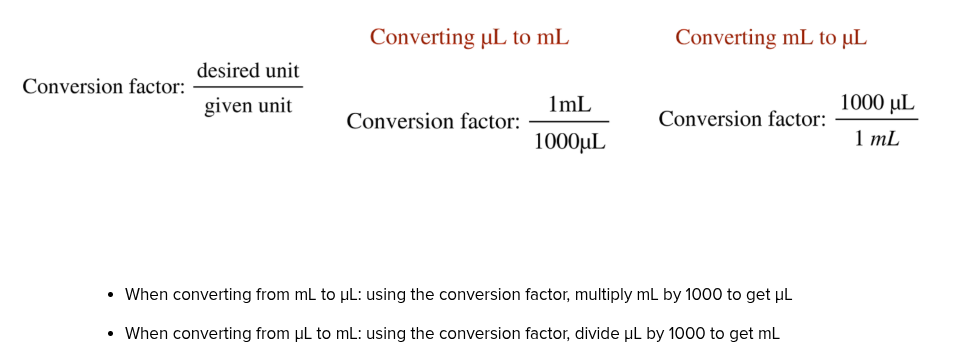
1000 µL = 1 mL
Micropipettors are designed to pipet liquids between 0.5 and 5000 µl. Using the equivalency equation, this is 0.0005–5 mL.
precision- The degree to which repeated measurements show the same result. - accuracy- How close a measurement is to the true or accepted value.
Remember that accuracy is only applicable if you can compare your data to an accepted standard value. If there were no specified standard value, you would be unable to evaluate the accuracy of your data. However, the precision of your data could be assessed through repeated testing and data collection, assuming you make no changes or modifications to your lab protocol.
accurate is correct (or close to real value), precise is repeating (or repeatable).