Human Physio Autonomic & Somatic Nervous System
PNS
Efferent → Somatic (concious) → Skeletal muscle
→ Autonomic (unconcious) → Sympathetic OR Parasympathetic
Sympathetic → Cardiac muscle, smooth muscle, glands
Parasympathetic → Enteric nervous system → Gastro-intestinal tract
Efferent division of PNS
A schematic of the somatic nervous system (SNS), which provides conscious and subconscious control over skeletal muscles.
A schematic of the autonomic nervous system (ANS), which controls visceral funcstions largely outside of our awareness
Autonomic nervous system
- Parasympathetic and sympathetic branches
- action via ANS is by dual innervation (antagonistic control of internal organs)
- Parasympathetic division is most active at rest
- “==rest and digest==” functions
- Sympathetic division is most active in emergency or threatening situations
- “^^fight-or-flight^^” response
ANS: Homeostasis
Parasympathetic
- conserve energy
- digestion
- diuresis
- defacation
Sympathetic
- exercise
- emergency
- embarassment
Anatomy of ANS
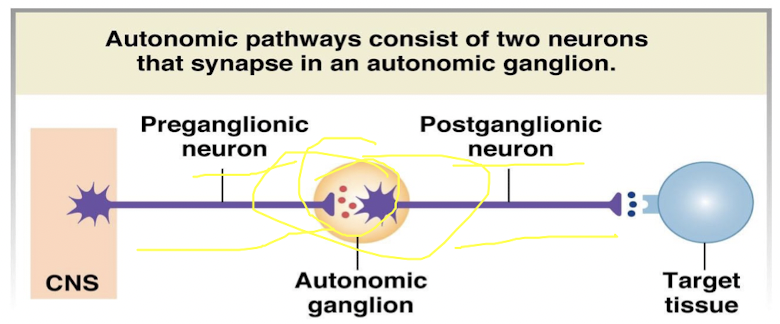
Preganglionic neuron
- originates in CNS (spinal cord) and projects to autonomic ganglion outside CNS
Ganglion
- sympathetic chain ganglion runs along vertebral column
Postganglionic neuron
- cell body in ganglion and projects axons to target tissue/effector organ
Target tissue
- cardiac muscle, smooth muscle or glands
Sympathetic vs Parasympathetic
Anatomical difference of two autonomic branches characterised by:
- Origin in the CNS
- Location of the autonomic ganglia
- Length of fibres
<<Sympathetic:<<
- Originate in the thoracic and lumbar region of spinal cord
- Ganglia close to spinal cord
- Short preganglionic neurons
- Long postganglionic neurons to target tissues
[[Parasympathetic:[[
- Originate in brain stem (cranial nerves) and sacral region
- Ganglia on or near target organs
- Long preganglionic neurons
- Short postganglionic neurons
SNS vs PNS pathways
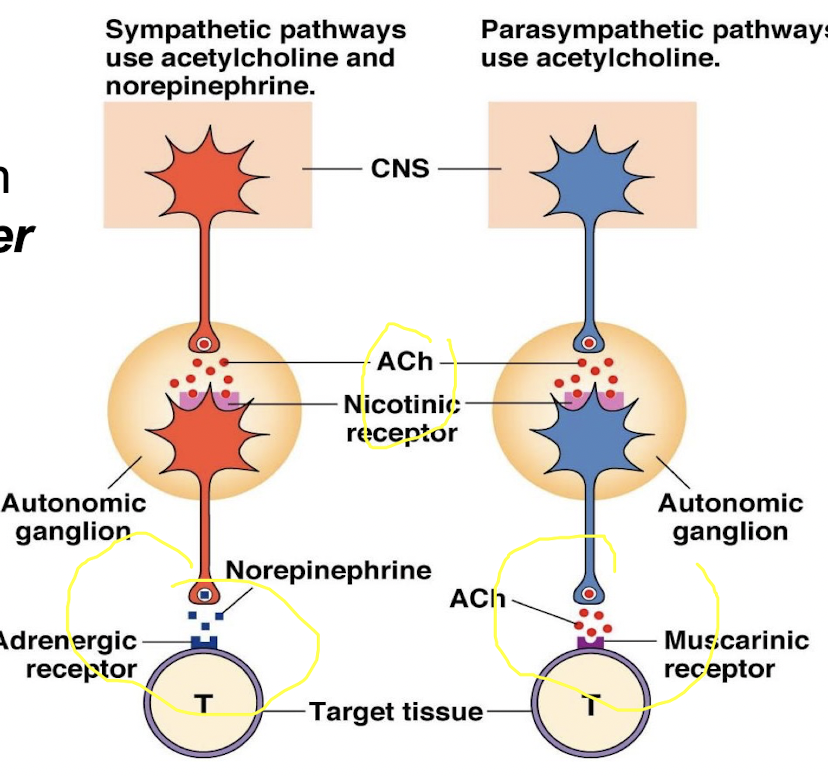
Sympathetic and parasympathetic branches also differ in their ^^neurotransmitter^^ released from preganglionic & postganglionic neurons and receptors.
SNS vs PNS responses
<<Sympathetic divison<<
- Dilates pupil of eye
- inhibits salivary gland secretion
- relaxes bronchi in lungs
- accelerates hearts
- inhibits activity of stomach and intestines
- inhibits activity of pancreas
- stimulates glucose release from liver; inhibits gallbladeer
- stimulates adrenal medulla
- inhibits emptying of bladder
- promotes ejaculation and vaginal contractions
[[Parasympathetic division[[
- constricts pupil of eye
- stimulate salivary gland secretion
- constricts bronchi in lungs
- slows heart
- stimulates activity of stomach and intestine
- stimulates activity of pancrease
- stimulates gallbladder
- promotes emptying of bladder
- promotes erection of genitalia