Heart Structure
Heart
It is a group of specialised tissues that work together to perform a particular function
Role:
The heart is made of cardiac muscle that contracts and relaxes at a regular rhythm. The contracts and relax at a regular rhythm. The contraction of the heart muscle forces blood out of the heart and into the arteries where it is transported to various parts of the body.

Atria Vs Ventricles
Atria walls are much thinner that the ventricles walls
Ventricle are pumping blood at longer distances compared to atria so thicker
Left ventricle is thicker and blood travels at a higher pressure as it sends blood to around the body meanwhile the left right ventricle sends it towards the lung therefore thinner.
Internal Heart Structure: Major Blood Vessels
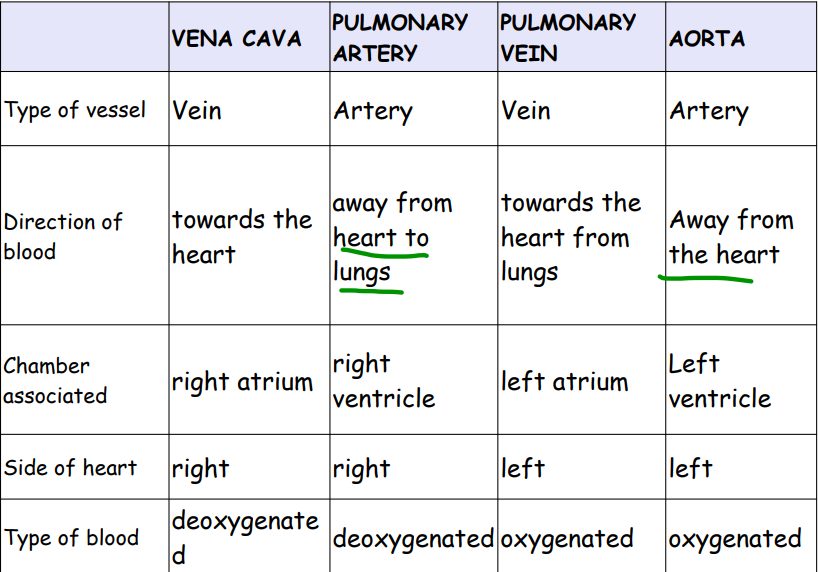
VEINS: Carry blood IN to the heart
ARTERIES: Carry blood Away from the heart
Internal Heart Structure: Valves
Atrioventricular AV Valves: between the atria and the ventricles which prevent back flow of blood from ventricles to atria, when ventricles contract.
Semilunar Valves: Location at the base of the pulmonary artery and aorta which, prevent back flow of blood from aorta/pulmonary artery into the ventricle
Journey of blood in heart and body
1. Deoxygenated blood then returns to the heart via the Vena Cava
2. This then enters the right atrium and ventricle
3. Pumped to lungs via pulmonary artery
4. Deoxygenated blood is picked up by lungs
5. Oxygenated blood travels to heart via pulmonary vein
6. Enters left atrium and left ventricle.
7. Pumped around body via aorta
8. Used up by cells for respiration
/