The Cell Cycle
PHASES OF THE CELL CYCLE
REGULATION OF THE CELL CYCLE, CANCER, APOPTOSIS
OVERVIEW
cell cycle is important in the growth, repair, and reproduction of cells in living organism
In eukaryotes, cells divide and transmit genetic information via the cell cycle, a highly regulated series of events for the growth and reproduction of cells
PHASES OF THE CELL CYCLE
interphase (G1, S, and G2)
mitosis (M phase)
cytokinesis
nondividing cells will leave the cell cycle and enter G0
INTERPHASE
longest phase of the cell cycle
cell grows so that it has enough material to divide between two daughter cells
cell also replicates its genetic material (DNA)
G1
cell grows and prepares for the replication of DNA and some cellular organelles are replicated
S (synthesis)
DNA is replicated
when it begins, each chromosome consists of one chromatid
after the replication, each chromosome has two identical chromatids held together by one centromere
at the end of S stage, the cell contains x2 the amount of DNA it had at the end of G1
G2
the cell continues to grow and prepares the materials needed for mitosis
such as the proteins that will make up the spindle fibers
MITSOSIS (M phase)
goal is to make sure there is an accurate transfer of a parent cell’s complete genome to each of the two resulting daughter cells
mitosis plays a role in growth, tissue repair, and asexual reproduction
mitosis alternates with interphase in the cell cycle.
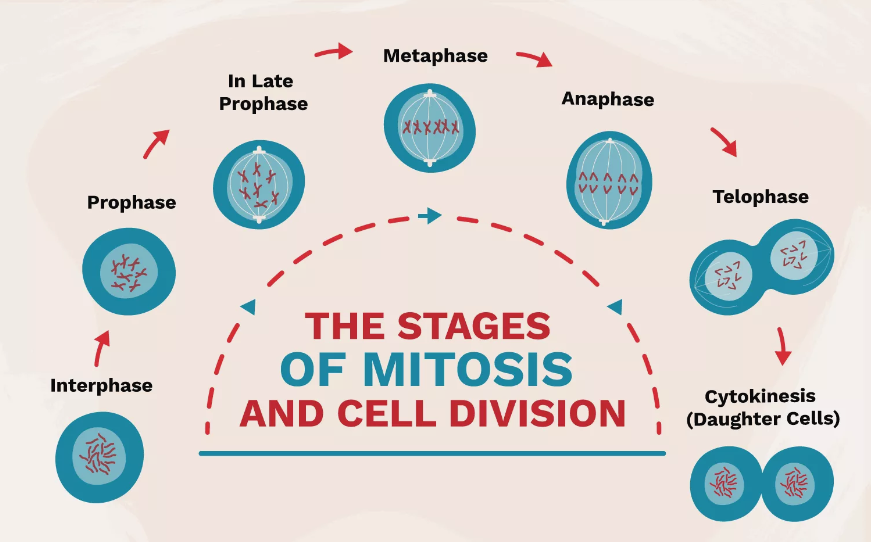
4 stages: prophase, metaphase, anaphase, and telophase
prophase
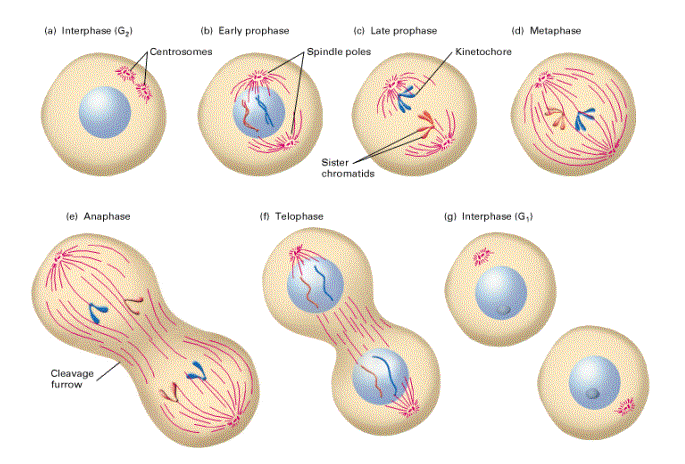
the nuclear membrane dissolves and the chromosomes condense and become visible
spindle fibers begin to form
metaphase
spindle fibers have fully attached to the centromeres of each chromosome
chromosomes are then aligned along the “equator” of the cell in a single column
metaphase plate
- the center of the mitotic spindle
anaphase
each chromosome splits as its centromere as opposing spindle fibers begin to shorten
the identical chromatids are pulled toward opposite ends of the cell
each chromatid no has its own centromere and is considered a separate chromosome
in the end, the cell has x2 the number of chromosomes that it had originally
telophase
two nuclear membranes form
each of the two nuclei now contain the same number of chromosomes and the same genetic information as the parent cell
CYTOKINESIS
the division of the cytoplasm and all of its cellular contents between the two daughter cells
in animal cells, a cleavage furrow is formed, which parts the cytosol and its contents between the two new cells
in plant cells, a cell plate is built within the dividing cell
providing new cell wall material for each daughter cell
NONDIVING CELLS
some cells may stop dividing temporarily or permanently
they stop dividing when they reach their mature, fully differentiated state or when environmental conditions are not favorable for continued growth
the nondividing cells have exited the cell cycle and are in G0
it can reenter the cell cycle in response to appropriate cues
nondividing cells may exit the cell cycle or be held at a particular stage in the cell cycle.
REGULATION OF THE CELL CYCLE, CANCER, AND APOPTOSIS
proper regulation of the cell cycle is important to appropriate growth, repair, and reproduction of cells
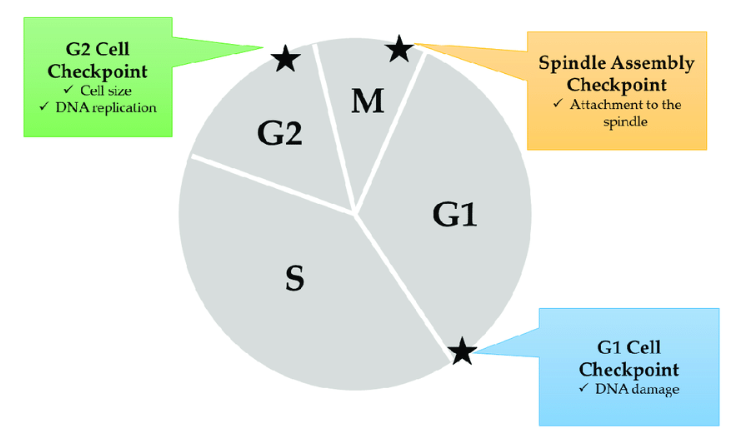
use checkpoints to regulate
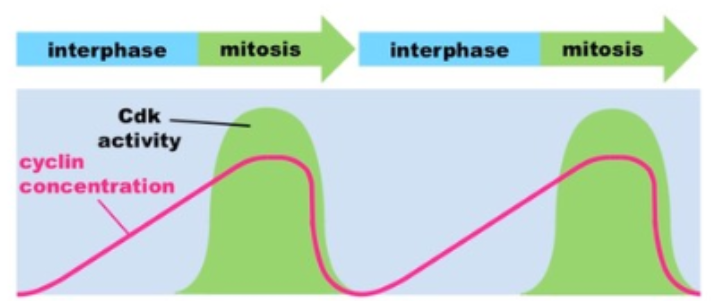
some checkpoints are controlled by interactions between cyclins and cyclin-dependent kinases
cyclin-dependent kinases
present at constant levels throughout the cell cycle
these kinases add phosphate groups to other molecules activating those molecules
inactive until they are bound to cyclin proteins
levels of cyclin proteins vary during the cell cycle
reaches maximum just before mitosis starts
DISRUPTIONS TO CELL CYCLE
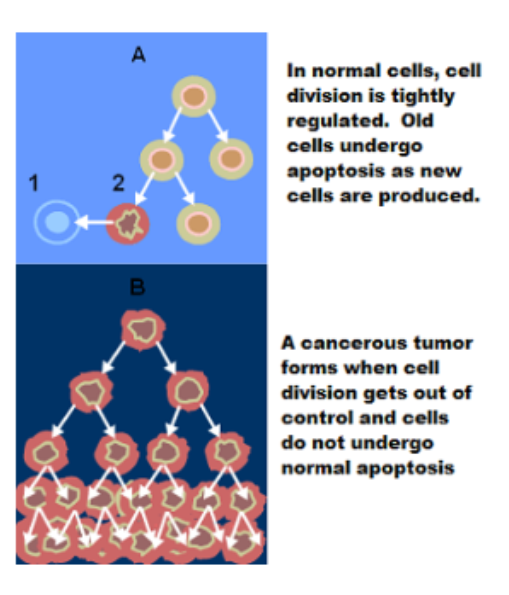
disruptions to the cell cycle may result in cancer and/or apoptosis (programmed cell death)
cancer
uncontrolled cell growth
cancer cells are not regulated so they can continue to grow and divide under conditions that would cause normally functioning somatic cells to stop dividing
apoptosis
sometimes a living organism’s survival depends on some cells dying and not reproducing
triggered when a cell acquires a mutation that could cause cancer