Week 3 | Day 3 | BIOA02
Week 3 | Day 3 | BIOA02
Temporal/Spatial Separation and Selfing
- Selfing ‘accidents’ still happen
- Eg. Sage
- Produces more than one flower per year, older flowers at bottom, newer at home.
- Is a hermaphrodite and uses spatial separation
- New flowers originally female, then morphs to male as it goes older
- If insects like bees goes from bottom to top of flower, may accidentally cause the flower to self-pollinate
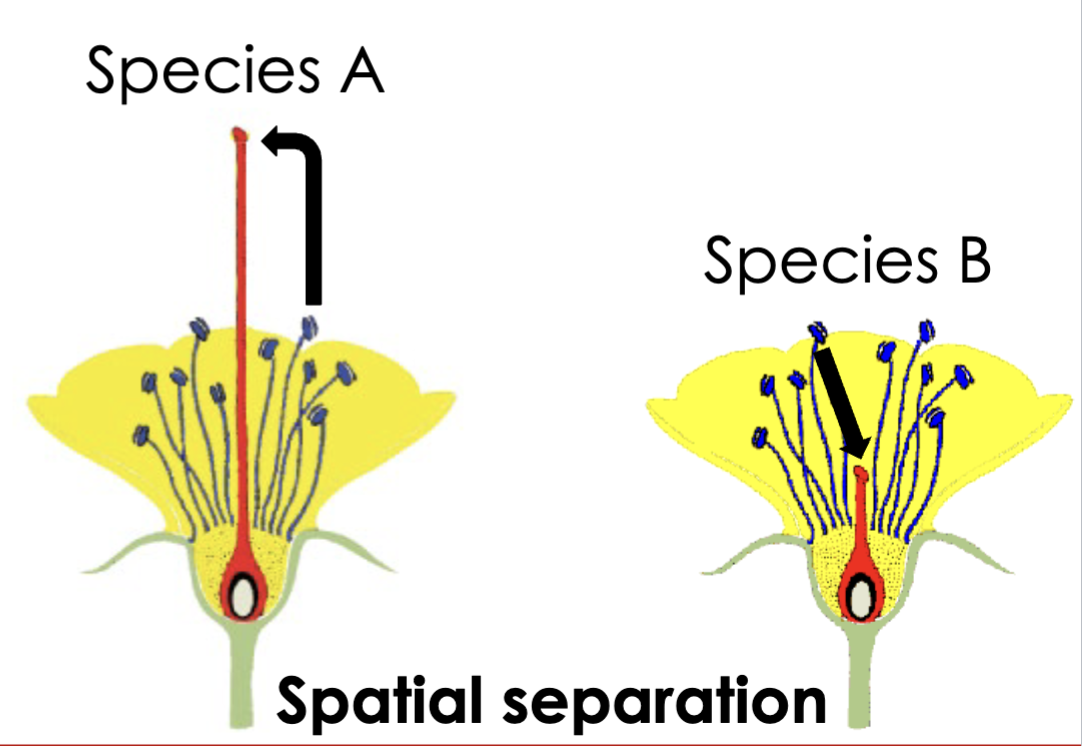
- Female part either really high or really low
Self-incompatibility
- No fertilization with own pollen (biochemical self-recognition)
- There is self-incompatibility in many fruit trees (we only get apples in our apple trees if insects pollinate them!)
- Many species in the rose family are self-incompatible
- Eg. sage (sage is SO cool look at the mechanic's online of the lever in the anthers in style)
Flowers Finding A Way To Pollinate
- Ingenious solution of angiosperms → non-directed and directed mobility of pollen to seek egg
- Today: extreme diversity in the types of flowers
- → invention of flowers: triggered largest diversity of plants
Forces Behind The Evolution of Flowers
Main forces:
- Assurance of seed set
- Sheer mechanics, bring female and male gametes together
- Inbreeding avoidance
- Create high-quality offspring, avoid selfing → avoid inbreeding depression
Pollination Syndromes
- Specialization
- Floral architecture to optimize pollen uptake and deposition
- Adaptation to pollinators’ senses for precise attraction (sight, smell, taste, touch)
- Adaptation to food requirements of pollinators (fitting reward)
- Flower shape, colour, odour; nature of reward
Pollination, Different Vectors
- Abiotic pollination (wind, water)
- → non-directed
Vs.
- Biotic pollination (animals)
- → directed
Wind Pollination
- 10% of all plants are wind-pollinated
- Wind pollination more common in/at
- Higher latitudes and altitudes
- Dry environments
- Open vegetation
- Island floras
- Generally, habitats with free insects or generally more wind
- The most effective flowers for wind pollination:
- Small, inconspicuous flowers
- No special colours
- No nectar
- Long filaments
- Long (feathery branched) styles/stigmas
- Very small fraction of pollen reaches stigma
- cheap but not very efficient
- large quantity of pollen necessary
Biotic Pollination
- More precise and directed
- Pollinator needs reward (pollen, nectar)
- Specialized organ construction
- Often only a restricted set of pollinators can take reward → adaptation to specialized pollinators
- Wide range of pollinators
- Specialists rely on a more narrow group of pollinators
- Sometimes: exclusive relationship → one pollinator serves one plant = tight co-evolution
- Generalist flower plants can attract a wide range of pollinators
- Opportunistic flowers
- Multiple flowers making up landing platforms for insects of different sizes to road
- Non-specialized food; pollen and nectar
- Specialists rely on a more narrow group of pollinators
Main types of pollinators:
- Bee
- Flies
- Butterflies
- Moths
- Hummingbirds
- Bee
- Most important pollinator group
- Pollinate more plant species than any other animal group
- Bees original approximately 80 million years ago → diversified along with the evolutionary radiation of flowering plants
- Adult bees live on nectar → nectaries, 30-35% sugar
- Larvae (juveniles) live on pollen (rich in protein)
- Blue or yellow colours most attract bees, red is NOT for bees
- Bees are smart, they can pick up clues and find ways to be efficient in finding nectar, so some flowers have developed nectar lines, which point out nectar towards the centre like arrows
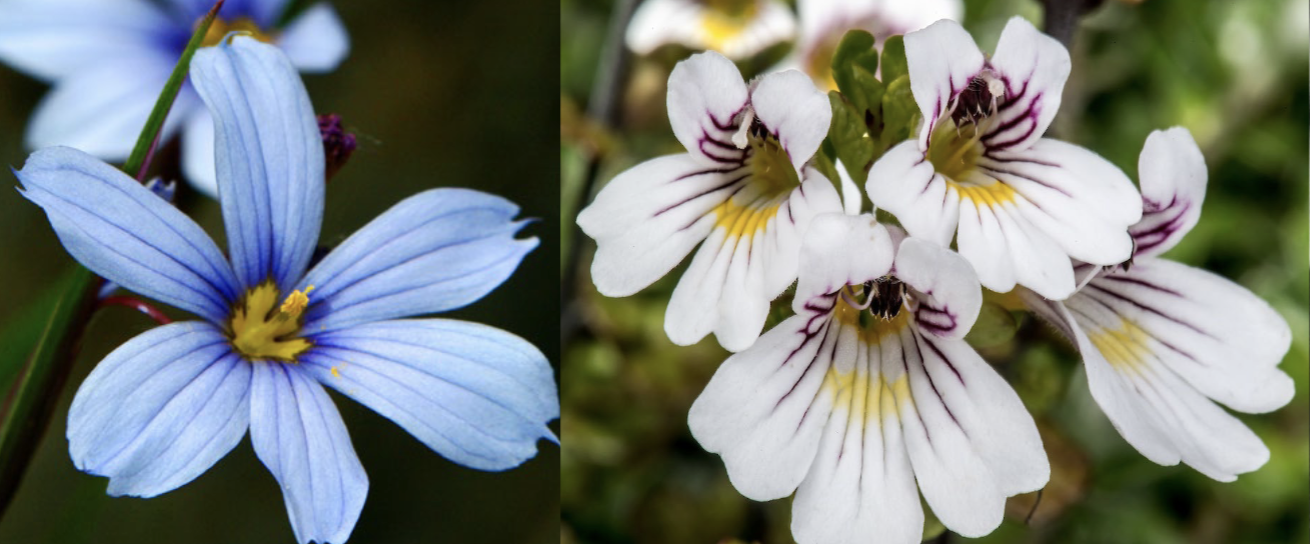
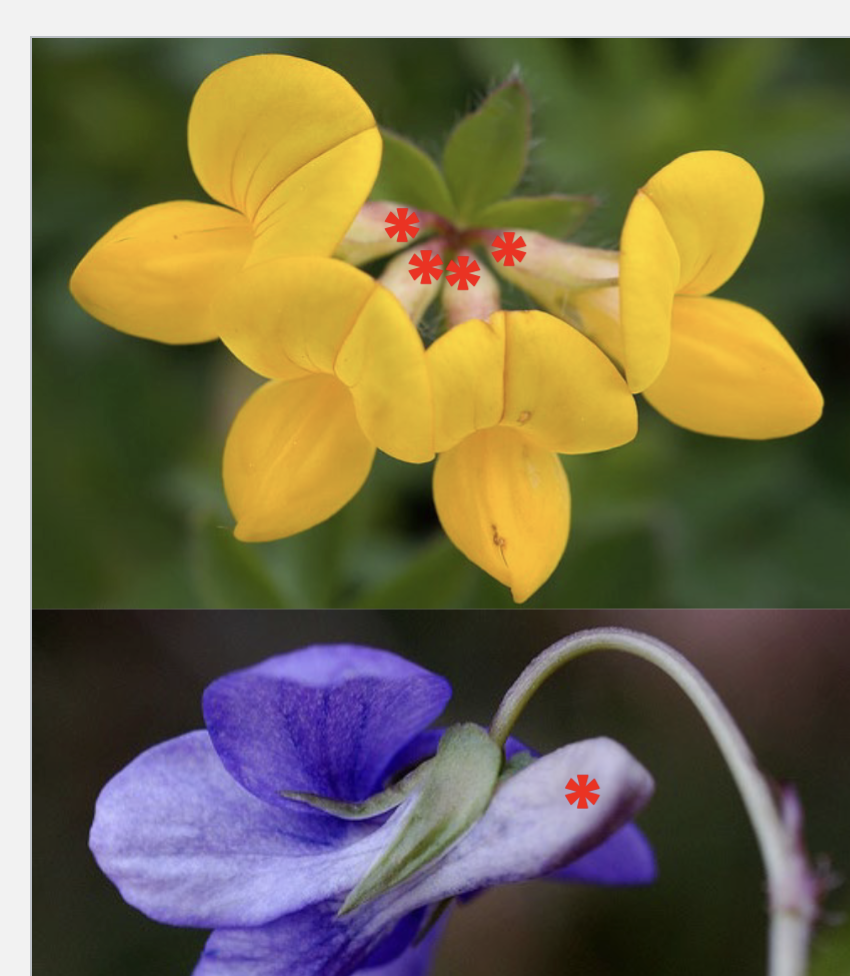
- Nectar hidden at the bottom of the flower, only accessible to bees
Cheating flowers
- Limits cost of reproduction
- Relies on the fact that there are more honest than cheating flowers
Some orchids:
- Smell, touch, and form mimic female bees
- Attraction of males
- Males try to copulate
- Pollen update and deposition
- Coevolution
- Flies
- Flies like dull, white, reddish flowers
- They like to lay their eggs in flesh, so some plants smell nasty to get pollinated
- Butterfly pollination
- Sight and smell
- Red and orange as the most distinct colours
- Long narrow flower tube → long proboscis of butterflies → no nectar robbing by non-pollinating insects
- Moths
- Moths are nice-active
- White or dull flowers with a very strong smell (mostly emitted after sunset)
- Long and narrow floral tube
- Hummingbirds
- Good sense of colour, attracted to red or yellow
- Bad sense of smell → little flower odour
- Birds lap up nectar with their tongue → more fluid nectar than insects, and more of it
- Long, tubular corolla suited to long beak, wider than for moths/butterflies
- Platform narrow tube butterflies
- Nectar, typically hanging, no scent hummingbirds