Positive Psychology: Introduction
Positive Psychology
- the science of happiness and human strengths
- aims to study, reflect, and discuss on the various empirical studies on happiness, well-being, and other positive concepts related in the development of one’s psychological wellness
Martin Seligman
- professor, University of Pennsylvania
- Proponent of Learned Helplessness Theory
- President of the American Psychological Association (1998)
Mikhaly Csikszentmihalyi
- Hungarian-American Psychologist
- Recognition for flow, a highly focused mental state conducive to productivity
- professor of Psychology & Management at Claremont Graduate University
- Former department chair of Psychology at the University of Chicago
3 Goals of Psychology during World War II
- cure mental illness
- enhance the lives of the normal population
- study geniuses
Victimology
- Psychologists viewed humans as passive individuals subjected to external forces instead of proactive, creative, and self-determined beings
Learned Helplessness
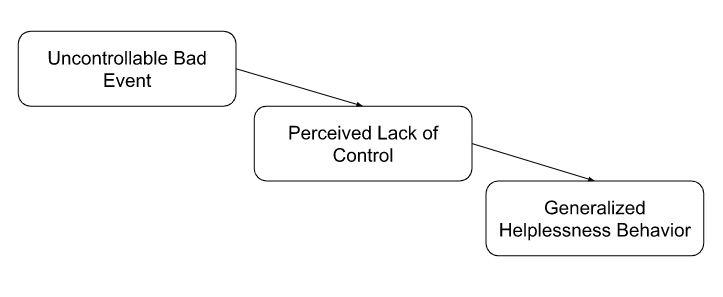
- The passive resignation produced by repeated exposure to negative events that are perceived to be unavoidable
- responses to failure (not to success)
- a control problem, not a competence problem
Business of Positive Psychology
- There is a set of human strengths that are most likely buffers against mental illness: courage, optimism, interpersonal skill, work ethic, hope, honesty, and perseverance
- Much of the task prevention will be to create a science of human strength whose mission will be to foster these virtues in young people
The aim of positive psychology is to catalyze a change in psychology from a preoccupation only with repairing the worst things in life to also building the best qualities in life.
-Martin Seligman
History
Western Perspectives
Greeks
- Aristotle and Plato emphasized in their teachings the importance of virtues
- Moral: courage, generosity, munificence
- Intellectual: wisdom, strength of character
- Polis: the maintenance of these virtues
- Aristotle and Plato: when people live a virtuous life, that is the good life
- Epicurus: abundance of positive feelings and pleasures
- Utilitarianism: The good life is considering the rights of other people; for the common good
Judeo-Christian Perspective
- The Christian scriptures, addresses human flourishing and virtue at a foundational level
- Christian positive psychology prioritizes the loving God and loving thy neighbor virtues (10 Commandments)
- Belief in an assured hope for a new era called God’s Kingdom (Heaven)
Humanistic Psychology
- Focusing on the human strengths of the individual
- Subjective experiences
- The capacity of each individual to be the best that they can be
- self-actualization
Virtue
- behavior showing high moral standards
- quality considered morally good/desirable in a person
What is a Good Life?
HEDONIC + EUDAIMONIC = THE GOOD LIFE!
- Hedonic
- describes levels of positive affect
- subjective satisfaction; pleasures
- Eudaimonic
- creation of meaning and purpose in life
Emotions
- William James saw the importance of incorporating emotions in understanding human behavior
ACTION > EMOTION
EMOTION > ACTION
Eastern Perspectives
Confucianism
- Morality is seen as a potential cure for all evils
- Importance of looking out for others
- Attainment of virtue is core of Confucian teachings:
- Sen: humanity; benevolence
- Yi: duty to treat others well; righteousness
- Li: etiquette and sensitivity for other’s feelings; propriety
- Zhi: wisdom
- Xin: truthfulness; fidelity; sincerity
Taoism
- Tao/Dao: “the way” or the energy that surrounds everyone and is a power that envelopes, surrounds and flows through all things
- Flow: to truly in life, the good and bad experiences are part of the process
- Virtues of humanity, justice, temperance, and propriety must be practiced
Buddhism
- wander for the gain of many, for the happiness of many, out of compassion for the world
- Suffering: a part of being brought by desire
- Nirvana: to be free from desire for anything
- Brahma Viharas: virtues that are above all others in importance such as love, joy, compassion, and equanimity
Hinduism
- emphasis on the interconnectedness of things
- harmonious union among all individuals
- live life fully to reap the fruits of reincarnation
- a man turns into something good by good action, and something bad by bad action
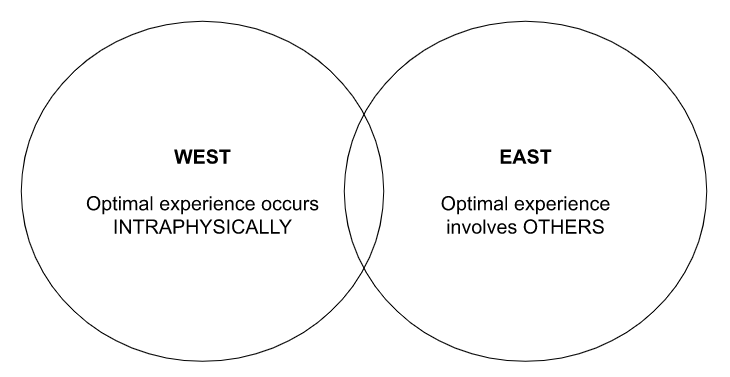
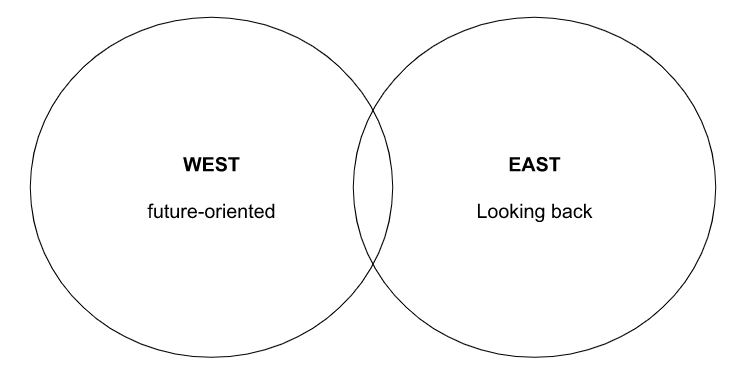
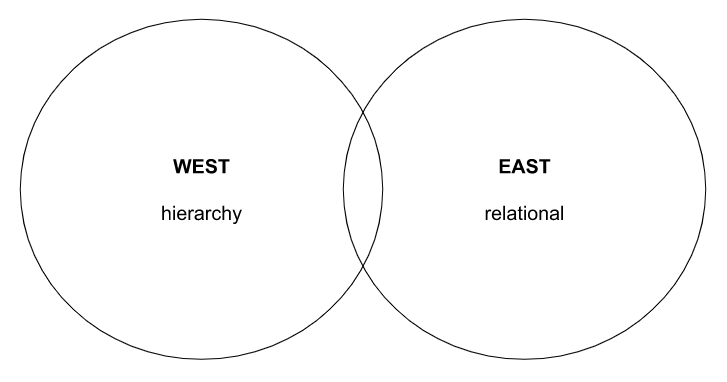
When East meets West
Orientation to Time
Thought Process
21st Century
- Pioneers
- Dr. Martin Seligman
- Dr. Mikhaly Csikzentmihalyi
- Dr. Christopher Peterson
- Dr. Sonis Lyubomisky