Bones of the foot
Bones of the Foot
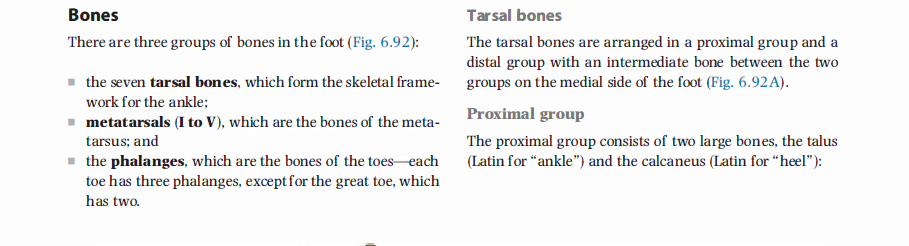
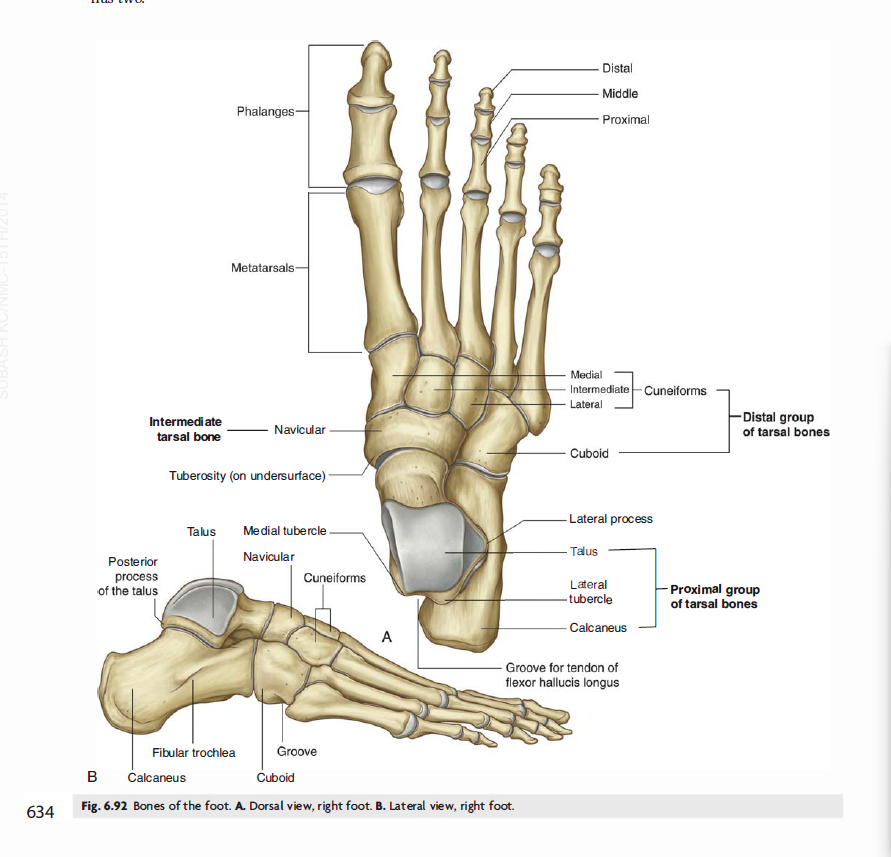
The foot is a complex structure composed of 26 bones, which are organized into three main sections: the hindfoot, midfoot, and forefoot. These bones provide the necessary support for walking, standing, and balance, and also form the various arches of the foot for shock absorption and flexibility.
1. Bones of the Foot
a. Hindfoot
The hindfoot includes the bones that form the rear part of the foot, which are primarily involved in bearing weight during standing and walking.
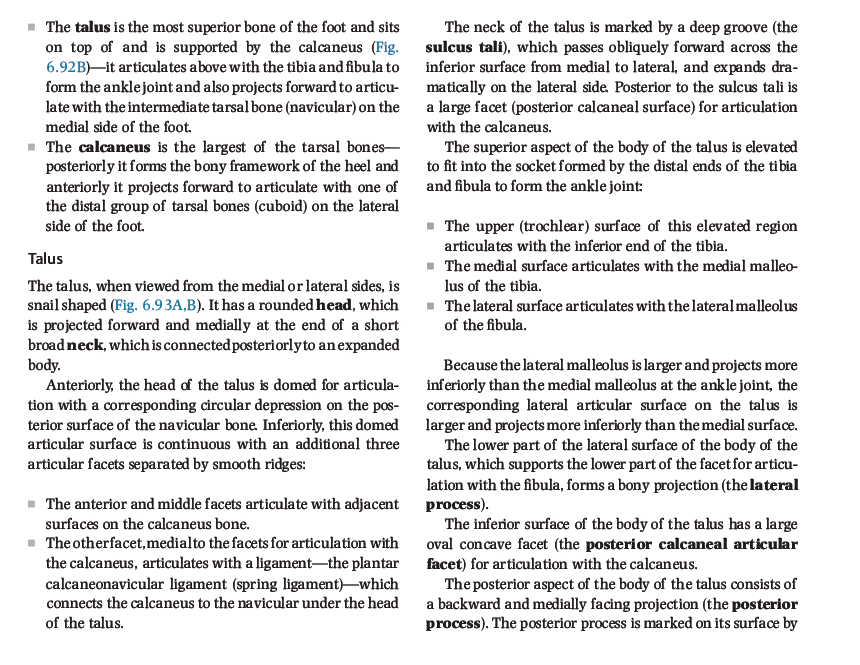
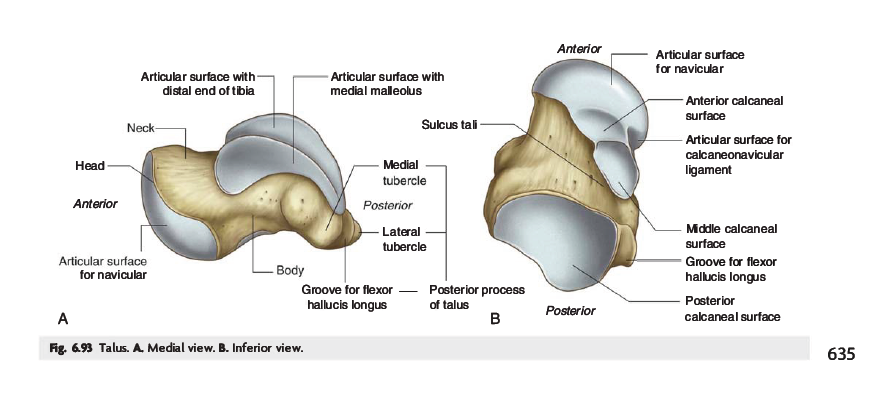
Talus (Ankle Bone)
Location: The talus sits on top of the calcaneus and forms the ankle joint by articulating with the tibia and fibula.
Function: It transmits forces from the tibia to the foot and is crucial for dorsiflexion and plantarflexion movements.
Articulations:
Superiorly with the tibia (talocrural joint)
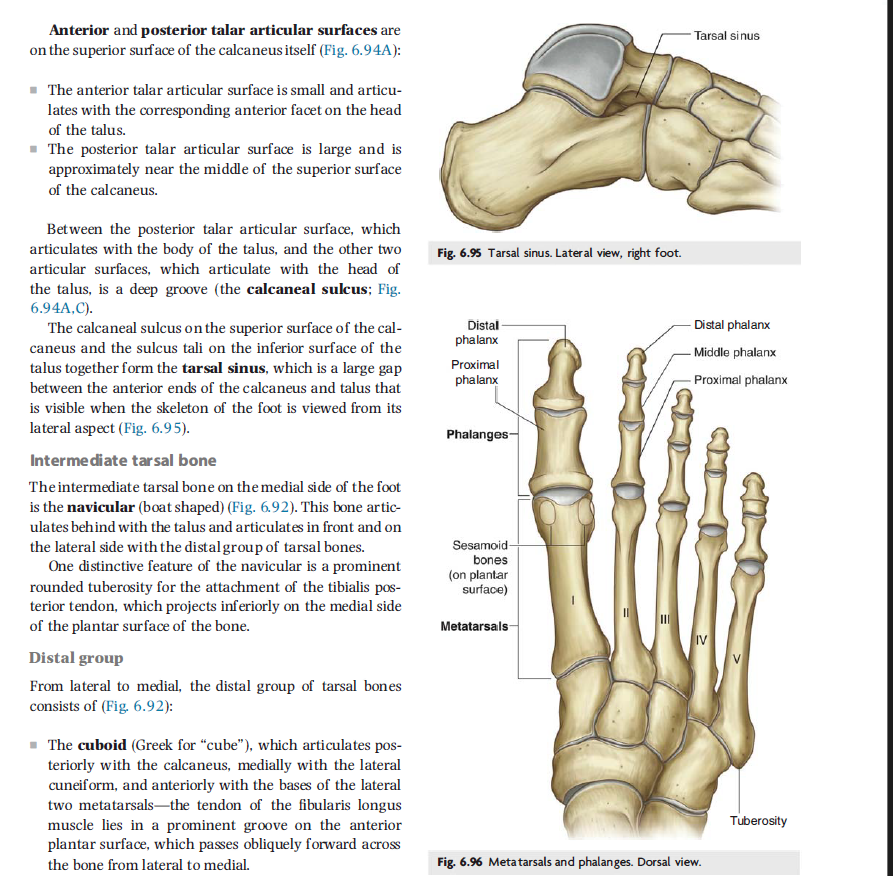
Inferiorly with the calcaneus (subtalar joint)
Medially with the navicular bone
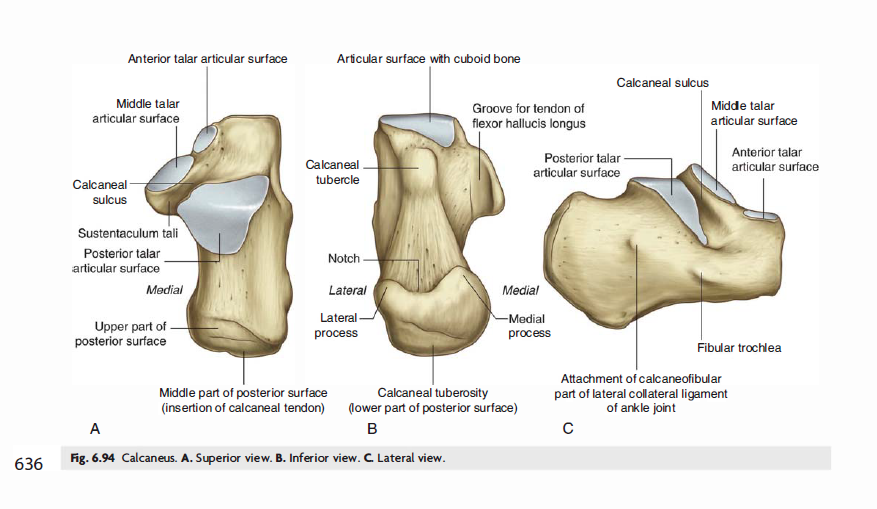
Calcaneus (Heel Bone)
Location: The largest bone in the foot, located in the posterior aspect of the foot.
Function: Provides leverage for the muscles of the calf, particularly the gastrocnemius and soleus, and absorbs shock during walking and running.
Articulations:
Superiorly with the talus (subtalar joint)
Anteriorly with the cuboid
b. Midfoot
The midfoot consists of bones that form the arch of the foot and play a role in supporting the body’s weight and facilitating foot movement.
Navicular Bone
Location: Situated between the talus and the cuneiform bones.
Function: Acts as a keystone for the medial longitudinal arch and assists in weight distribution.
Articulations:
Posteriorly with the talus
Anteriorly with the cuneiform bones
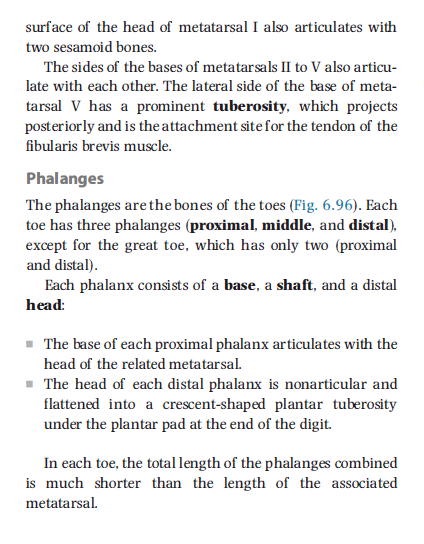
Cuboid Bone
Location: Located on the lateral side of the foot, it is shaped like a cube.
Function: Contributes to the lateral longitudinal arch and serves as a support for the fifth metatarsal.
Articulations:
Posteriorly with the calcaneus
Anteriorly with the fourth and fifth metatarsals
Medially with the lateral cuneiform
Cuneiform Bones (Medial, Intermediate, and Lateral)
Location: There are three cuneiform bones, located between the navicular and the first three metatarsals.
Function: Form part of the medial longitudinal arch and help with weight distribution and stability.
Articulations:
Posteriorly with the navicular
Anteriorly with the first, second, and third metatarsals
c. Forefoot
The forefoot contains the metatarsals and phalanges, which are essential for balance and propulsion during walking and running.
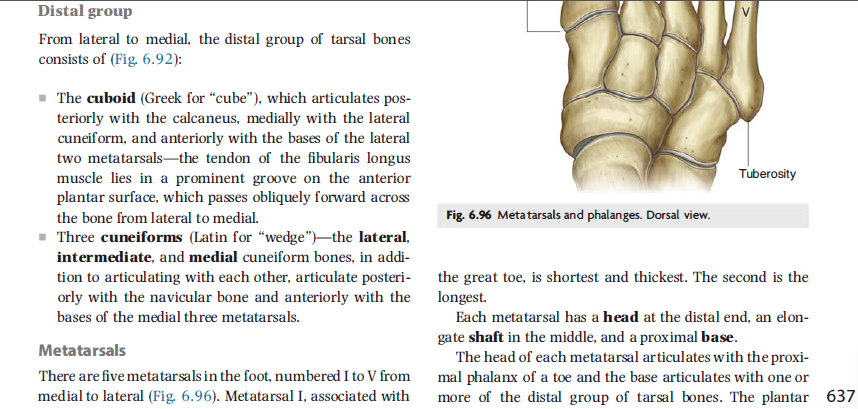
Metatarsals
Location: The five metatarsals are numbered 1–5, starting from the medial side (big toe).
Function: These bones bear weight and are involved in movement and balance.
Articulations:
Proximally with the cuneiform and cuboid bones
Distally with the proximal phalanges
Phalanges (Toe Bones)
Location: Each toe has three phalanges (proximal, middle, and distal) except for the big toe, which has only two (proximal and distal).
Function: The phalanges provide flexibility for toe movements and aid in balance during standing and walking.
Articulations:
Proximally with the metatarsals
Distally with the next phalanx (except in the case of the big toe)
2. Function of the Bones of the Foot
Support and Stability: The bones of the foot, especially the tarsal bones, form arches that distribute the body’s weight during standing and walking. The medial longitudinal arch, lateral longitudinal arch, and transverse arch are critical in maintaining balance.
Movement and Flexibility: The metatarsals and phalanges, along with the joints between them, allow for the foot's flexibility and range of motion. The motion of the talocrural joint, subtalar joint, and midfoot joints contributes to activities such as walking, running, and jumping.
Shock Absorption: The foot's bones, along with the ligaments and soft tissues, help absorb the impact of walking and running. The calcaneus plays a particularly important role in shock absorption.
Leverage and Propulsion: The bones of the foot assist in the generation of force and propulsion during walking and running. The metatarsals act as levers to push the body forward with each step.
3. Clinical Significance
a. Fractures and Injuries
Fractures of the Calcaneus: Often caused by trauma (e.g., falling from a height), calcaneal fractures can disrupt the subtalar joint and impact walking.
Metatarsal Fractures: These are common in athletes or due to trauma, especially stress fractures in the second metatarsal (often known as march fractures).
Navicular Fractures: The navicular bone is prone to fractures, particularly in athletes involved in high-impact sports.
b. Flatfoot (Pes Planus)
Flatfoot occurs when the medial longitudinal arch collapses. This condition can be caused by ligamentous laxity, muscle weakness, or tendon dysfunction (e.g., tibialis posterior tendon dysfunction).
c. Bunions (Hallux Valgus)
A bunion is a deformity at the first metatarsophalangeal joint (big toe joint), where the big toe deviates laterally. This is often associated with abnormal alignment of the metatarsal bones and can be aggravated by improper footwear or hereditary factors.
d. Hallux Rigidus
This is a condition characterized by stiffness and pain in the first metatarsophalangeal joint, typically due to arthritis or degenerative joint disease. It impairs the ability to dorsiflex the big toe and can affect walking mechanics.
e. Foot Deformities
Claw Toes and Hammer Toes: Deformities where the toes become abnormally bent due to muscle imbalances or joint instability.
Charcot Foot: A progressive condition involving the destruction of foot bones due to neuropathy, often seen in patients with diabetes mellitus.
4. Conclusion
The bones of the foot are intricately designed to provide support, mobility, and stability. They enable complex movements necessary for walking, running, and balancing. Pathological conditions affecting the bones of the foot, such as fractures, deformities, or degenerative diseases, can significantly impact mobility and require medical intervention.