HUMAN BIOLOGY
cells - the basic structural and functional units of all living organisms, responsible for carrying out essential life processes.
cell division - a crucial process that allows for growth, repair, and reproduction in organisms, ensuring the continuation of life.
cell theory - a fundamental concept in biology that states that all living things are composed of cells, that the cell is the basic unit of life, and that all cells arise from pre-existing cells.
cells - need stable environment for proper functioning, which includes maintaining pH, temperature, and nutrient levels, ensuring optimal conditions for metabolic processes.
The six transport methods across the cell membrane are:
Diffusion - Movement of molecules from an area of higher concentration to an area of lower concentration.
Osmosis - Diffusion of water molecules across a selectively permeable membrane.
Facilitated Diffusion - Movement of molecules across a membrane via transport proteins, without energy input.
Active Transport - Movement of molecules against a concentration gradient, requiring energy in the form of ATP.
VESICULAR TRANSPORT
Endocytosis - Process by which cells engulf external substances, bringing them into the cell.
Exocytosis - Process by which cells expel materials in vesicles to the outside environment.
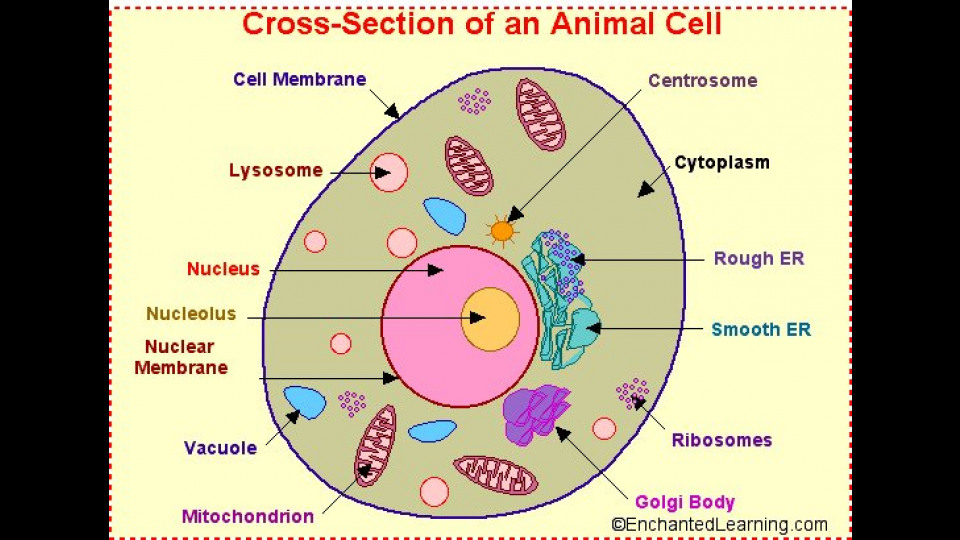
Here's an outline of the functions of major cell organelles:
Nucleus:
Acts as the control center of the cell, housing DNA and genetic material.
Regulates gene expression and mediates the replication of DNA during the cell cycle.
Mitochondria:
Known as the powerhouses of the cell, they generate ATP through cellular respiration.
Involved in other processes like apoptosis and metabolic regulation.
Ribosomes:
Sites of protein synthesis, translating genetic instructions from the mRNA to build proteins.
Endoplasmic Reticulum (ER):
Rough ER: Studded with ribosomes, assists in protein synthesis and folding.
Smooth ER: Involved in lipid synthesis, detoxification, and calcium storage.
Golgi Apparatus:
Modifies, sorts, and packages proteins and lipids for secretion or use within the cell.
Lysosomes:
Contain digestive enzymes to break down macromolecules, old cell parts, and foreign invaders.
Peroxisomes:
Break down fatty acids and amino acids and detoxify poisons.
Chloroplasts (in plant cells):
Sites of photosynthesis, converting solar energy into chemical energy stored in glucose.
Vacuoles:
Storage organelles that can contain water, nutrients, or waste.
Plant cells have a large central vacuole that maintains cell pressure and structure.
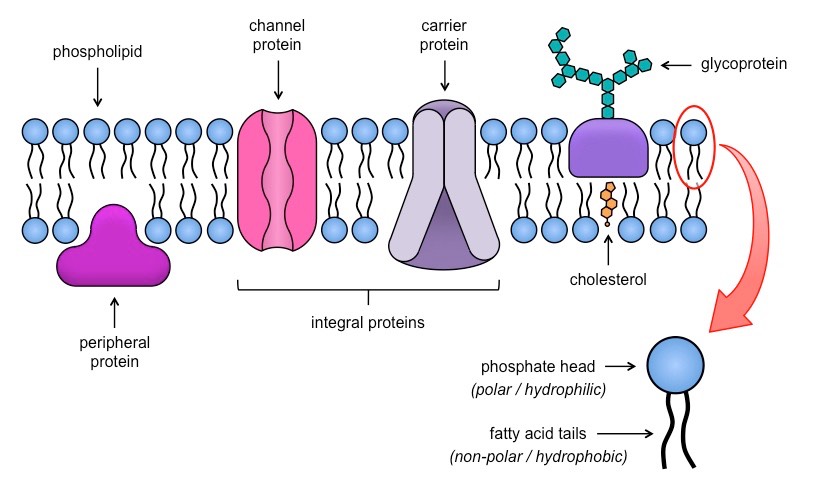
Cell Membrane:
Selectively permeable barrier that regulates what enters and exits the cell.
Provides structural support and facilitates communication between cells.
Cytoskeleton:
Provides structural support for the cell.
Involved in cell movement and transport of materials within the cell.
The cell membrane serves several crucial functions:
Protective Barrier: It separates the cell's internal environment from the external environment, providing protection and structural support.
Selective Permeability: It regulates the movement of substances in and out of the cell, allowing essential nutrients in and waste products out.
Signal Reception and Transmission: Membrane proteins act as receptors for signal molecules, facilitating communication between cells and the environment.
Cell Adhesion: The membrane aids in cell adhesion, enabling the formation of tissues and communication with other cells.
Enzymatic Activity: Some membrane proteins serve as enzymes, catalysing biochemical reactions directly at the membrane surface.
Attachment Point: It provides anchorage points for the cytoskeleton and extracellular matrix, maintaining cell shape and stability.
passive process - this occurs without the expenditure of energy, allowing substances to move across the membrane according to their concentration gradient.
active process - this requires energy input, usually in the form of ATP, to move substances against their concentration gradient, which is essential for maintaining cellular homeostasis.
why do cells need oxygen and water - cells require oxygen for aerobic respiration, a process that generates ATP, the energy currency of the cell, while water is crucial for various biochemical reactions, maintaining osmotic balance, and facilitating nutrient transport.
autotrophs - organisms that produce their own food through photosynthesis or chemosynthesis, converting light or chemical energy into organic compounds, which serve as a primary energy source for themselves
heterotrophs - organisms that cannot produce their own food and must obtain energy by consuming other organisms, either directly or indirectly, relying on the organic compounds created by autotrophs for sustenance.
carbohydrates
organic compounds made up of carbon, hydrogen, and oxygen, which serve as a primary energy source for both autotrophs and heterotrophs, playing a vital role in cellular respiration and metabolism.
tissue types -
1- epithelial - a type of tissue that forms protective layers on body surfaces and lines cavities, playing a crucial role in absorption, secretion, and sensation.
2- connective - provides support and binds other tissues together, including bone, blood, and adipose tissue. 3- Muscles are responsible for movement and consist of three types: skeletal, cardiac, and smooth. 4- nervous - composed of neurons and glial cells, facilitating communication within the body.
3- muscular tissue - responsible for the contraction and relaxation of muscles, enabling movement and maintaining posture.
4-
cardiac - heart only, striiated, involuntary multinucleated cells
describe as branching cells
pump heart
cardiac - found in the heart, striated involuntary, single nucleus per cell, described as non-branching fibers with intercalated discs.
smooth - internal, non striated involuntary, single nucleus per cell
described as elliptical
to move internal organs
skeletal - bones only, strated voluntary, multinucleatedd cells
to move bones
described as non-branching fibres w intercalated disc
nervous
nervous - responsible for transmitting signals that coordinate muscle contractions and responses to stimuli.
nervous system: coordinates muscle movements and relays signals between the brain and muscles, ensuring proper function of the skeletal muscles.
neurons (brain/nerve fibre)