The Nervous System and The Endocrine System
Nervous System
Central Nervous System (CNS)
Composed of the brain and spinal cord.
Receives information from the body, processes it, and sends messages back.
Peripheral Nervous System (PNS)
Nerves that carry messages to and from the CNS from other parts of the body. Sensory Neuron and Motor Neuron are apart of PNS.
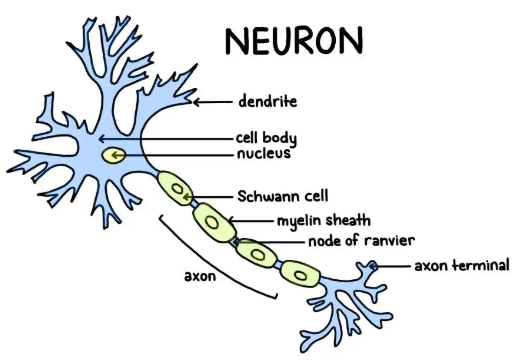
Types of Neurons:
Sensory Neurons: Impulse reaches the CNS.
Interneurons: Impulse relayed within the CNS.
Motor Neurons: Carries impulse to the effector.
Afferent: Toward the CNS.
Efferent: Pathway from the CNS.
Nerve Impulse:
Stimulus → Receptor → Sensory Neuron (To the CNS) → Interneuron (In the CNS) → Motor Neuron → Effector → Response
Reflex Arc:
EG:
Hand on Pin (Stimulus) → Pain Receptor → Sensory Neurons → Interneuron (But only to the spine) → Motor Neuron → Hand Effector → Move hand (Response)
Cold (Sitmulus) → Skin Receptor → Sensory Neuron → Interneuron (Hypothalamus) → Motor Neuron → Muscles Effector → Shivering (Response)
Endocrine System
Definition
The endocrine system releases hormones into your bloodstream while continuously monitoring levels. It oversees processes such as:
Metabolism
Homeostasis (constant internal balance)
Growth and Development
Sexual Function
Reproduction
Sleep-Wake Cycle
Mood
Video Notes
Glands
Organs
Cells
Glands & Their Hormones
Pituitary Gland
Base of brain below hypothalamus
Regulates growth, known as the Master Gland
Pineal Gland
Produces Melatonin for sleep-wake cycles
Regulates Circadian Rhythms
Thyroid
Produces T3 and T4 hormones, including Thyroxine and Triiodothyronine.
metabolism
Adrenal Glands
Sit atop each kidney.
Produce Cortisol and Aldosterone (Adrenal Cortex), and Adrenaline (Adrenal Medulla).
Key Definitions
Endocrine System: Composed of glands that secrete hormones directly into the bloodstream, acting more slowly yet lasting longer than the nervous system.
Target Organs: Organs that hormones act upon.
Hormone: A chemical produced by a gland that has a biological effect on target organs.
Homeostasis
Thermoregulation involves the skin, hypothalamus, blood vessels, and negative feedback.
Hot: - Flat Hair
- Vasodilation (blood vessels move closer to skin making it red)
- SweatingCold: - Hair stands up
- Shivers
- Vasoconstriction
Graphical Representation
Glands | Hormones | Functions |
|---|---|---|
Pituitary | Growth Hormone | Regulates growth, controls functioning of endocrine glands |
Thyroid | Thyroxine | Controls metabolism rate and balanced growth |
Parathyroid | Parathormone | Manages calcium balance in the body |
Adrenal | Adrenaline | Prepares body for emergencies |
Pancreas | Insulin | Controls blood glucose levels |
Testes | Testosterone | Governs male reproductive development |
Ovaries | Oestrogen, Progesterone | Governs female reproductive development |
Pineal | Melatonin | Sleep wake cycle, Regulates Circadian Rhythms |