3.6a: Social-Emotional Development Across the Lifespan
Separation anxiety: excessive anxiety/fear when separated from major attachment figures
Stranger anxiety: fear of strangers infants commonly display
Temperament: a person’s characteristic emotional reactivity and intensity
Self-concept: all our thoughts and feelings about ourselves in answer to the question, “Who am I?” (emerges gradually)
Ecological Systems Theory
Ecological Systems Theory: explains how a person’s development is influenced by various environmental views
→ Using 5 nested systems — ranging from direct to indirect influences
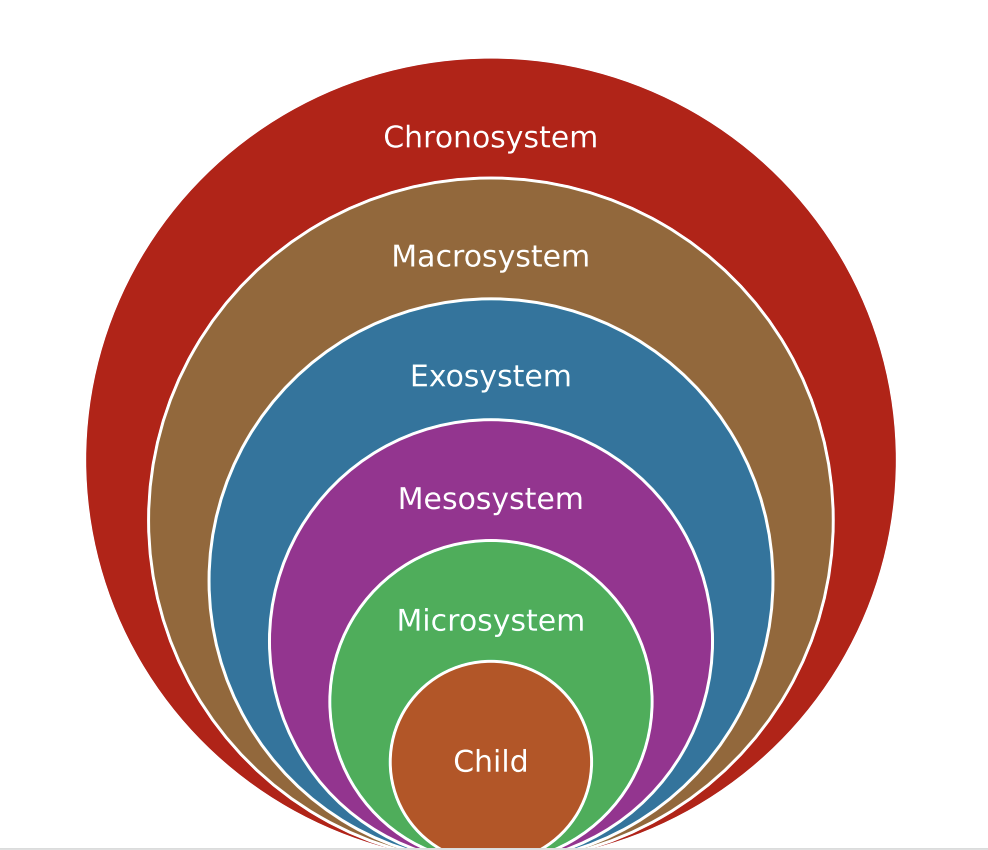
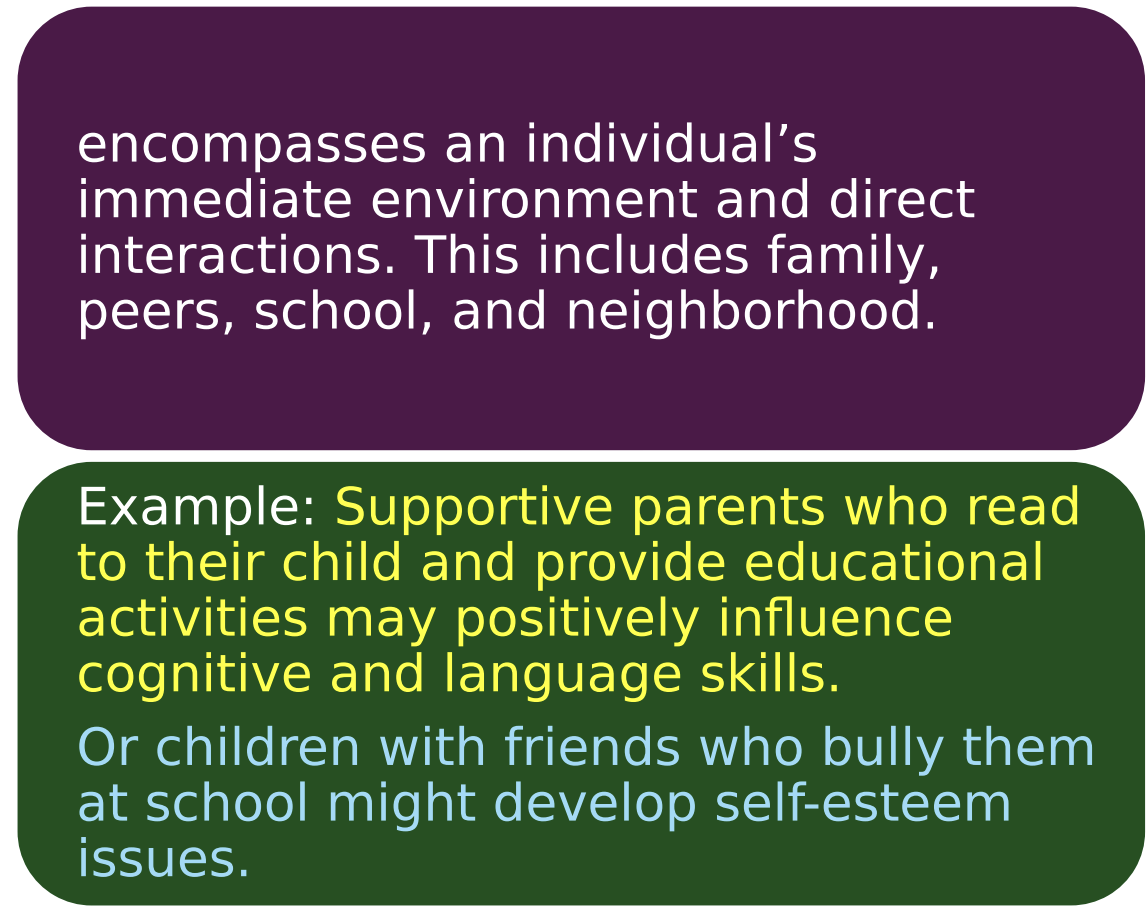
1) Microsystem
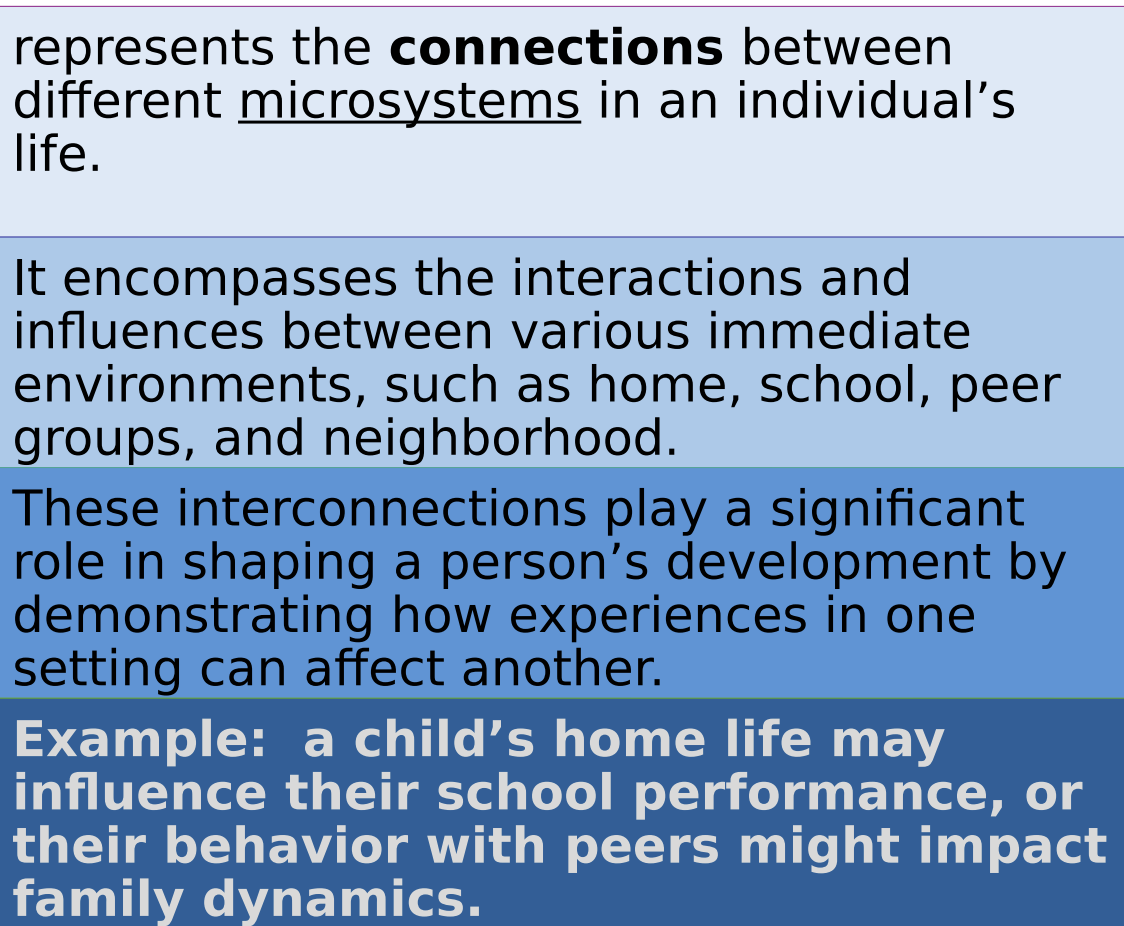
2) Mesosystem
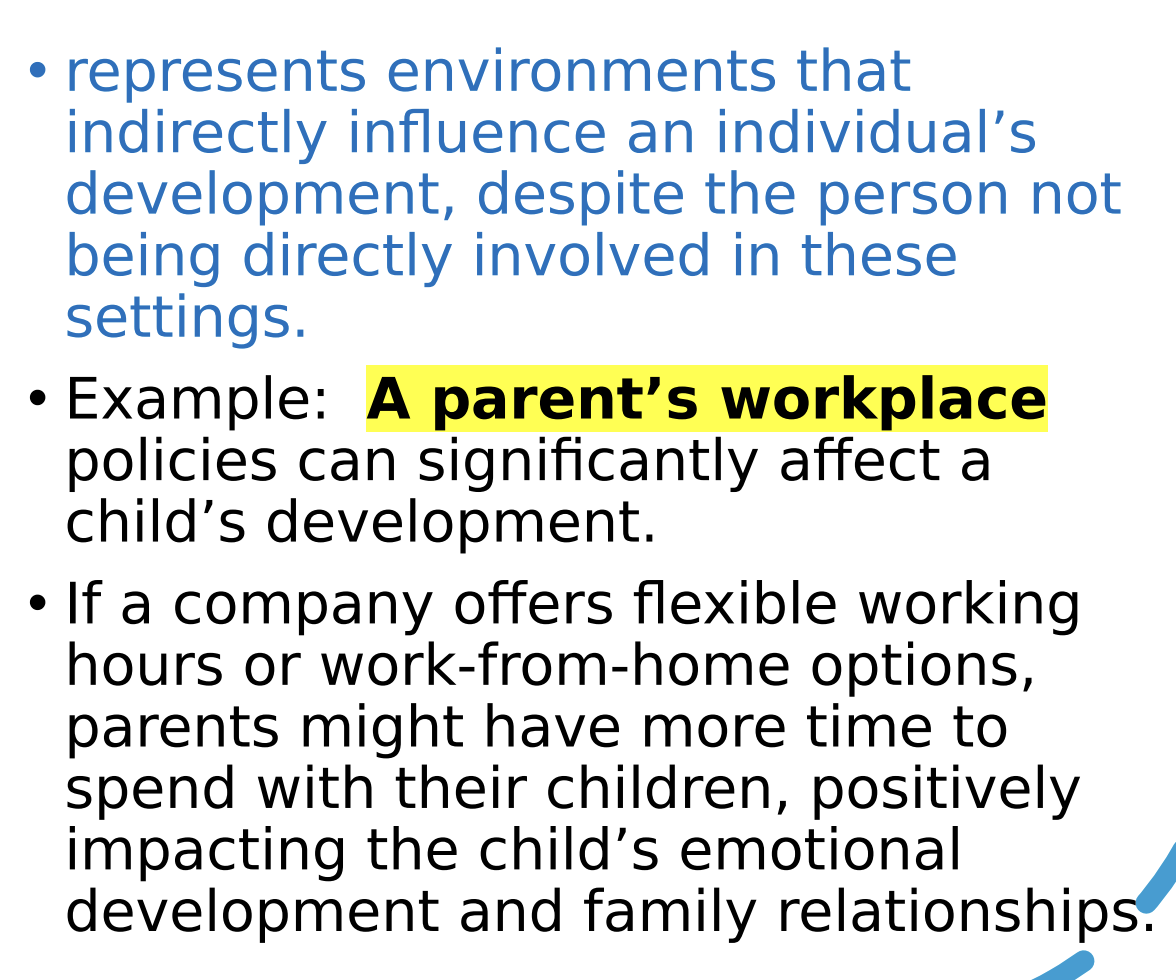
3) Exosystem
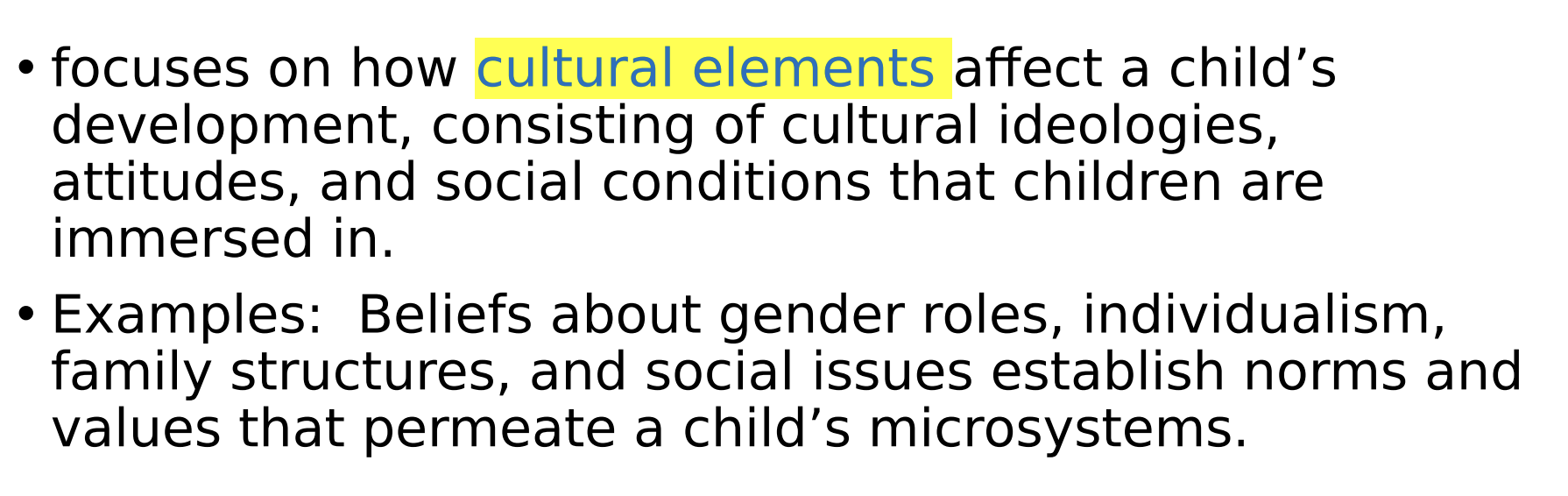
4) Macrosystem
5) Chronosystem

→ Examples of Chronosystem:
historical events
environmental changes
parent’s employment status
societal economic changes
changes in family structure
personal life transitions (puberty, starting school)
Origins of Attachment
Attachment: an emotional tie w/ others — shown in young children by seeking closeness to caregivers & sharing distress to separation
Body Contact
Contact comfort: physical and emotional security an infant derives from major attachment figures
Secure base: safe, reliable, emotional, and physical foundation provided by a primary caregiver
as we mature, our secure base shifts; parents → peers & partners
Attachment Differences
Strange situation: a procedure for studying child-caregiver attachment
→ a child is placed in an unfamiliar environment while their caregiver leaves and then returns, then the child’s reactions are observed
⬇
Types of Attachments
→ Secure attachment: demonstrated by infants who comfortably explore environments in the presence of their caregiver, show only temporary distress when the caregiver leaves & find comfort in the caregiver’s return
→ Insecure attachment: demonstrated by infants who display either a clinging, anxious attachment or an avoidant attachment that resists closeness
they are less likely to explore their surroundings
→ Disorganized attachment: infants exhibit no consistent, coherent strategy for managing stress and behavior during these separations and reunions
Attachment Styles
Basic trust: a sense that the world is predictable and trustworthy; said to be formed during infancy by appropriate experiences w/ responsive caregivers
Anxious attachment: people constantly crave acceptance but remain alert to signs of possible rejections
creates constant concern over rejection
Avoidant attachment: people experience discomfort when getting close to others & use avoidant strategies to maintain distance from others
decreases commitment and increases conflict
Parenting Styles
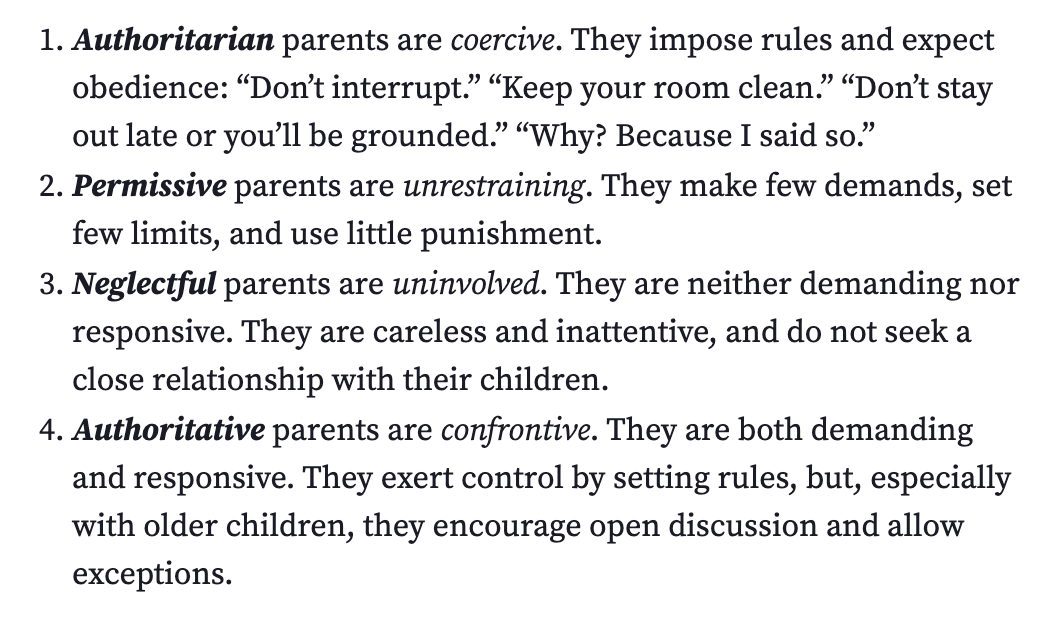
* Parenting styles depend on demandness & responsiveness