Lecture 1 - Consumer choice
Assumptions about choice
Consumers aim to maximise satisfaction
Consumers can choose different combinations of the two goods and may be indifferent between certain combinations
Indifference being the same level of satisfaction or utility
indifference curves
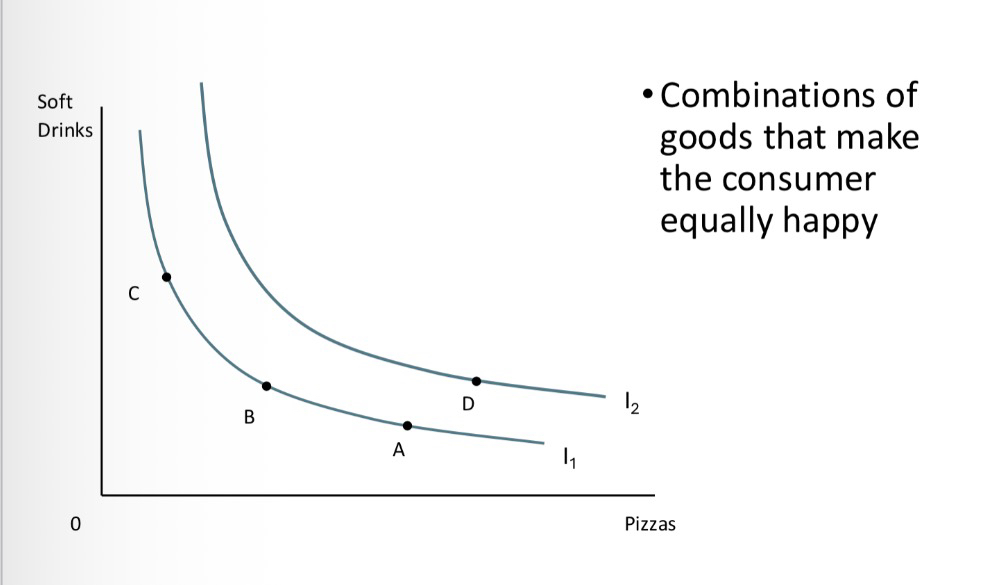
A, B or C give the same satisfaction
D gives more satisfaction than A, B or C
The slope is the marginal rate of substitution (MRS) - rate at which the consumer is willing to substitute one good for another
The value for one good equals the amount the other good the consumer is willing to sacrifice, for an additional unit
Four Properties
Higher curves are preferred to lower ones
Slopes downwards
Do not Cross
Convex to the origin
Perfect substitutes
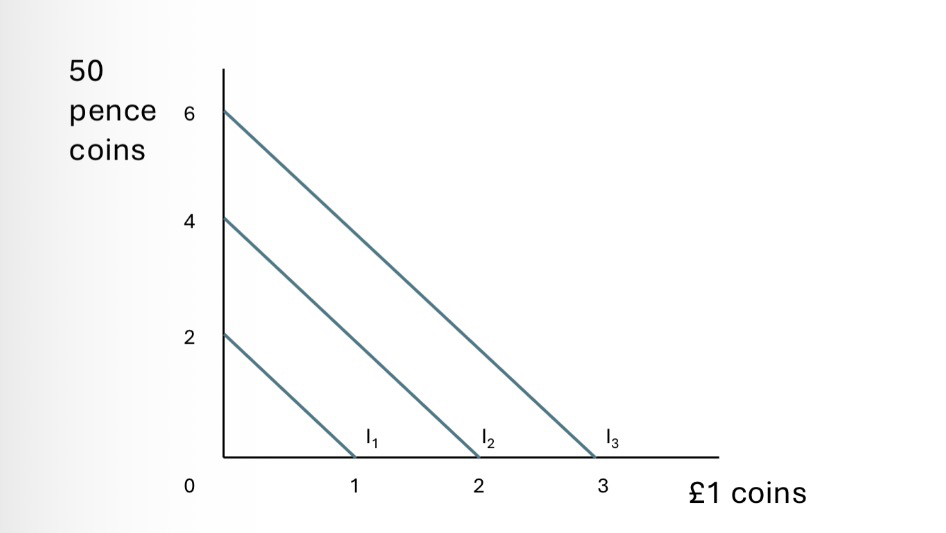
Identical utility: Each unit of good A gives the same satisfaction as a unit of good B.
Constant marginal rate of substitution (MRS): The consumer is always willing to trade one good for the other at a fixed rate.
Straight-line indifference curves: Indifference curves are linear with a constant slope.
Corner solutions: Consumers buy only the cheaper good; if prices are equal, any combination is acceptable.
Examples
Bottled water
Sugar
Perfect Complements
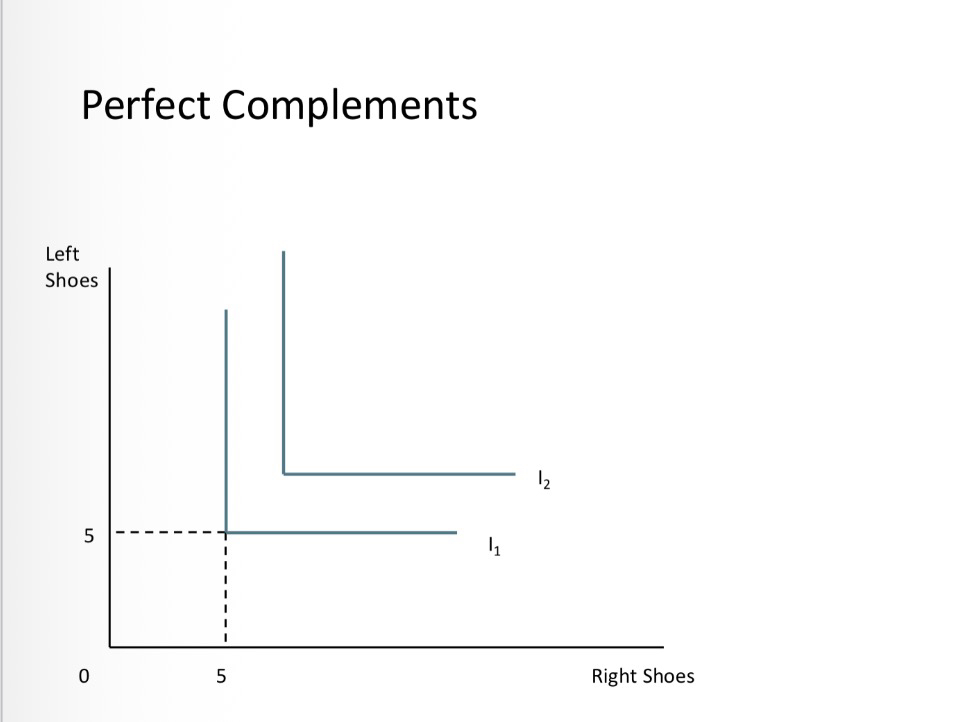
Fixed consumption ratio: Goods must be used in a specific proportion (e.g. 1:1).
Zero substitutability: One good cannot replace the other.
L-shaped indifference curves: Utility only increases when both goods increase together.
No trade-off at the margin: The marginal rate of substitution (MRS) is not smooth and effectively undefined at the kink.
Example
Left shoes and right shoes
Printers and ink cartridges
Cars and fuel
The Consumers Optimum
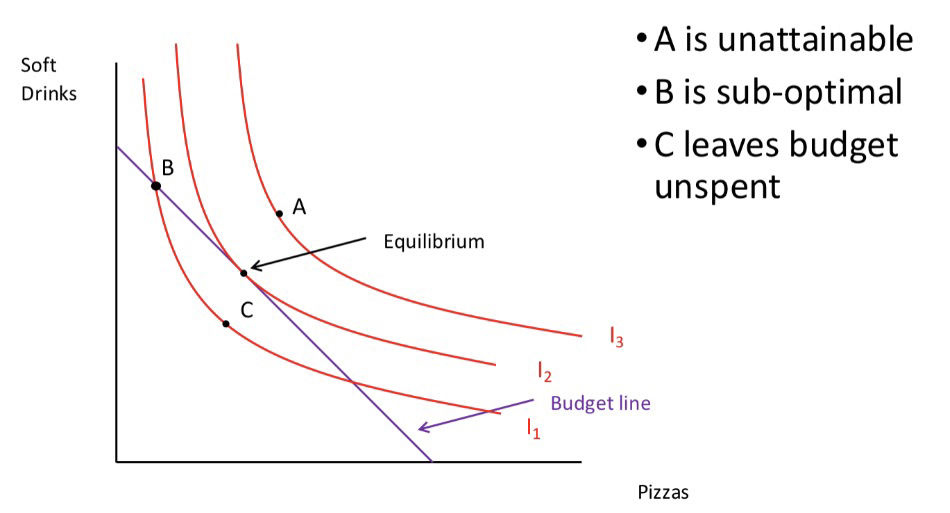
At the optimum point the slopes of the indifference curve and budget line are equal
Therefore,
MRS = Relative price
The rate at which the consumer wants to trade is equal to the rate at which the market will trade
What happens if Income Changes?
Higher income consumers can afford more of both goods
New optimum point depends on consumer’s preferences
If the consumer buys more AS income increases the good becomes normal
Income effect on a Normal good
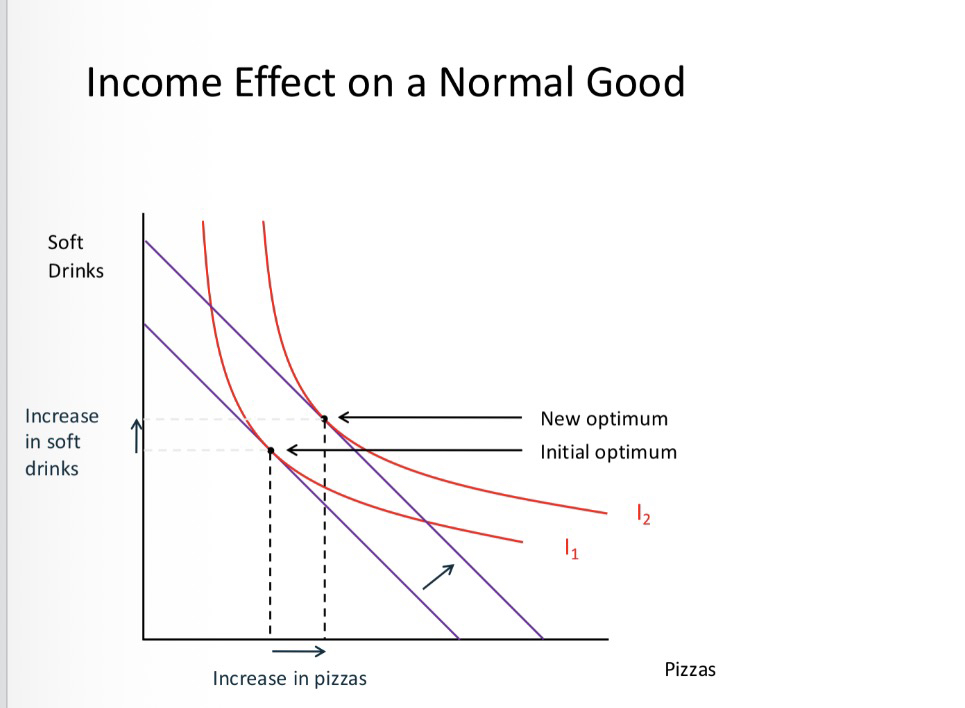
As real income increases, quantity demanded increases.
As real income falls, quantity demanded falls.
The income effect is positive.
Example:
With higher income, a consumer buys more fresh food, branded clothing, or leisure services.
Income effect on an Inferior good
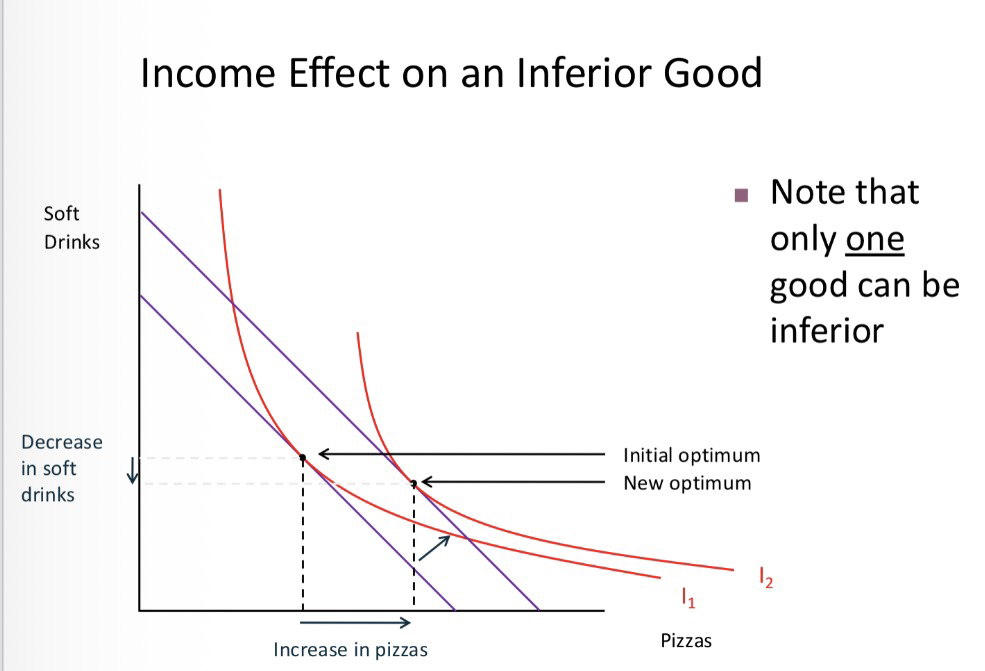
As real income increases, quantity demanded decreases.
As real income falls, quantity demanded increases.
The income effect is negative.
Example:
When income rises, consumers switch away from budget supermarket brands or instant noodles toward higher-quality alternatives.
Effects of price change
Income effect: change in consumption that results from the consumer moving to a different indifference curve
Substitution effect: change in consumption that results from the consumer moving along the indifference curve in the direction of the good that has got relatively cheaper
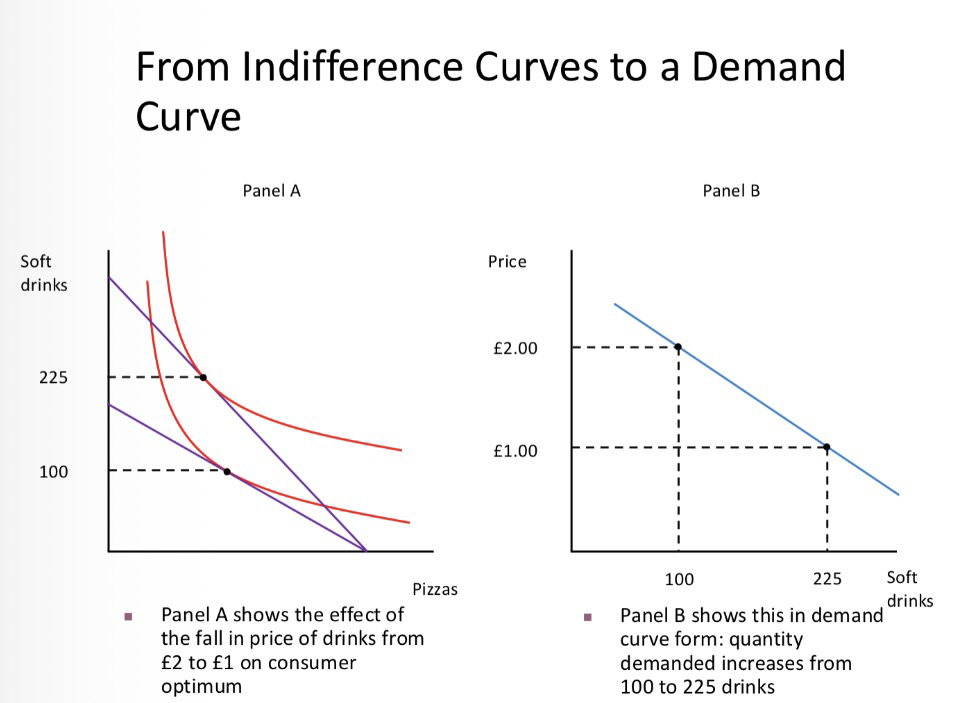
Indifference Curve to a demand curve
Giffen goods
Giffen goods are a rare type of inferior good for which an increase in price leads to an increase in quantity demanded, violating the law of demand.
Why this happens
A price rise has two effects:
Substitution effect – consumers substitute away from the good (always negative).
Income effect – real income falls.
For a Giffen good, the negative income effect is so strong that it outweighs the substitution effect, causing demand to rise when price rises.
Key conditions for a Giffen good
The good must be inferior.
It must form a large proportion of the consumer’s income.
There must be no close substitutes.
Consumers are typically low-income, relying heavily on the good.
Example
Staple foods such as bread, rice, or potatoes in very poor households.
If the price of the staple rises, consumers cannot afford better foods and are forced to buy more of the staple to meet calorie needs.