DNA sequencing
DNA sequencing history
first methods involved radioactively labelled bases and gel electrophoresis
All done by hand so took long time
Sequence was read manually from the bottom to the top of the gel
Sanger sequencing
The radioactive labels were then changed for fluorescent tags whcih could be read automatically by a machine
A laser detected each tag on the DNA base as it ran through the gel past a sensor in the machine
later versions used a gel in a capillary tube to run sample through
Many samples could be prepared and sequenced in one go
Order of bases ready by computer
How sequencing works
the DNA from the organism to be sequenced is cut into smaller pieces
Each piece is sequenced separately
The order of bases on each piece is analysed by a computer to rearrange all the separate pieces of DNA into the correct sequence
Sequencing DNA fragments
DNA is mixed with:
a primer
DNA polymerase
An excess of nucleotides and terminator nucleotides
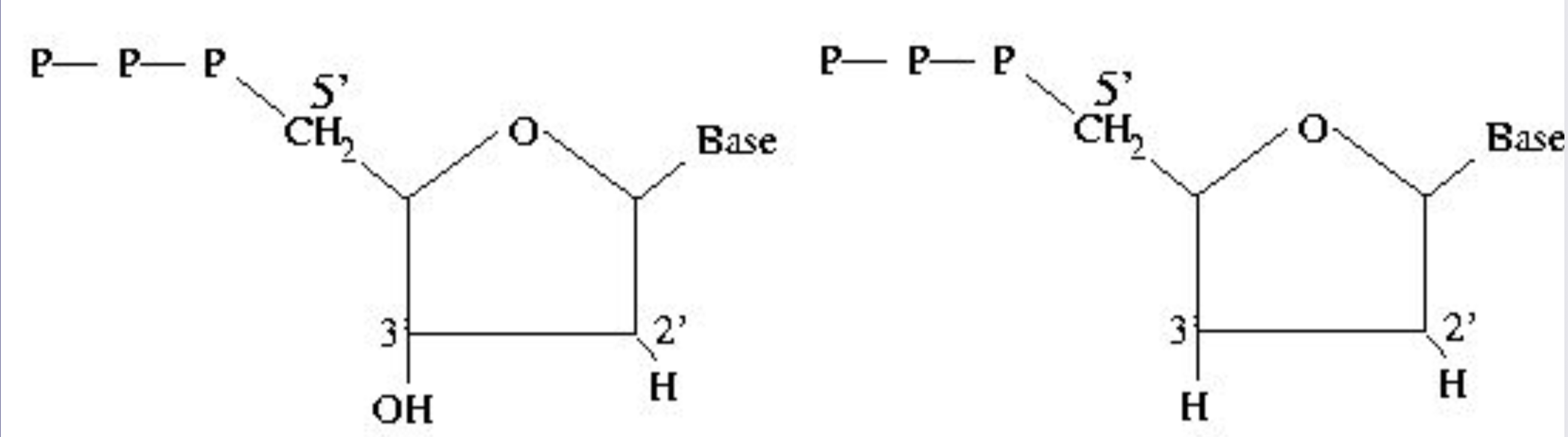
a thermal cycler is used to anneal the primers and add nucleotides to make multiple copies of the DNA fragment
As they are in excess normal nucleotides are usually added
Sometimes however a terminator nucleotide is added by chance
Stops the DNA strand being extended any further
Eventually terminator nucleotides are added at all the possible positions
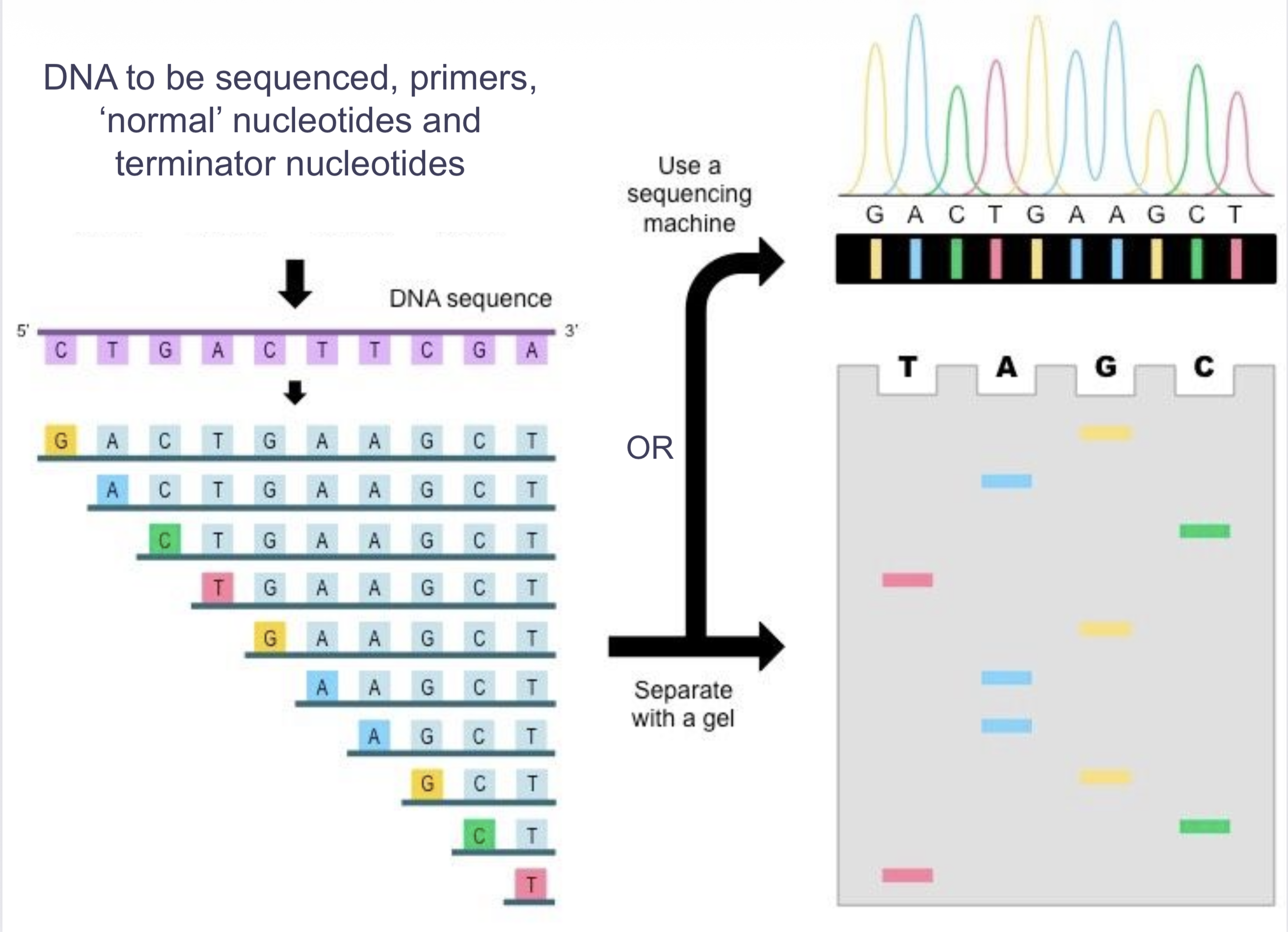
Aligning the sequences
once all of the DNA fragments have been sequenced they must be reassembled into the original whole DNA strand
Looks at overlapping sequences
Bioinformatics
The development of the software and computing tools needed to organise and analyse raw biological data
Algorithims
Mathematical models
Statistical tests
Computational biology
uses data from bioinformatics to build theoretical models of biological systems
Used to predict what will happen in different circumstances