Language and Thought
Language and Thought
Instructor Information
Presenter: Dr. Lisa Smithson
Reference: Schacter et al. 2011)
Communicating with Other Species
Clever Hans

Teaching Chimpanzees to Use Language
Winthrop and Luella Kellogg (1933):
Published a book concerning their experiences raising a chimpanzee named Gua alongside their infant son.
Gua could never speak a single word (Source: Sdorow, 2002).
Cathy and Keith Hayes (Hayes, 1951):
Raised a chimpanzee named Viki as part of their family.
Viki could only say four words: "mama," "papa," "cup," and "up" (Source: Sdorow, 2002).
Noted: The vocal anatomy of apes may not be ideal for the production of speech.
Chimpanzees and Language Communication
Robert Yerkes:
A primatologist who predicted that apes might have substantial communication abilities but cannot convey them through speech.
Recommended the use of sign language as an alternative.
Washoe:
A chimpanzee taught to use American Sign Language (ASL).
Trainers never spoke in Washoe's presence, only communicated through signs.
After 4 years of training, Washoe had a vocabulary of approximately 160 signs.

Learning Human Signs
Loulis:
A chimpanzee who was not exposed to human signers.
Learned 68 signs by observing Washoe communicate with other chimpanzees.
True Language Use in Chimpanzees
Herbert Terrace:
A psychologist from Columbia University.
Initially believed that apes could use language and subsequently taught a chimpanzee named Nim Chimpsky to use sign language.
Nim mastered 125 signs during the study.
Conclusion: Nim and other apes did not display true language.
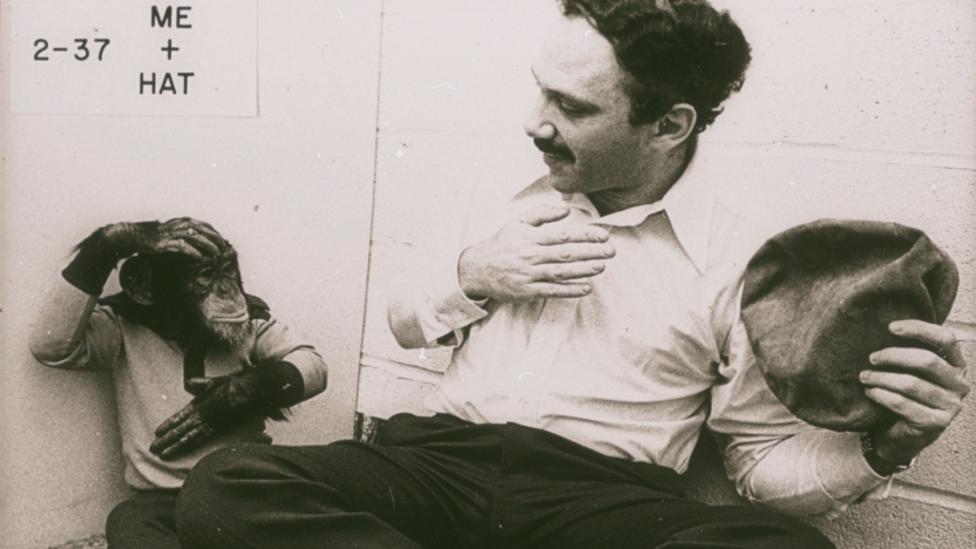
Koko the Gorilla
Koko:
A gorilla taught by Francine Patterson to use more than 300 signs.
Demonstrated generativity by spontaneously referring to a zebra as a “white tiger.”

Most Convincing Case: Kanzi
Kanzi:
A male chimpanzee who learned hundreds of words.
Can combine words to create many combinations.
Performed 72% of 660 requests correctly.

Limitations of Chimpanzee Language
Chimpanzees can acquire hundreds of words, but the average four-year-old child knows approximately 10,000 words.
The conceptual repertoire of chimpanzees is simpler than that of humans.
The linguistic constructions by chimpanzees rarely exceed 3 or 4 words.
Relationship Between Language and Thought
Linguistic Relativity Hypothesis
Benjamin Lee Whorf (1987-1941):
Proposed the linguistic relativity hypothesis which states that "our perception of the world is determined by the particular language we speak" (Source: Sdorow, 2002).
Testing the Linguistic Relativity Hypothesis
Carmichael et al., 1932:
Conducted research showing that the way an ambiguous figure is described influences memory.
Language and Gender Roles
Study by Janet Shibley Hyde (1984):
Explored effects of gendered pronouns on children’s stereotypes about men and women.
Utilized a ‘wudgemaker’ story and established four experimental conditions:
Used pronoun ‘he’.
Used pronoun ‘they’.
Used pronoun ‘he or she’.
Used pronoun ‘she’.

Results of Gender Role Study
Found that pronoun use affects children's gender-role stereotypes.
Males were perceived as competent wudgemakers in all conditions.
Pronouns influenced perceptions of female wudgemaking competence.
Language, Perception, and Time
Experiments comparing English and Mandarin speakers show that spatial displays affect language and thought.

Concept Formation
Understanding Thinking
Thinking:
The mental manipulation of words and images in order to solve problems, form concepts, and make decisions (Source: Sdorow, 2002).
Concept:
A mental representation that categorizes shared features of related objects, events, or other stimuli.
Information is classified into categories based on shared similarities.
Piaget's Theory on Schemes Across Development
Three processes explaining the transition from built-in schemes to complex mental schemes:
Assimilation:
Utilizing existing schemes to understand events or experiences.
Accommodation:
Altering a scheme due to the introduction of new information.
Equilibration:
The balance process of assimilation and accommodation to create schemes suitable for the environment.
(Source: Boyd et al., 2015).
Stages of Logical Thinking Development
Piaget's stages detail how logical thinking evolves:
Sensorimotor Stage:
Age: Birth to 2 years.
Infants utilize sensory and motor schemes to interact with the world.
Preoperational Stage:
Age: 2 to 7 years.
Children develop symbolic schemes such as language and fantasy, using them for thinking and communication.
(Source: Boyd et al., 2015).
Concrete Operational Stage:
Age: 7 to 11 years.
Children begin logical thinking and problem-solving.
Formal Operational Stage:
Age: 11 years and older.
Adolescents learn to think logically about abstract ideas and hypothetical scenarios.
(Source: Boyd et al., 2015).
Family Resemblance Theory
States that members of a category possess features characteristic of that category but not necessarily shared by every member.
Prototype Theory
Suggests that individuals categorize by comparing new instances to a category’s prototype, which is deemed the “best” or “most typical” member of that category.
Exemplar Theory
Proposition that categorization occurs by comparing new instances against stored memories of other instances within the category.
Brain Involvement in Concept Formation
The left hemisphere and visual cortex are primarily involved in creating prototypes.
The right hemisphere, prefrontal cortex, and basal ganglia are actively engaged in recognizing exemplars.
Neuroimaging indicates that both processes are utilized in forming concepts and categories.
Exemplar-based learning engages analysis and decision-making, while prototype formation takes a more holistic approach, implementing image processing.
Categories
Category-Specific Deficit
A neurological syndrome characterized by an inability to recognize objects belonging to a specific category while retaining recognition of objects outside that category.
Inquiry into whether category-specific brain organization is innate persists.
Brain Areas and Category-Specific Processing
Temporal lobe: Active during animal and tool recognition.
Motor Cortex: Engages during physical interaction with objects.
To Ponder
Question: What is the optimal way to operationalize language ability among other species?
Decision Making
Rational Choice Theory:
Individuals make decisions by estimating the likelihood of an outcome, evaluating its value, and then multiplying the two factors.
Decision-Making Scenarios
Preference Challenge:
a) 10% chance of gaining $500
b) 20% chance of gaining $2000
The Irrational Reality
Individuals excel at frequency estimation but struggle with probability estimation.
Probabilities and Test Outcomes
Illustration of breast cancer testing statistics:
P(B): Probability of breast cancer = 0.01
P(T+ | B): Probability of a positive test given breast cancer = 0.80
P(T+ | ¬B): Probability of a positive test given no breast cancer = 0.096
The resulting calculation of probabilities follows:
Heuristics
Availability Bias
Refers to the tendency to overestimate the probability of events based on information readily available rather than less available data.
The Conjunction Fallacy
Occurs when individuals believe that two events are more likely to occur together than either event is likely to occur on its own.
Representativeness Heuristic
Defined as a mental shortcut where probability judgments are made by comparing an object or event to a prototype.
Example following this heuristic involves describing individuals based on their interests and behavior:
Jack enjoys reading about social and political issues and displays strong argumentative skills.
Tom is a loner who prefers mathematical puzzles and has abstract speech with controlled emotions.
Harry is a bright individual, an avid racquetball player, and asks insightful questions throughout an interview.
Advantages and Disadvantages of Heuristics
Advantages:
Proficient at forming categories based on prototypes.
Effective at classification judgments based on prototype similarity.
Disadvantages:
Difficulty in judging probabilities accurately.
Framing Effects
Defined as instances when people provide varied answers to identical problems depending on presentation.
Example: 70% of the time, a drug may be beneficial versus stating that 30% of the time it is harmful.

Sunk-Cost Fallacy
A specific framing effect where decisions are influenced by prior investments in a situation.

Problem Solving
Definition:
The cognitive process that allows individuals to overcome obstacles to reach a goal (Source: Sdorow, 2002).
Steps in Problem Solving:
Identify the problem.
Gather relevant information.
Attempt a solution.
Evaluate the results (Source: Sdorow, 2002).
Approaches to Problem Solving
Trial and Error:
Attempting multiple solutions systematically until achieving success.
Psychologists' Focus in Problem Solving:
Primary interest lies in studying:
Insight.
Algorithms.
Heuristics (Source: Sdorow, 2002).
Insight in Problem Solving
Definition:
A mental manipulation of information rather than mere trial and error.
Characterized by an “aha!” experience, indicating a breakthrough in thought.
Types of Solutions:
Non-insight problems yield solutions incrementally.
Insight problems result in sudden, unpredictable solutions.
Skeptical views exist regarding the nature of insight (Source: Weisberg, 1992; Sdorow, 2002).
Can Animals Use Insight?
Research by Wolfgang Köhler (1887-1967):
A Gestalt psychologist who conducted experiments regarding animal insight on Tenerife in the Canary Islands during WWI.


(Source: Sdorow, 2002).
Algorithms and Heuristics in Problem Solving
Algorithm:
A step-by-step problem-solving procedure or rule that guarantees a correct solution when correctly followed.
May sometimes result in inefficient approaches to problem-solving (Source: Sdorow, 2002).
Heuristic:
A general guiding principle in problem-solving that doesn’t guarantee solutions.
Helps exclude unlikely alternatives without necessitating attempts (Source: Sdorow, 2002).
Difficulties in Problem-Solving
Mental Set:
A tendency to apply a previously successful problem-solving strategy, limiting one's ability to approach a new problem requiring a different strategy.
Suggested remedy involves opposing one’s usual assumptions (Sdorow, 2002).
Functional Fixedness in Problem-Solving
Functional Fixedness:
Inhibition in realizing that a familiar object can be utilized in an unusual manner to solve a problem.
Classic Study by Maier (1931):
Illustrated this principle through an experiment involving problem-solving strategies.

(Source: Sdorow, 2002).
Overcoming Functional Fixedness
Can be alleviated by:
Ignoring or altering familiar object names.
Study by Glucksberg & Danks (1968):
Participants given:
A bulb
Some wire
A switch
A wrench
Batteries
Task: Create a circuit to light the bulb (limited wire supply).
Finding: Participants who termed the wrench as 'jod' (a nonsensical term) were more likely to solve the problem than those calling it a wrench.
