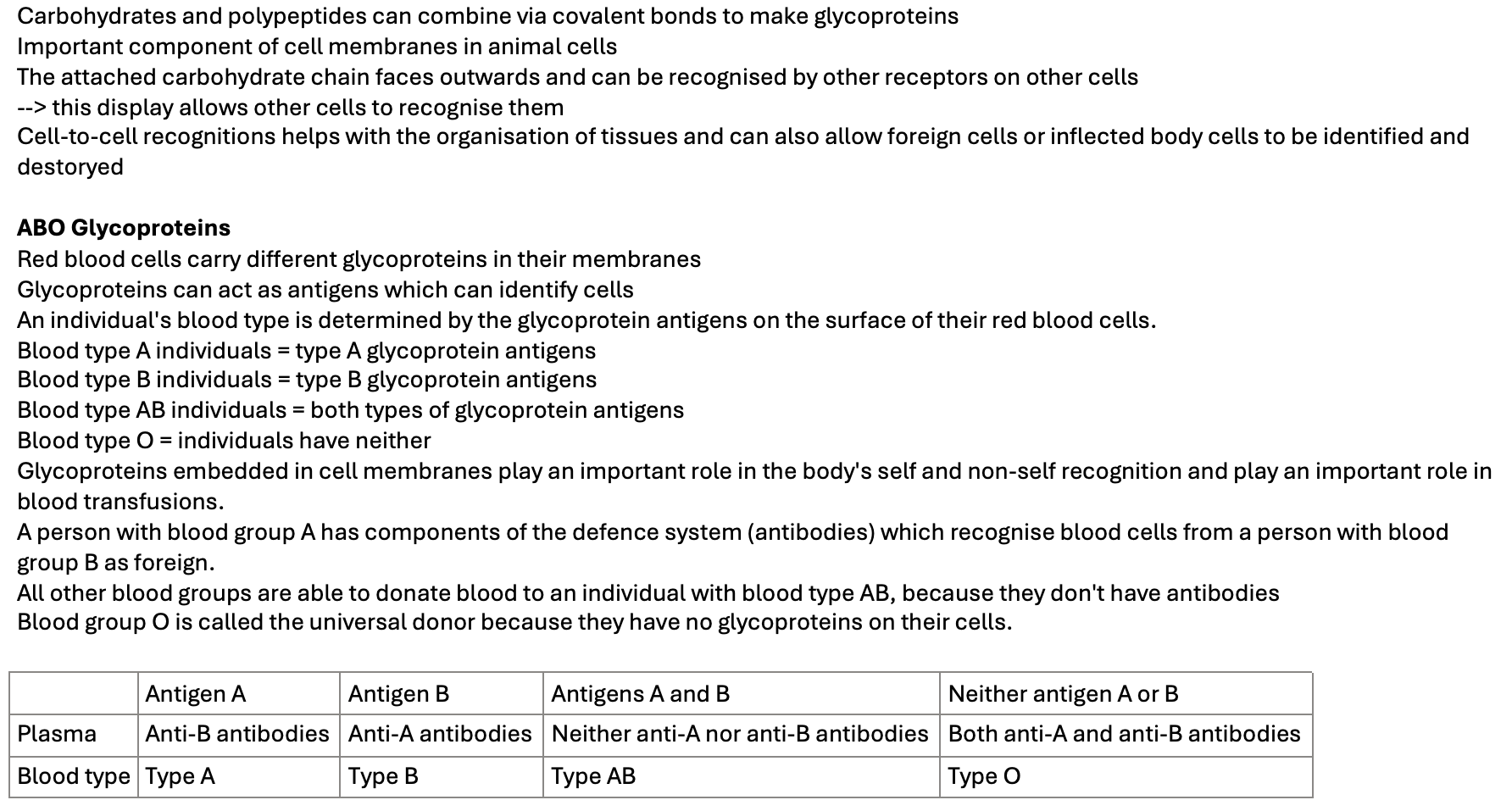
Cell-Cell Recognition
Glycoproteins and glycolipids are components of the plasma membrane
Carbohydrates and polypeptides can combine via covalent bonds to make glycoproteins
Oligosaccharides project outwards from the membrane
The carbohydrate is attached either to protein in the membrane (glycoprotein) or to lipid (glycolipids)
Interactions between the oligosaccharides and carbohydrate-binding proteins in adjacent cells allow cell-cell recognition
Oligosaccharides in adjacent cells can become linked binding them into a tissue
Cells can recognise foreign cells or infected body cells by the oligsaccharides of their glycoproteins and glycolipids
ABO Glycoproteins
Red blood cells carry different glycoproteins in their membranes
Glycoproteins can act as antigens which can identify cells
An individual's blood type is determined by the glycoprotein antigens on the surface of their red blood cells.
Blood type A individuals = type A glycoprotein antigens
Blood type B individuals = type B glycoprotein antigens
Blood type AB individuals = both types of glycoprotein antigens
Blood type O = individuals have neither
Glycoproteins are important in recognition and blood transfusions
A person with blood group A has components of the defence system (antibodies) which recognise blood cells from a person with blood group B as foreign.
All other blood groups are able to donate blood to an individual with blood type AB, because they don't have antibodies
Blood group O is called the universal donor because they have no glycoproteins on their cells.
| Antigen A | Antigen B | Antigens A and B | Neither antigen A or B |
Plasma | Anti-B antibodies | Anti-A antibodies | Neither anti-A nor anti-B antibodies | Both anti-A and anti-B antibodies |
Blood type | Type A | Type B | Type AB | Type O |