Parts of the Brain
Mind Map: Brain Structures and Neurotransmitters
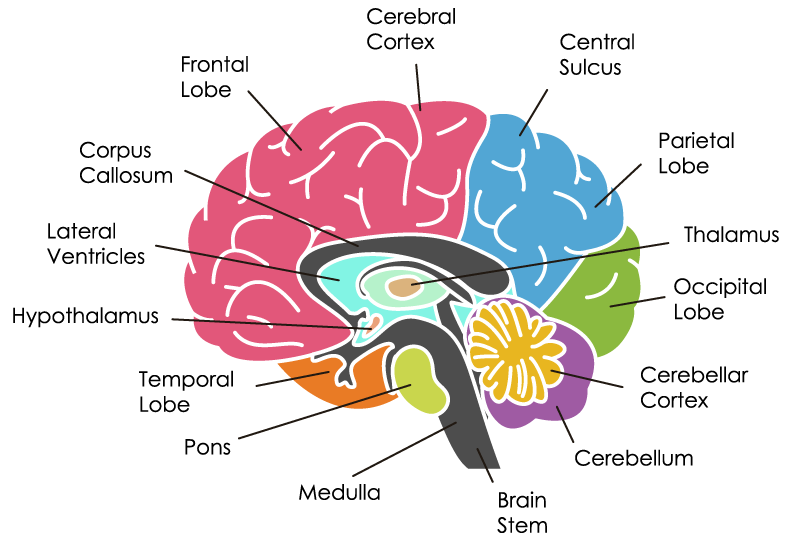
Brain Structures:
Cerebral Hemispheres (The Left Cerebral Hemisphere Controls Your Right Side and The Right Cerebral Hemisphere Controls Your Left Side)
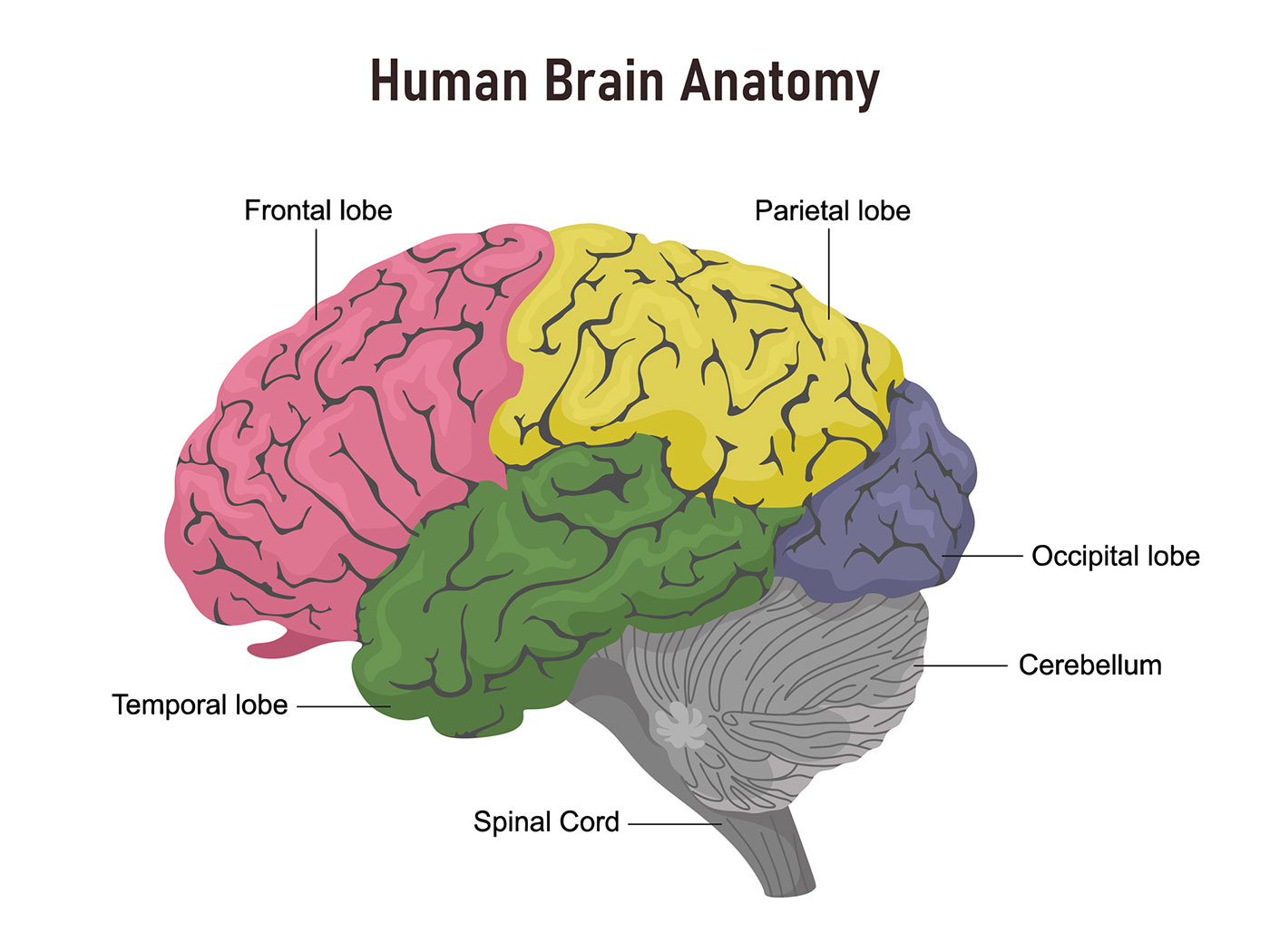
Frontal Lobe
Motor Cortex
Broca's Area
Parietal Lobe
Somatosensory Cortex
Temporal Lobe
Auditory Cortex
Wernicke's Area
Occipital Lobe
Visual Cortex
Limbic System
Amygdala
Hippocampus
Hypothalamus
Pituitary Gland
Pineal Gland
Brain Stem
Medulla
Pons
Reticular Formation
Cerebellum
Thalamus
Spinal Cord
Neurotransmitter Functions:
Acetylcholine
Heart Contraction
Blood Pressure
Dopamine
Reward and Pleasure
Motor Control
Serotonin
Mood Regulation
Sleep and Appetite
Glutamate
Excitatory Neurotransmitter
Learning and Memory
Norepinephrine
Fight or Flight Response
Attention and Alertness
Endorphins
Pain Relief
Euphoria
Definitions: Brain Structures and Neurotransmitters
Acetylcholine: A neurotransmitter that plays a key role in muscle movement and is involved in the processes of learning, memory, and mood regulation.
Action Potential: A rapid change in the electrical potential across a cell membrane, which is essential for the transmission of nerve signals.
Adrenal Glands: Endocrine glands located above the kidneys that produce hormones such as adrenaline and cortisol, which are involved in the body's response to stress and other functions.
All-or-Nothing Principle: The principle that states that once a nerve impulse reaches a certain level of intensity, it will fire and travel the length of the neuron without losing any intensity.
Amygdala: A part of the brain involved in the processing of emotions, especially fear and pleasure responses.
Aphasia: A condition that impairs a person's ability to process language, often resulting from damage to the brain, typically in the left hemisphere.
Association Areas: Regions of the cerebral cortex that integrate sensory and motor information, and are involved in complex mental functions such as learning, memory, and thinking.
Auditory Cortex: The part of the temporal lobe that processes auditory information.
Axon: A long, slender projection of a nerve cell that conducts electrical impulses away from the neuron's cell body.
Brain Stem: The part of the brain that controls basic functions such as breathing, heart rate, and blood pressure.
Broca's Area: A region of the brain located in the frontal lobe, associated with the production of speech.
Cerebellum: A structure located at the back of the brain that is responsible for coordinating voluntary movements, posture, and balance.
Cerebral Hemispheres: The two halves of the cerebrum, which are responsible for higher cognitive functions.
Cerebrum: The largest part of the brain, responsible for higher brain functions such as thought and action.
Corpus Callosum: A thick band of nerve fibers that connects the two cerebral hemispheres and facilitates communication between them.
Dendrites: Branch-like extensions of a neuron that receive signals from other neurons.
Dopamine: A neurotransmitter involved in many functions, including mood, reward, and motor control.
Endorphins: Neurotransmitters that act as natural painkillers and are involved in feelings of pleasure and well-being.
Frontal Lobe: The part of the brain associated with reasoning, planning, problem-solving, and motor control.
Genotype: The genetic makeup of an individual organism.
Glutamate: The most abundant excitatory neurotransmitter in the central nervous system, involved in learning and memory.
Hippocampus: A region of the brain involved in the formation of long-term memories and spatial navigation.
Hormone: A chemical messenger produced by the endocrine glands that regulates various bodily functions.
Hypothalamus: A region of the brain that controls the autonomic nervous system and regulates various bodily functions, including body temperature, hunger, and thirst.
Interneuron: A neuron that transmits impulses between other neurons, especially as part of a reflex arc.
Limbic System: A set of brain structures, including the hippocampus and amygdala, involved in emotion, motivation, and memory.
Medulla: The base of the brainstem that controls vital autonomic functions such as breathing and heart rate.
Motor Cortex: The part of the cerebral cortex that is involved in the planning, control, and execution of voluntary movements.
Motor Neuron: A type of neuron that conveys nerve impulses from the central nervous system to muscle fibers or glands.
Myelin Sheath: A layer of fatty tissue that insulates the axons of neurons and enables faster transmission of nerve impulses.
Neuron: A specialized cell transmitting nerve impulses; a nerve cell.
Neurotransmitters: Chemical messengers that transmit signals across the synapses between neurons.
Norepinephrine: A neurotransmitter and hormone that plays a role in the body's response to stress.
Occipital Lobe: The lobe of the brain that processes visual information.
Parasympathetic: The division of the autonomic nervous system responsible for calming the body and conserving energy.
Parietal Lobe: The lobe of the brain involved in processing sensory information and spatial awareness.
Phenotype: The observable physical or biochemical characteristics of an organism, determined by both genetic and environmental factors.
Phenylketonuria: A genetic disorder that results in the inability to metabolize phenylalanine, leading to intellectual disabilities if untreated.
Pineal Gland: A small endocrine gland in the brain that produces melatonin, which regulates sleep-wake cycles.
Pituitary Gland: An endocrine gland that controls other endocrine glands and regulates various bodily functions.
Pons: Middle part of the brainstem that coordinates facial movement, balance and hearing.
Plasticity: The brain's ability to reorganize itself by forming new neural connections throughout life, especially in response to injury or disease.
Reflex: An involuntary and nearly instantaneous movement in response to a stimulus.
Reticular Formation: A network of neurons in the brainstem involved in controlling arousal and attention.
Sensory Neuron: A nerve cell that transmits sensory information from the sensory organs to the central nervous system.
Serotonin: A neurotransmitter that regulates mood, appetite, and sleep.
Somatosensory Cortex: The part of the brain that processes sensory information from the body, such as touch and temperature.
Spinal Cord: A long, thin, tubular bundle of nervous tissue that extends from the medulla oblongata in the brainstem to the lumbar region of the vertebral column.
Sympathetic: The division of the autonomic nervous system responsible for the body's fight-or-flight response.
Temporal Lobe: The lobe of the brain involved in auditory processing and the formation of long-term memory.
Terminal Buttons: The small knobs at the end of axons that secrete neurotransmitters.
Thalamus: A structure in the brain that relays sensory and motor signals to the cerebral cortex.
Thyroid Gland: An endocrine gland in the neck that produces hormones regulating metabolism and growth.
Visual Cortex: The part of the cerebral cortex that processes visual information.
Wernicke's Area: A region of the brain associated with the comprehension of language and the production of meaningful speech.
Diagrams & Images
Abstract Words | Extra:
Acetylcholine,
Action Potential,
adrenal glands,
all or nothing principle,
amygdala,
aphasia,
association areas,
auditory cortex,
axon,
brain stem,
Broca's area,
cerebellum,
cerebral hemispheres,
cerebrum,
corpus callosum,
dendrites,
dopamine,
endorphins,
frontal lobe,
genotype,
glutamate,
hippocampus,
hormone,
hypothalamus,
interneuron,
limbic system,
medulla,
motor cortex,
motor neuron,
myelin sheath,
neuron,
neurotransmitters,
norepinephrine,
occipital lobe,
parasympathetic,
parietal lobe,
phenotype,
phenylketonuria,
pineal gland,
pituitary gland,
pons,
plasticity,
reflex,
reticular formation,
sensory neuron,
serotonin,
somatosensory cortex,
spinal cord,
sympathetic,
temporal lobe,
terminal buttons,
thalamus,
thyroid gland,
visual cortex,
Wernicke's area