9. Blood glucose concentration✅
Changes in conc of glucose
All cells need a constant supply of energy to work, so blood glucose must be carefully controlled
Conc is normally around 90mg per 100cm3 of blood
It’s monitored by cells in the pancreas
Blood glucose conc rises after eating food containing carbohydrate
Blood glucose conc falls after exercise, as more glucose is used in respiration to release energy
Insulin and glucagon
the hormonal system control blood glucose conc, uses two hormones: insulin and glucagon
Travel in the blood to their target cells (effectors), secreted by a cluster of cells in the pancreas called the Islets of Langerhans
Act on effectors to restore the blood glucose conc to normal
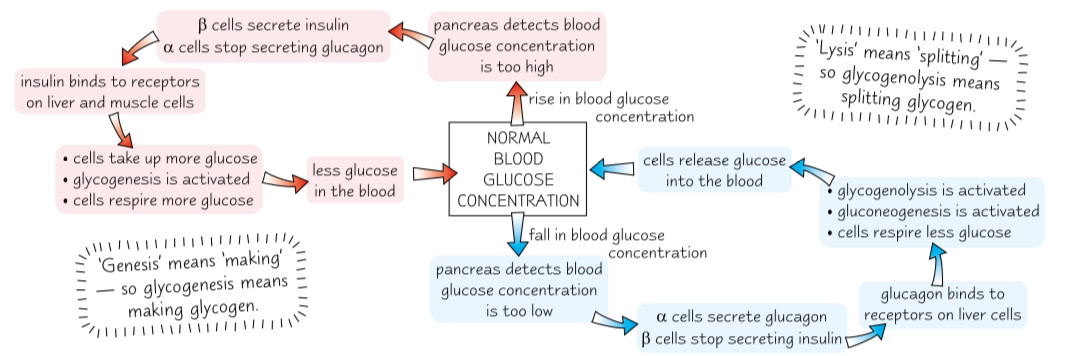
Beta cells secrete insulin into the blood
Alpha cells secrete glucagon into the blood
Insulin
— lowers blood glucose conc when its too high —
Insulin binds to specific receptors on the cell membranes of liver cells and muscle cells
It increases the permeability of muscle cell membranes to glucose, so the cells take up more glucose
This involves increasing the number of channel proteins in the cell membranes
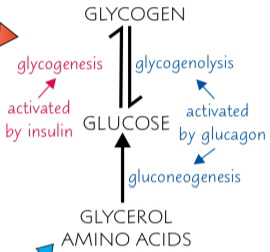
Insulin also activates enzymes in liver and muscle cells that convert glucose into glycogen
The cells are able to store glycogen in their cytoplasm, as an energy source
Forming glycogen from glucose is a process called glycogenesis
Insulin also increases the rate of respiration of glucose, especially in muscle cells
Glucagon
— raises blood glucose conc when its too low —
Glucagon binds to specific receptors on the cell membranes of liver cells
It activates enzymes in liver cells that break down glycogen into glucose
Breaking down glycogen into glucose is a process called glycogenolysis
Glucagon also activates enzymes that are involved in the formation of glucose from glycerol (a component of lipids) and amino acids
The process of forming glucose from non-carbohydrates is called gluconeogenesis
Glucagon decreases the rate of respiration of glucose in cells
Hormones
because they travel in the blood, responses are slower
But hormones are not broken down as quickly so their effects tend to last longer
Negative feedback - blood glucose conc
Insulin - facilitated diffusion
skeletal and cardiac muscle cells contain a channel protein called GLUT4, this is a glucose transporter
When insulin levels are low, GLUT4 is stored in vesicles in the cytoplasm of cells
When insulin binds to receptors on the cell surface membrane, it triggers the movement of GLUT4 to the membrane
Glucose can then be transported into the cell through the GLUT4 protein, by facilitated diffusion
Adrenaline
adrenaline is a hormone that’s secreted from your adrenal glands
Similar to glucagon, increases blood glucose conc and is secreted when there’s a low conc of glucose (When stress or exercising)
Adrenaline binds to receptors in the membrane of liver cells:
It activates glycogenolysis (breakdown of glycogen into glucose), it inhibits glycogenesis (the synthesis of glycogen from glucose)
It also activated glucagon secretion and inhibits insulin secretion, increasing glucose conc
This gets the body ready for action by making more glucose available for muscles to respire
Adrenaline and glucagon - second messenger
— both can activate glycogenolysis inside a cell even though they bind to receptors outside of the cell, this is how… —
the receptors have specific tertiary structures that make them complementary to their hormone
Adrenaline and glucagon bind to their receptors and activate an enzyme called adenylate cyclase
Once activated, this enzyme converts ATP into a chemical signal called a ‘second messenger’
The second messenger is called cyclic AMP (cAMP)
cAMP activates an enzyme called protein kinase A, this activates a chain of reactions that break down glycogen into glucose (glycogenolysis)
Diabetes
— a condition where blood glucose conc can’t be controlled properly —
Type 1
the immune system attacks the Beta cells in the islets of Langerhans so they can’t produce any insulin
Some people have a genetic predisposition to developing type 1 diabetes, the disease may also be triggered by a viral infection. But no ones knows the cause
After eating blood glucose level rises and stays high, this is called hyperglycaemia. Can result in death if left untreated
The kidneys can’t reabsorb all this glucose so some is excreted in the urine
Treated with insulin therapy, has to be carefully controlled because too much insulin can lead to a dangerous drop in blood glucose levels - hypoglycaemia
Eating regularly and controlling simple carbohydrate intake (sugars) helps to avoid a sudden rise in glucose
Type II
acquired later in life, linked with obesity and is more likely in people with a family history
Risk factors include: lack of exercise, age and poor diet
Occurs when the beta cells dont produce enough insulin or when the body’s cells dont respond properly to insulin
Cells don’t respond properly because the insulin receptors on their membranes don’t work properly, so the cells don’t take up enough glucose. So blood glucose conc is higher than normal
Can be treated by eating a healthy, balanced diet. Losing weight and regular exercise. Glucose-lowering medication can be taken if diet and exercise can’t control it, eventually insulin injections may be needed
Type II - growing health problem
increased in the UK, linked to increasing obesity, more unhealthy diets and low levels of physical activity
Can cause additional health problems: visual impairment, kidney failure
So health advisors are trying to educate people about the risks
Evaluating responses to type II diabetes
— to reduce the risk, health advisors recommend people…
eat a diet that low in fat, sugar and salt
Regular exercise
Lose weight if necessary
— campaigns aim to educate people on how to have a healthier diet and lifestyle
— also challenged the good industry to reduce the advertising of junk food, to improve the nutritional value of their products and to use clearer labelling
Food companies have attempted to make their products more healthy
using sugar alternatives
Reducing the sugar, fat and salt content
— however there is pressure on companies to increase profits, so nothing will really change until the public perception about healthy eating changes
RP…