Week 11 Pre-work Electric Potential Notes
Electric Potential
Based on Chapter 23 of Giancoli, this lecture discusses electric potential, potential difference, and their relationship to electric fields and point charges.
Topics
Electric potential energy and potential difference.
The relation between electric potential and electric field.
Electric potential due to point charges.
The electron volt.
23-1 Electrostatic Potential Energy and Potential Difference
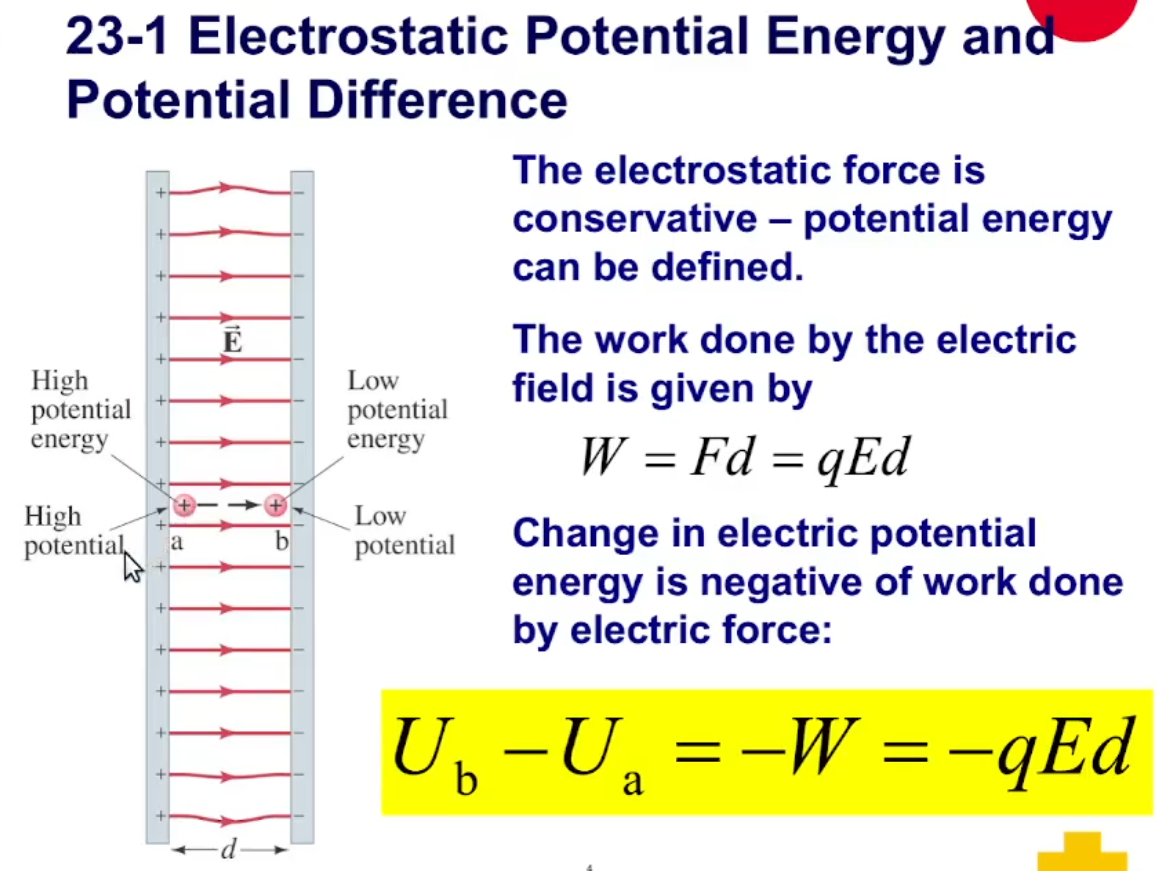
The electrostatic force is conservative, allowing potential energy to be defined.
The work done by the electric field:
Change in electric potential energy is the negative of work done by the electric force:
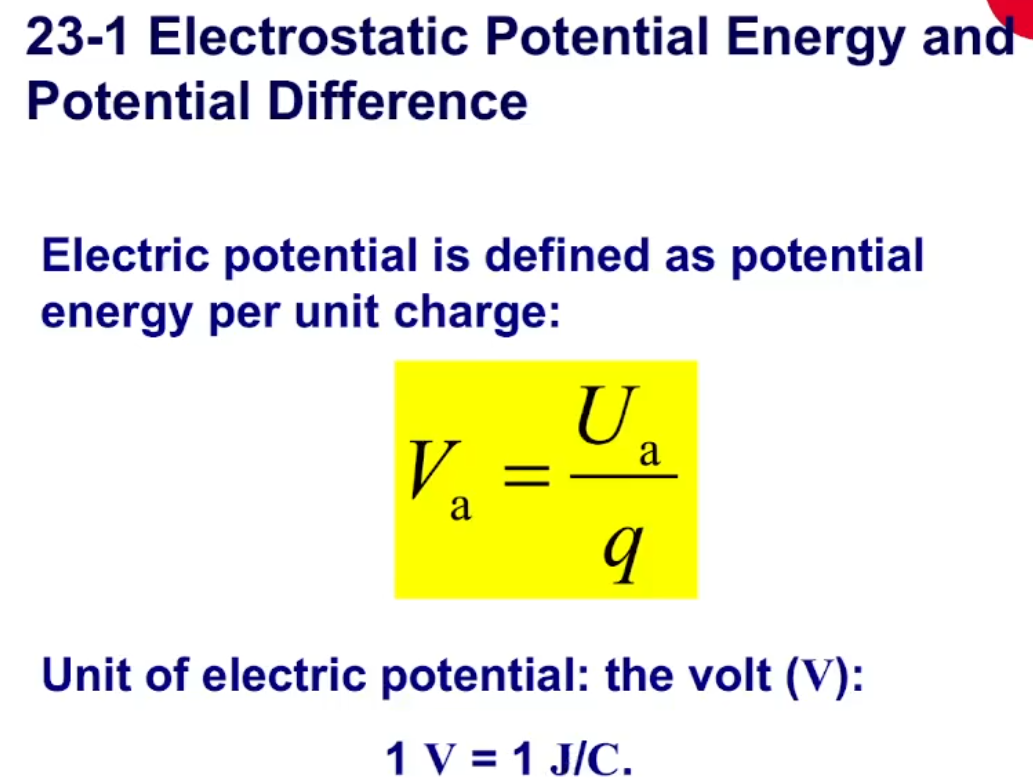
Electric potential is defined as potential energy per unit charge:
The unit of electric potential is the volt (V):
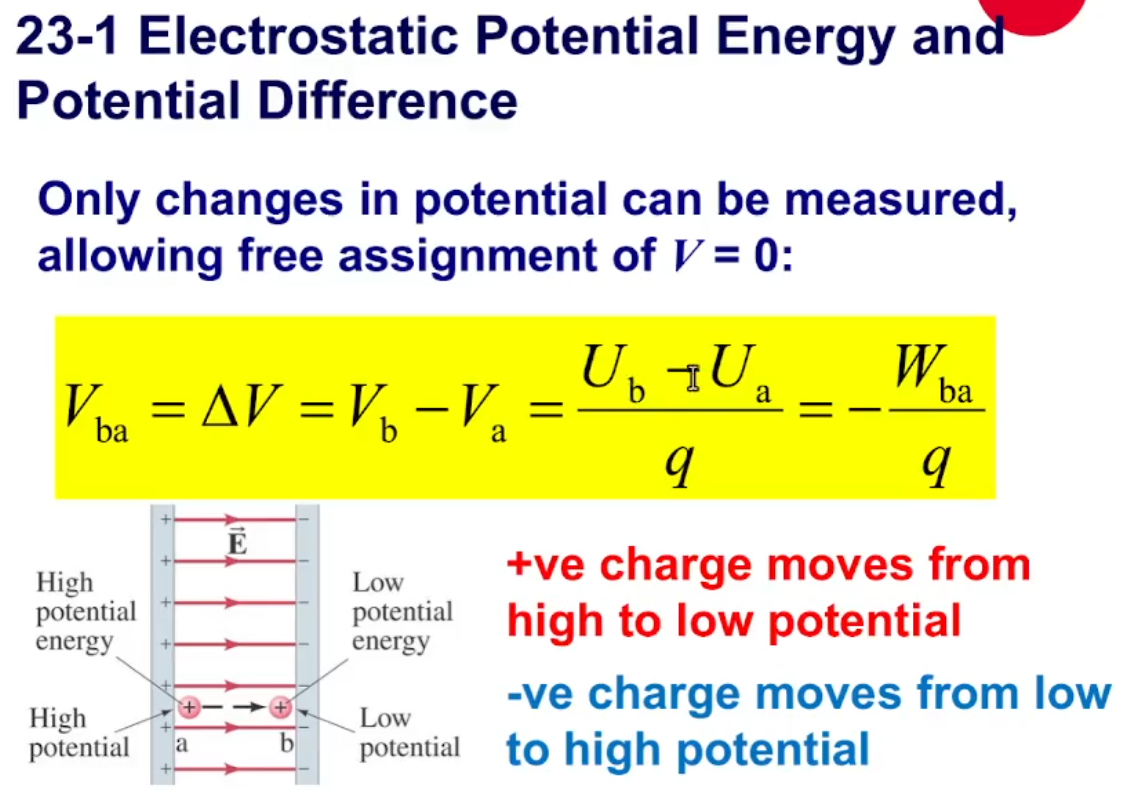
Only changes in potential can be measured, allowing free assignment of .
Positive charges move from high to low potential.
Negative charges move from low to high potential.
The potential difference between two points:
Conceptual Example 23-1: A Negative Charge
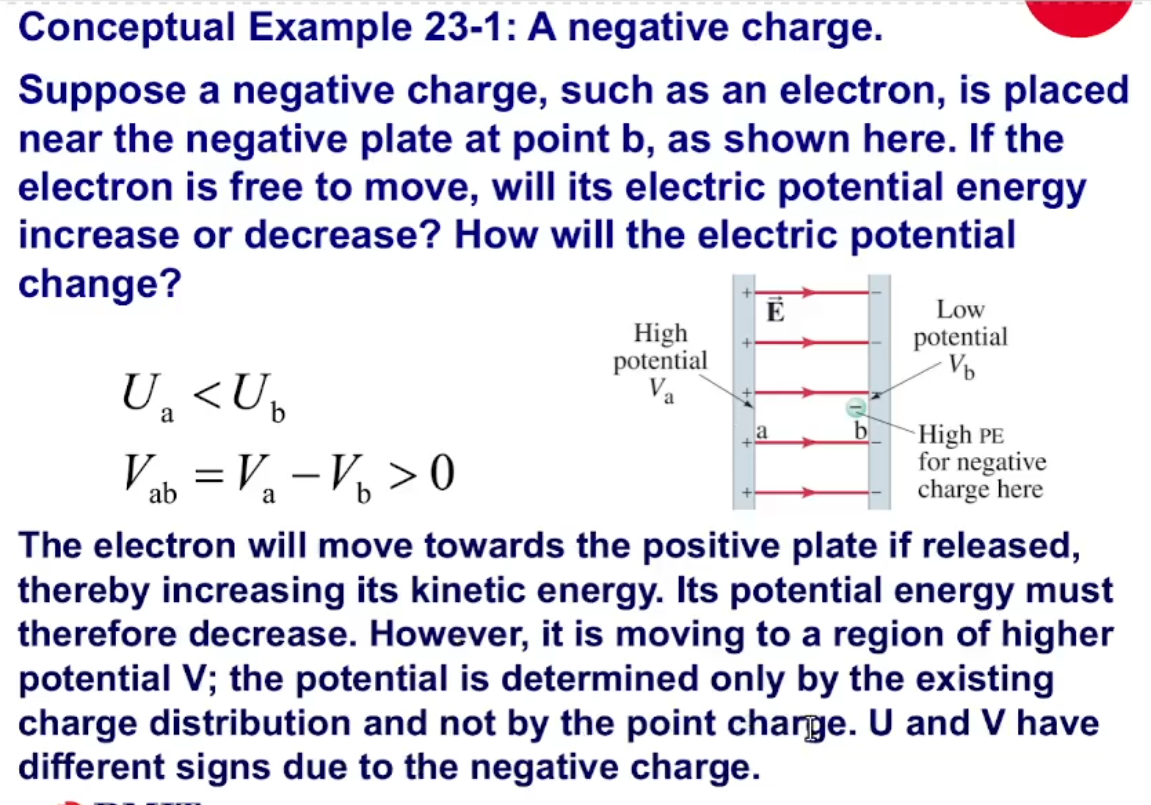
When a negative charge (e.g., an electron) is placed near a negative plate, it will move towards the positive plate if released, increasing its kinetic energy.
Its potential energy decreases as it moves towards the positive plate.
The electron moves to a region of higher potential , which is determined only by the existing charge distribution and not by the point charge itself.
and have different signs due to the negative charge: Vb > Va but Ub < Ua, thus Ua - Ub > 0
Analogy Between Gravitational and Electrical Potential Energy
Two rocks at the same height: the larger rock has more potential energy (a).
Two charges at the same electric potential: the 2Q charge has more potential energy (b).
Electrical Sources
Batteries and generators supply a constant potential difference.
Example 23-2: Electron in CRT
An electron in a cathode ray tube is accelerated from rest through a potential difference .
(a) What is the change in electric potential energy of the electron?
The electron accelerates towards the positive plate, decreasing its potential energy.
(b) What is the speed of the electron as a result of this acceleration?
Loss in potential energy = gain in kinetic energy.
Since (starts from rest):
23-2 Relation Between Electric Potential and Electric Field
The general relationship between a conservative force and potential energy:
For a uniform field:
Example 23-3: Electric Field Obtained from Voltage
Two parallel plates are charged to a potential difference of 50 V. If the separation between the plates is 0.050 m, calculate the magnitude of the electric field in the space between the plates.
23-3 Electric Potential Due to Point Charges
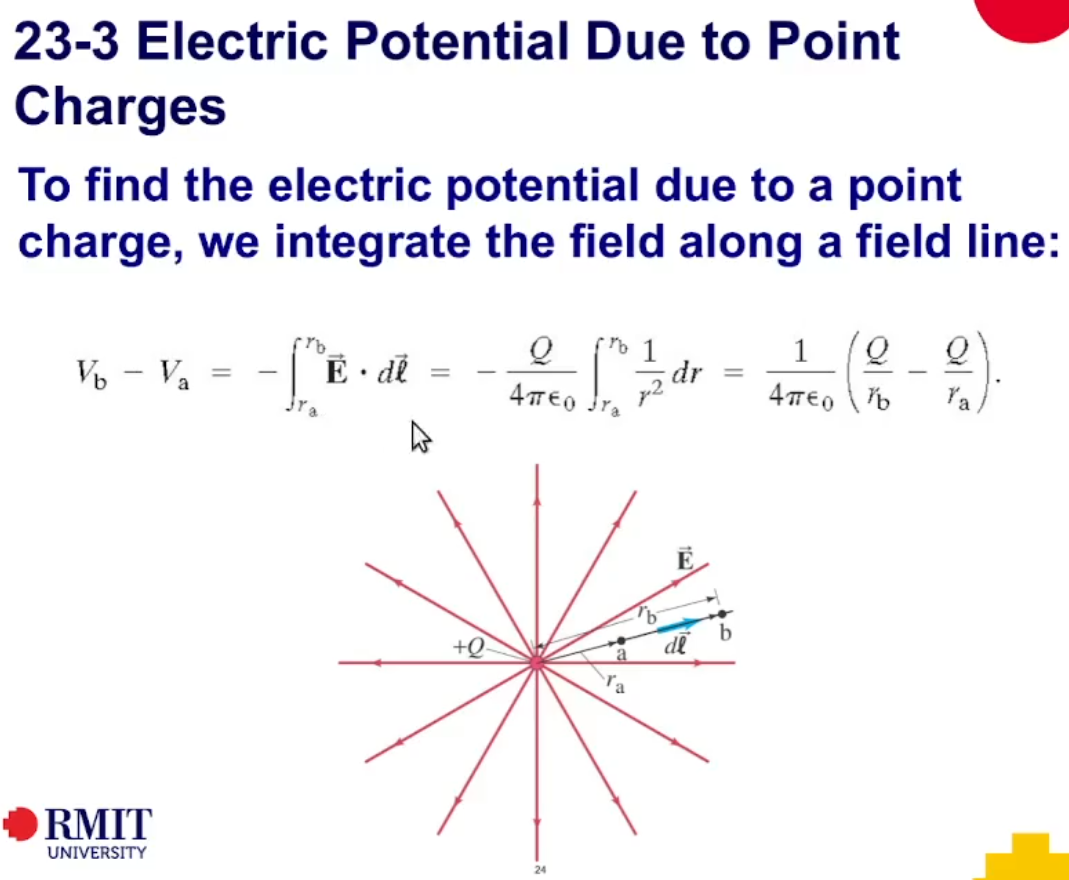
To find the electric potential due to a point charge, we integrate the field along a field line.
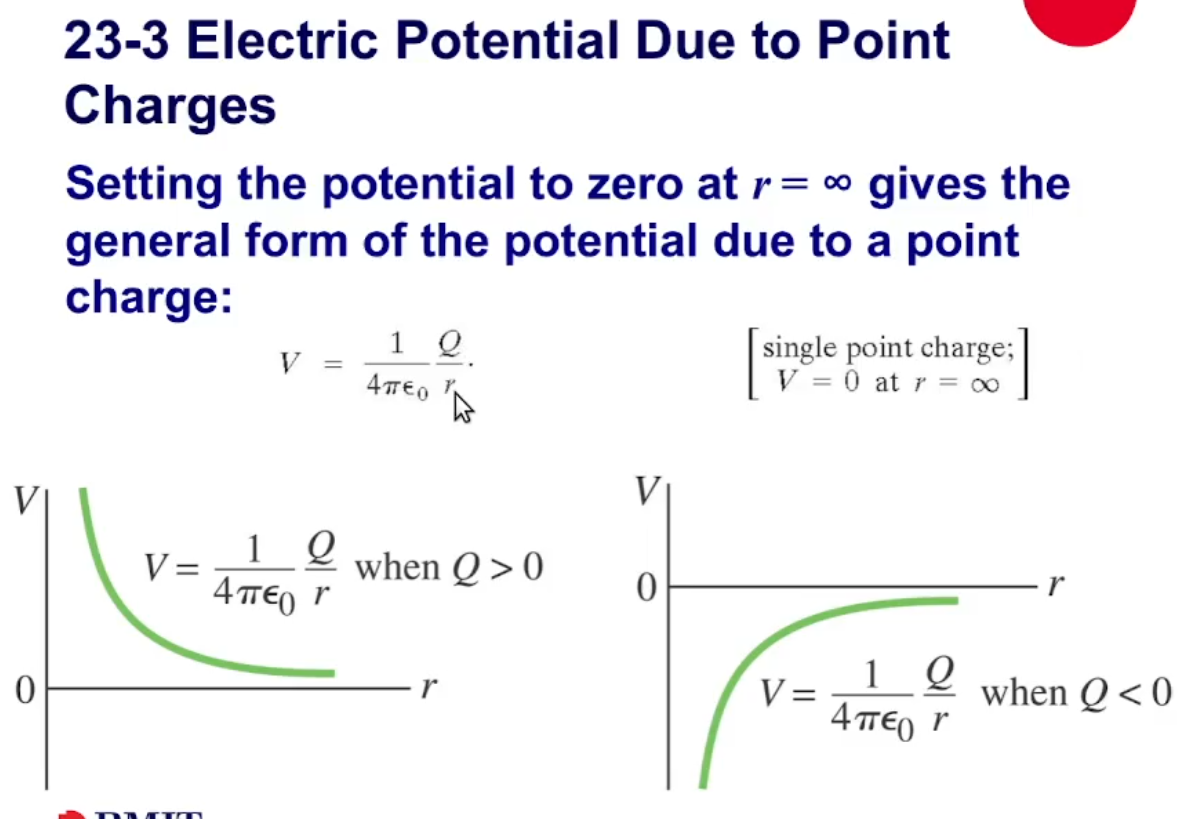
Setting the potential to zero at gives the general form of the potential due to a point charge:
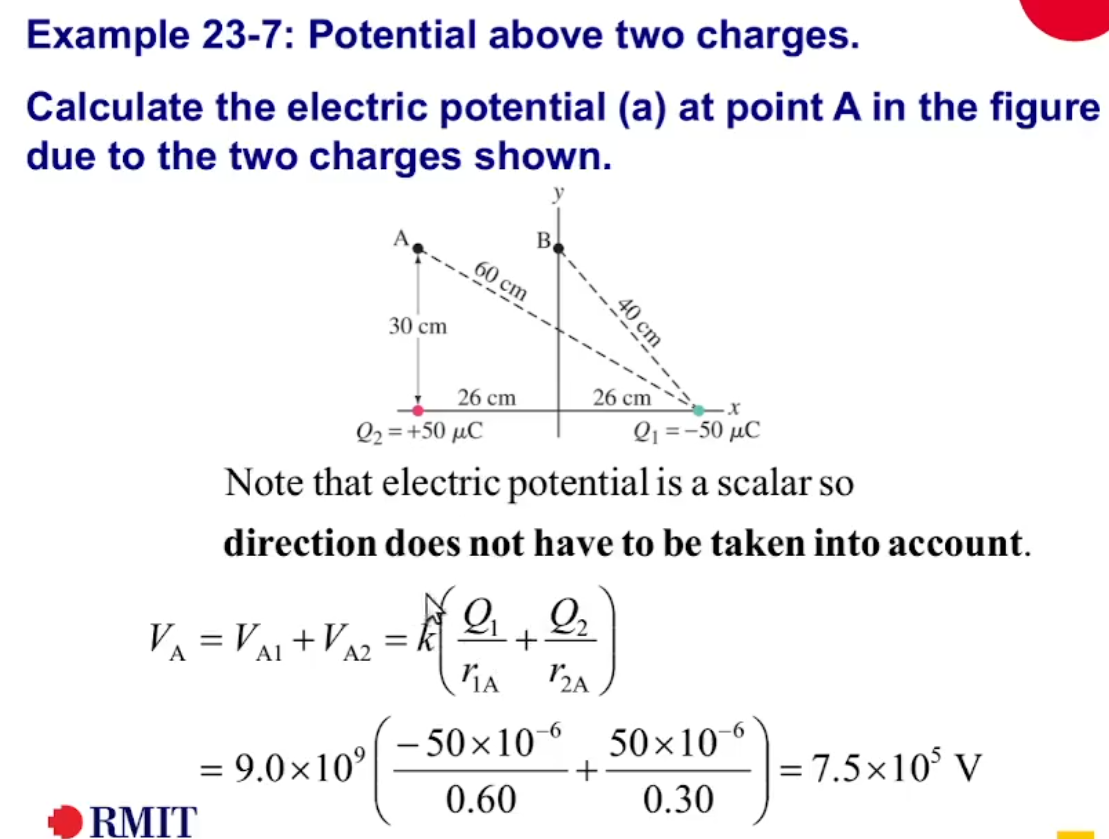
Example 23-7: Potential Above Two Charges
Calculate the electric potential (a) at point A and (b) at point B due to the two charges shown.
(a) At point A:
Note that electric potential is a scalar, so direction does not have to be taken into account.
(b) At point B:
Point B is equidistant to 2 equal magnitude charges (one + & one -) so that the potentials due the both charges will cancel → .
This would be true for all points along the perpendicular bisector.
23-8 Electrostatic Potential Energy; the Electron Volt
The potential energy of a charge in an electric potential is .
To find the electric potential energy of two charges, imagine bringing each in from infinitely far away. The first one takes no work, as there is no field. To bring in the second one, we must do work due to the field of the first one; this means the potential energy of the pair is:
One electron volt (eV) is the energy gained by an electron moving through a potential difference of one volt:
The electron volt is often a much more convenient unit than the joule for measuring the energy of individual particles.
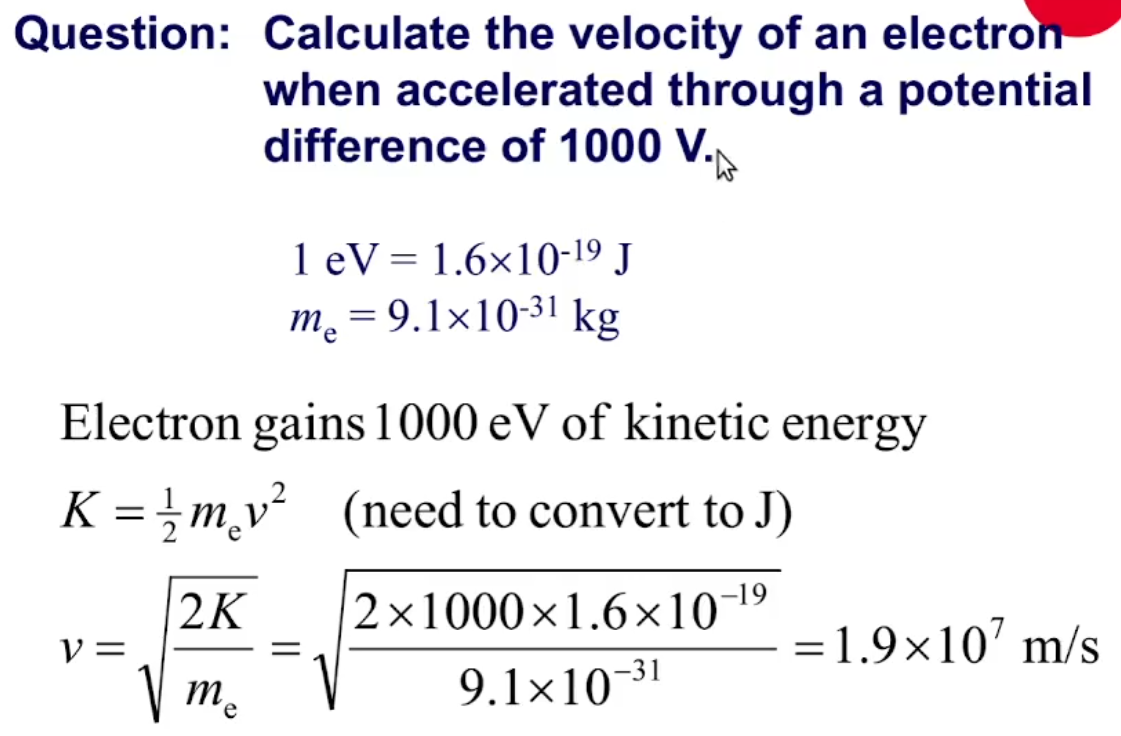
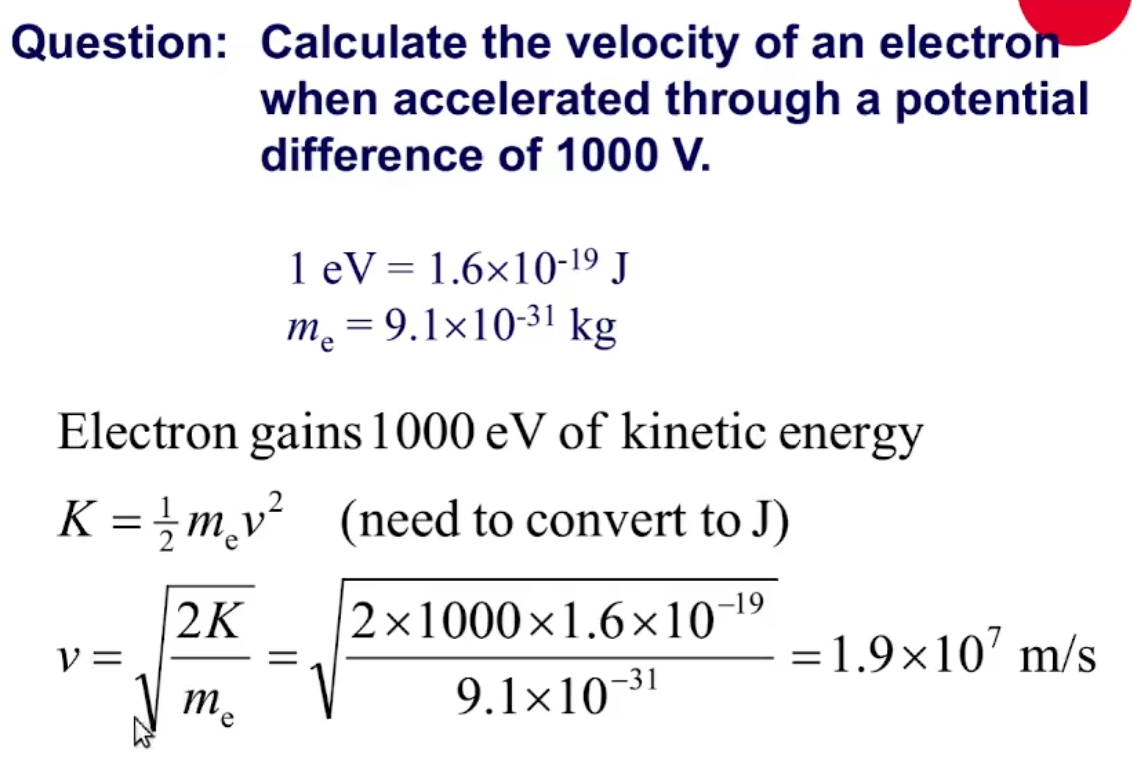
Question:
Calculate the velocity of an electron when accelerated through a potential difference of 1000 V.
Electron gains 1000 eV of kinetic energy
Summary
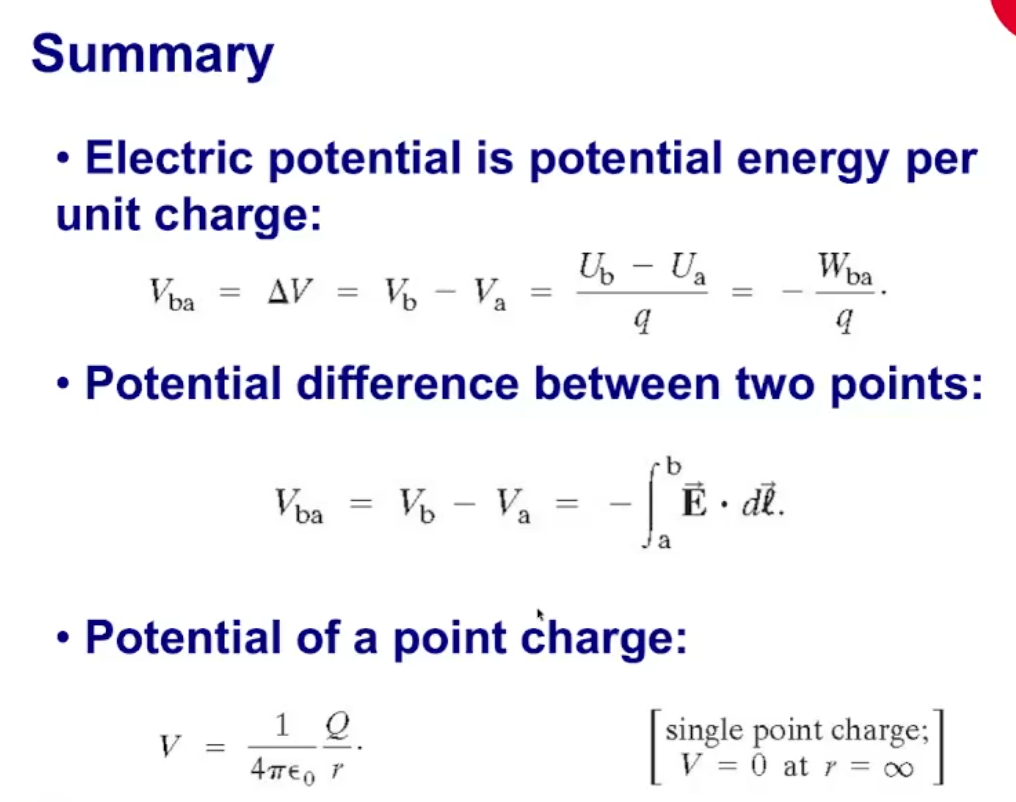
Electric potential is potential energy per unit charge: .
Potential difference between two points: .
Potential of a point charge: .