Lec 2- Cards
Learning Outcomes
Understanding of Age-Related Clinical Conditions:
Gain knowledge about the pathogenesis, presentations, and specific traits linked to clinical conditions arising from aging, particularly sarcopenia and osteoporosis.
Assessment Skills:
Perform subjective and objective evaluations for patients suffering from sarcopenia and osteoporosis.
Rehabilitation Prescription:
Design rehabilitation programs for patients diagnosed with or showing signs of sarcopenia and osteoporosis.
Sarcopenia
Definition and Characteristics
Sarcopenia is a musculoskeletal disorder primarily affecting older adults. It is characterized by:
Accelerated loss of muscle mass and function.
Low muscle mass, strength, power, and physical performance, which accounts for the deterioration in quality of life.
Risks Associated with Sarcopenia
Increased Health Risks:
Higher likelihood of adverse health outcomes, leading to loss of independence in daily activities, increased frailty, falls, and more frequent hospitalizations.
Rate of Declines:
Strength and power reduction can occur up to eight times faster than the loss of muscle mass, significantly impacting overall physical functionality and correlating with morbidity and mortality risks (Fyfe, 2022).
Impact of Sarcopenia
Fracture Risk:
Individuals with sarcopenia experience a 58% higher risk of fractures (Yeung et al. 2019).
Disability Rate:
Older adults with sarcopenia are 1.5 to 5 times more likely to experience disability compared to their non-sarcopenic peers (Janssen et al. 2004).
Mortality Rate:
Older adults with sarcopenia have a 41% higher mortality rate compared to those without (Koon Yee-Lee et al. 2021).
Sarcopenic Obesity
Defined as low skeletal muscle mass coinciding with high adiposity levels.
Older adults with this condition are likely to have higher cardiovascular risk factors and an increased mortality risk.
Assessment of Sarcopenia
Assessment tools involve a scoring system where a score of 4 or more points indicates probable risk of sarcopenia.
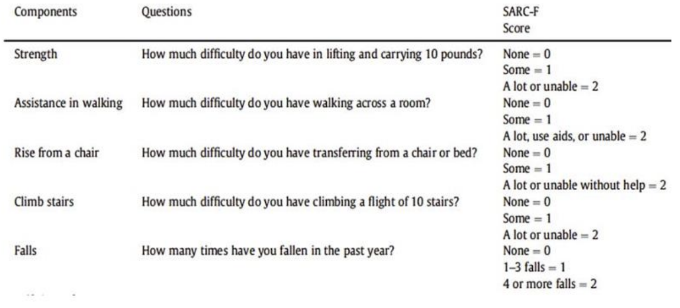
Key Metrics for Assessment
Strength/Muscle Mass:
Grip Strength: Critical in assessing muscle health.
5 x Sit-to-Stand Test (STSTS): Measures power; performance indicates strength issues.
30-Second Sit-to-Stand Test: Evaluates muscular endurance.
Calf Girth: Measurement to predict low muscle mass, with suggested cut-off values of <34 cm for men and <33 cm for women.
Functional Performance:
Gait Speed: Critical for functional ability evaluation; a cut-off of 0.8 m/s is critical for mortality and disability risk assessment. According to the Grim Reaper metaphor, walking at this speed or faster significantly reduces mortality risk.
6-Minute Walk Test (6MWT): Assessment of aerobic and physical capacity.
Timed Up and Go Test (TUG): Evaluates mobility and balance.
40m Walk test (40MWT): A quick assessment used to measure walking speed over a short distance, providing valuable information about an individual's functional mobility and fall risk.
Management Strategies
Preventative and Treatment Measures:
Integrating physical activity, especially resistance training, is vital for older adults suspected of having sarcopenia.
Nutrition: Emphasize adequate daily protein intake (1 to 1.5 grams per kilogram of body weight) and caloric intake.
Exercise Focus for Sarcopenia
Low Muscle Mass: Target high volume and high effort to engage muscle fibers.
Low Strength: High effort with lower volume focusing on near-max loads.
Low Power: Emphasize velocity and intent with low volume and high effort.
Low Physical Performance: Tailor exercise selection to address these deficiencies.
Exercise selection- Closed chain exercises
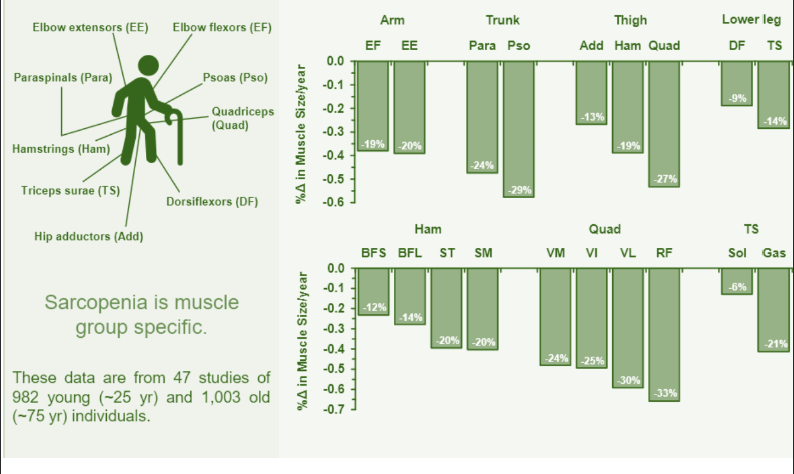
Strength loss with ageing is not uniform across muscle groups
Greatest in
Lower body muscles compared to upper body muscles
Stabilisers compared to prime moverers
ACSM strength training recommendations for older adults
multi and single joint exercies
free and machine weights
60-80% of 1rm, 8-12 reps, 2-3 sets 1-3min rest
Can incorporate power programs of 30-60% of 1rm 6-10reps 2-3 sets higher repetition
Nutrition and Recovery
Emphasizing recovery and caloric needs are essential elements of sarcopenia management.
Exercise can enhance both muscle mass and strength even in less trained individuals.
Osteoporosis
Definition
Osteoporosis is characterized by low bone mass and deterioration of bone tissue, leading to increased fragility and susceptibility to fractures.
Osteopenia: A precursor stage where bone mineral density is lower than normal but without significant symptoms or functional compromise.
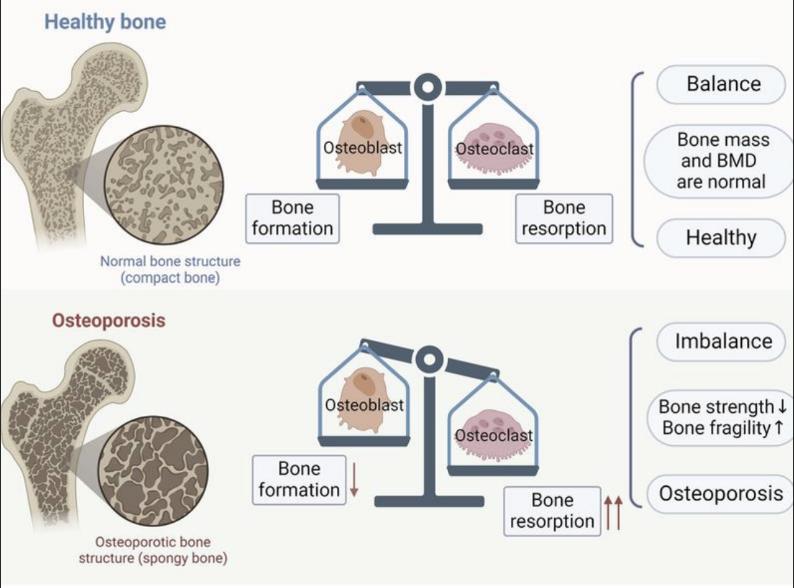
Presentation in Patients
no observable signs
Back pain from vertebral compression and fractures
stress fractures/falls
Hip/neck of femur fractures
Loss of height (Dowagers Hump)
Extreme Kyphosis
Assessment Techniques
Evaluating conditions in individuals with osteoporosis involves several measures:
Analyzing posture,
strength
including hand-held dynamometry
Grip Strength
balance
Through 30s single-leg stands
Berg Balance test
Rombergs Test
Function
Tug
6min walk test
30s STS
Exercise Implications and Strategies
Wolff’s Law: A bone grows or remodels in response to the forces or demands placed upon it
“After injury to bone, placing specific stress in specific directions to the bone can help it remodel and become normal healthy bone again.
Indicates that bone adapts and strengthens through dynamic stress rather than static pressure. This includes necessary conditions for exercise loads:
Dynamic stress that involves high bone strains.
Rapid loading techniques.
Adequate load intensity even with few repetitions.
Postmenopausal Regimens: High-load strength training with low repetitions is crucial for increasing bone mass, particularly beneficial in early postmenopausal women.
Research indicates the key to sustaining/augmenting bone mass lies in the magnitude of load applied, rather than frequency.
High-Intensity Resistance and Impact Training (HiRIT)
LIFTMOR RCT Insights
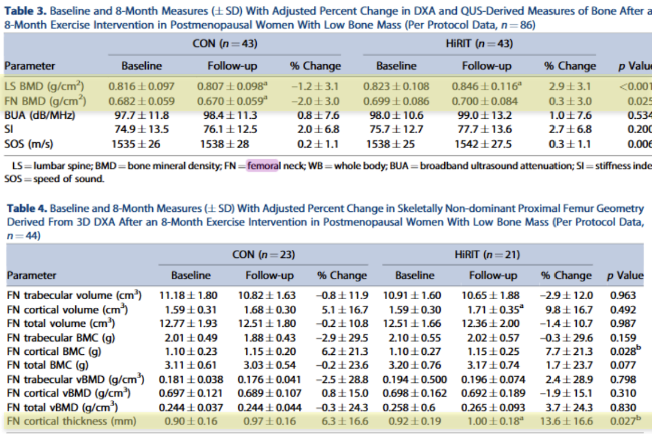
This was done in postmenopausal women >58 with low bone mass
over 8mths twice a week
The LIFTMOR RCT group conducted an extensive eight-month supervised program demonstrating effectiveness in increasing BMD (Bone Mineral Density) and functional capabilities in postmenopausal women with diagnosed osteoporosis through various exercises, including:
High-load, low-reps resistance training.
Supervised high-load exercises such as deadlifts and back squats.
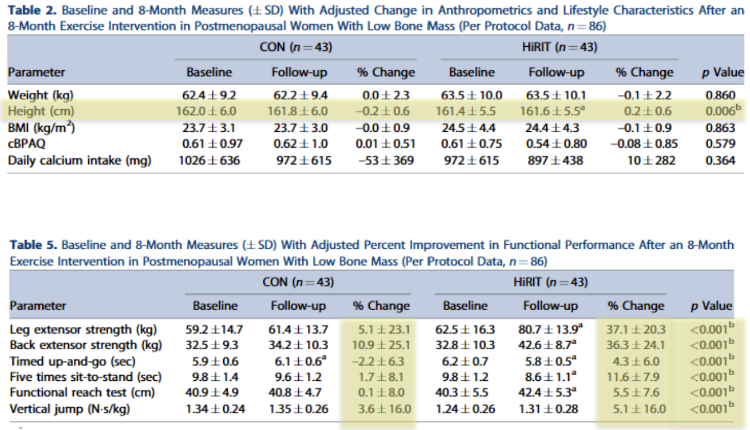
Outcomes and Importance
Enhancements in cortical mass, which are critical for the structural integrity of bones and essential in preventing hip fractures, reveal the importance of optimizing bone geometry to protect against fractures.
Fall Prevention Strategies
Statistics on Falls
Injury Statistics: Falls are the leading cause of hospitalization for those aged 65 and older, accounting for 73% of such cases.
14-64yrs 23%
Falls main cause (55%) of injury deaths >65yrs
58%in ages 65-74yrs
75% at ages 75-84yrs
86% 85 yrs and older
Factors Increasing Fall Risk
Risk factors include
dementia,
neurological disorders,
poor eyesight,
muscle weakness,
joint deformities,
unsafe environments.
Preventions
Working on mobility
Balance
Strength
living environment is safe
Fall Prevention Programs
Programs should focus on improving mobility, balance, and strength while also enhancing living conditions to reduce risks and instill confidence in older adults.
Effective Exercise Programs
Meta-analysis indicates that structured exercise can mitigate falls, with a notable 21% reduction in fall rates among elders.
Programs targeting balance with more than 3 hours of weekly exercise exhibited a 39% reduction in fall rates.
Case Studies
Case Study—Bill (Age 75): Presents with signs suggestive of sarcopenia based on measured calf circumference, gait speed, and strength metrics. Recommendations would focus on tailored resistance and aerobic training designed to improve his functional capabilities.
Case Study—Jill (Age 62): Exhibits a dowager's hump, indicators of osteoporosis. Proposed interventions would target balance and strength to improve her overall physical function.
References
A variety of studies and reviews enrich the information provided, including evidence from journals like the Journal of Bone Mineral Research, British Journal of Sports Medicine, and others pertaining to exercise physiology and sarcopenia management.