Secondary Economic Activities
Secondary Economic Activities
Secondary Activity: Manufacturing
Secondary economic activities involve manufacturing, where raw materials (inputs) are processed into finished products (outputs). This usually takes place in factories and includes activities like making cars, electronics, and clothing.
Types of Industry:
Light Industry: Uses light raw materials and produces smaller goods that are easy to transport, like electronics. Example: Intel and Apple.
Heavy Industry: Involves heavy machinery and raw materials to produce large, bulky products like steel and cement. Example: Irish Cement, Platin, Co. Meath.
Footloose Industries: Industries that are not tied to specific locations because they are not dependent on raw materials that need to be mined or harvested. They can be set up anywhere with access to good infrastructure. Examples: Computer manufacturing and pharmaceuticals.
Factors which impact the location of Manufacturing:
Raw Materials: Factories often locate near raw materials to reduce transport costs, especially for bulky inputs.
Labour Supply: Factories need workers, so they are typically located close to towns or cities with a good supply of labour.
Markets: Factories may locate close to their target market to reduce transport costs, especially if the finished products are bulky or perishable.
Transport Facilities: Access to roads, rail, rivers, and ports is important to transport raw materials in and finished products out as efficiently as possible. Intel built their factory in Ireland next to the M4 and near Dublin Airport.
EU Policy: Factories in Ireland benefit from EU policies that promote economic development and fair competition, making Ireland an attractive location for manufacturing.
Government Policy: Governments may offer incentives like grants and tax breaks to encourage factories to locate in certain areas.
Capital: Access to funding from banks, investors, or government grants can influence where a factory is set up.
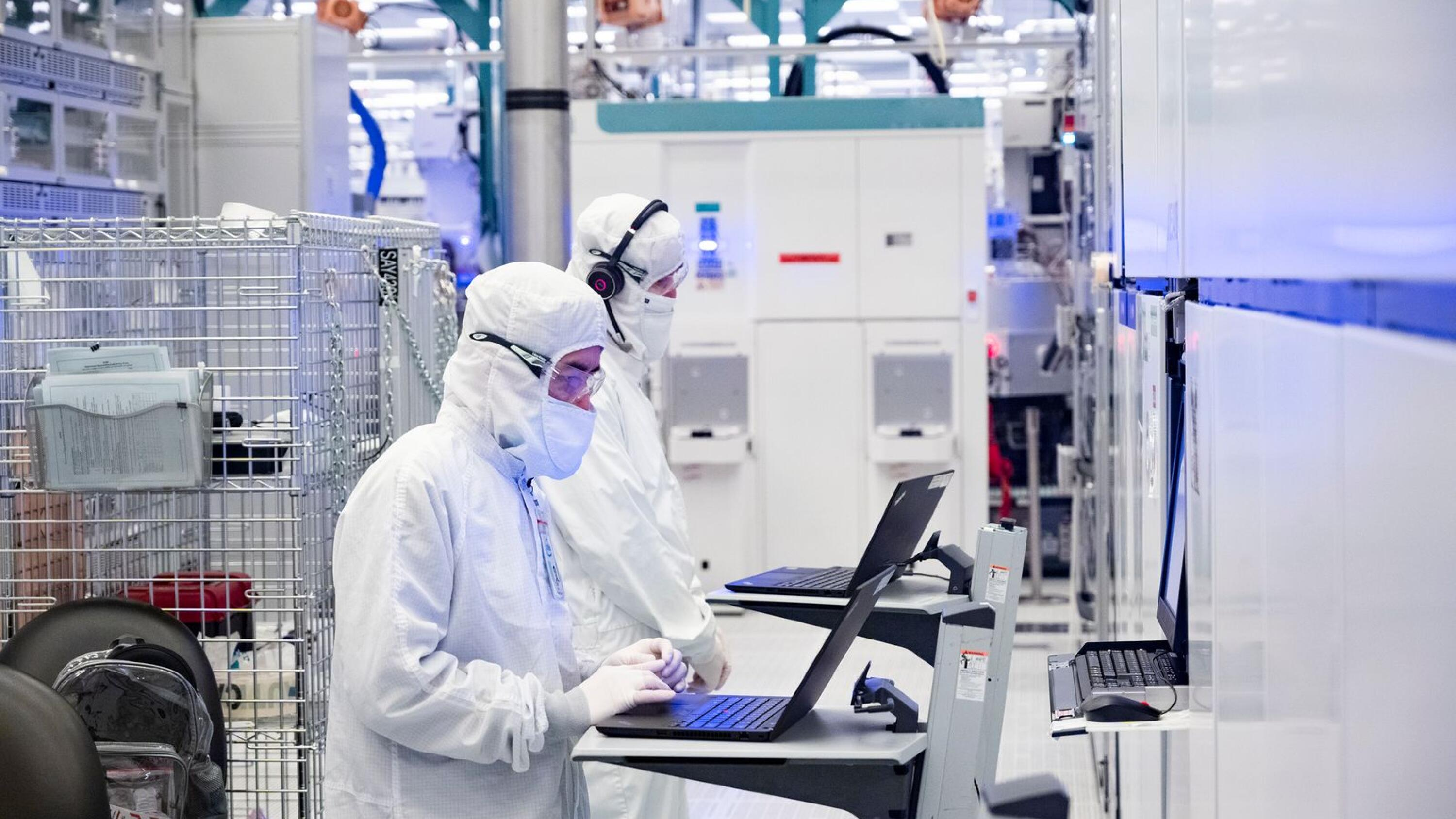
Intel Manufacturing Plant interior
Manufacturing as a System
Intel has a factory in Leixlip, Kildare. They have the following inputs, processes and outputs which they use in the manufacturing process:
Inputs:
Raw Materials: Silicon, metals, and chemicals needed to create microchips.
Labour: Skilled engineers, technicians, and factory workers who operate and maintain the machinery.
Energy: Large amounts of electricity to power the manufacturing processes.
Water: Used in the cleaning and cooling processes during chip production.
Machinery: Advanced technology and equipment to design and manufacture semiconductor chips.
Processes:
Design: Engineers design microchips with specific functions using complex software.
Wafer Fabrication: Silicon wafers are processed, with layers of circuits added through photolithography and etching.
Assembly and Testing: Finished chips are assembled into processors and rigorously tested for performance and quality.
Outputs:
Microchips and Processors: The final product, used in computers, smartphones, and other electronics.
Waste Materials: Includes by-products like excess chemicals and used water, which need to be treated before disposal.
Technology and Innovation: New chip designs and technologies that can be patented or further developed.
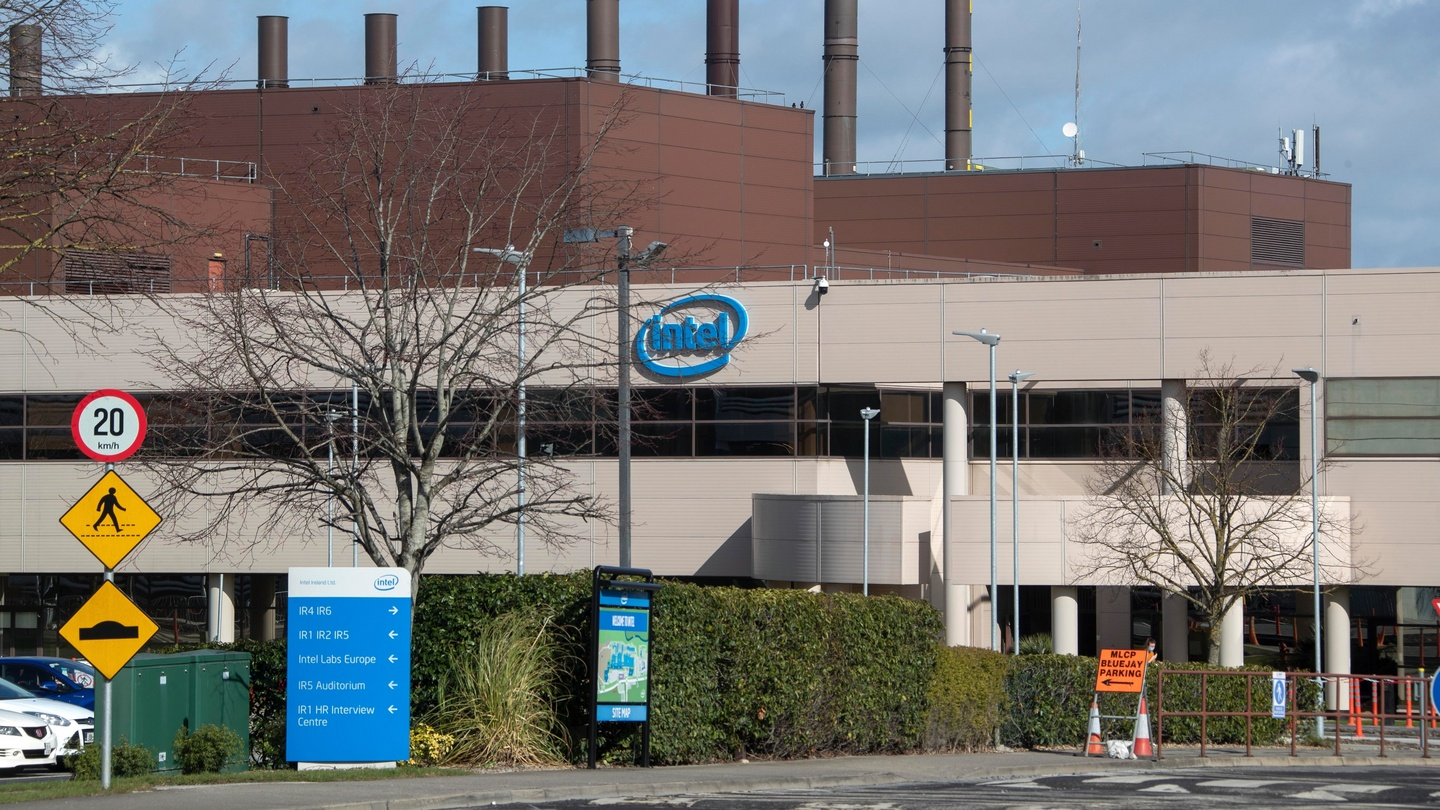
Intel Factory, Leixlip, Co. Kildare