MICRO-LESSON-4
Module 2
LESSON 1: CONTROL AND DESTRUCTION OF MICROORGANISMS
Reasons for controlling microbial growth:
1. To prevent/limit spoilage or destruction of valuable substances/commodities
2. To prevent infections
3. To prevent contamination of the cultures, the person and the environment
Microorganisms are controlled by means of physical agents and chemical agents. Physical agents include such methods of control as high or low temperature, desiccation, osmotic pressure, radiation, and filtration. Control by chemical agents refers to the use of disinfectants, antiseptics, antibiotics, and chemotherapeutic antimicrobial chemicals.
Microbial control can be achieved through:
1. Inhibition of microbial growth (prevent from growing, multiplying)
2. Destruction of the microorganism
Basic terms used in discussing the control of microorganisms include:
Sterilization
Sterilization is the process of destruction, removal elimination and inactivation of all forms of microbes from culture media and body surfaces etc. The methods of sterilization employed, depends on the purpose for which it is carried out, the material which has to be sterilized and the nature of microorganisms that are to be removed and destroyed.
Disinfection
Disinfection is the elimination of microorganisms from inanimate objects or surfaces.
Decontamination
Decontamination is the treatment of an object or inanimate surface to make it safe to handle.
Sterilization and disinfection are forms of decontamination.
Disinfectant
A disinfectant is an agent used to disinfect inanimate objects but generally too toxic to use on human tissues.
Antiseptic
An antiseptic is an agent that kills or inhibits growth of microbes but is safe to use on human tissue.
Sanitizer
A sanitizer is an agent that reduces, but may not eliminate, microbial numbers to a safe level.
Cidal
An agent that is cidal in action will kill microorganisms and viruses.
Static
An agent that is static in action will inhibit the growth of microorganisms.
PHYSICAL AGENTS
- TEMPERATURE
Microorganisms have a minimum, an optimum, and a maximum temperature for growth. Temperatures below the minimum usually have a static action on microorganisms. They inhibit microbial growth by slowing down metabolism but do not necessarily kill the organism. Temperatures above the maximum usually have a cidal action, since they denature microbial enzymes and other proteins. Temperature is a very common and effective way of controlling microorganisms.
A. High Temperature
Vegetative microorganisms can generally be killed at temperatures from 50°C to 70°C with moist heat. Bacterial endospores, however, are very resistant to heat and extended exposure to much higher temperature is necessary for their destruction.
1. Autoclaving
Autoclaving employs steam under pressure. During autoclaving, the materials to be sterilized are placed under 15 pounds per square inch of pressure in a pressure- cooker type of apparatus at temperature of 121° C.

2. Boiling water
Boiling water (100°C) will generally kill vegetative cells after about 10 minutes of exposure. However, certain viruses, such as the hepatitis viruses, may survive exposure to boiling water for up to 30 minutes, and endospores of certain Clostridium and Bacillus species may survive even hours of boiling.
3. Hot air sterilization
Microbiological ovens employ very high dry temperatures: 171°C for 1 hour; 160°C for 2 hours or longer; or 121°C for 16 hours or longer depending on the volume. They are generally used only for sterilizing glassware and metal instruments.
4. Incineration
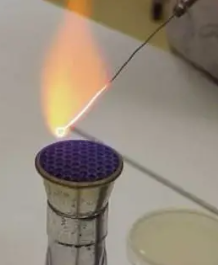
Incinerators are used to destroy disposable or expendable materials by burning. We also sterilize our inoculating loops by incineration.
B. Low Temperature
Low temperature inhibits microbial growth by slowing down microbial metabolism. Examples include refrigeration and freezing.
Refrigeration at 5°C slows the growth of microorganisms and keeps food fresh for a few days.
Freezing at -10°C stops microbial growth, but generally does not kill microorganisms, and keeps food fresh for several months.
- DESSICATION
Desiccation, or drying, (sun, air, oven) generally has a static effect on microorganisms. Lack of water inhibits the action of microbial enzymes. Dehydrated and freeze-dried foods, for example, do not require refrigeration because the absence of water inhibits microbial growth.
- RADIATION
1. Ultraviolet Radiation
UV lights are frequently used to reduce the microbial populations in hospital operating rooms and sinks, aseptic filling rooms of pharmaceutical companies, in microbiological hoods, and in the processing, equipment used by the food and dairy industries.
An important consideration when using UV light is that it has very poor penetrating power. Only microorganisms on the surface of a material that are exposed directly to the radiation are susceptible to destruction. UV light can also damage the eyes, cause burns, and cause mutation in cells of the skin.
2. Ionizing Radiation
Ionizing radiation, such as X-rays and gamma rays, has much more energy and penetrating power than ultraviolet radiation. It is often used to sterilize pharmaceuticals and disposable medical supplies such as syringes, surgical gloves, catheters, sutures, and petri plates. It can also be used to retard spoilage in seafoods, meats, poultry, and fruits.
- FILTRATION
Microbiological membrane filters provide a useful way of sterilizing materials such as vaccines, antibiotic solutions, animal sera, enzyme solutions, vitamin solutions, and other solutions that may be damaged or denatured by high temperatures or chemical agents.
CHEMICAL AGENTS
DISINFECTANTS, ANTISEPTICS, AND SANITIZERS
Disinfection is the elimination of microorganisms from inanimate objects oar surfaces, whereas decontamination is the treatment of an object or inanimate surface to make it safe to handle.
Because disinfectants and antiseptics often work slowly on some viruses - such as the hepatitis viruses, bacteria with an acid-fast cell wall such as Mycobacterium tuberculosis, and especially bacterial endospores, produced by the genus Bacillus and the genus Clostridium, they are usually unreliable for the destruction of all life forms.
There are several factors which influence the antimicrobial action of disinfectants and antiseptics, including:
1. The concentration of the chemical agent.
2. The temperature at which the agent is being used. Generally, the lower the temperature, the longer it takes to disinfect or decontaminate.
3. The kinds of microorganism present. Endospore producers such as Bacillus species, Clostridium species, and acid-fast bacteria like Mycobacterium tuberculosis are harder to eliminate.
4. The number of microorganism present. The more microorganisms present, the harder it is to disinfect or decontaminate.
5. The nature of the material bearing the microorganisms. Organic material such as dirt and excreta interfere with some agents.
Many such chemical agents are in common use. Some of the more common groups are listed below:
1. Phenol and phenol derivatives
Phenol (5-10%) was the first disinfectant commonly used. However, because of its toxicity and odor, phenol derivatives are now generally used. These include orthophenylphenol, hexachlorophene, triclosan, hexylresorcinol, and chlorhexidine.
Orthophenylphenol is the agent in Lysol®, O-syl®, Staphene®, and Amphyl®.
Hexachlorophene in a 3% solution is combined with detergent and is found in PhisoHex®.
Triclosan is a chlorine-containing phenolic antiseptic very common in antimicrobial soaps and other products.
Hexylresorcinol is in throat lozenges and ST-37.
A 4% solution of chlorhexidine in isopropyl alcohol and combined with detergent (Hibiclens® and Hibitane®) is a common handwashing agent and surgical hand scrub. These agents kill most bacteria, most fungi, and some viruses, but are usually ineffective against endospores. They alter membrane permeability and denature proteins.
2. Soaps and detergents
Surface-active agents, or surfactants, are a group of chemical compounds that lower the surface tension of water.
Soaps are only mildly microbicidal. Their use aids in the mechanical removal of microorganisms by breaking up the oily film on the skin (emulsification) and reducing the surface tension of water so it spreads and penetrates more readily. Some cosmetic soaps contain added antiseptics to increase antimicrobial activity.
However, bacterial endospore and certain bacteria such as Mycobacterium tuberculosis and Pseudomonas species are usually resistant.
4. Chlorine
Chlorine is used in the chlorination of drinking water, swimming pools, and sewage.
Sodium hypochlorite is the active agent in household bleach.
Calcium hypochlorite, sodium hypochlorite, and chloramines (chlorine plus ammonia) are used to sanitize glassware, eating utensils, dairy and food processing equipment, hemodialysis systems, and treating water supplies.
5. Iodine and iodophors
Iodine also denatures microbial proteins. Iodine tincture contains a 2% solution of iodine and sodium iodide in 70% alcohol. Aqueous iodine solutions containing 2% iodine and 2.4% sodium iodide are commonly used as a topical antiseptic.
Iodophors are a combination of iodine and an inert polymer such as polyvinylpyrrolidone that reduces surface tension and slowly releases the iodine. Iodophors are less irritating than iodine and do not stain. They are generally effective against vegetative bacteria, Mycobacterium tuberculosis, fungi, some viruses, and some endospores.
Examples include Wescodyne®, Ioprep®, Ioclide®, Betadine®, and Isodine®.
6. Aldehydes
Aldehydes such as formaldehyde and glutaraldehyde, denature microbial proteins.
Formalin (37% aqueous solution of formaldehyde gas) is extremely active and kills most forms of microbial life. It is used in embalming, preserving biological specimens, and in preparing vaccines. Alkaline glutaraldehyde (Cidex®), acid glutaraldehyde (Sonacide®), and glutaraldehyde phenate solutions (Sporocidin®) kill vegetative bacteria in 10-30 minutes and endospores in about 4 hours.
EFFECTIVENESS OF HAND WASHING
It is routine practice to wash the hands prior to and after examining a patient and to do a complete regimented surgical scrub prior to going into the operating room. This is done in order to remove the potentially harmful transient flora, reduce the number of resident flora, and disinfect the skin.
Actual sterilization of the hands is not possible since microorganisms live not only on the surface of the skin but also in deeper skin layers, in ducts of sweat glands, and around hair follicles. This normal flora are mainly nonpathogenic staphylococci and diphtheroid bacilli.