(Module 42) Chllenges of Contempory Agriculture.
Sustainable Agriculture:
A commitment to satisfying human food and textile need and to enhancing the quality of life for farmers and society as whole, now and in the future.
It requires a balance among feeding the groiwng population, minimizing environmental impacts, and ensuring social justice.
Sustainability of Contemporary Agricultural Innovations:
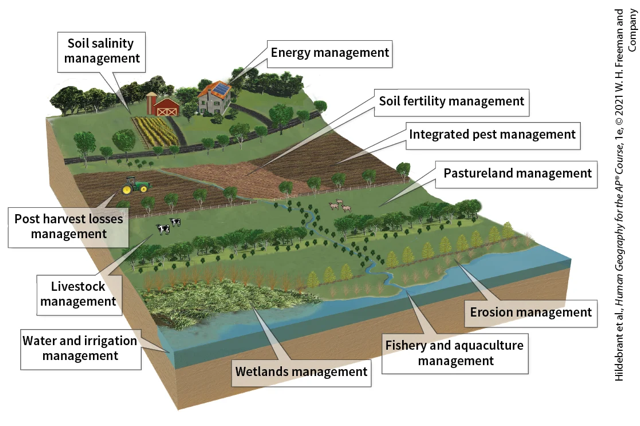
This figures shows how sustainable agriculture can be arranged on a farm property that slopes towards a wetland area.
The farm produces crops, dairy products, and awuaculture, using all aspects of the land in a sustainable matter.
Genetically Modified Organism (GMO):
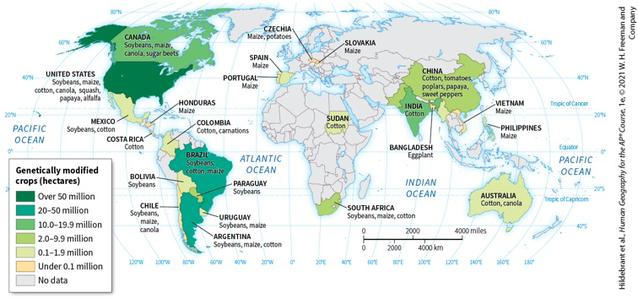
A living organism including crops and livestock, that is produced through genetic engineering.
Most scientists agree GM is safe for people and the environment.
Critics dispute the increase in productivity that scientists associate with GMOs, and that they are not in the best interest of the environment or people.
They claim that chemicals are harming the soil by destroying its living organisms.
Water Agriculture:
Aquaculture: The cultivation and harvesting of aquatic organisms under controlled and conditions.
Mariculture: the farming of saltwater species such as shrimp, oysters, and marine fish.
Urban Farming and Community-Supported Agriculture:
Urban Farming: The practice of growing fruits and vegetables on small private plots or shared community gardens within the confines of a city.
Community-Supported Agriculture (CSA): A direct-to-consumer marketing arrangement in which farmers are guaranteed buyers for their produce at guaranteed prices and consumers receive fresh food directly from the produces.
Farmer’s Market: A venue (ranging from a few stalls in the street to covered enclosures extending a few city blocks) in which farmers sell their produce directly to consumers.
Organic Farming: The production of crops and livestock using ecological processes, natural biodiversity, and renewable resources rather than industrial practices and synthetic plus.
Conventional Agriculture: Farming that depends on manufactured synthetic inputs, GMO seeds, and other industrial practices.
Food Choice Movement:
Value-Added Speciality Crop: A crop whose physical start or form has been changed.
Fair-Trade: A certification program that supports good crop prices for farmers and environmentally sound farming prices.
Slow-Food: Movement that resists fast food by preserving the cultural cuisine and the associated food and farming practices of an ecoregion.
Locavores: People who dedicate themselves to slow-food diets and to obtaining as much of their nutrition as possible from local farmers.
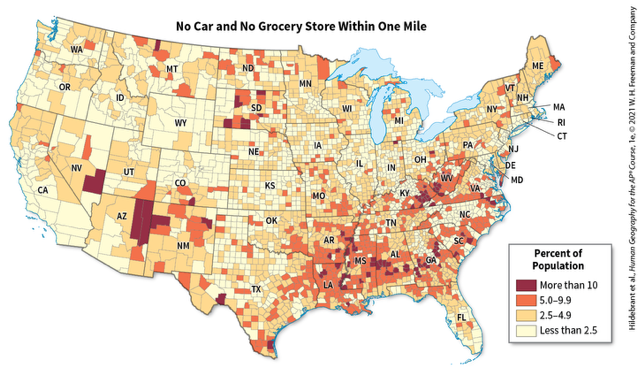
Food Desert: Area with limited access to fresh, nutritious foods.
Contemporary Challenges:
Food Security: According to the United Nations, the situation in which all people, at all time, have physical and economic access to enough safe and nutritious food that meets their dietary needs and food preferences for an active and healthy life.
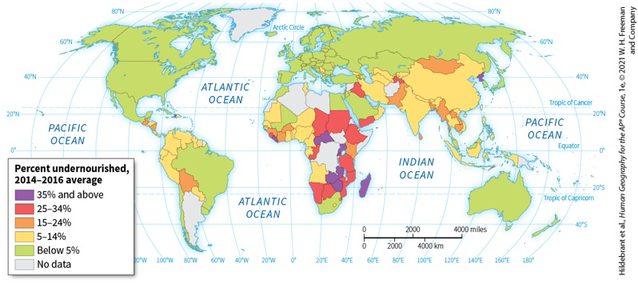
Food Insecurity: Occurs when large numbers of number of people experience long periods of inadequate diets.
Notice how the percentages of undernourished populations align with wealth and poverty.
Food Safety:
The globalized food system is quite vulnerable to food contaminations that can cause illness and even death.
Each link in the from “farm to fork” is another opportunity for contamination with viruses and bacteria.
Climate Change:
Most scientists believe that the climate conditions that have prevailed for millennia and to which our global food system is adapted are beginning to shirt.
Global climate change may increase extreme weather, leading to droughts and floods that can reduce crop yields.
Suburbanization:
As world population increases and cities expand outward, good farmland is lost to housing and retail developments.
As the expansion of cities and development of suburbs replace farmland, other areas of fertile land are also affected.
Economies of Scale:
Large agribusinesses manage the worldwide complexities of food production and distribution.
Major companies employ scientists who understand governments regulations at local, regional, and national levels as well as pricing factors leading to economies of scale.
Following government policies on an international or regional levels is not feasible for most small scale farmers.