rhythm and editing
rhythm
how the duration of shot (a) relates to the duration of shot (b)
rhythm, therefore, describes a temporal property — but where the temporal dimension of editing refers to the represented reality of an edit, the rhythmic duration refers to its material duration. both have a temporal characteristic. but they are dffrerent characteristics
possibly the most complex and elusive dimension, as it arises from a whole range of factors aside from editing rhythm, such as the rhythm of movememnt within shots, and the rhythms of sound and music accompanying the shots
karen pearlman — ‘Cutting Rhythms’
puts rhythm at the center of editing
film editing as choreography: the rhythmic coordination of bodies, objects, camera movements and cuts
uses an analogy that film editing is dance
how we feel movement inside oursevles when we edit
cutting rhythms
how does an editor make decisions about when and where to cut to shape a film’s rhythm?
karen pearlman — rhythmic intuition — something we develop over time, through experience that is leared
implicit learning
much of our implicit learning is acquired through watching films, and also through our observation and participation in the world
expertise
skill, doesn’t require conscious thought
judgement
sensitivity
heightened attentiveness to movement and emotion in the material
creativity
rumination
coming to solutions whilst thinking about something else
intuition & movement
“the editor’s intuitive thinking is based in movement: movement of story, movement of emotion, movement of image and sound” — Pearlman, 2016: 14
“thinking rhythmically is what i call the intersection of the rhythms of the world and the rhythms of the editor’s body with the editor’s craft skills” (pearlman, 22)
editors shape movement
editors use kinaesthetic empathy and mirror neurons to understand movement’s expressive potential
editors respond with their own internal sense of movement to the movement that they perceive — embodied experience
rhythm & movement
rhythm is made up of movement
the universe itself contains rhythms, and we depend on these rhythms which are all ways in which we follow the rhythms of the world
when we perceive these rhythms, we are seeing, hearing and feeling movement
do we just purely notice these rhythms?
when an editor cuts intuitively, the body and brain are responding to movement
an editor can obtain a feeling for movement or kinaesthetic empathy, just as when we watch dance or sports, we may empathize with the movement we see
kinaesthetic empathy is feeling with movement
neuroscientific evidence suggests that we can obtain such a feeling for movement through mirror neurons — through brain activity, we mimic the movements that we see through mirroring as well as bodily memory
when we edit, we stand in for the spectator/viewer’s breathing, blinking etc. we measure the rhythms of the film’s breath, comparing it when the feeling of one’s own breathing
editing as a choeography
rhythm is bade up of patterns of movement
for an editor, movement activates their kinaestheic empathy and how they intuitively shape the film’s rhythm
pearlman cpmpares the creative process of editing to choreography, which is also a craft that shapes movement and rhythm
choreographers work with the dynamics of time, energy, space and flow just as editors work with these elements
dynamics
the function of rhythm in film is to create cycles of tension and release to engage the viewer emotionally, physiologically and cognitively
choreography and dancer rudolf laban’s effort theory, used primarily in dance, is a valuable way to consider how these cycles of tension and release can be created in film editing
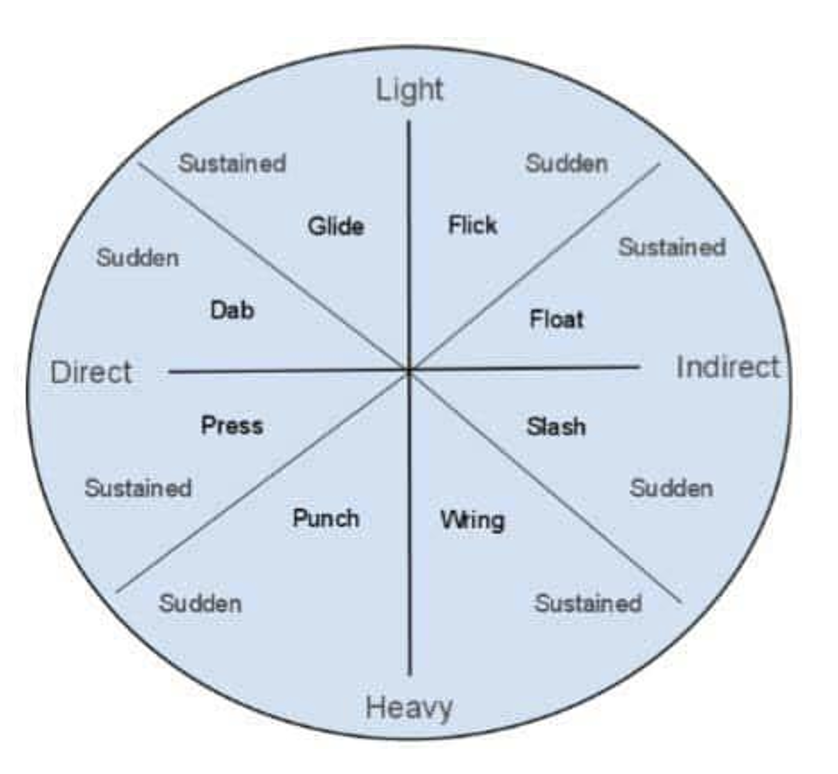
units of rhythm in film
pulse
smallest and most constant
a film’s pulse can include accents on words, camera movements, colors, changes in light and anything else that moves in a shot
movement phrases
a coherent sequence of shots or moves that communicate a feeling or idea through their rhythm
the juxtaposition of different movement energies, timings and directions can express different things within a scene and the film as a whole
this isn’t simply about cuts but also the movement within the frame, such as the camera, dialogue, actors and the sound
types of rhythm
physical
movement patterns of image and sound create meaning directly
emotional
shaping the rise and fall of emotions in the characters and the viewer
event
movement of plot, movement of story or ‘structure’
physical, emotional & event rhythm
martin scorsese’s raging bull (1980) contains 8 fight sequences — expressionistic rather than realistic
only one camera was used ant there are only a few cuts of the audience
editor thelma schoonmaker was given free rein to cut the fight sequences. for the 13th round scene, she edited first for narrative structure and then reworked the scene for movement, lighting and effects (faller, 1997)
discontinuity, shock, smash, and power cuts
extreme discontinuity on at least one, or usually several of the 4 dimensions of editing:
scene from ragin bull: collusion editing, the camera frequently crosses the axis of action (180 rule), dolly zoom shot
a smash cut is effective when you want to change locations abruptly and/or change the tone of the scene
emotional rhythm
performance guides the cutting
blinks, pauses, hesitations, glances, swallows, twitches, sighs, sobs, smiles etc are all contractions and release of feeling
given that performances/scenes are often covered in more than one take and from more than one angle, interesting problems arise for the editor in terms of shaping emotional rhythm
emotional rhythm & actor’s movement
theater director vsevolod meyerhold’s influence on eisenstein had a key influence on the development of editing and film form. he suggested that movement should have 3 phases:
preperation
action
recovery
in editing, this is a way of seeing a trajectory through an actor’s movement
actions
if an editor can see the action, then they can discern a point at which the action has reached its optimal stage for the throw to achieve the impact they want to have on the viewer
murch — the rate and quality of the blinks, the breath, the tilt of the head, the purse of the lips, the raise of an eyebrow etc, are all movements that are effective in throwing emotion
beats — the point at which an actor changes or modifies their action. the beat gives the editor the opportunity to see the end of one emotional trajectory and the rise of another
event rhythms: questions and structures
dramatic questions
a question where something is at stake and an action implied