Happiness Psychology
Lecture 1 😁
Prep
Happiness = Enjoyment + Purpose + Satisfaction
Hedonic treadmill: Trying and trying to be satisfied (etc.) but you can’t stay satisfied
Satisfaction isn’t just from what you have, but more from (haves/wants)
You can have more satisfaction with more haves, but also by managing wants
Faith (zooms you out), family, friends, meaningful work
Lecture
2 original philosophies of happiness:
Hedonic view (Aristippus): Happiness = pleasure, and life is pleasure-maxxing
Eudaimonic view (Aristotle): Hedonic happiness isn’t critical for well-being. It lwk meaninglessly makes us slaves to our desires (and temp. happiness)- He thought happiness = meaning, not just pleasure
(based on those 2 OGs)
Hedonic well-being: How frequently and intensely joy, fascination, sadness, anger, etc.
Bradburn: Distinguish between positive and negative affect (happiness = balance of both)
Kahneman: Happiness = pleasure, and 0 pain (like Aristippus)
* Focuses only on momentary affective experiences, not global evaluations
* Hedonistic treadmill: Pleasures and pains eventually return to baseline (homeostasis), so hedonistic measurement could be flawed (same thing in 2 years isn’t pleasurable anymore)
* Happiness trap: Actively trying to get happiness can reduce happiness (following desired and pleasure can therefore ≠ happiness
Measures momentary affective happiness (PANAS- Positive and Negative Affect Schedule)
Social relationships can help:
Affect amplification: Higher positive affect when w others
Emotional regulation/support: Loved ones help downregulate negative emotions
Life satisfaction: Overall appreciation of life (added to Hedonic)
Diener: Happiness isn’t just emotional, it’s also cognitive evaluations of life
Diener: Happy when life meets their standards and expectations
Measures global life evaluations (SWL5- Satisfaction w Life Scale, Cantril ladder (1-10, how good your life is))
Social relationships can help:
Social support: increases life satisfaction
Physical health (romantic partners, and groups help us maintain healthy habits)
Eudaimonic well-being: Living life full, meaningfully, to reflect one’s true potential
Ryff & Keyes - Well-being is related to 6 aspects of human actualization
Autonomy
Personal growth
Self-acceptance
Life purpose
Environmental mastery (feeling like we’re good at what we’re doing)
Positive relations w others
Deci & Ryan - Self-Determination Theory on essentials for intrinsic motivation
Autonomy
Competence: Desire for control and mastery
Relatedness: Interact and connect w ppl
Measures meaning and purpose (MLQ- Meaning in Life Questionnaire)
Social relationships can help:
Social support: feeling supported predicts greater purpose in life, and less depression
Attachment security: Close relationships help maintain secure attachment styles = greater meaning in life
thus, inconsistencies in happiness measures:
Can feel good (hedonic) but meaningless (eudaimonic- eating chocolate)
Can feel stressed (hedonic) but deeply fulfilled (eudaimonic- parenthood)
Genetics
30-40% heritability of happiness
Because of neurotransmitters dopamine (reward) and serotonin (mood- feel content)
41% heritability for females, 22% for males
Social relationships
Fundamental NEED to belong, have frequent and positive interactions and stable relationships (romantic, friends, family, colleagues, and strangers (minimal interactions also increase!)
Strongest, most reliable predictors of happiness
Not having relationships screws w our longevity more than smoking, drinking, pollution, etc.
Ofc, conflicts, and dysfunctional relationships isn’t good for happiness (unhappy marriages are way worse than staying single)
What if you’re aro? Also what’s the psychology of being introverted -?
Money
Happiness increases w income!
But richer ppl = happier, not becoming richer = happier
Lamu & Olsen looked at love vs. relationships across 6 countries, and relationship explained 50% variance in life satisfaction, and income only 7% (much more hedonic)
Social relations can influence impact of money on happiness
becoming richest in neighborhood makes you happier than same lvl- not the money amount
Prosocial spending!
Reading
Hedonic treadmill: A rich guy, and his servant are both similarly happy cos they’re used to their states. Material possessions and surroundings give you a temporary boost. However, street prostitutes and ppl in mental hospitals are consistently unhappy, so you don’t always get used to it. If you have good company, then anything is bearable.
Prospect theory: Losses loom larger than gains
That’s why relationships should be predominantly positive, the negatives are overbearing anywayyy
Eastern Asians “are well” when disciplined and critical view of self
US sees “pride” as a “well” virtue, others don’t
Memory research suggests that people can feel happy in several ways: (a) by seeing themselves grow through negative experiences, (b) by positively reappraising past negative experiences, and/or (c) by downplaying the positivity of past positive events relative to current ones.
Prosocial spending is more fulfilling than spending on self
Was even applicable pre-COVID (when we were most ego-centric, although, ppl that bought for themselves didn’t go out of their way to feel bad about not donating, the ppl that happened to donate simply felt even better about themselves)
Was even applicable for criminals
The joy from charitable spending several times fades 10x slower than personal (if they gaf enough about the charity)
Was even applicable when they thought back to personal vs prosocial spending (but only if they described/thought enough about it- otherwise emotion absent)
- Evidence from smaller studies was much less consistent (above 200ppl better)
Among them, ppl that could choose and see the benefit of their donation were happiest
Lecture 2 😁
Lecture
— “Disrupting sleep pressure”
Caffeine disrupts melatonin= stay awake (stays in system HOURS longer than you think)
Deep sleep for memory consolidation, power cleanse toxins, destress
REM sleep brainwaves look like awake waves
3 nights w/o REM = anxious, moody, paranoid, psychosis (hallucinations and delusions)
Why do we dream:
Creativity
Overnight therapy (time for healing emotional wounds)
REM sleep is the last 2 hours of sleeping, so if you need to wake up earlier, sleep earlier
When you randomly wake up, it’s usually after REM to ‘see if you’re safe’, but you remember those very clearly (can make you incorrectly think you slept shit)
Lucid dreaming messes with REM sleep
Even consistent 6 hours a night fw concentration
“I can get by w just 4 hours” ERRRR *wrong buzzer* like 1% can cos of rare gene
“It’s a sleep debt, I’ll catch up on weekend” ERRRR, you are NAWT the sleep banker
Recycle rate of human: 16 hours (need sleep after that)
7 hours nightly at least for cognitive performance
Hippocampus, amygdala, prefrontal cortex
Less can contribute to mood disorders
40% learning deficit (new info bounced)
When sleep-deprived: More muscle loss than weight loss (store fat and energy !!)
Worse sleep nowadays
Only letting ourselves think in bed (over-active stress system)
Higher body temperature
Increase heart rate
Modern light (sun takes away daylight from our eyes- time for melatonin)
LED blue/white lights 2x more waking than yellow (phones, laptops too)
Alcohol fw the overnight work of REM sleep (memory is still vulnerable)
Sleeping pills only improve sleep slightly (or so they CLAIM, but the deepest waves are lost)
Rebound insomnia from stopping sleeping pills
Reading
NREM: Non-rapid eye movement- decreases anxiety
REM: reduces sting of traumatic events
Lack of sleep=
Worse decision-making
Lack creativity
Sadder
Less efficient
Obesity likelihood increase
Impaired blood sugar regulation (pre-diabetic lvl)
3x more likely to be infected by a rhinovirus
Women have 70% greater of getting pneumonia in 4-years
before receiving a flu shot = produced less than 50% of the normal antibody response
Young males sleeping 4 hours for 4 nights drops testosterone to that of 10 yrs older
Women have 30% more irregular menstrual, and less follicular stimulation
24% increase in heart attacks on day after daylight savings (-1hr sleep)
More amyloid-b= inc. % Alzheimer’s
Sleeping before studying primes hippocampus for new memory consolidation, and after allows for offline consolidation (and less subsequent forgetting).
Glymphatic system: Brains lymphatic system (removes metabolic detritus, amyloid-b, etc. during NREM sleep)
Blue light fw melatonin (less sleepy)
Lecture 3 😁
Lecture
What is work?
Intentional activity to support needs or self, or others (or to provide goods and services for economy)
Effects of unemployment: decreased psychological and psychosomatic well-being, and self-esteem, and familial conflict
Happiness at work
Work engagement: positive, fulfilling state of mind (vigor + dedication + absorption (reaching a flow state))
Thriving: Experiencing engagement + a sense of learning at work
thriving = better performance too
The good working life: job satisfaction + meaningfulness + psychological richness
What can make work happy?
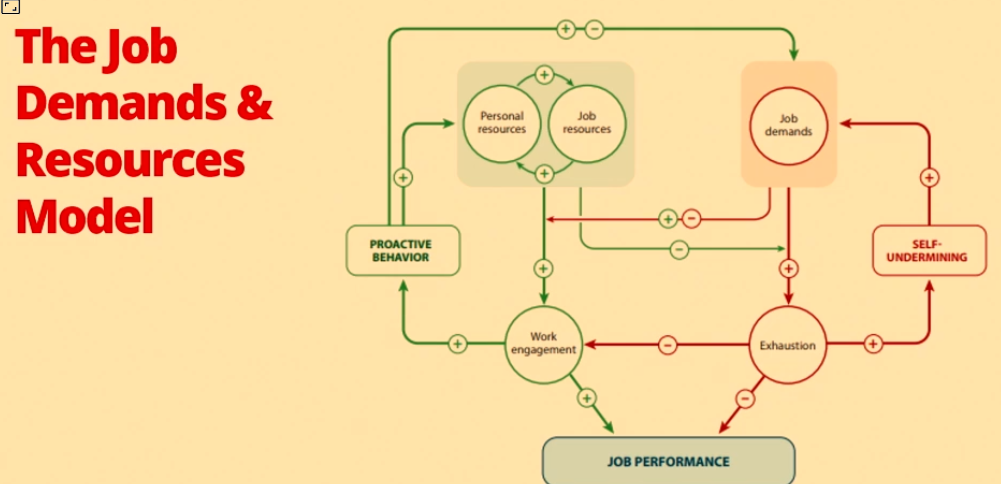
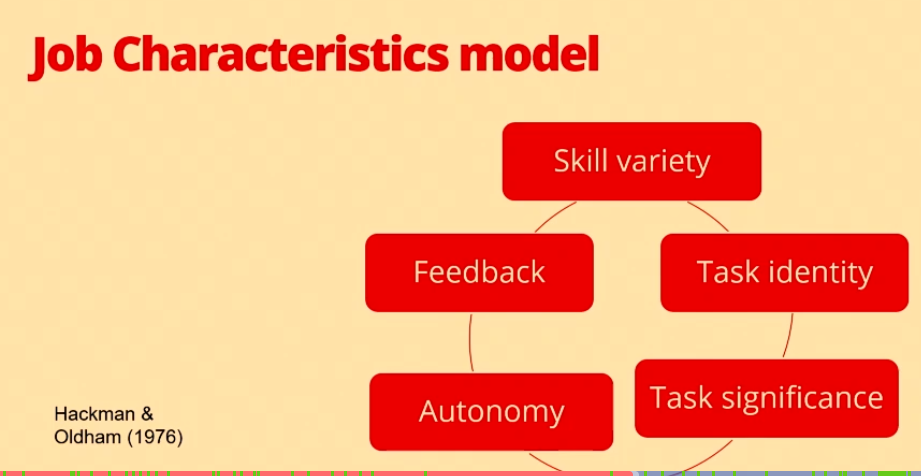
SMART makes job happy
S: Stimulating- task and skill variety w mental complexity (engaging)
M: Mastery- Role clarity, can understand job and feedback well
A: Autonomy
R: Relational- connection w ppl
T: Tolerable work- not too overloading, doesn’t conflict w home life
Can work be play?
Ludic play: Open-ended and exploratory
Agonistic play: Competing, w rules (sports, improvement)
You study/ perform better when you make obligations playful
Reading
Psychologically rich life: a life that provides a variety of interesting and perspective-changing experiences
higher curiosity, more holistic thinking, and a more liberal political orientation are associated with the experience of a psychologically rich life
Perceived contribution is positively related to both job satisfaction and work meaningfulness
Participation is uniquely associated with work psychological richness
Socially Embedded Model of Thriving (SEMT): how individuals thrive in supportive environments that promote independent behaviors.
Individual thriving, dyadic thriving (relationship quality and mutual need fulfillment between individuals), collective thriving (a group)
Lecture 4 😁
Lecture
Sex is all behavior that arouses us (beyond just coitus)
½ of women face sexual abuse (non-consensual/ power dynamic)
¼ face sexual violence
orgasms release oxytocin (increases intimacy)
men and women equally fall asleep after sex
sex good.
Reading
4 factors of happiness:
circumstances
aspirations
comparisons with others
one’s baseline happiness
Individuals who have no sexual activity are less happy than average
The median American has sexual intercourse two to three times a month
Sex may bring more happiness to the highly educated than to the less-educated
People who’ve paid for sex are less happy (monogamy was also “better”)
Sexuality didn’t affect anything!
Unemployment and divorced parents= more sex
Gay/bi men have more sex than straight men (no diff between lesbians and straight women)
Good enough sex: important for couples to engage in sexual intimacy to reap benefits (but doing more than they can benefit from doesn’t give extra benefits)
likely once a week
Lecture 5 😁
Lecture
Mindfulness: Monitoring and acceptance theory (using attention to monitor current moment, with acceptance)
Not about ‘clearing your mind’, or relaxation/ ‘no stress’ per se
Kuyken (2008)- MBCT or antidepressants over 15 months and got similarly better, but mindfulness patients relapsed less (and 75% of them stopped using antidepressants at the same time)
helps w attention, working memory, executive control, rumination, relationships
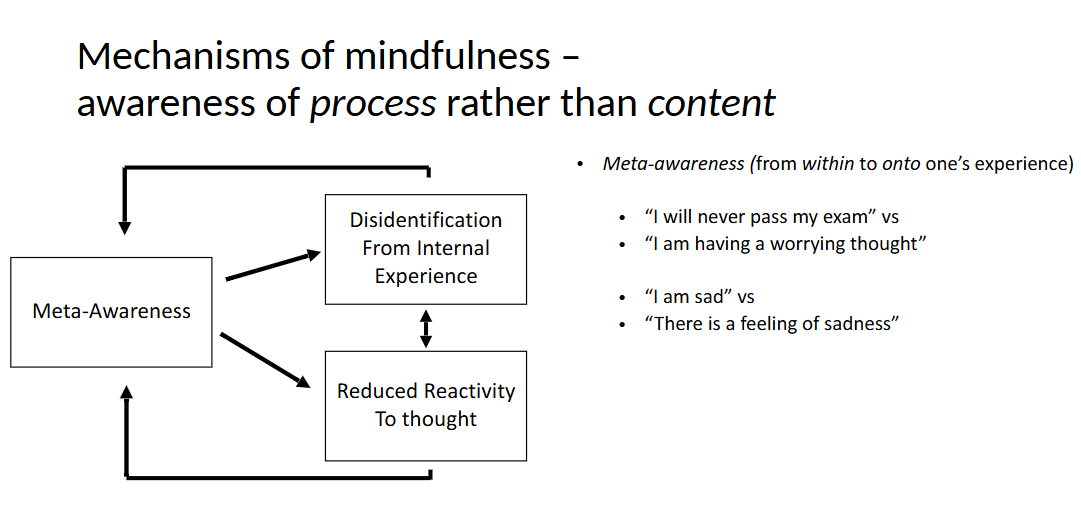
Mindfulness helps w loneliness (accept status)
Improves social relationships
Reading
Mindfulness is naturally occurring, but varies across ppl, and fluctuates throughout day
Monitor and Acceptance theory: what meditation is basically
practices will say “breath in, breath out” “that’s your anger”- monitoring
“welcome each experience” “be nonreactive to ___” - acceptance
Mindfulness-Based Stress Reduction (MBSR) program- 8 weeks guided practices
MBCT (mindfulness-based cognitive therapy), Emotional Regulation Therapy
Dialectical Behavior Therapy
Attention monitoring increases awareness of emotional stimuli, creativity and attention
doesn’t regulate emotions tho- without acceptance, can just make you overly sensitive and cause distress
Acceptance mixed w that fixes it
Monitoring develops before acceptance, so early mindfulness can cause distress
Lecture 6 😁
Lecture
68% of adults believe religion is important (and it’s increasing among young too, religion is ‘coming back’)
Religiously active ppl are physically healthier = +4 years!
prob less drinking, drugs, etc. better mental health, less crime and STDs, stable marriage
self-control (inhibit undesirable tendencies)
self-regulation (prayer, meditation, meaningful goals)
self-monitoring (‘community and god are watching’)
Health and religiousness are best predictors of life satisfaction
Negative effects of religion:
Struggle to conform to mandates
Relationships w ppl who don’t share religious beliefs
Cognitive dissonance between own and religious beliefs (real.)
Fixation on punishment for not conforming
Less analytical thinking= poorer decision-making
spirituality: you find answers yourself vs religion: answers given for you
more gen-z are spiritual, and also more agnostic
God as an attachment figure: a safe haven = ↑ comfort, ↓ stress
Existential Theory of Mind: Religious/ metaphysical understanding provides sense of control- everything has a symbolic meaning, god wanted this to happen because!!!
Compensatory Control: ↓ perceived control = ↑ god faith
Hence, higher religiosity in instable countries (war, disease, poverty…)
Terror Management via promising psychological immortality (rebirth…)
Belongingness (social group)
The Hive Hypothesis: Need to lose self and become a social organism (drumming, chanting, costumes, effervescence)
Self Transcendental Experiences (STE’s): Transient mental states of decreased self-salience or increased connectedness
Awe
Flow
Mystical experiences
Meditation
Near-death experience
Psychedelics (LSD, Mescaline for depression, anxiety, and addiction)
Being treated = personally meaningful, could = an awakening
Sensory deprivation
Sex 💀
Brain lesions and temporal lobe epilepsy
Spontaneous
Spontaneous Spiritual Awakenings (SSAs): Sudden union w universe, God, etc.
Psychological turmoil or trauma often causes
Half of Americans have had an awakening (and 25% of them aren’t religious)
Does this have anything to do w my frontal lobe developing
Self-actualization (become best version of self, achieve personal growth etc.)
Pursue creative passion
Kindness and altruism
Authenticity and self-acceptance
Get into the flowwwwww
Reading
Awe: Positive feeling of wonder, enlightenment, and admiration that transcends one’s ordinary reference frame (larger than self).
Dispositional awe: Individual’s tendency to experience awe
Awe-inspired = enhanced momentary life satisfaction (by expanding time perception)
awestruck more often = decreased inflammation
Materialists are less globally satisfied w life
makes you more preoccupied w self-interest, lwk the opposite of awe (transcend self, become more empathetic tbh)
Having 'more meaning in life’ = more awe = less materialism = happiness
Lecture 7 😁
Lecture
Ryff’s psychological well-being (Ryff like Web)
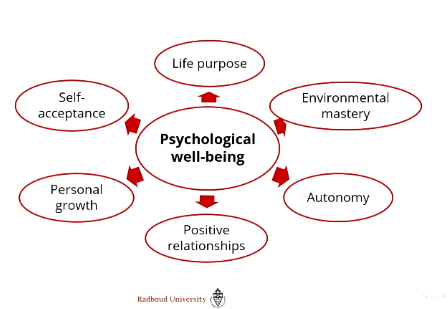
Self-determination theory: need for autonomy, competence, and relatedness for well-being
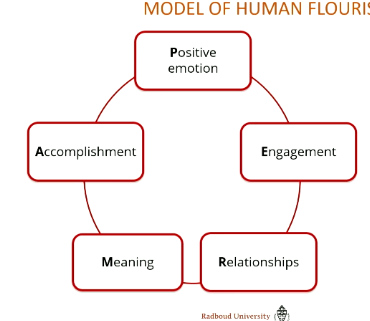
Model of human flourishing: integrated view
Students feel performance pressure more from self than from uni
Female and international students experience:
Higher burnout
More depressive symptoms
Lower social safety (higher for internationals)
More performance pressure
Higher perceived study load
More peer support (lower for internationals)
Other gender have even worse mental health
Compassionate communication (connected w eudemonic well-being):
Encouraging genuine connection between you 2
Expressing what is alive within yourself w/o criticism or blame
Learning what’s alive in them
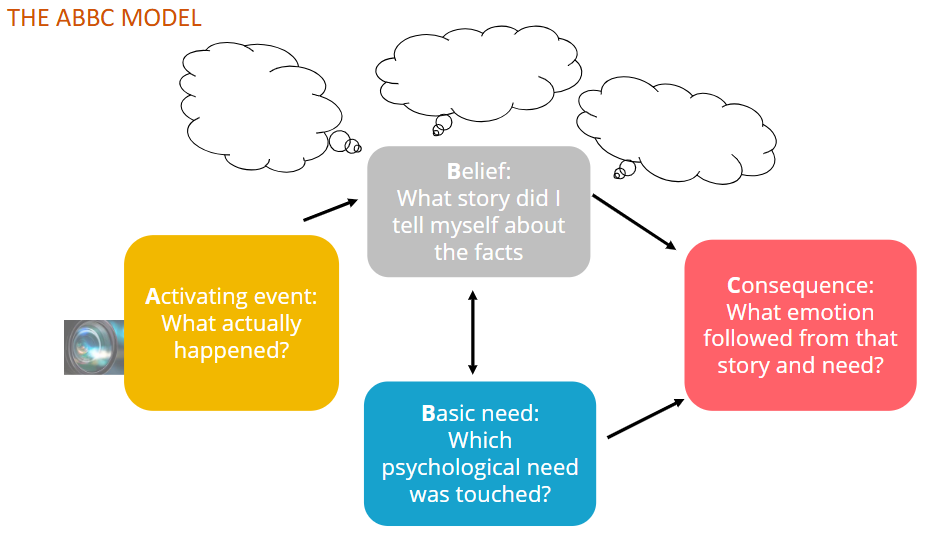
Observation vs trigger vs story
ABBC model: Activating event (something happened) → Belief (story you told yourself about the facts) → consequence (emotion followed)
Your underlying needs and the story you tell yourself are why you interpret events the way you do (you hate someone, you read into their reactions, etc.)
Reading
Feelings are like weather to a construction company- if it rains or is too hot, their productivity is affected, but they can’t change the weather, and wishing it was different doesn’t help. Contingency plans, adapting, and doing something do.
Metacognition: experiencing your emotions consciously and separating them from your behavior (don’t be controlled by them)
3 parts in brain:
Brain stem- reptile brain (regulate instinctive behaviors and motor functions)
Limbic system- paleomammalian brain (basic stimuli→ emotions)
Neocortex- newest, most human part (decision-making, judgement, language)
not entirely accurate, they’re not evolved in that order or localized neatly
still, 3 main functions:
Detection- see and process environment (visual cortex+ occipital) OMG A CAR-
Reaction- (Mostly amygdala) MOVE OUT THE ROAD
Decision- (prefrontal cortex) um how do I react to near-death now…
Fear saved life here. Sadness is beneficial too- unhappy ≠ negative
Basic vs complex emotions: felt on their own vs in combination
Primary negative emotions:
Sadness
Anger
Disgust
Fear
Primary positive emotions (more debate):
Joy- stay alive to mate
Interest- progress and prosper (evolutionary benefit)
Complex emotions:
Shame
Guilt
Contempt- “you are WORTHLESS” (anger + disgust)
Telling someone who’s throwing a tantrum to “Use their words!” is telling them to be metacognitive- use your prefrontal cortex instead of just the limbic system (when angry, count to 10 before speaking to give prefrontal cortex time to catch up to limbic system)
imagine their response at your reaction as you count (longer if angrier)
Journaling about bad feelings can help you feel in control
But also keep a database of good memories! (improves mood to recollect :)
Humans retain memories so that we can envision and predict the future
Can think back on past and reconstruct impression (it wasn’t so bad!!)
If you are happy rn, your memories will be broader and general, but if unhappy, the past has more specific unhappy memories
Think back on negative memories after a while, about what you learned from them
Buddha: Observe emotions like they are happening to someone else